Give conversation a direction
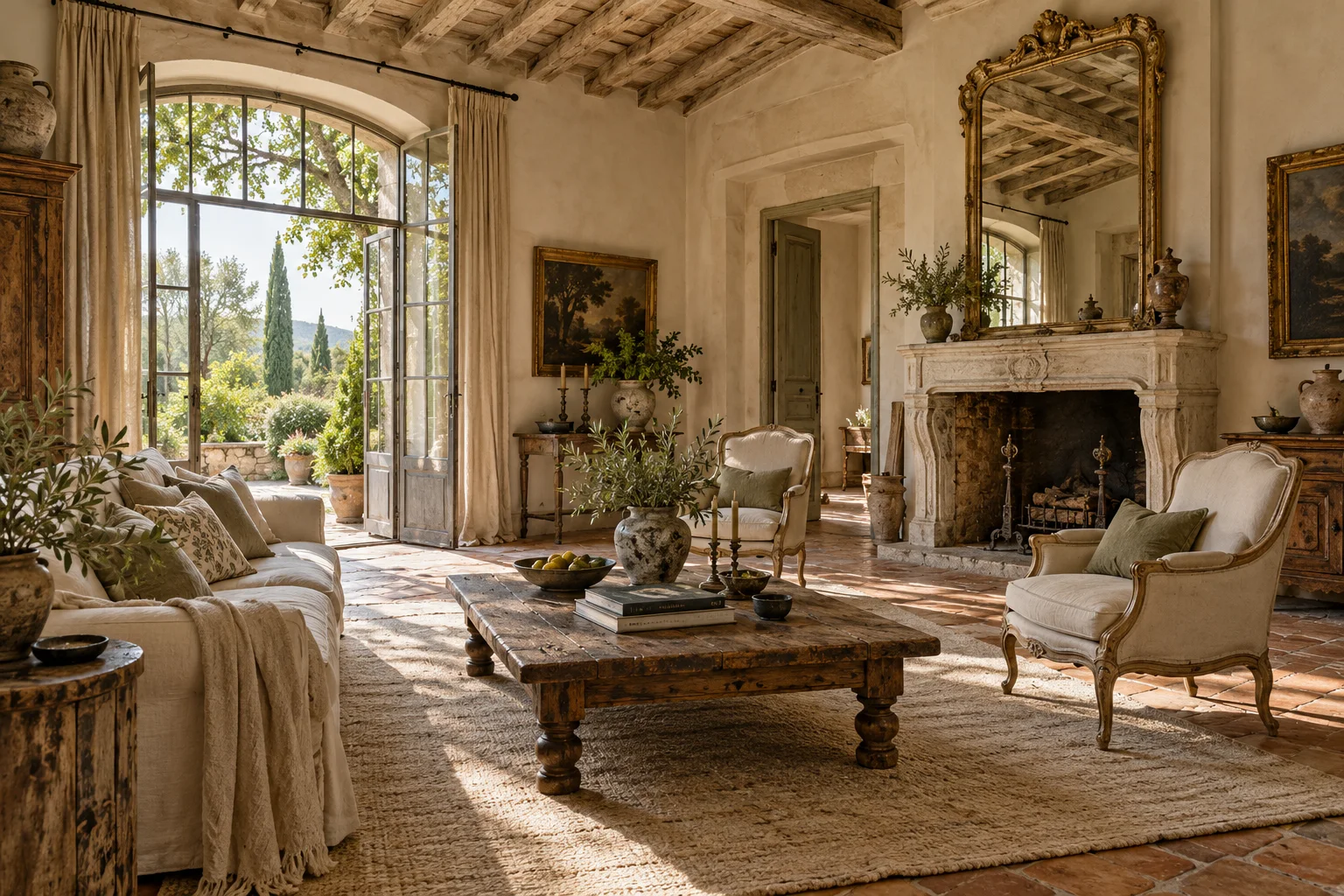
Start with the chairs turned slightly toward one another, then adjust for the view and available space. Facing seats encourage conversation, while a more open angle connects the group to the rest of the room. Do not automatically push backs against the wall: small changes can alter the whole arrangement. Check what each person sees, including windows, doors, or a screen.
Place a table template between the chairs and sit down. Can you set down a cup without stretching and stand without stepping around a leg? Do not choose a top simply to fill the gap. Measure chairs at their widest points, including arms and splayed legs, then test movements with a visitor.
Connect the chairs without insisting on a pair
Different models can relate through similar height, a shared color family, or complementary fabrics. If one is heavily carved, keep the other quieter. A simple round table often connects two silhouettes better than a third ornate object. Compare seat heights: a substantial difference can affect conversational comfort and the relationship to the table.
Examine each seat’s condition separately. The Canadian Conservation Institute notes that inappropriate handling can damage furniture; move chairs by load-bearing parts using a suitable method. Before daily use, seek advice on uncertain frames or upholstery. New fabric alone does not establish a chair’s structural soundness.
Complete the group with one accent
Choose a lamp or artwork that gives the group direction rather than identical accessories on each side. A low vase on the table preserves eye contact. If adding a rug, mark its footprint with chairs in their working positions; it should connect the setting without becoming an obstacle as feet move.
View the arrangement from the living-room entrance. The table should remain visible as the link between seats, and the main route should be clear. Photograph two versions and compare after a day of use. The best plan often allows people to settle naturally rather than displaying both chair fronts in exactly the same way.
What to compare
| Option | Role in the room | What to check |
|---|---|---|
| Face to face | Direct conversation | Access between chairs and table |
| Chairs at an angle | Opens toward the living room | Reach to the tabletop |
| Two different chairs | A personal arrangement | Comparable heights and comfort |
Your buying checklist
Continue planning your room
Frequently asked questions
What size round table should I choose?
Start with the actual chairs and room needed to stand up. Use a template and try movements with a cup, book, and planned objects. Diameter is not an isolated rule: tabletop height and base design can make two equally sized tables very different to use in the same arrangement.
Must both armchairs have the same fabric?
No. A shared color or similar materials may be enough. Compare fabrics with the chairs’ wood and the room’s light. If silhouettes differ strongly, restrained upholstery often helps connect them. Comfort and the condition of each upholstered seat still need separate checking before the two pieces enter regular use.
Can this group sit in front of a fireplace?
Yes, if circulation and fireplace use permit it. For a working fire, discuss necessary distances with the relevant professionals. For a decorative fireplace, focus on the view and access to nearby doors. The group should support the focal point without closing the room or blocking access to other seating.
How can a small sitting area feel less rigid?
Allow a slight difference between sides: a lamp by one chair, a painting aligned with the other, or related but different fabrics. Above all, keep objects easy to move. A flexible arrangement can adapt to reading and guests while retaining its main connection around the round table.
Sources & further reading
- Canadian Conservation Institute — Furniture and Wooden Objects — Sensitivity of wooden furniture to light, humidity, and handling; no historical attribution.