Choose a Principle That Connects the Works
Set the pictures side by side and look for what they share: a landscape subject, muted colors, frame material, or compositional movement. Keep one main connection. If subjects differ widely, a family of frames can provide continuity; if frames vary, related colors may suffice. Do not replace an interesting antique frame solely to produce a uniform series.
Next choose one main work and two or more supporting pieces. The main picture need not be the largest; its subject may simply matter most to you. Place it in the arrangement, then test the surrounding works. Equally busy pictures can compete. Introducing a quieter drawing or leaving wall space distinguishes the works without diminishing their individual character.
Test Sizes in Relation to the Sofa
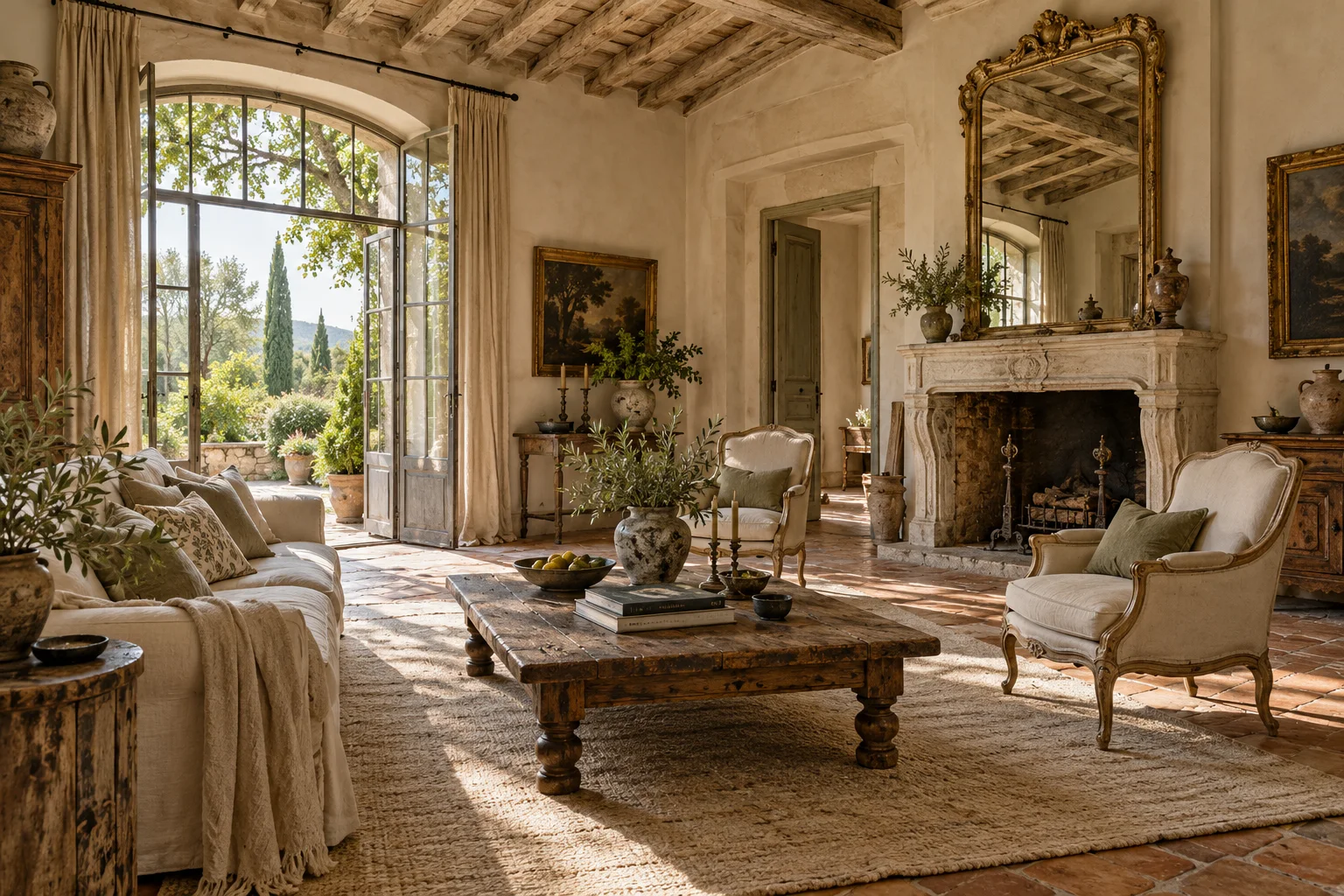
Measure the sofa, any sconces, and available boundaries. Cut templates to the outside dimensions of the frames and move them on the wall using a temporary method compatible with the paint. Look from the doorway and an opposite armchair. The group should relate to the sofa without necessarily reproducing its exact width.
Try a shared line: centers, lower edges, or alignment within a smaller group. Compare this with a freer arrangement around the main work. Keep gaps sufficiently coherent that differences appear intentional. Check proximity to people’s heads when seated. Photograph trials with the same framing; comparison is more useful than changing every picture simultaneously.
Install According to Frames and Materials
A gallery wall is a mounting project as well as decoration. Record each frame’s weight and condition, then choose a hanging system suited to the wall. Old cord or a hanging ring may need attention. The Canadian Conservation Institute explains that light and location affect painting conservation; avoid a composition that exposes works to direct sun merely to achieve an appealing photograph.
Do not clean a painting to artificially harmonize the group’s colors. A dirty surface or fragile frame needs specialist advice. Number positions on the plan, keep dimensions and photographs, and install progressively. Once the works are in place, observe the wall at different times. Address reflections or discomfort through lighting and arrangement before multiplying objects on the sofa.
What to compare
| Composition | Effect | Works When |
|---|---|---|
| Shared alignment | Calm group | Formats are related |
| Main work and satellites | Clear hierarchy | One piece leads |
| Asymmetrical group | Freer rhythm | A color connection exists |
Your buying checklist
Continue planning your room
Frequently asked questions
How many pictures should go above the sofa?
The number depends on their sizes and the available wall. Start with works that mean something to you, then test their footprint. Three pictures may occupy more space than seven small frames. Leave a margin around the group and add a piece only when it improves the composition, rather than aiming for a predetermined total.
Can paintings and prints be mixed?
Yes, if you respect their display needs and find a visual connection. Related subjects or a shared tonal quality can connect different media. Check framing condition and glazing reflections. The combination should let each work be read individually, without treating a print merely as filler between two paintings or ignoring its own presence in the group.
Should frames align with the sofa’s top?
The sofa provides a reference, but no single alignment is compulsory. Test the relationship between the backrest, empty spaces, and artworks. Above all, look from positions actually used. A height chosen while standing may feel remote when seated; templates allow comparison before drilling and help connect the pictures to the room’s daily experience.
How can another picture be added later?
Keep the plan and identify spaces where expansion remains possible. Test the new work with templates instead of immediately moving frames. It may replace a piece or create a second group elsewhere. A growing collection does not require every acquisition to share one wall, particularly when a separate grouping gives an individual work a better setting.
Sources & further reading
- Canadian Conservation Institute — Basic Care: Paintings — Location, light, and framing affect painting conservation; the source does not prescribe an aesthetic arrangement.