Give Each of the Two Volumes a Function
Position the sofa first according to conversation, reading and the views you want to keep. The chest can then hold living-room belongings or anchor a side wall. Avoid assuming it must be centered behind the sofa: opening drawers and the depth of the sofa back may make that position impractical. Draw both pieces at their actual size.
Compare their heights and visual weight. A broad dark chest needs more surrounding space than a small pale piece on legs. A low sofa leaves much of the wall visible; a tall chest may then become the dominant presence. Test with photographs taken from the entrance and seated positions. This helps reveal furniture that conceals a window or blocks a view.
Create a Connection Without Making Surfaces Uniform
Choose one thread: wood repeated in a side table, a color echoed in a cushion or a curved line shared by both pieces. One connection is often enough. The chest does not need repainting to match the sofa fabric exactly. Contrast can make its patina easier to appreciate, especially when walls and accessories remain relatively restrained.
Maintain a hierarchy among patterns. If the sofa has a strongly patterned textile, keep the chest top calm; if the sofa is plain, a more expressive painting or lamp can accompany it. The Canadian Conservation Institute's guidance on old finishes encourages thought before alteration. Try reversible choices first: moving furniture, changing textiles, adjusting light and reorganizing objects.
Test the Room in Actual Use
Open drawers, pull out chairs and walk through carrying a tray. A composition successful in a photograph may be awkward every day. Leave free space on the chest and provide a surface genuinely reachable from the sofa. The two pieces need not do everything: a small additional table may prevent uncomfortable movements and repeated trips across the room.
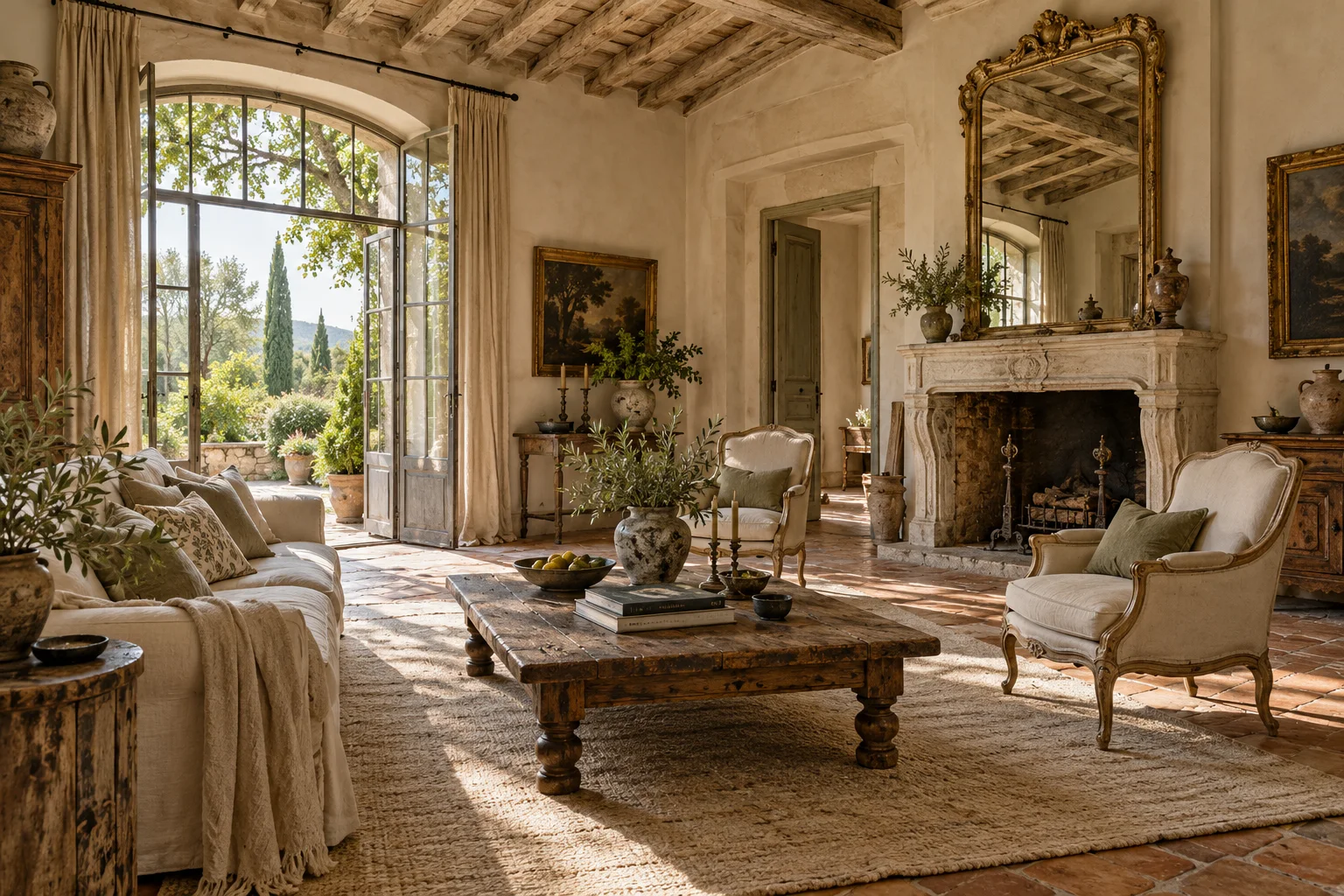
In the evening, observe light on the wood and fabric. A lamp on the chest can add depth without shining directly into seated people's eyes. Then adjust accessories by removing rather than adding. In a French country living room, a few visible antique objects often have the strongest presence, while the sofa provides comfort for contemporary life.
What to compare
| Choice | Benefit | What to Check |
|---|---|---|
| Chest on a side wall | Accessible storage | Drawer opening |
| Chest behind the sofa | Visual separation | Depth and circulation |
| Chest on the opposite wall | A focal point in the view | Balance of volumes |
Your buying checklist
Continue planning your room
Frequently asked questions
Does an antique chest require a beige sofa?
No. Beige is one possibility among many. Consider the light, wood tones and colors already present, then test fabric samples in the room. Soft green, blue or a stronger shade can work when the composition retains a clear hierarchy and the color choice suits the actual surroundings.
Can the chest stand behind the sofa?
Yes, if the drawers stay accessible and the combined depths leave comfortable circulation. Measure projecting handles and the sofa's sloping back. This position can separate two zones, but it should not turn useful storage into furniture that can no longer be opened without moving the sofa.
How can I keep the chest from looking too dark?
Try a lighter wall, side lighting and fewer accessories before altering the furniture. Leave its feet and outline visible. A completely covered top or a poorly lit corner can make its presence feel heavier than the wood color itself, so assess the surrounding arrangement before choosing a permanent change.
Must the other furniture be antique?
No. A simple table and contemporary seating can accompany the two main pieces. Repeat a material or proportion to connect them, then check practical use. The living room gains personality when objects are selected for function and design rather than because every piece comes from the same period.
Sources & further reading
- Canadian Conservation Institute — Care of Furniture Finishes — Identifying finishes and taking care before cleaning or altering them.