Choose a Volume, Not Just a Silhouette
Compare the overall width, the height of the body and the available suspension length. Listing photographs flatten volume: a chandelier with widely spreading arms may occupy much more space than its central silhouette suggests. Map its footprint above the intended furniture, including the lowest drops. Check the view from doorways and from the places where people will sit.
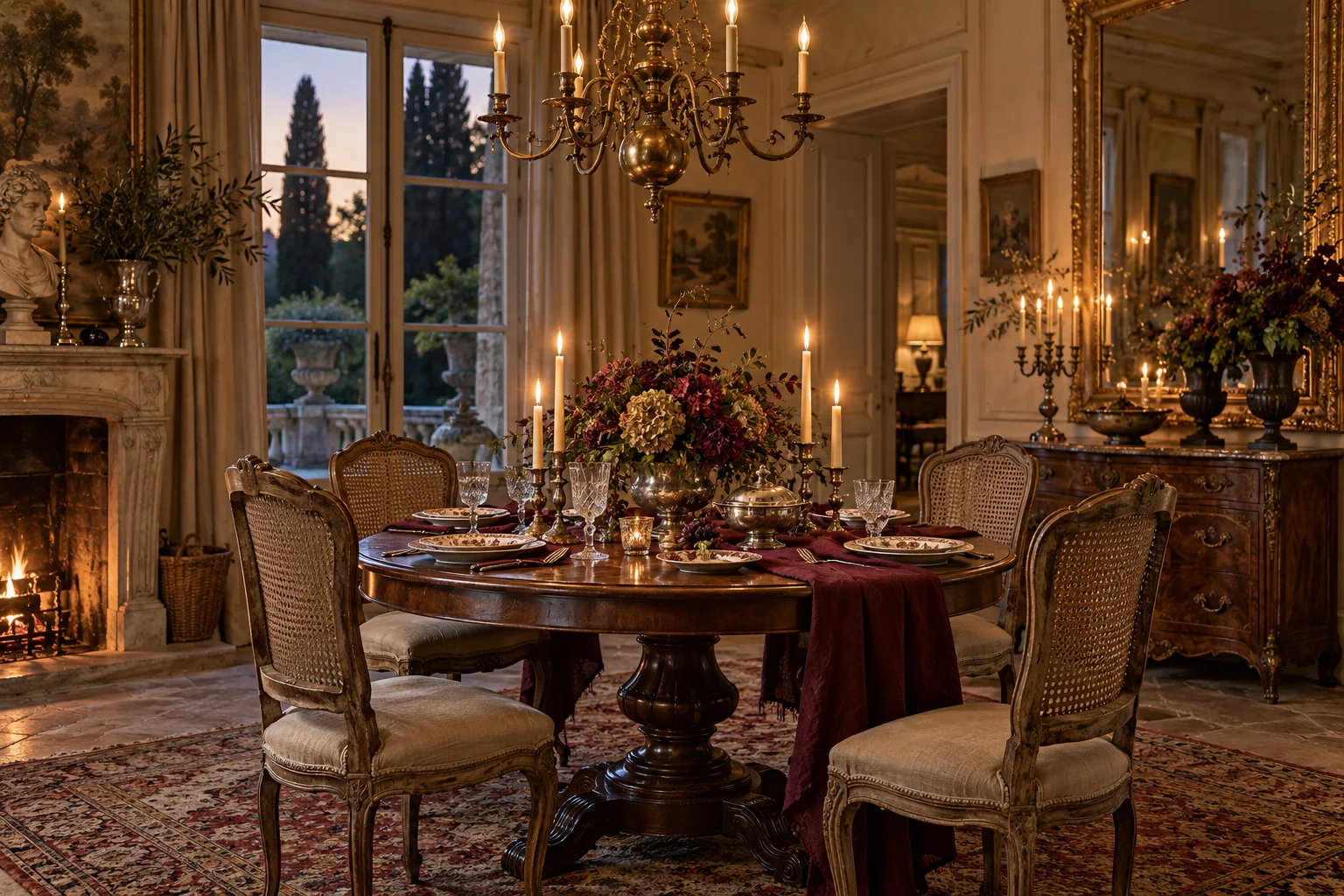
Above a table, centering the composition on the furniture can make more sense than automatically aligning it with the room. In an entryway, the main issue becomes clearance beneath the object. We suggest allowing the chandelier to relate to one other strong feature, such as a mirror or armoire, instead of concentrating numerous decorative accents in the same spot.
Inspect Arms, Attachments and Added Parts
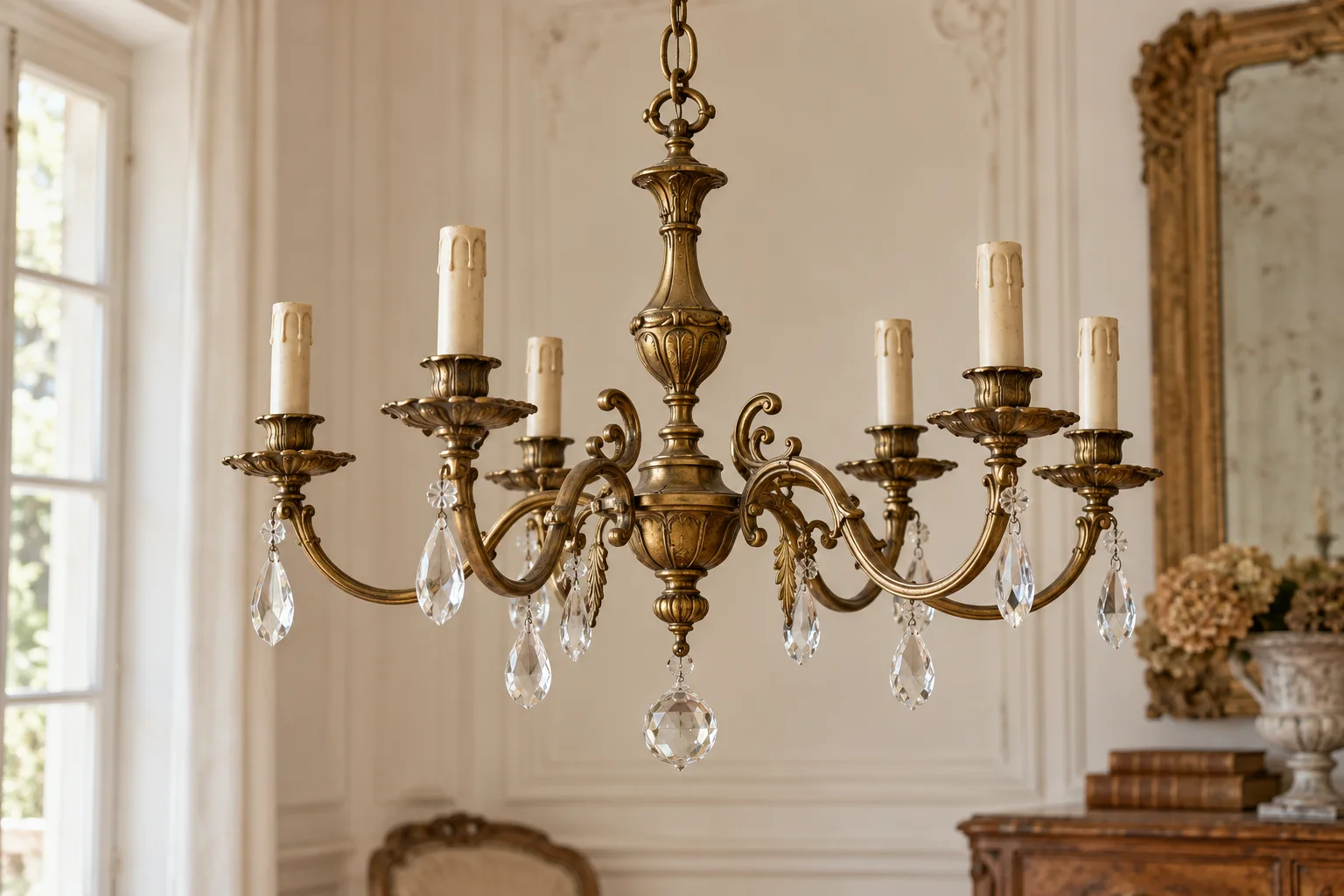
Request views of every arm, the ceiling canopy, chain and decorative attachments. Look for arms set at different angles, visible solder joints and missing components. Asymmetry might reflect construction or repair; it deserves an explanation but is not, by itself, evidence of age. Detail photographs should accompany dimensions and the stated weight.
For a chandelier with hanging drops, ask how many are present, which have been replaced and how they will be packed. Metal color alone cannot identify an alloy or gilding. The Canadian Conservation Institute notes that polishing removes material, so a bright finish should not be an automatic requirement. A coherent patina can sit comfortably alongside pale walls and a wooden table.
Plan Lighting You Can Actually Use
An antique light that turns on has not necessarily been assessed for current use. Have a qualified person inspect its electrical components and plan the mounting, taking the supporting structure and actual weight into account. Ask what has been checked or replaced and keep that information with the photographs. A new cord alone does not establish the quality of a refurbishment.
For atmosphere, imagine the chandelier alongside lower lamps: it can define the central arrangement without providing all the room's illumination. Try the light color and see how it renders neighboring materials. Electrical Safety First's guidance includes following the bulb specifications. Suitable installation deserves planning before purchase, particularly when the suspension point needs to move.
What to compare
| Chandelier Feature | Effect in the Room | Essential Check |
|---|---|---|
| Slender arms | An airy outline | Distortion and attachments |
| Hanging drops | Reflections and presence | Missing pieces and fragility |
| Compact structure | A quieter accent | Weight and actual volume |
Your buying checklist
Continue planning your room
Frequently asked questions
What chandelier size should I choose above a table?
No single proportion works in every room. Compare the chandelier diameter, the table width and the surrounding clearances. Make a lightweight mock-up without attaching it to the electrical point, then view the arrangement from a seated position and from the approaches to the table before choosing the final size.
Can I install an antique chandelier myself?
Installation depends on the supporting structure, weight and condition of the electrical equipment. An older object may have undergone several alterations. Have a qualified person plan the installation and inspection; this also makes it possible to select a mounting method compatible with the ceiling structure and the particular fixture.
Are mismatched chandelier drops a defect?
They can indicate replacements or a composition assembled at different times. Ask for these differences to be described and photographed. Whether they are acceptable depends on your project and the seller's description; on their own, they cannot establish a period or prove that a particular type of restoration took place.
Does a chandelier belong in a country kitchen?
It can suit an eating area separated from cooking and splashes, provided the installation is appropriate. Consider access for cleaning and the circulation below it. A densely ornamented design will be less straightforward to maintain than an open form in a kitchen that receives frequent everyday use.
Sources & further reading
- Canadian Conservation Institute — Care of Brass and Copper, Note 9/3 — Polishing removes material and can affect details or patinated surfaces.
- Electrical Safety First — Electrical Safety Advice for Lamps — Cord condition, stability, bulb selection and clearance from flammable materials; British plug requirements are not applied to other countries.