Acid etching or wheel engraving: how to tell on an antique etched mirror
Run a fingernail across the design. Acid etching sits almost flush with the surface and feels like fine sandpaper; the frosting is even, and the edges of the motif are slightly soft. Wheel engraving is cut with a rotating stone or copper wheel, so the lines have depth, a V-shaped section and bright facets that flash when the mirror moves. Many mirrors combine both: an acid-etched frosted ground with wheel-cut highlights on flowers and ribbons.
The method tells you about the workshop, not the date. Acid etching was an industrial process used on bistro and shop mirrors; wheel engraving took a skilled hand and appears on better bedroom and salon mirrors. Neither is proof of age, because both are still practiced. Describe what you see, name the motif and note whether the design is on the front face or on the back behind the silvering.
Patterns and where they came from
Florals dominate: roses, lilies and sprays trailing from one corner, often with a ribbon bow. Geometric borders, a frosted band with a clear inner line, belong to the 1920s and 1930s and suit bathrooms. Bistro mirrors carry lettering, scrolls and sometimes a brand name; the lettering is a decorative choice unless documented as original to a café. Bevelled plates with etched corners were a bedroom standard in France from about 1900 to 1940.
Check that the pattern is complete. A design that runs off the edge of the plate shows the glass was cut down. Ask whether the plate is in its original frame; etched mirrors are often reframed, which is acceptable if stated. The frame itself, wood, gilt or chrome, gives you a second set of clues about the period the dealer is proposing.
How the silvering wears on etched glass
The silvered back is the weak side. Moisture creeping in from the edges oxidizes the silver and shows on the front as gray spotting, called foxing, that usually begins along the lowest edge and around any crack. On an etched mirror the frosted areas can look darker when the silvering behind them fails, because the matte surface no longer bounces light. Light edge foxing is normal and accepted; foxing through the center of a bathroom mirror is a reason to look for another plate.
Look at the back if you can. A painted protective layer that is intact, usually red, gray or black, is a good sign. Flaking paint, bare silver or rust stains on the backing board mean water has reached the silvering. Resilvering is possible but rarely matches the old tone, and it means stripping the back entirely; for a decorative mirror it is seldom worth it.
Cleaning the front, protecting the back
Clean only the front. Apply glass cleaner or a mild soap solution to a soft cloth, never to the mirror, and wipe the smooth areas first, then the etched areas gently in one direction. Dry at once. Residue settles in frosted areas, so finish with a dry microfiber cloth and avoid polishes and ammonia-heavy products that haze the matte surface. The Canadian Conservation Institute's guidance on glass objects supports exactly this: liquid on the cloth, not on the object, and no moisture at the edges.
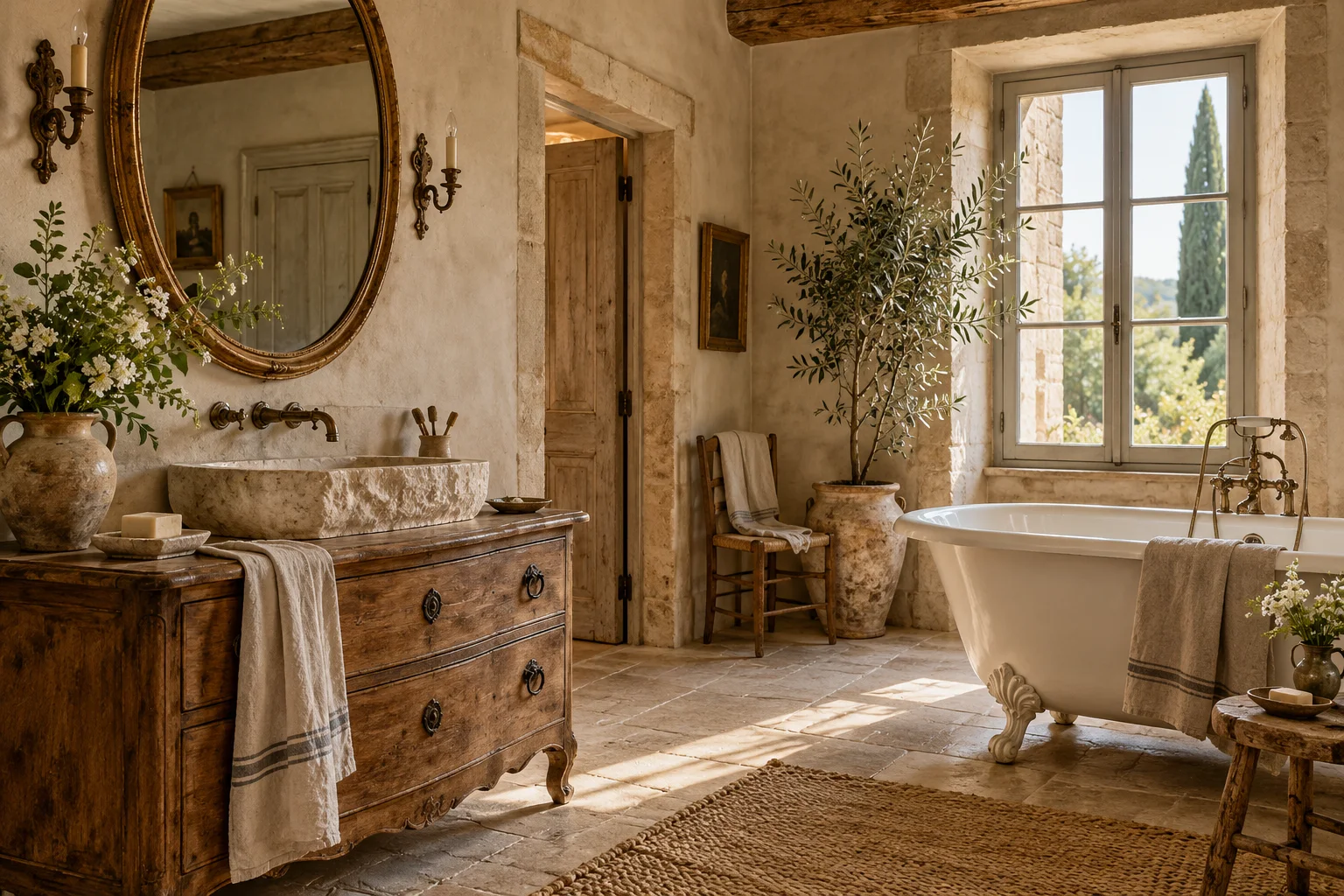
Never let liquid run to the frame edge or behind the plate. Hang the mirror with a small air gap from the wall, keep it out of the shower zone in a bathroom, and avoid rapid temperature changes. In a bathroom, an etched mirror lasts far longer above a basin in a ventilated room than on the wall facing a shower.
What to compare
| Form | Suggested Use | Decisive Check |
|---|---|---|
| Acid-etched frosted border mirror | Bathroom away from the shower, powder room | Silvering at the edges; even frosting |
| Wheel-engraved floral bedroom mirror | Bedroom above a dressing table or chest | Depth and facets of the cuts; complete pattern |
| Etched bistro mirror with lettering | Kitchen, dining room, hallway | Reframed or original; lettering described as decorative unless documented |
Your buying checklist
Continue planning your room
Frequently asked questions
How can you tell if an antique mirror is etched or engraved?
Run a fingernail across the design. Acid etching is almost flush with the surface, evenly frosted and slightly soft at the edges of the motif. Wheel engraving has depth, a V-shaped cut and bright facets that flash as the mirror moves. Many mirrors combine a frosted etched ground with wheel-cut highlights, so describe both when you see them.
Can etched mirror glass be cleaned with vinegar or ammonia?
Avoid both. Ammonia-heavy cleaners haze the matte etched surface over time, and any liquid that runs to the edge reaches the silvering on the back. Use a mild glass cleaner or soapy water applied to a soft cloth, wipe the etched areas gently in one direction, and dry immediately with a clean microfiber cloth. Keep the frame edge dry.
Is foxing on an etched mirror a reason not to buy?
Light gray spotting along the lower edge is normal and accepted on antique glass. Spotting across the center, or dark patches behind the frosted areas, means the silvering has failed where it shows most, and the mirror will not improve. Resilvering strips the back and rarely matches, so for a bathroom mirror it is usually better to choose another plate.
Does an etched pattern date a mirror?
No. Acid etching and wheel engraving have been used continuously from the 19th century to today, and motifs were copied across decades. Frosted geometric borders are consistent with the 1920s and 1930s and trailing florals with 1900 to 1940, but a style is an inspiration, not a documented date. Use the frame, the glass thickness, the backing and any provenance together.
Sources & further reading
- Canadian Conservation Institute — Caring for ceramic and glass objects — Supports the cleaning method (liquid on the cloth), humidity control and the description of silvering deterioration.