Choose the reflection before the silhouette
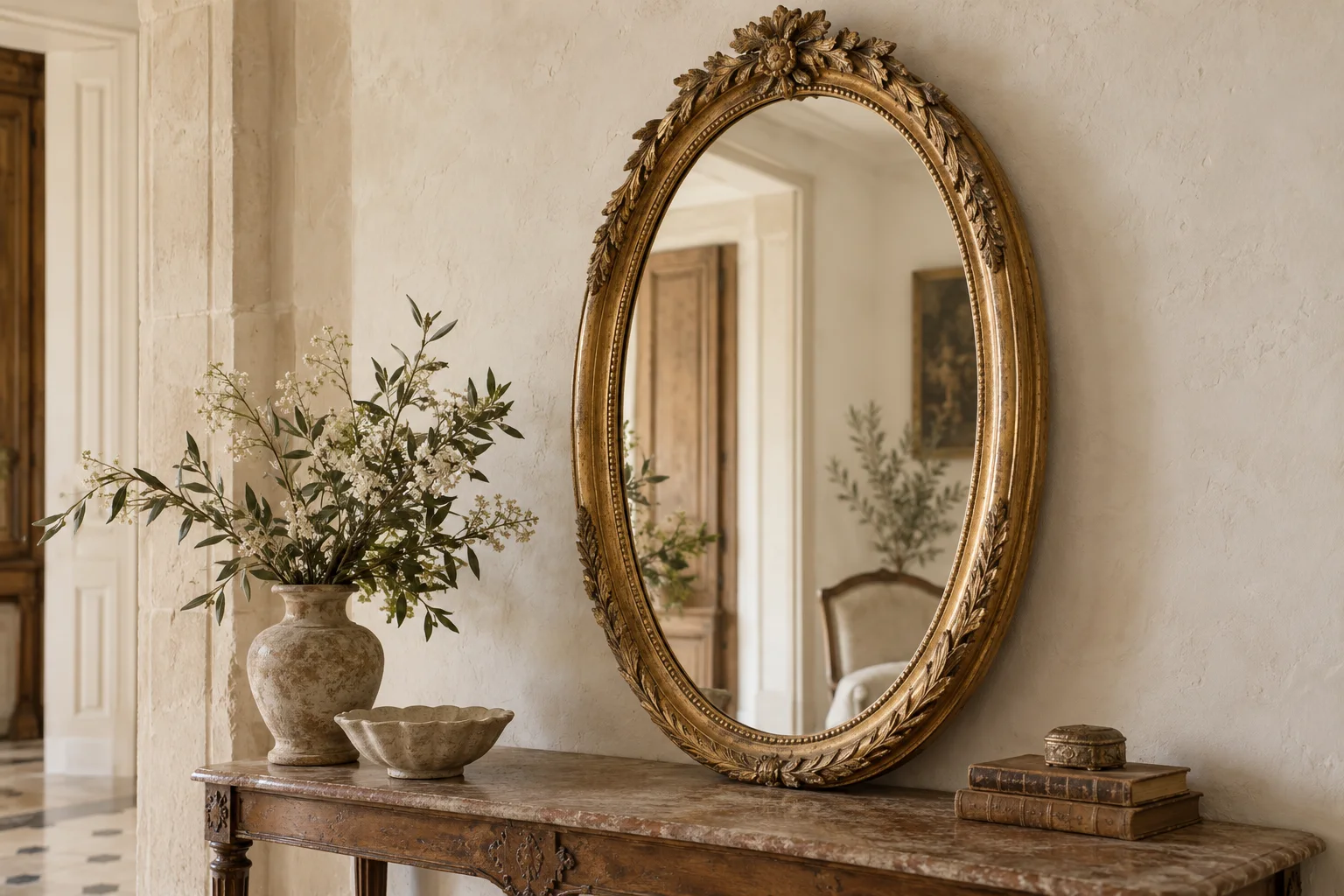
Place a paper template in the proposed location and look at it from the doorway, sofa, and standing position. Will the mirror reflect the garden, a quiet wall, or open storage? A vertical shape can suit a narrow entryway; a large horizontal mirror can echo a sideboard. These are composition ideas to adapt to the furniture’s height and what you actually want to see.
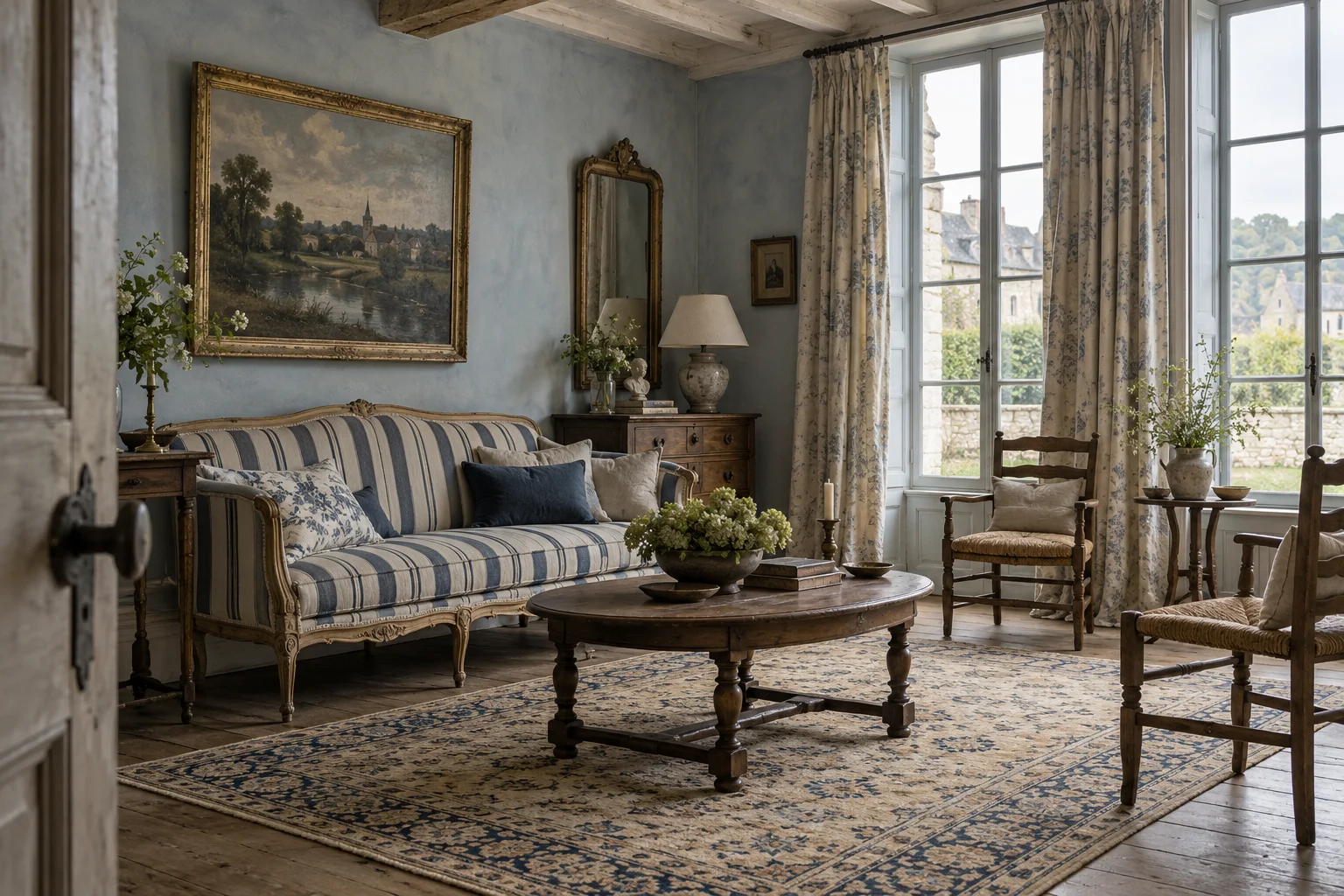
In a living room with exposed beams, pair a gilt frame with a simple table and plain linen to give it space to stand out. Check reflections from light bulbs in the evening as well: a position that looks appealing during the day can become glaring. Photographs taken from the main seats help compare two locations before any mounting.
Examine the frame, glass, and back separately
Ask for an unfiltered front view, a side photograph, and a view of the back. Record the outer and glass dimensions, missing ornament, open corners, and evidence of repairs. An assembly of different components should be described as such; the glass and frame may have separate histories. Record inscriptions too, without using them alone to date the object.
A dark area in the mirror does not automatically mean the glass needs replacing. First decide whether it affects your use: an entryway mirror needs a sufficiently clear reflection, while a mainly decorative piece can accommodate more irregularities. Ask whether detachable parts have been stabilized and whether any treatment is documented.
Plan an installation that protects the ornament
Record the actual weight, wall construction, and load-bearing points of the frame. Have a suitable mounting system specified for the whole assembly instead of automatically retaining an old wire. A mirror resting on a mantel also needs appropriate restraint: leaning does not mean secured. Plan the route up the stairs and allow for two people when its size requires them.
The Canadian Conservation Institute notes the sensitivity of gilded frames to moisture and of corners to stress. Avoid treating the entire object like an ordinary windowpane. Request a procedure that distinguishes glass, gilding, and backing; if an ornament moves or a surface flakes, have that area examined before continuing to clean.
What to compare
| Option | Role in the room | What to check |
|---|---|---|
| Vertical gilt frame | A bright focal point in an entryway | Useful reflection and high mounting |
| Horizontal mirror | Echoes a sideboard’s width | Weight and available viewing distance |
| Heavily spotted glass | Primarily decorative presence | The clarity you need from the reflection |
Your buying checklist
Continue planning your room
Frequently asked questions
Can an antique mirror go in a bathroom?
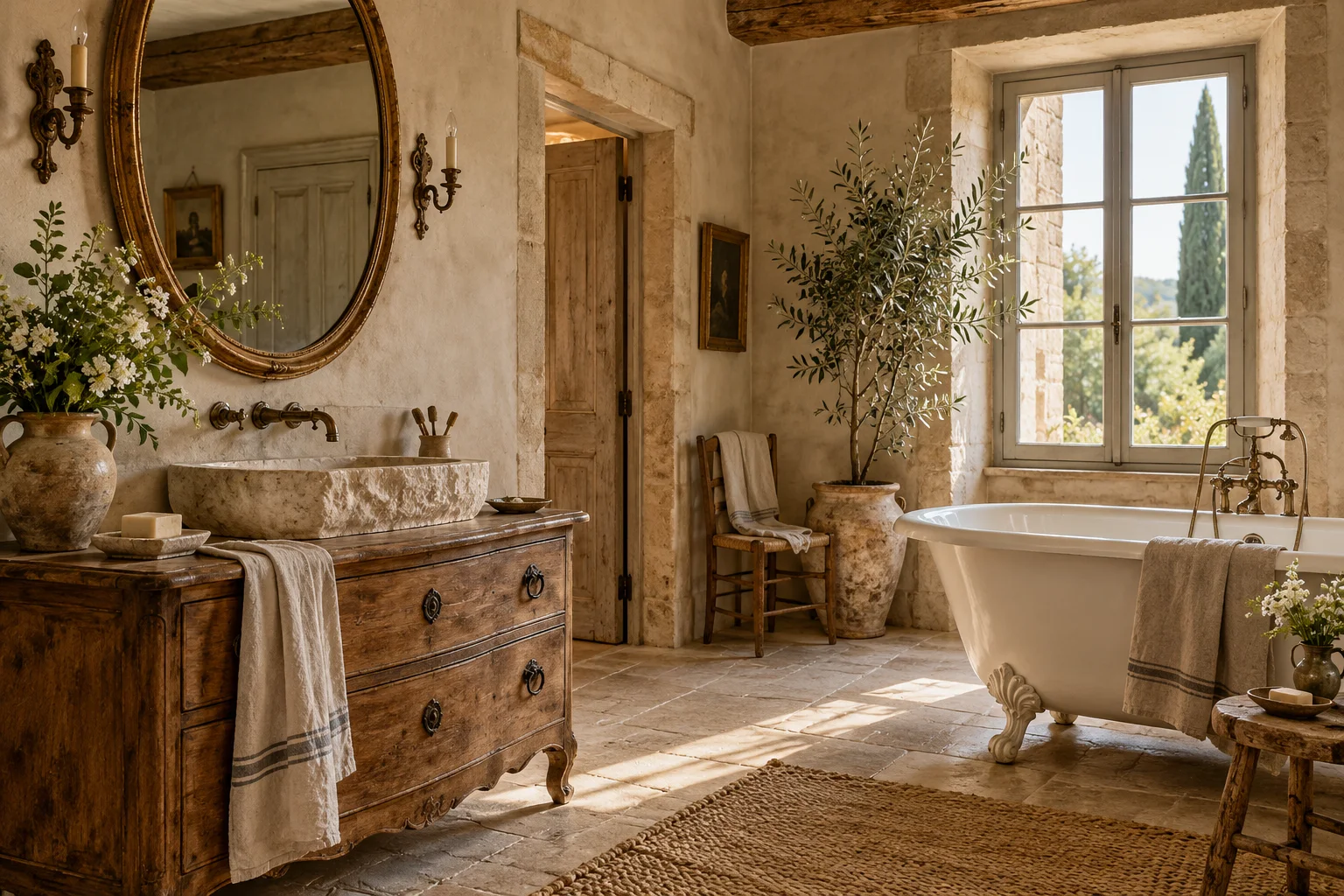
Only consider a location with conditions suitable for all its materials. Attractive gilding tells you nothing about resistance to splashes. For a bathroom used every day, seek advice about the frame and backing; a contemporary mirror can serve beside the sink while the antique stays in the dressing room.
Should spotted mirror glass be replaced?
Not automatically. Consider how much it affects use, the glass’s significance within the whole object, and whether removed parts can be retained. Ask for an estimate specifying exactly what will be replaced. New glass may improve the reflection, but the alteration should remain documented rather than later being presented as entirely original.
How wide should a mirror above a console be?
Compare the actual outline with a template, including any projecting ornament. Leave visual space around the arrangement and try it with the lamps or vases you intend to use. There is no universal ratio: wall width, ceiling height, and the reflection matter as much as the width of the furniture.
Can wavy glass establish the age of a mirror?
A characteristic of the glass is an observation, not a date by itself. A mirror may have received replacement glass, a new backing, or added ornament. For an attribution, gather detailed views, provenance, and construction information, then have a qualified person assess them together. Retain uncertainties in the object’s record.
Sources & further reading
- Canadian Conservation Institute — Basic Handling of Paintings — Fragile frame joints and precautions for handling gilded surfaces.
- Canadian Conservation Institute — Care of Ceramics and Glass — Fragility of glass and ceramics, examination of deterioration, and handling precautions.