Recognize Chair Families Without Confusing Shape and Origin
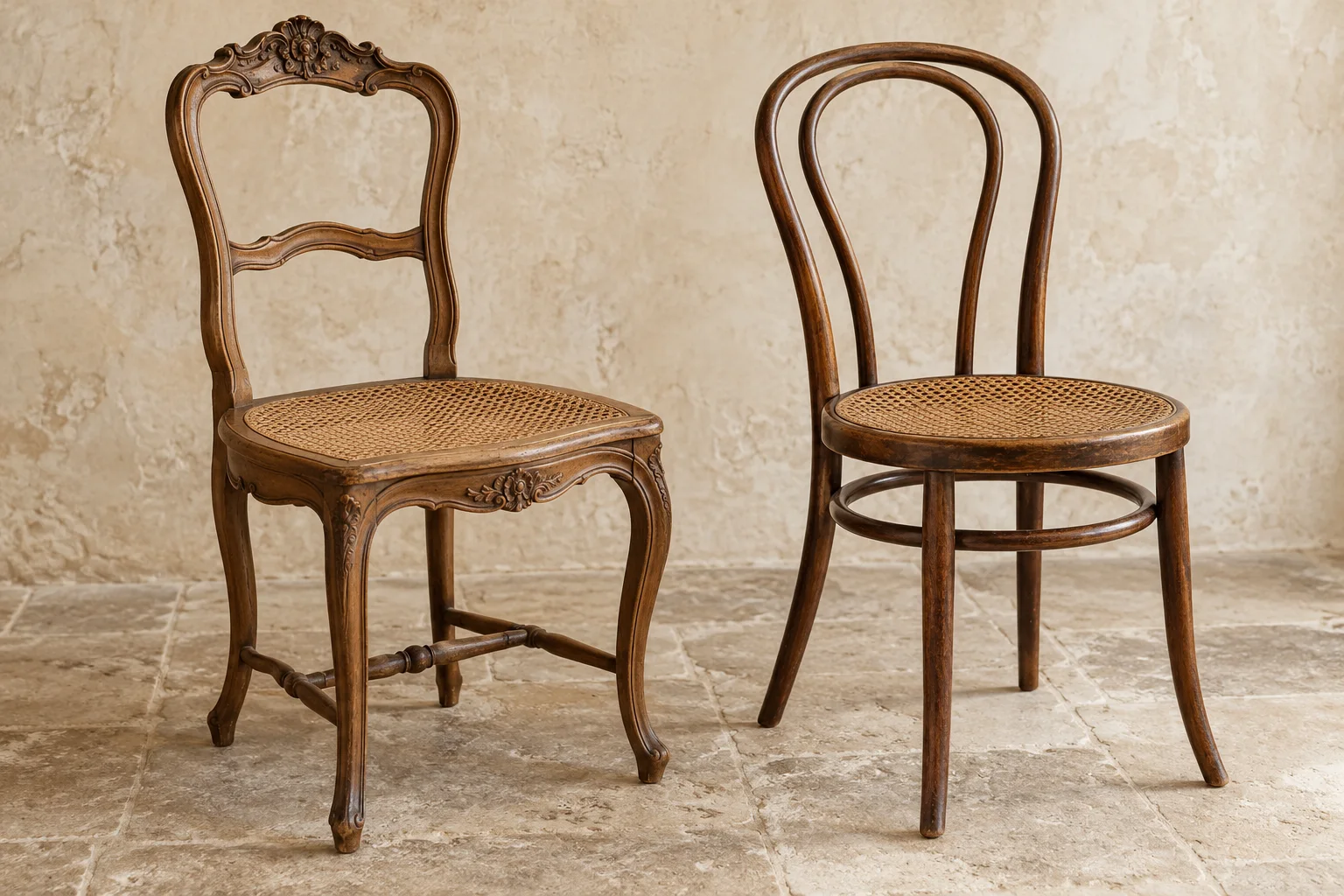
The back, seat, and legs provide a useful starting point. A spindle back looks light, while a solid back makes a stronger visual statement. A rush seat brings a matte contrast to wood, whereas caning allows light through. A bistro chair suggests a use and a decorative setting: the name does not prove French manufacture or identify a particular maker.
The V&A documents Thonet’s steam-bent wood manufacturing and numbered models. This reference helps distinguish a construction method from a curve simply carved into wood. For a privately owned chair, photograph labels, marks, screws, and joints underneath the seat. A similar silhouette is not enough to attribute a piece to Thonet. Also ask whether the chair has been recaned, repainted, or reassembled using parts from other chairs.
Build a Comfortable Group Around the Table
Our suggestion for a country kitchen is to combine chairs with compatible seat heights and a shared wood tone, then vary the backs. A matching pair at the ends can frame a mixed group. Test them with the actual table: knees need room beneath the apron, and any arms should slide underneath without being forced.
Measure the full width of the back and the space needed to pull each chair out. On an uneven floor, have the points of support assessed rather than shortening a leg yourself. In a bedroom, a single rush-seat chair can hold clothing; in an entryway, the seat should let someone put on shoes without blocking the route. Removable cushions can unify colors, but they cannot repair a failing seat.
Examine a Chair Before Bringing It Home
Ask for front, side, underside, and rear-joint photographs. Look for gaps between components, repaired legs, broken cane near the edge, and split stretchers. Ask precise questions about any advertised restoration: tightening, gluing, replacing the seat, and completely refinishing the chair are different interventions. The Canadian Conservation Institute recommends checking joints before moving furniture.
For everyday use, have a moving or unstable structure evaluated before sitting on it. A fragile chair may remain a display object, clearly identified as such. Allow for repairs before purchasing and request an estimate suited to the model. Preserve the records you receive: underside photographs, the seller’s description, and completed work help track the object without inventing its history.
What to compare
| Type | Effect in the Room | What to Examine |
|---|---|---|
| Rush seat | Rustic warmth | Rush edges and stretchers |
| Cane seat | Visual lightness | Cane tension and breaks |
| Bentwood | Bistro character | Joints and split curves |
Your buying checklist
Continue planning your room
Frequently asked questions
Can several chair styles be mixed?
Yes, by keeping one clear connection: seat height, color, or the lightness of the backs. Arrange them around the table before deciding. Two very wide chairs may reduce the number of usable places. Comfort and circulation should guide the composition just as much as color, particularly when the chairs will be used daily.
Does a maker’s mark guarantee authenticity?
A mark is a clue to assess alongside the entire chair. Ask for a clear photograph, its location, and any available provenance. Then compare the construction with reliable documentation. An isolated label or number cannot by itself guarantee a maker or period; the physical evidence and the records need to support one another.
Should damaged caning be kept?
That depends on the intended use and the chair’s documentary importance. Caning intended for regular sitting needs professional advice if damaged. For a fragile display piece, preserving the seat without loading it may be preferable. Photograph its condition before intervention and ask exactly which parts would be replaced, rather than assuming a repair leaves everything unchanged.
Which chair works best in a small kitchen?
Choose a manageable width, a back that does not project too far, and a seat compatible with the table. A visually light chair can feel less bulky, but dimensions remain decisive. Check the space needed when someone sits down and access to cabinets; catalog photographs often conceal these practical constraints in a small room.
Sources & further reading
- V&A — Thonet and the invention of bentwood furniture — Documents Thonet furniture made from steam-bent wood and the existence of numbered models.
- Canadian Conservation Institute — Basic Care of Wooden Furniture — Supports preserving finishes and checking joints before moving furniture; does not date the furniture shown.