Measure Places Before Choosing Silhouettes
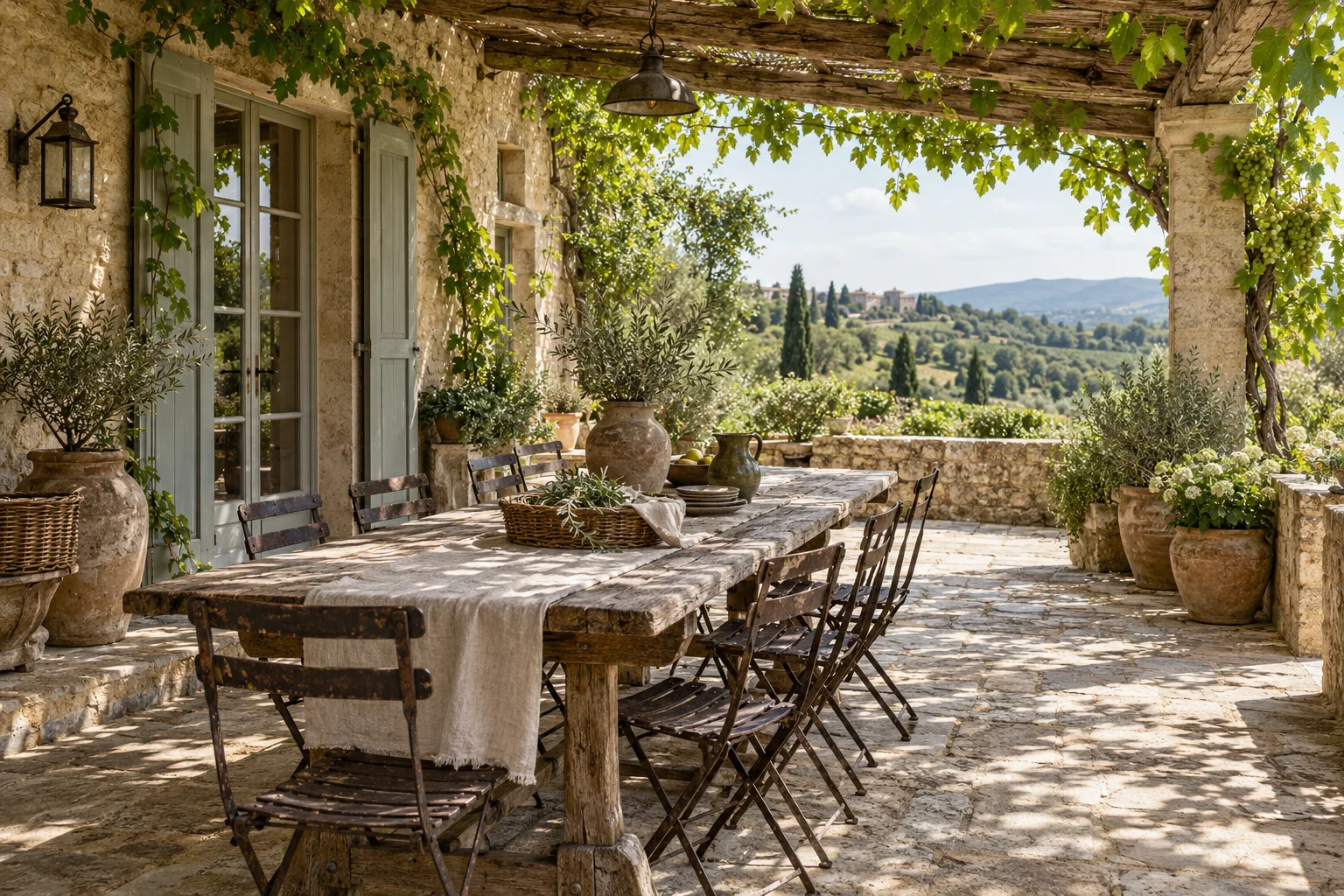
Record tabletop height and clearance below the apron. Measure between the legs, then use temporary chairs to test knees, elbows, and pullback space. A seat that suits one table may not suit another. Armchairs must fit without hitting the apron if you want them to tuck beneath the top.
Establish actual needs: everyday meals, occasional guests, or a place for someone who gets up frequently. A broad chair at each end can create rhythm without inconveniencing guests along the sides. Do not calculate places from table length alone. Photograph the trial with chairs occupied to see the circulation left around the group.
Choose a Simple Relationship Between Seats
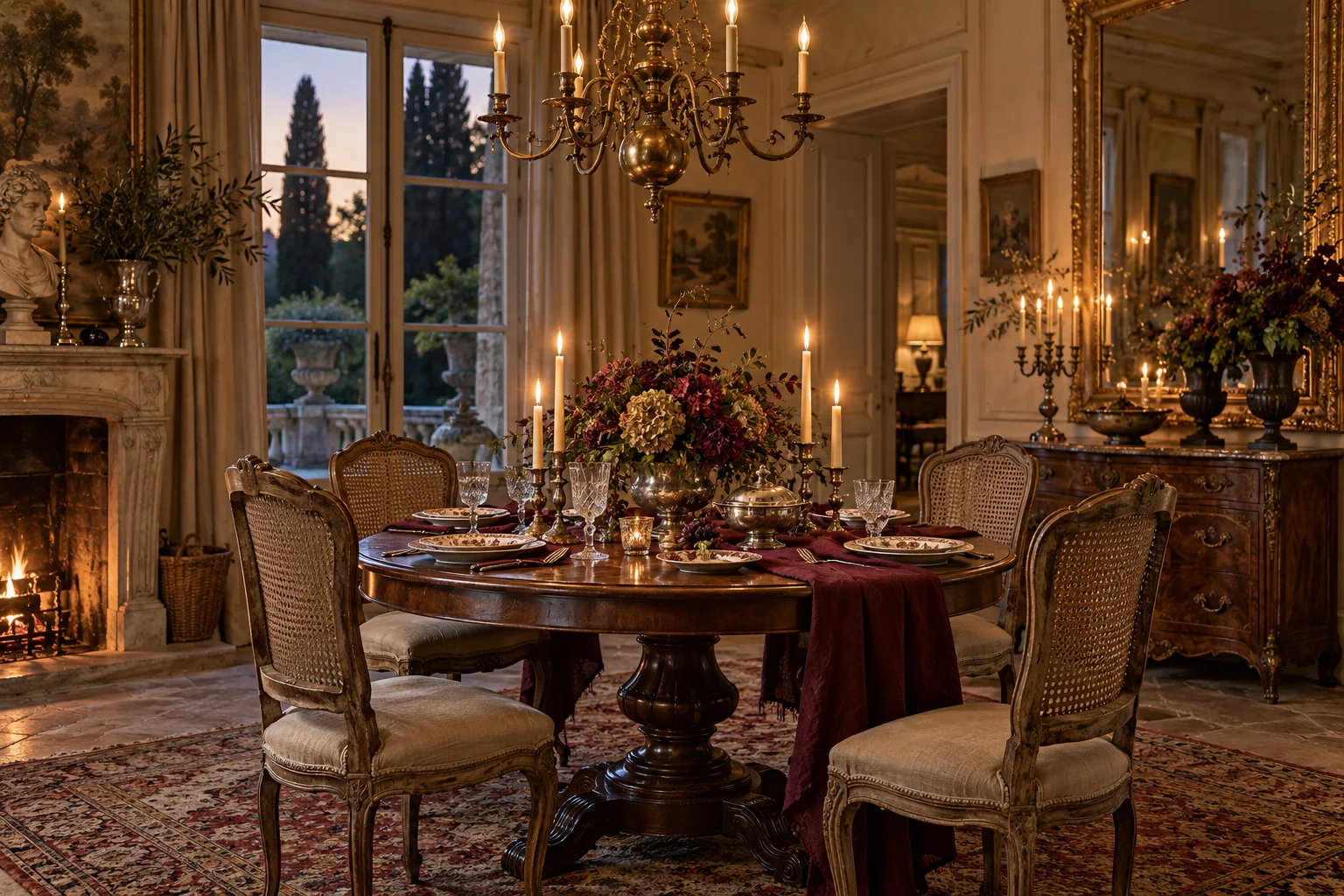
We suggest keeping seat heights close and varying backs within a coherent wood palette. You can also combine two pairs with a different pair at the ends. The result stays readable when variations follow a principle. Avoid simultaneously changing color, volume, height, and presumed period of every seat if you want a calm dining room.
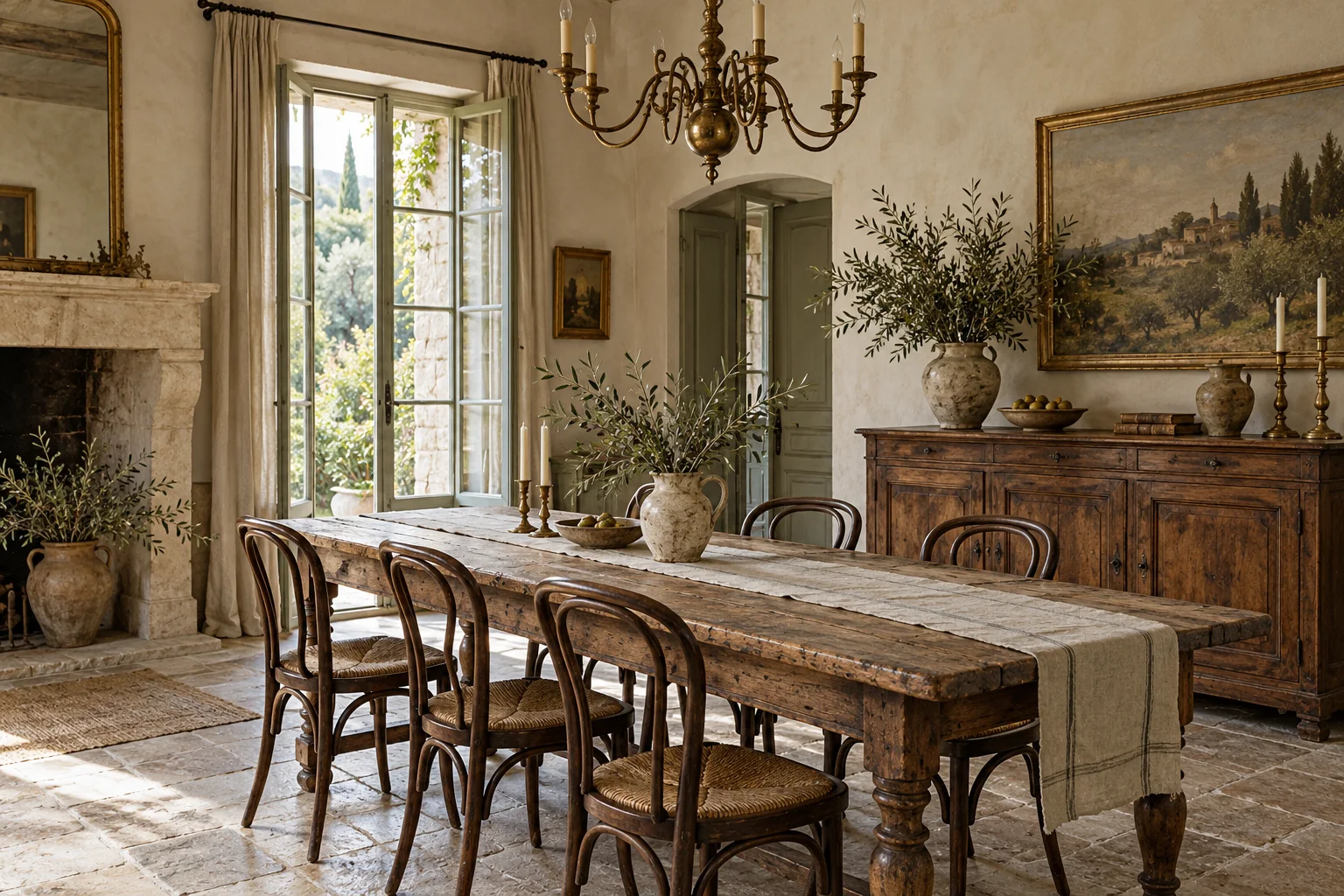
Bentwood bistro chairs can accompany rush-seat chairs, but their name does not identify their manufacturer. The V&A documents bentwood techniques and Thonet models. Use that reference to ask questions, without attributing all curved chairs to the company. For decorating, prioritize line relationships and comfort; for collecting, have attributions checked separately.
Build a Usable Group That Can Evolve
Inspect each chair individually: joints, legs, back, and seat. A mismatched group does not share one condition. Request an estimate for necessary work before completing it. A moving chair or broken caning needs examination before use. The best decorative placement cannot turn fragile seating into a dining place.
Removable cushions can link colors, but cannot correct unsuitable height or instability. Keep the table clear enough for the seats to remain visible and choose linen in relation to the top’s design. If the collection grows gradually, keep measurements of chairs that work well. They will help prevent buying a beautiful seat incompatible with everyday dining-room use.
What to compare
| Combination | Result | Condition |
|---|---|---|
| Two or three pairs | Ordered rhythm | Compatible heights |
| Shared wood, varied backs | Warm unity | Balanced volumes |
| Different end chairs | Framed table | Space for arms |
Your buying checklist
Continue planning your room
Frequently asked questions
Can rush-seat and cane chairs be mixed?
Yes, if their heights, widths, and comfort suit the table. The texture difference can enrich a country interior. Keep another shared feature, such as wood color or slender legs. Examine each seat separately, however: an appealing overall appearance does not guarantee the strength of its woven surface or its suitability for everyday meals.
How can the group avoid looking disorderly?
Choose a repeating criterion and limit other contrasts. Related wood tones can connect different backs; two pairs can frame a more distinctive model. Test the complete group around the table. Chairs should be considered together, not simply admired individually in advertisements, because their proportions and practical relationships become clear only in the intended arrangement.
Should every chair be painted the same color?
That is not essential. An old finish may deserve preservation, and textiles may already connect the group. Before painting, have surfaces and condition identified. Compare the arrangement with its existing woods and a simple cushion palette; this reversible change may be enough to make the dining room coherent without altering the furniture itself.
Can a fragile chair be kept at the table’s end?
End placement does not necessarily reduce demands. If it is unsuitable for sitting, give it a decorative role clearly separate from used places. Have possible consolidation assessed. When hosting, provide genuinely functional seats rather than counting on a fragile chair because it visually completes the group; its position does not change its structural condition.
Sources & further reading
- V&A — Thonet and the invention of bentwood furniture — Documents Thonet furniture made from steam-bent wood and the existence of numbered models.