Metal: copper, tin, enamel and iron
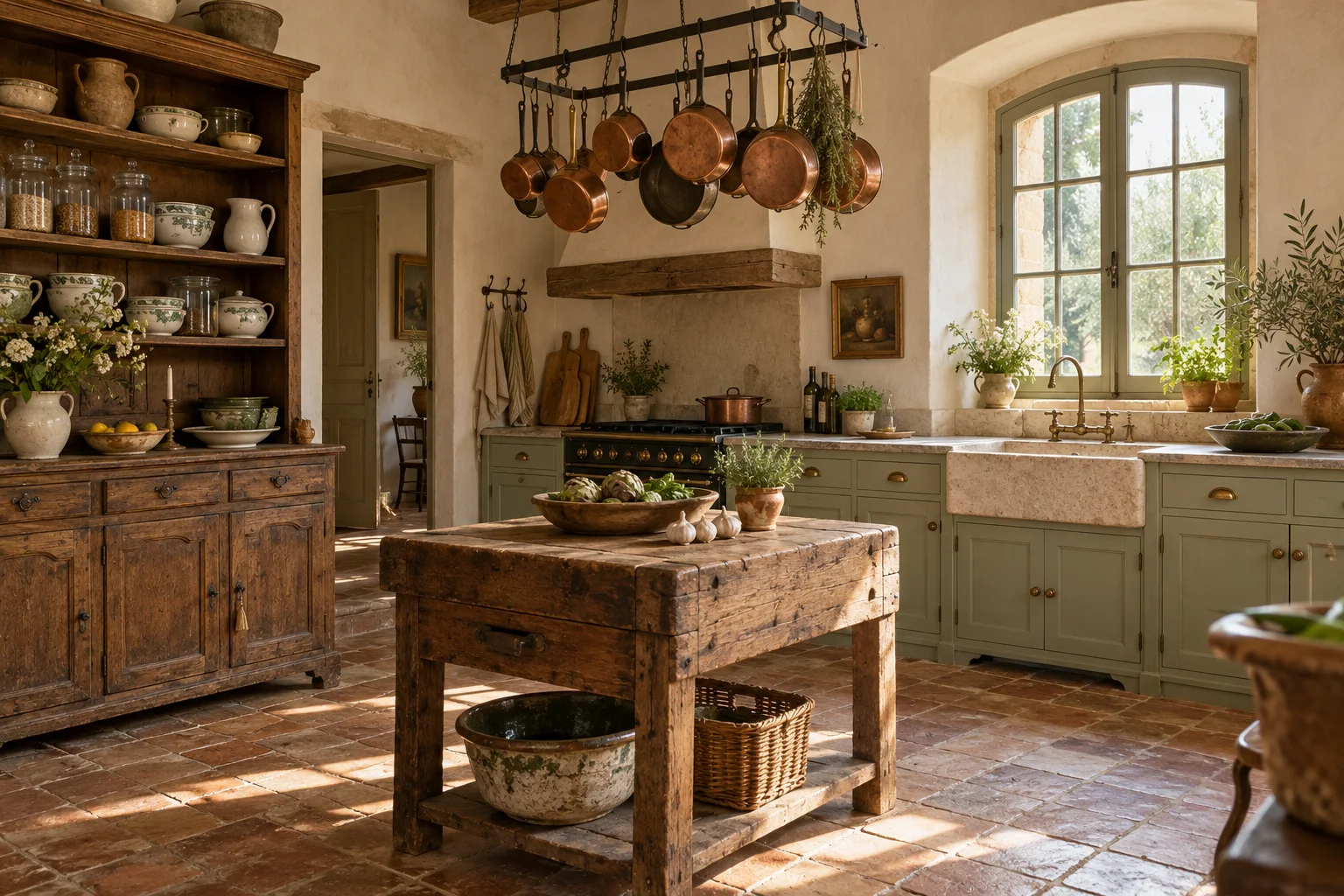
Copper saucepans and sautés come first because they cook; the check is the tin lining and the gauge, covered in our guide to copper saucepans from France. Tinned copper moulds for cakes and jellies, fluted or in the shape of a fish, hang well and still bake if the tin is sound; a mould with copper showing inside is for the wall. The enamel coffee pot, blue, white or speckled, with a hinged lid and a long spout, is the most recognisable object of the period; chips inside the pot expose iron that rusts into the coffee, chips outside are only cosmetic.
A balance scale with brass pans and a set of iron or brass weights, usually from 50 g to 2 kg, was the counter’s instrument; check that the beam swings freely and that the weights are a matching set. The wire egg basket, collapsible or fixed, and the iron salad shaker ask only for no broken wires and no flaking rust. The Canadian Conservation Institute gives the care rules for all of them: dry at once after washing, wax bare iron, do not strip old tin.
Wood, pottery and glass
The round bread board with a handle, beech or elm, needs a flat face and no split reaching the edge. The wooden salt box, hung by the stove with a sloping lid, is often pine and often wormy; test the back with a thumbnail. The coffee grinder, a wooden box with a cast-iron mechanism and a drawer, should turn smoothly and grind; the maker’s plate is the only basis for naming one.
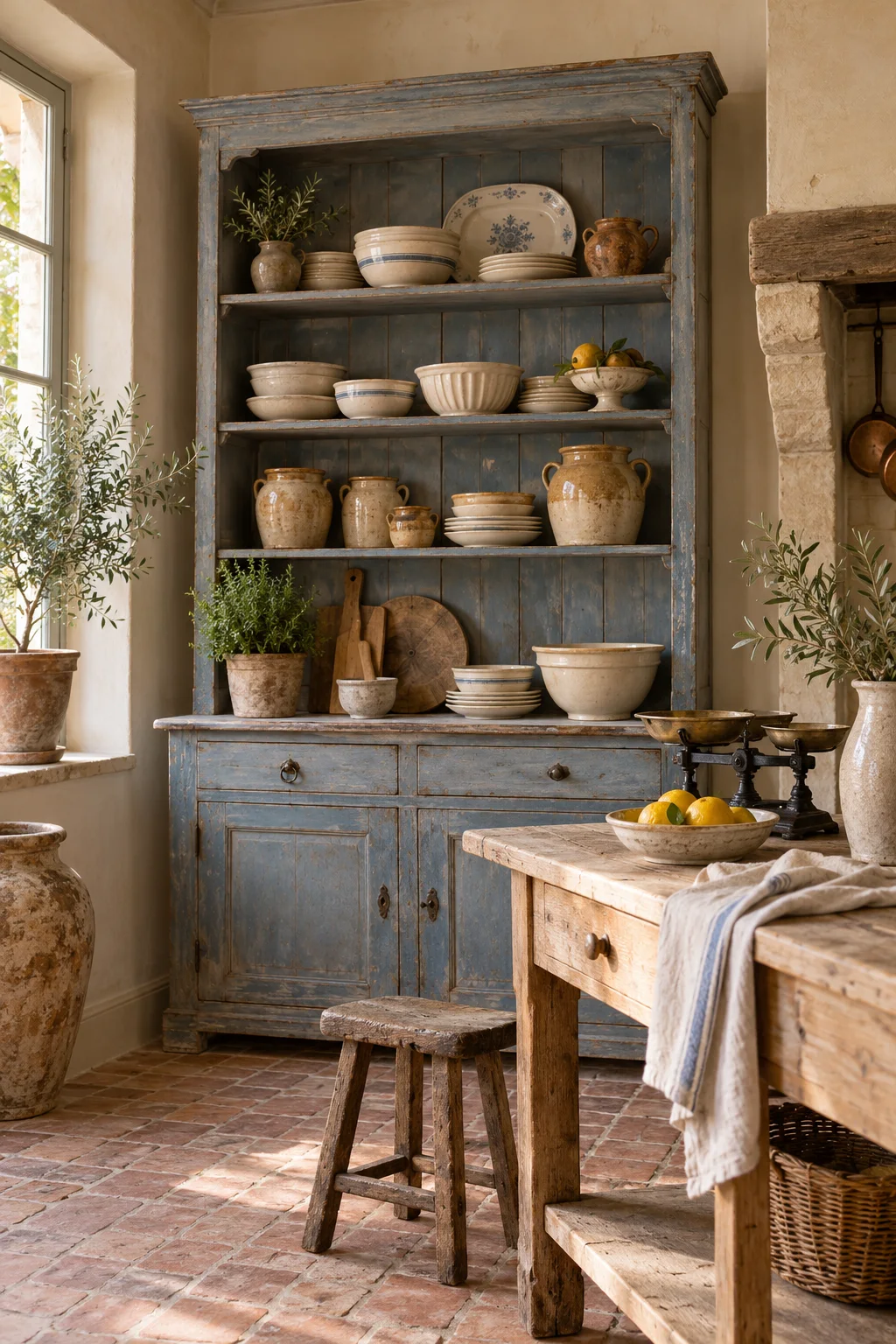
Pottery brings the color. Confit pots, glazed yellow or green on the upper half, stored duck in fat in the Southwest; grease jars in salt-glazed stoneware held lard; both ask for no hairlines and no stained crazing, as explained in our guide to vintage French pottery. A glazed earthenware gratin or tian dish, oval and shallow, still goes in the oven if the glaze and body are sound and the dish is warmed with the oven rather than put into it hot. Clip-top glass preserve jars with rubber rings are the cheapest piece on this list and the most used: the glass must be free of chips at the rim where the ring seals.
Building the kitchen: what to buy first, and where it goes
Buy the pieces you will use before the pieces you will display: two copper pans, a bread board, a scale, six preserve jars. Add the coffee pot, the grinder and the confit pots as the shelves fill. A full set bought at once looks like a shop; a kitchen assembled over two years looks like a kitchen. Our French country decor guide makes the same point for the whole house.
Copper hangs on a rail or hooks within reach of the stove, 18 to 24 in (45 to 60 cm) above the worktop; pottery sits on open shelves or on top of the dresser; the scale stays on the counter where it works. Our French country kitchen page shows the room as a whole, and the categories for copper cookware, kitchen scales and kitchen pots and jars give the individual checks in more depth.
What to compare
| Form | Suggested Use | Decisive Check |
|---|---|---|
| Copper saucepan, 2.5 to 3 mm | Daily cooking | Tin lining intact on the cooking surface |
| Enamel coffee pot | Coffee or flowers | No chips inside the pot |
| Balance scale with weights | Weighing on the counter | Beam swings freely, weights match |
| Confit pot, half-glazed | Shelf display, dry storage | No hairlines or stained crazing |
Your buying checklist
Continue planning your room
Frequently asked questions
Which vintage French kitchenware is still safe to cook with?
Tinned copper pans with an intact lining, enamel pots without chips inside, stoneware jars and sound glazed gratin dishes. Avoid cooking in lead-glazed earthenware with crazing or hairlines, in copper with exposed metal, and in enamel chipped on the inside where iron shows.
What is the most useful piece of French kitchenware to buy first?
A copper saucepan or sauté of 2.5 to 3 mm with a sound tin lining. It cooks better than most modern pans and sets the tone of the kitchen on its hook. A bread board and a set of clip-top preserve jars come next because they are used every day.
How do I display French kitchenware without clutter?
Group by material and keep each group where it works: copper on a rail by the stove, pottery on open shelves, the scale on the counter. Leave empty space between groups and avoid filling every surface; three confit pots read better than nine.
Are enamel coffee pots safe to use?
Yes, if the enamel inside is intact. Chips on the outside are cosmetic; chips inside expose iron that rusts and flavours the coffee. Many people use old enamel pots for flowers or utensils and keep a modern pot for coffee.
Sources & further reading
- Canadian Conservation Institute — Care of metal objects — Care of iron, tinned copper and enamelled metal kitchen objects.
- Canadian Conservation Institute — Basic care: furniture and objects made of wood — Care of wooden boards, boxes and grinders.