Distinguish an Original Table from Adapted Furniture
Begin by asking whether the legs, top, and dimensions correspond to the furniture’s documented condition. Shortened legs, an added top, or a new base change how it should be understood. These alterations can create an appealing table if they are described. Look at the ends of legs, stretcher positions, and fasteners beneath the top to prepare questions, without turning these clues into a verdict.
A plain-top coffee table, a compartmented table, and a chest should not be chosen in the same way. The first can be easier to move; the second requires its closures to be checked; the third means clearing the surface to reach storage. If you like an old worktable, ask exactly which adaptations made its present use possible. Keep photographs taken before restoration when they exist.
Find the Right Relationship with the Seating
Mark the table’s footprint on the floor with paper or removable tape, then sit in every chair. Try reaching the center without leaning excessively, and check the route to the window or sofa. A large table may look generous in a photograph while getting in the way of daily life. Compare its height with the cushions actually used, not only the sofa’s frame.
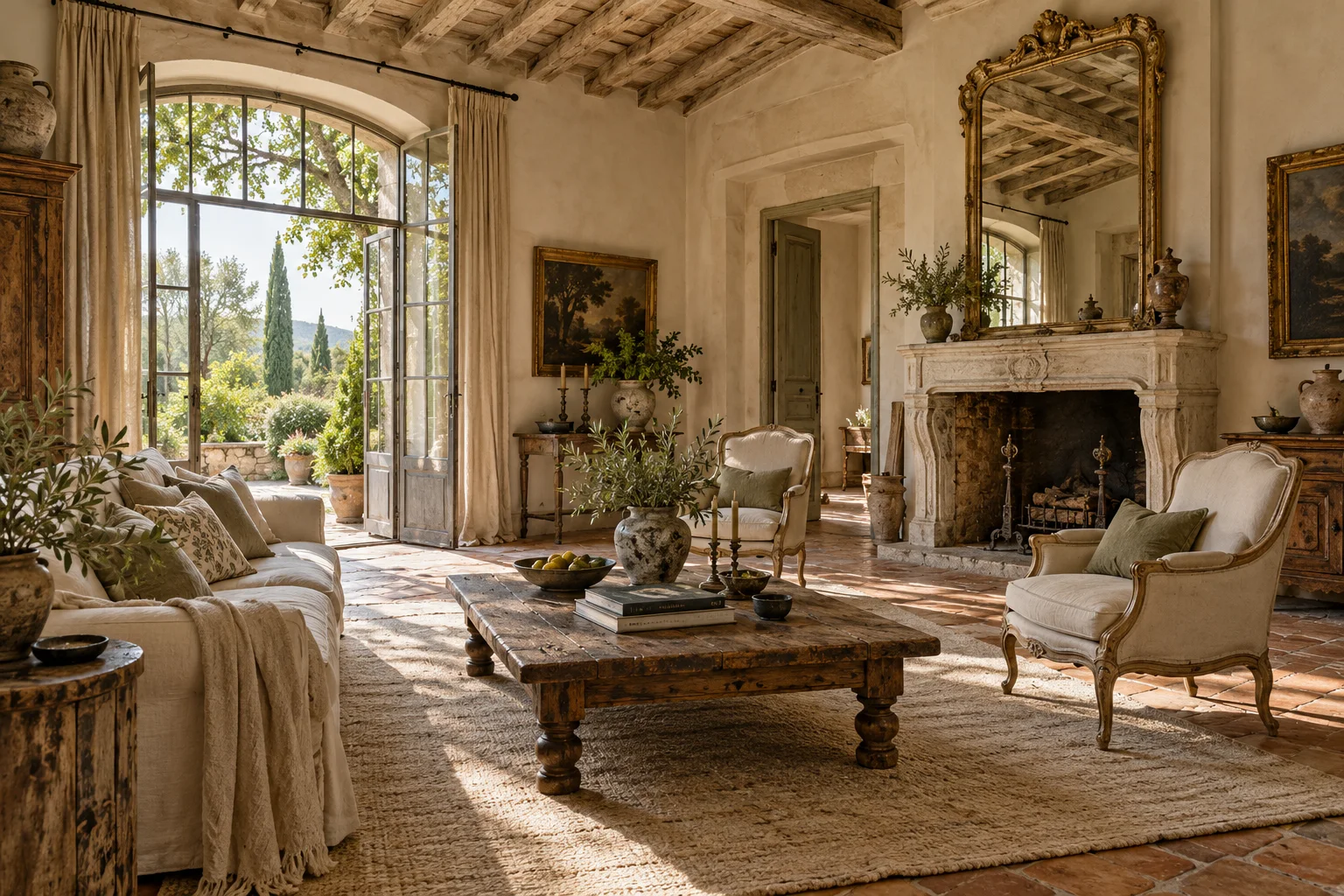
Our suggestion for a country living room is a simple table, pale linen, and one or two objects with appealing materials, such as a tray and a small vase. A carved chest needs less additional decoration. In a man cave or library, prioritize somewhere convenient for books and drinks. Two small movable tables can be more practical than one large central piece; however, they require two stable structures and consistently clear routes.
Check the Surface and Protect Its Use
Request close photographs of the top, corners, and underside. Look for open cracks, added components, and movement between the apron and legs. Examine a stone top together with its support; a veneered top should not be treated as solid wood. The Canadian Conservation Institute recommends protecting furniture tops from water and heat.
Before buying, decide whether the table will accommodate occasional meals, display objects only, or intensive family use. Coasters and a serving tray reduce incidents, but cannot make an unknown finish resistant to everything. Before cleaning, have the surface and its condition identified. Stripping to even out the color may remove useful evidence; do not choose it solely to imitate an inspiration photograph.
What to compare
| Option | Practical Advantage | Constraint |
|---|---|---|
| Simple table | Immediate access to the top | Exposed surface |
| Chest | Enclosed storage | Lid must be cleared |
| Two small tables | Flexible arrangement | More legs in circulation areas |
Your buying checklist
Continue planning your room
Frequently asked questions
Can a table with shortened legs be a good choice?
Yes, for a decorating project, if the alteration is stable, well executed, and clearly disclosed. Ask what changed and check the base’s proportions. For a heritage-focused purchase, the intervention has greater significance. The price and description should reflect the actual condition rather than presenting the furniture as untouched or implying that its present form is original.
Should the table be round or rectangular?
The answer depends on the seating arrangement and walking routes. A round shape can make moving around corners easier, while a rectangular shape follows a long sofa. Reproduce both footprints on the floor. Also check the position of the legs, which may obstruct movement even when the top itself looks compact and suitable for the room.
Can glass be placed over an antique tabletop?
A custom protective top may suit some surfaces, but it must not conceal instability or put stress on an uneven tabletop. Ask for advice about support and contact with the finish. The protection should remain removable and allow the furniture’s condition to be checked, rather than creating an arrangement that hides changes beneath it.
How can objects be displayed without clutter?
Keep a genuinely usable part of the top free for everyday activities. Group small items on a tray that can be moved in one motion, and choose a vase that does not interrupt conversation. A heavily carved table or strongly grained surface can remain almost bare: the material already supplies much of the decoration and visual interest.
Sources & further reading
- Canadian Conservation Institute — Basic Care of Wooden Furniture — Supports preserving finishes and checking joints before moving furniture; does not date the furniture shown.