Choose one area for copper
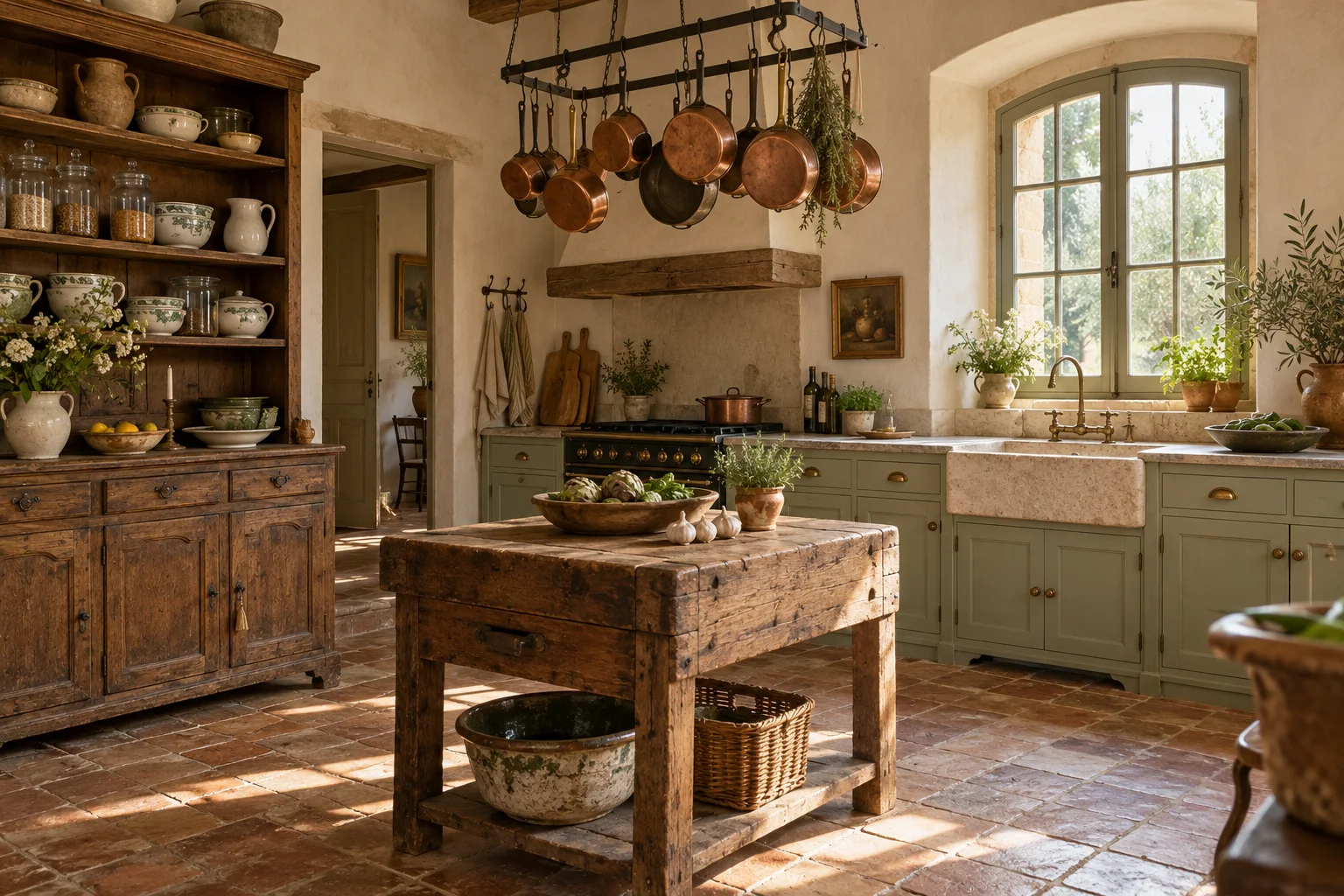
A side wall, buffet top, or section of backsplash away from working constraints can provide a starting point. View the area from the doorway before arranging objects. One large form with two smaller ones creates a clearer hierarchy than a line of equally sized pieces. Let wall show between silhouettes so each outline stays identifiable.
Pair copper with less reflective materials: matte pottery, plain linen, and patinated wood. Contrast makes reflections more noticeable without increasing object numbers. If the kitchen already has busy cabinet fronts, limit accessories. Arrange pieces on the floor and photograph several versions before choosing hanging points.
Plan supports for the actual objects
Record weight, handle length, and loop shapes. Request examination of rivets and attachments before suspending a piece by its handle. Wall supports must suit the wall and load without resting an object on a fragile edge. Also check that utensils will not strike one another when a door opens or someone passes.
For shelf display, check stability and usable depth. A round basin can roll or tip if merely leaned against something. Have discreet restraint designed instead of relying on weight alone. Keep access for removing every piece; a collection that is hard to handle complicates everyday kitchen care.
Choose patina and clarify purposes
The Canadian Conservation Institute states that polishing copper removes material. Uniform shine is therefore not an automatic goal: distinguish stable surface, coating, and deposits before intervention. Browns and pinkish tones can form a coherent arrangement. Document inscriptions before work and request care that respects associated materials.
Cooking pieces need a separate assessment of interior, lining, and repairs. FDA technical guidance on copper and acidic foods reinforces that food contact cannot be judged from the outside. It approves no particular utensil. Keep functional contemporary equipment within reach when antique copper is reserved for atmosphere.
What to compare
| Option | Role in the room | What to check |
|---|---|---|
| Wall arrangement | Clearly visible silhouettes | Handles and fixings |
| Copper on a sideboard | An easily rearranged group | Stability of forms |
| Cookware in actual use | Decoration linked to a real activity | Food-contact assessment |
Your buying checklist
Continue planning your room
Frequently asked questions
How many copper pieces create an atmosphere?
Begin with a few differently sized pieces and assess their effect from the entrance. Add another only if the composition stays clear. One large basin may have more presence than many small utensils. The number depends on the wall, furniture, and space needed for actual kitchen movements and work.
Can polished and patinated copper be mixed?
Yes. The contrast can add depth when forms are well distributed. Do not standardize every surface before observing the arrangement. Polishing changes material and should be decided according to actual condition. Patina is not necessarily a flaw to remove in order to make a decorative group feel harmonious.
Can hanging pans later be used for cooking?
Cooking suitability needs assessment independently of hanging. Have interiors, linings, and repairs examined before reuse. A decorative object does not need to cook to belong in a kitchen. If alternating display and use, also provide easy access and a clear description of the condition of each individual piece.
Where should copper go in an already busy kitchen?
Choose one focal point and temporarily remove nearby accessories. A quiet wall or clear buffet often makes the pieces easier to see. Avoid filling areas needed for work. The kitchen becomes more coherent when objects have defined places and useful surfaces remain available rather than hosting another layer of decoration.
Sources & further reading
- Canadian Conservation Institute — Brass and Copper — Polishing removes material; distinctions between cleaning, patina, and protective coatings.
- FDA — Food Code 2022, section 4-101.14 — Official access page for the Food Code 2022: section 4-101.14 restricts contact between copper or its alloys and acidic foods. A US technical source, not approval of a particular antique utensil in France.