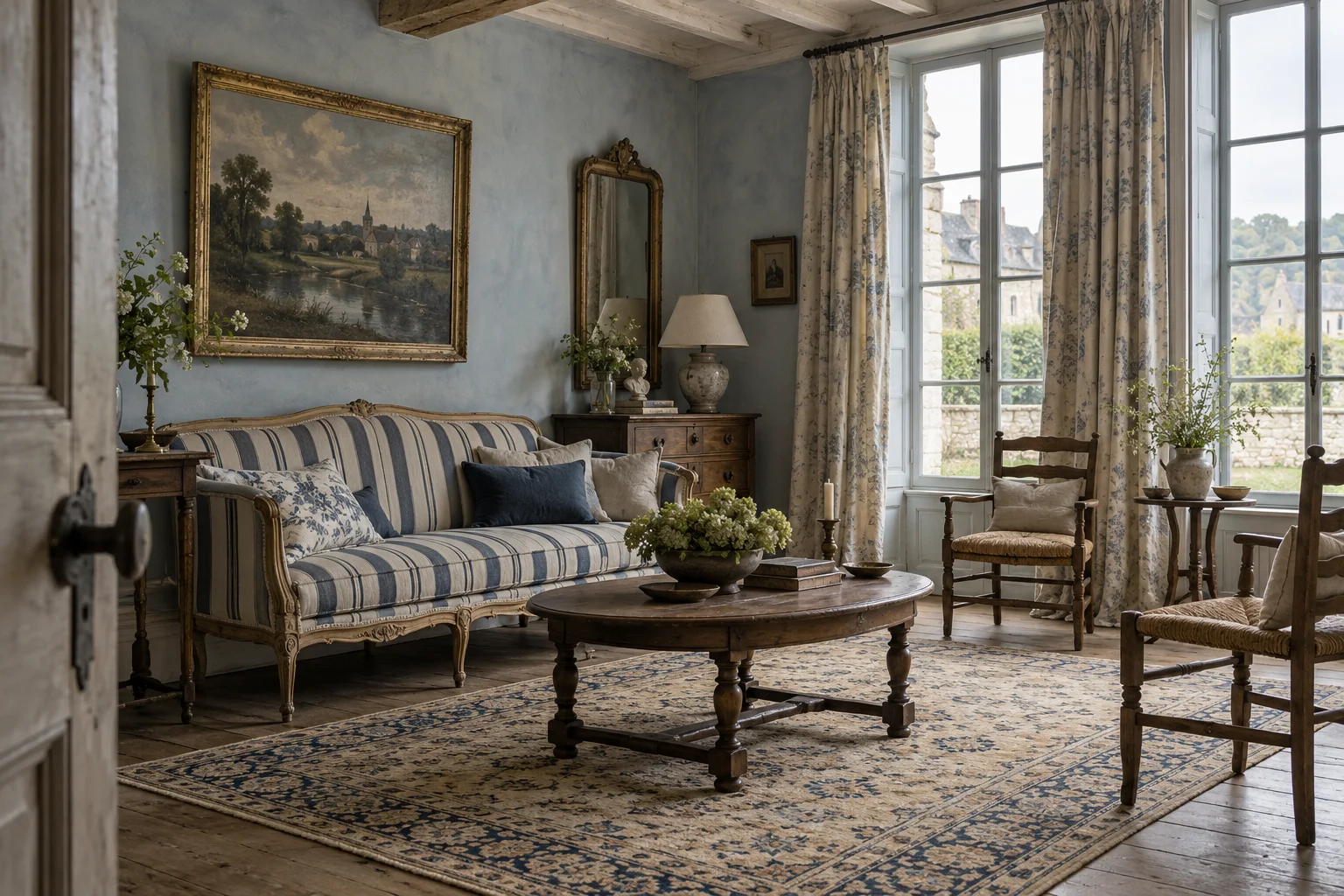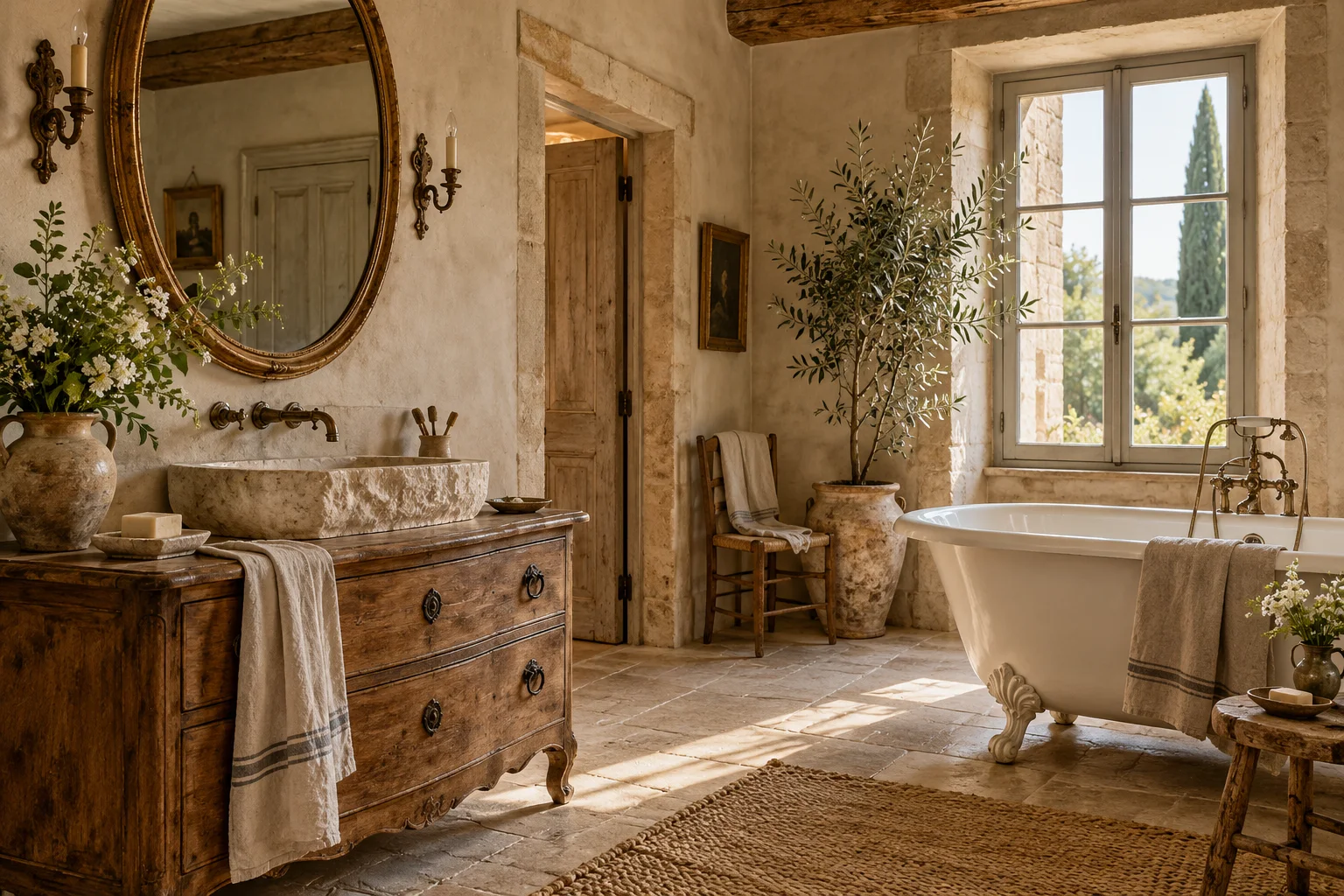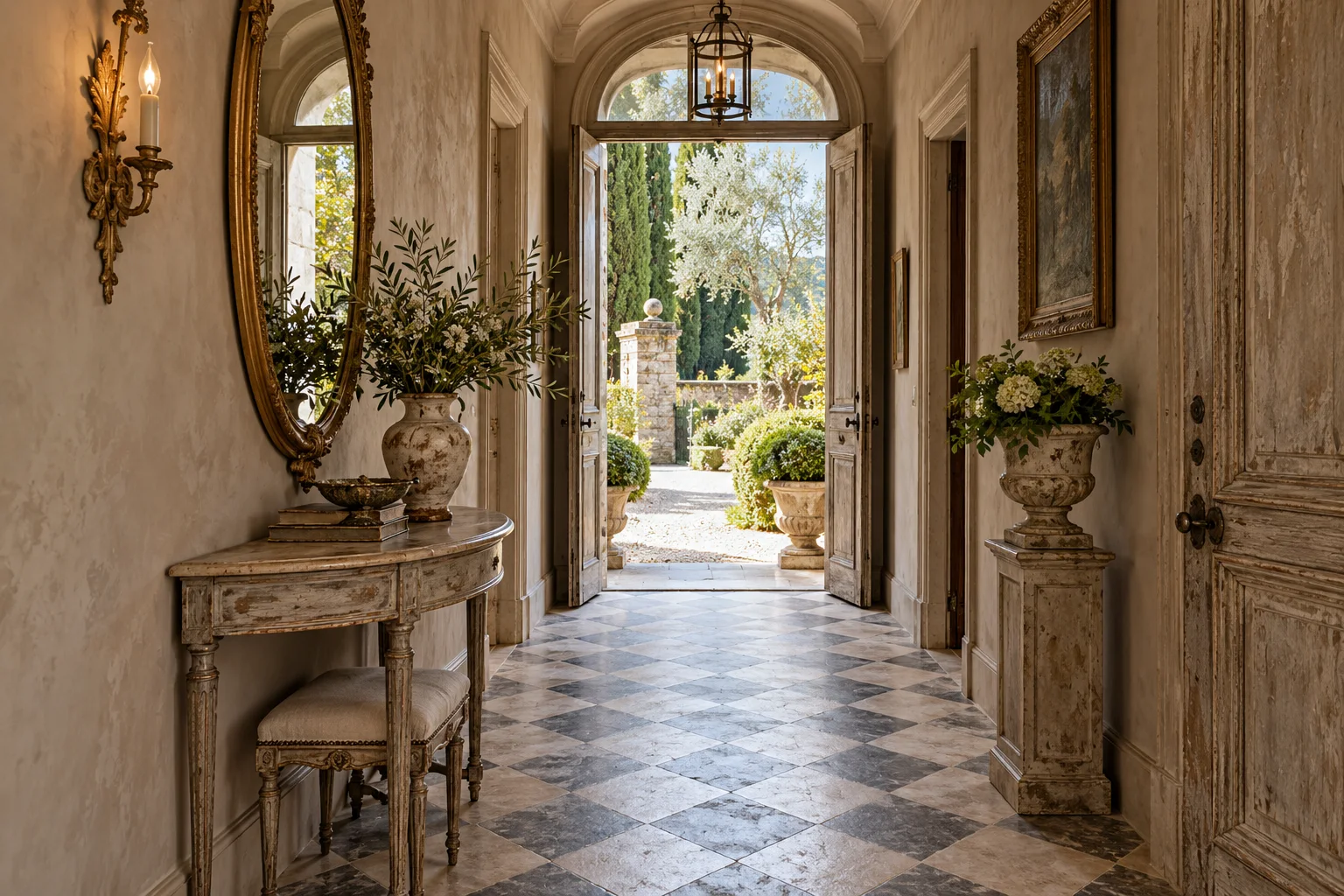
Which frame types a vintage oval mirror comes in
Three families cover most of what you will find. Gilt frames, usually composition ornament on a wood base, carry foliage, ribbons or a cresting at the top; they date in style from the late 18th century onward and were produced in volume through the 1920s. Carved wood frames in oak, walnut or fruitwood show tool marks and grain on the back; they are heavier and plainer. Painted frames, often pine or beech, were made for bedrooms and bathrooms and may carry several layers of paint over the original finish.
Turn the mirror over. A wooden back board nailed with cut nails, or a thin panel held by tacks, suggests an older construction; a hardboard back with wire staples points to a 20th-century frame or a later re-backing. Neither detail dates the mirror on its own. Ask the seller to describe the frame material in plain terms: carved wood, composition on wood, or moulded plaster, and whether any ornament has been replaced.
Reading the glass on an oval antique mirror
Bevelled glass has a ground edge, usually 0.5 to 1 in (13 to 25 mm) wide, that catches light as a bright band around the reflection. Bevelling on an oval plate is skilled work, and a crisp, even bevel is a point in the mirror's favor. Flat glass is not inferior; many country mirrors never had a bevel. What matters is whether the glass is original to the frame and what condition it is in.
Foxing, the gray or black spotting where the silvering has broken down, appears first at the edges and around any old water damage. Light foxing is accepted on a vintage oval mirror and can be attractive in a hall. Heavy foxing across the center makes a bathroom mirror unusable. Replacing the glass is straightforward for a glazier, who will cut a new oval from the old plate as a template; keep the old glass if the frame is a collectible piece.
Where an oval mirror works in a French country home
Above a console in an entryway, an oval breaks the horizontal line of the table top and gives a last look before leaving. Hang it so the center sits at about 60 in (152 cm) from the floor, or slightly lower above a low console. Over a basin, an oval gilt mirror suits a powder room; a painted wood oval suits a full bathroom where humidity is higher. In a bedroom, a pair of small ovals above two bedside tables repeats the form and keeps the wall calm.
Scale the oval to the furniture beneath it. A rule that works: the mirror width between one half and two thirds of the console or basin width. A 48 in (122 cm) console carries a 24 to 32 in (61 to 81 cm) wide oval comfortably. Taller ovals, 40 in (102 cm) and more, belong on a wall of their own or above a fireplace.
Hanging hardware and safe fixing
Old oval mirrors often arrive with a single twisted wire or a rusted ring at the top. Replace it. Fit two D-rings to the frame's back, a third of the way down from the top, and run picture wire rated above the mirror's weight. A 30 in (76 cm) gilt oval with glass weighs roughly 15 to 25 lb (7 to 11 kg); heavier carved frames can double that. Use a fixing suited to the wall: screws into a stud, or expansion anchors in plaster and masonry.
Check the frame joint at the top before hanging, because ovals are built from several pieces of wood joined on the curve. A joint that has opened shows a hairline through the gesso. It can be stabilized by a restorer; until then, hang the mirror by the frame's sides rather than its crown.
What to compare
| Form | Suggested Use | Decisive Check |
|---|---|---|
| Gilt composition oval | Entryway console, powder room | Losses in ornament; bole visible at worn edges |
| Carved wood oval | Living room, dining room | Open joints on the curve; grain and tool marks on the back |
| Painted wood oval | Full bathroom, bedroom | Paint layers and stability; glass foxing at the edges |
Your buying checklist
Continue planning your room
Frequently asked questions
How do you hang a heavy vintage oval mirror?
Fit two D-rings to the back of the frame about a third of the way down, join them with picture wire rated above the mirror's weight, and fix into a stud or use expansion anchors in plaster or masonry. Avoid hanging from the crown of the oval, where the frame joints meet. A mirror over 40 lb (18 kg) deserves two separate wall hooks rather than one.
Is foxing on an oval antique mirror a problem?
Light spotting at the edges is normal and accepted; many buyers prefer it in a hallway. Spotting across the center makes the mirror impractical for a bathroom. Foxing cannot be reversed, but a glazier can fit a new oval plate using the old one as a template, and the old glass can be kept with the frame.
What size oval mirror goes above a console table?
Aim for a mirror width between one half and two thirds of the console width. A 48 in (122 cm) console suits an oval 24 to 32 in (61 to 81 cm) wide. Hang it so the center is about 60 in (152 cm) from the floor, lower if the console is low, and leave 6 to 10 in (15 to 25 cm) between the table top and the frame.
Can a gilt oval mirror be used in a bathroom?
In a powder room without a shower, yes. In a full bathroom, steam softens gesso and lifts gilding over time, so choose a painted or carved wood oval, keep it away from the shower, and ventilate. If you want gilt in a steamy room, a regilded or metal-leaf frame will tolerate the conditions better than original water gilding.
Sources & further reading
- Canadian Conservation Institute — Caring for ceramic and glass objects — Supports the glass-care and foxing guidance; silvering deterioration is irreversible and cleaning should stay on the front surface.
- Canadian Conservation Institute — Basic care: furniture and objects made of wood — Supports dry dusting and stabilization of wooden and gilded frames by a conservator before hanging.