Ceramic, glass and metal: how each behaves
Ceramic vases are porcelain or earthenware. Porcelain is vitrified and watertight if the glaze is sound; earthenware, including faience and majolica, is porous and seeps through any hairline. Forms run from the baluster and the bottle to the trumpet and the urn; the Met’s essay on French faience shows the painted earthenware tradition behind many provincial vases.
Glass vases include opaline, the opaque milky glass in white, blue and green made through the 19th century and again in the 1950s, cut crystal, and pressed glass. Glass is watertight but brittle: chips at the rim and foot, and bruises, the half-moon marks of knocks, are the usual faults. Metal vases are brass, bronze, pewter or spelter, often with a glass or tin liner; a metal vase without a liner should not hold water for long, because the inside corrodes and the water smells.
Pairs, mounts and placement in a French room
French interiors used vases in pairs and in garnitures: two vases and a clock on a mantel, or two matching vases at each end of a buffet. A true pair shares the same mark, the same decoration mirrored or repeated, and the same wear; two near-matching vases assembled from different services are a married pair and should be described as such. A single vase from a broken pair is still a good vase and costs much less.
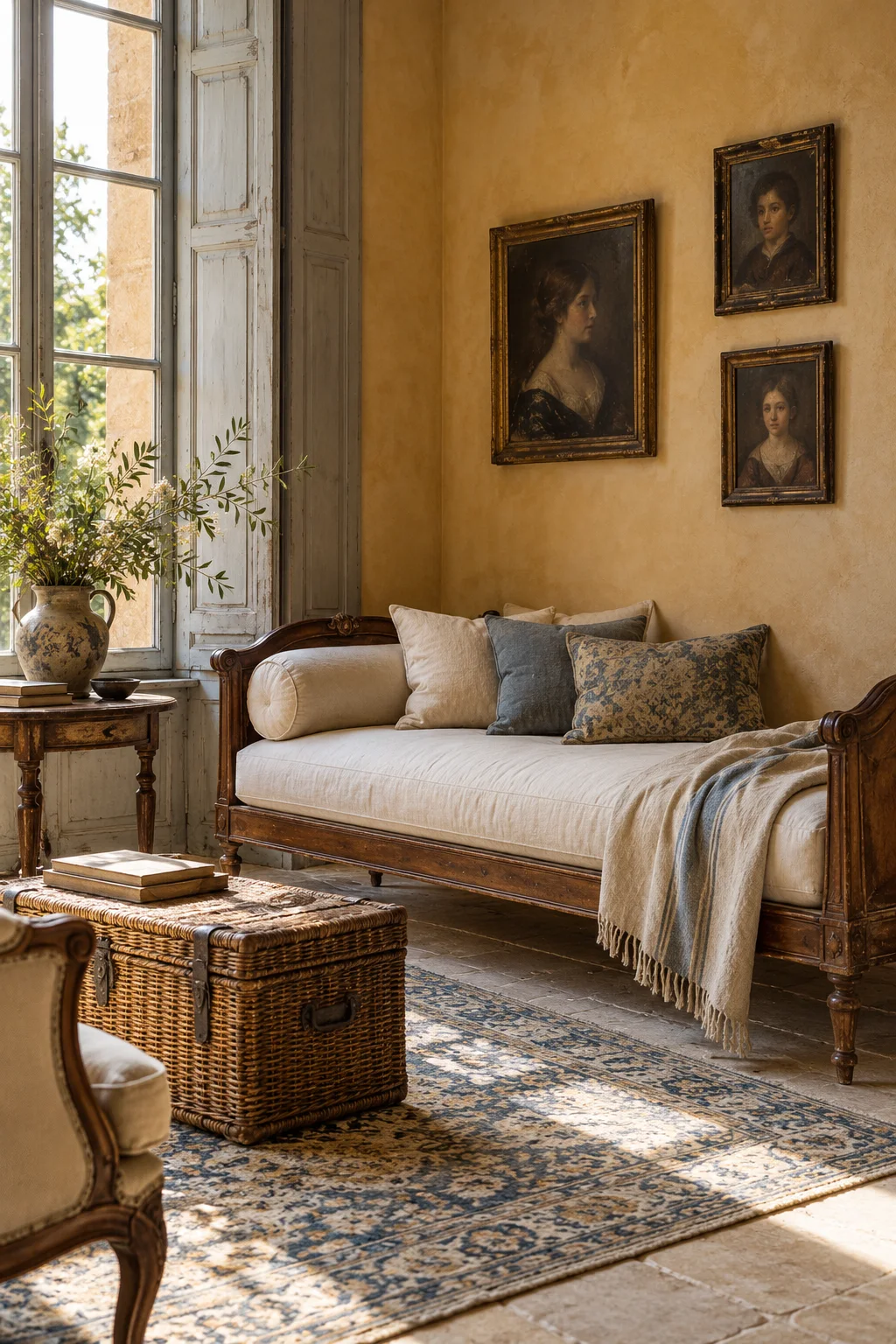
Gilt-bronze mounts on porcelain or opaline, handles and feet screwed through the body, were a 19th-century way to make a vase into an ornament. Mounts should be tight and the holes through the body clean; a mount re-fixed with glue is a repair. On a mantel, vases sit at the ends and leave the centre to the mirror or the clock; on a side table, one vase and a lamp are enough. Our French country living room page shows the arrangement, and the category for vases and ceramics gives more examples.
Finding hairlines and chips, and water versus display
Hold the vase up to a window and turn it slowly: a hairline shows as a bright thread through porcelain and glass, and as a dark line through earthenware. Run a fingernail around the rim and the foot; a chip catches the nail where the eye misses it. Tap the body with a knuckle while holding the vase loosely: a ring is sound, a buzz or a dull note means a crack. Look inside with a torch for staining, which marks where water has sat.
A vase with a hairline can still hold flowers if you put a glass or plastic liner inside, a jam jar often fits; water in contact with the crack will widen it and stain the body. Earthenware with crazing should stay dry or be lined. The Canadian Conservation Institute recommends against filling porous ceramics with water and against sudden temperature changes; cold water into a vase that stood in the sun is enough to crack glass. Dry display asks nothing of the body and is the safest use for a rare piece.
What to compare
| Form | Suggested Use | Decisive Check |
|---|---|---|
| Porcelain or opaline pair on a mantel | Display, occasional flowers | Matching marks, decoration and wear |
| Earthenware or faience single vase | Dry display or lined for flowers | Hairlines and stained crazing |
| Metal vase with gilt mounts | Ornament, dried stems | Liner present, mounts tight |
Your buying checklist
Continue planning your room
Frequently asked questions
Can antique vases hold water?
Porcelain and glass vases with no hairline can. Earthenware, faience and majolica are porous and should be lined with a glass insert or kept dry, and metal vases need their liner. Any vase with a hairline will seep and stain, so line it or use it for dried stems.
How do I know if two vases are a true pair?
A true pair carries the same mark, the same form, decoration that repeats or mirrors, and similar wear. Two vases of the same shape with different marks or slightly different heights are a married pair assembled later, which is fine to buy but should be described honestly.
What is opaline glass?
Opaline is an opaque or semi-opaque glass, white, blue, green or pink, made in France through the 19th century and again in the 1950s. Vases are blown or molded, sometimes with gilt mounts. Check the rim and foot for chips and bruises, and expect the 1950s pieces to be lighter and more even.
Why do antique vases have metal mounts?
Gilt-bronze handles, rims and feet were added in the 19th century to turn porcelain and glass vases into mantel ornaments and to protect edges. The mounts are screwed through holes in the body; they should be tight, and a mount re-fixed with glue counts as a repair.
Sources & further reading
- The Metropolitan Museum of Art — French Faience — Painted earthenware traditions behind French provincial vases.
- Canadian Conservation Institute — Caring for ceramic and glass objects — Water, temperature change and handling for ceramic and glass objects.