What the real farmhouse owned
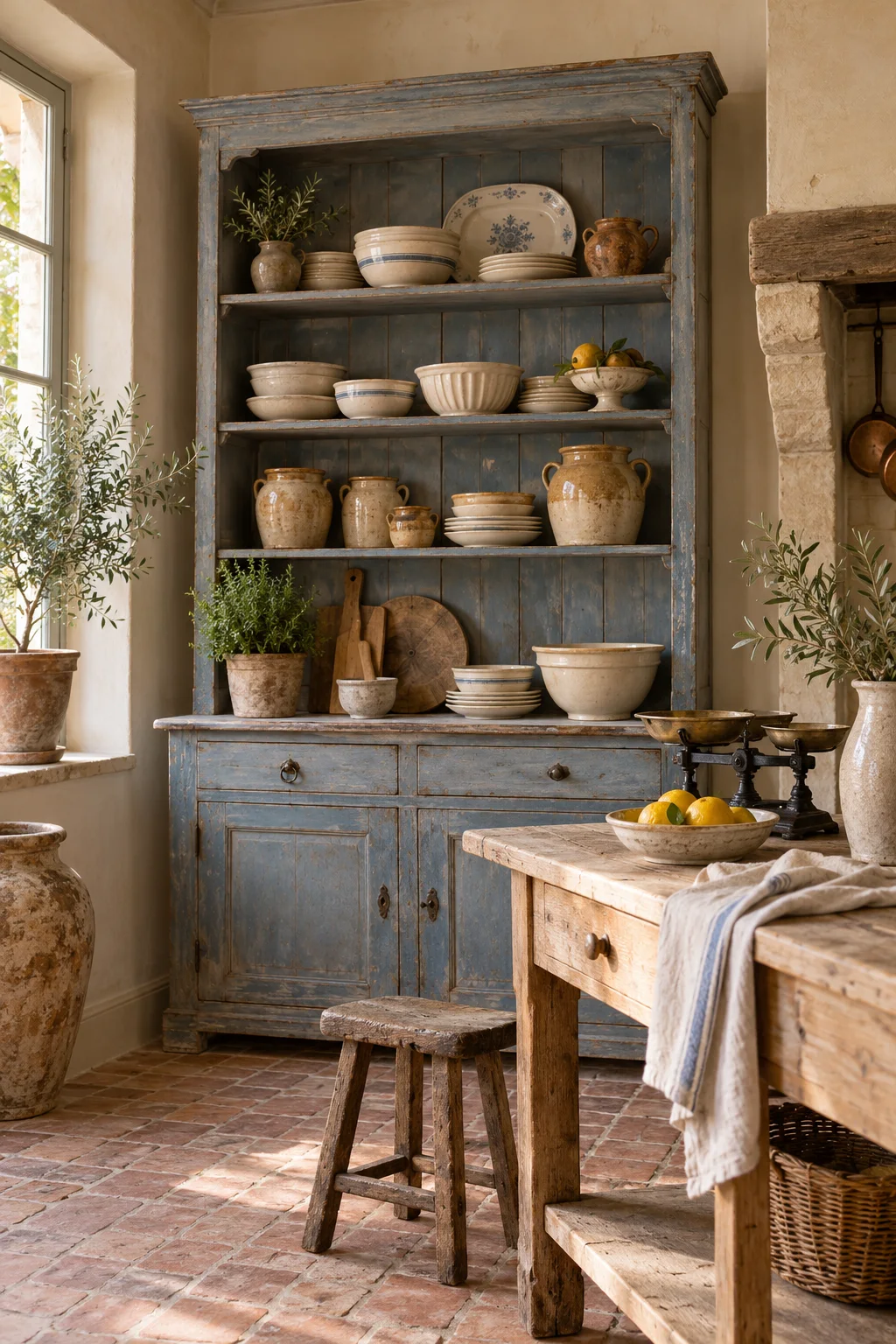
A prosperous 1900 farm kitchen kept its wealth in plain sight: a dresser with the wedding faience on plate racks, copper pans on the wall because the garde-manger had no door, a dough trough that became a console, grain sacks that became cushions after a hundred other jobs. Storage was furniture — armoires, buffets, chests — because fitted cupboards belonged to shops, not farms. That inventory logic is the whole style: fewer objects, each one worn in by use. Our objects index catalogues them family by family.
The palette: chalk, linen, wood, copper
Three colours carry a farmhouse room: a chalky wall colour (off-white, pale grey, ochre), the wood of the furniture (walnut, oak, cherry, unpainted or scrubbed), and the accent of metal — copper in the kitchen, black iron on lamps and hinges. Fabric stays undyed or striped: linen sheets, mattress ticking, grain sacks in faded ecru and red. Patterns come from faience and toile, not from wallpaper.
What never belongs
A short and firm list: mass-produced “distressed” furniture where the wear is printed; roosters on more than one object; new terracotta glazed to look old; plastic lamp cords styled as vintage braids; and any object whose only story is that it was bought to look like it has a story. farmhouse decor survives contact with real life — a kitchen that never cooks cannot carry it. Compare our French country style guide for where farmhouse stops and country begins.
Ten moves that read authentic
- Hang three copper pans by their handles, patina untouched.
- Put the good plates on a dresser rack, mismatched by a generation.
- Use a real grain sack — as a cushion, not a slipcover.
- Leave one wall of raw lime plaster or old render.
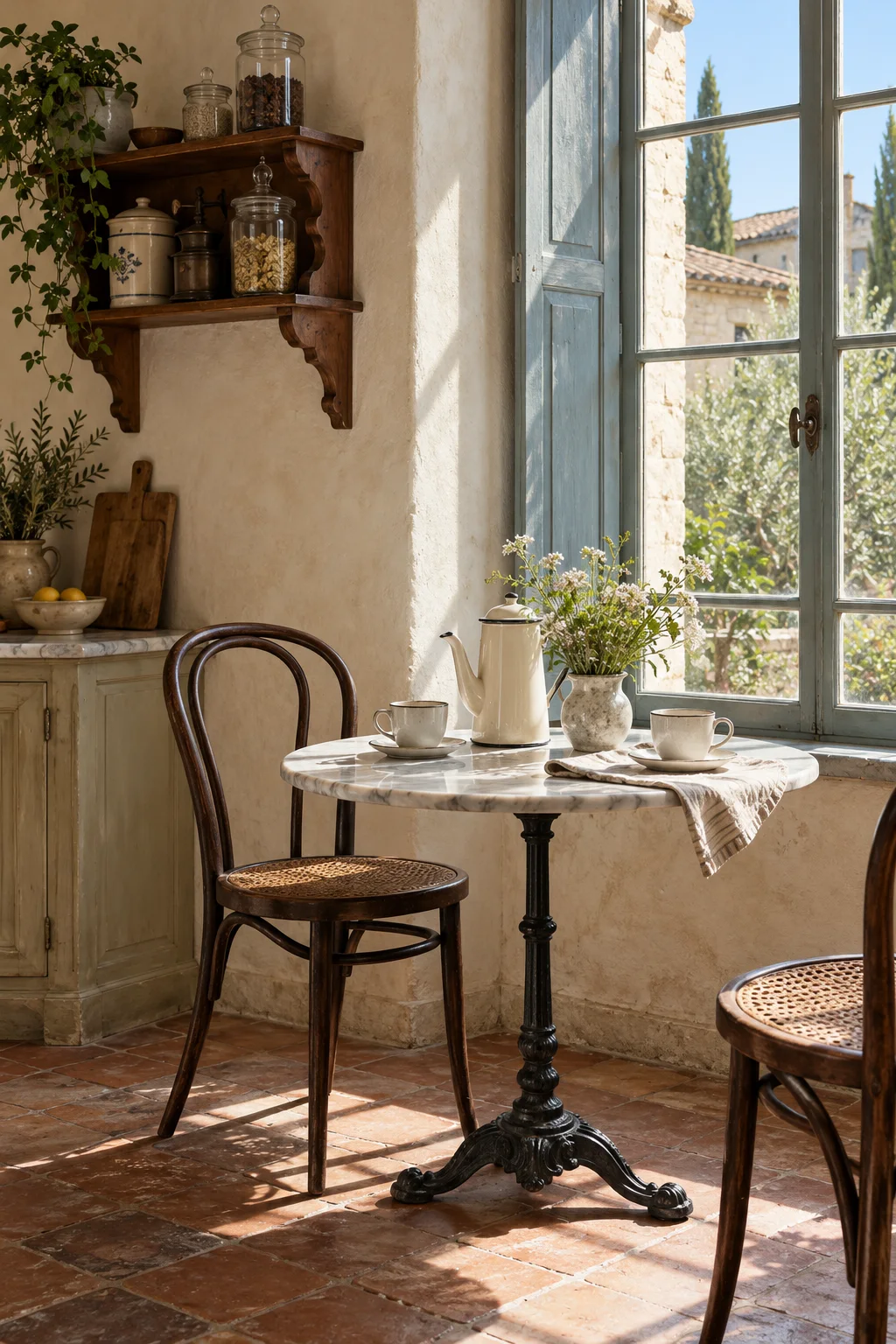
- Set a scrubbed farm table with benches, not six identical chairs — and see our chairs guide for mixing them honestly.
- Stand a tall armoire where a wardrobe would go.
- Light with candle-scale: wall sconces and one brass lamp, never downlights.
- Dry herbs where the range used to be.
- Keep window linen on tension rods, half-drawn.
- Leave the kitchen counter two-thirds empty — the style is restraint, not abundance.
What to compare
| Object | Why it belongs | Placement |
|---|---|---|
| Copper pans | Cooked daily; patina is earned | Three on a kitchen wall, by size |
| Faience plates | The farm's visible savings | Dresser rack, never a plate rail in a row of twelve |
| Grain sacks | A hundred jobs before this one | One per bench, as cushions |
| Dough trough | Baked the household bread | Entry console or linen storage |
| Armoire | Fitted furniture did not exist | Bedroom, holding linen, doors closed |
| Toile de Jouy | The one printed fabric farms bought | A single curtain or chair, not a suite |
Frequently asked questions
What is French farmhouse decor?
French farmhouse decor is the working household shown honestly: copper pans, faience on a dresser, grain sacks, scrubbed wood tables and freestanding armoires, in a chalky palette of off-white, wood tones and one metal accent. Every object originally had a job; the style is their honest display.
What is the difference between French country and French farmhouse decor?
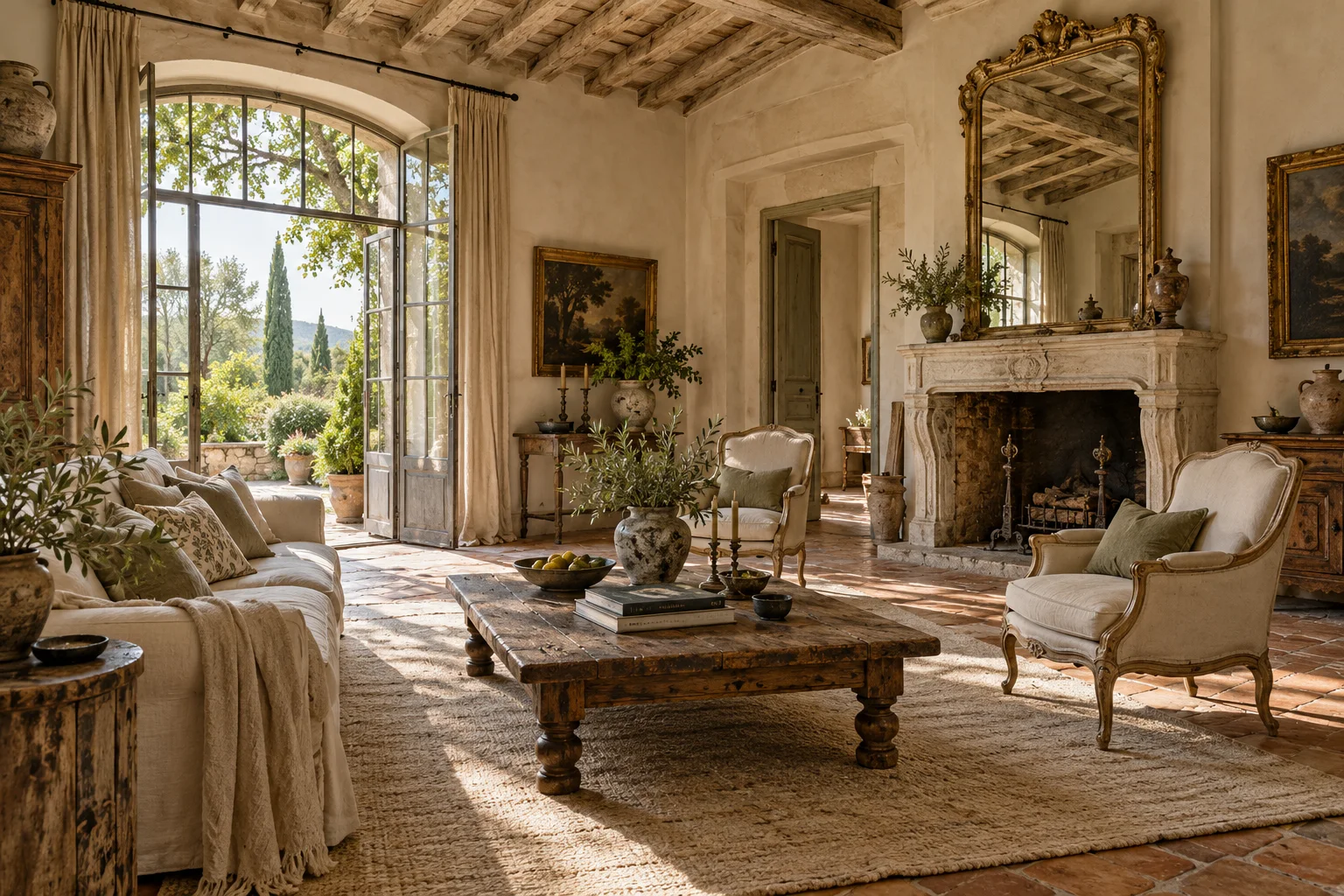
Farmhouse is the stricter, working end of the family — plain wood, utility objects, no formality. French country adds comfort and one formal note: upholstered chairs, a gilt mirror, a chandelier. Farmhouse keeps a kitchen soul; country adds a salon.
What colours are French farmhouse?
A chalky base — off-white, pale grey, soft ochre — the natural browns of walnut, oak and cherry, linen and ticking in ecru and faded red, and copper or black iron as the only metal accents. Three wall colours maximum per house.
Where do I start with French farmhouse decor?
Start in the kitchen: three copper pans on the wall, the good plates on a dresser, linen at the window and two-thirds of the counter left empty. The style is built from useful objects, so the kitchen — where the objects are still useful — is where it convinces first.