Distinguish the Shapes Before Comparing Listings
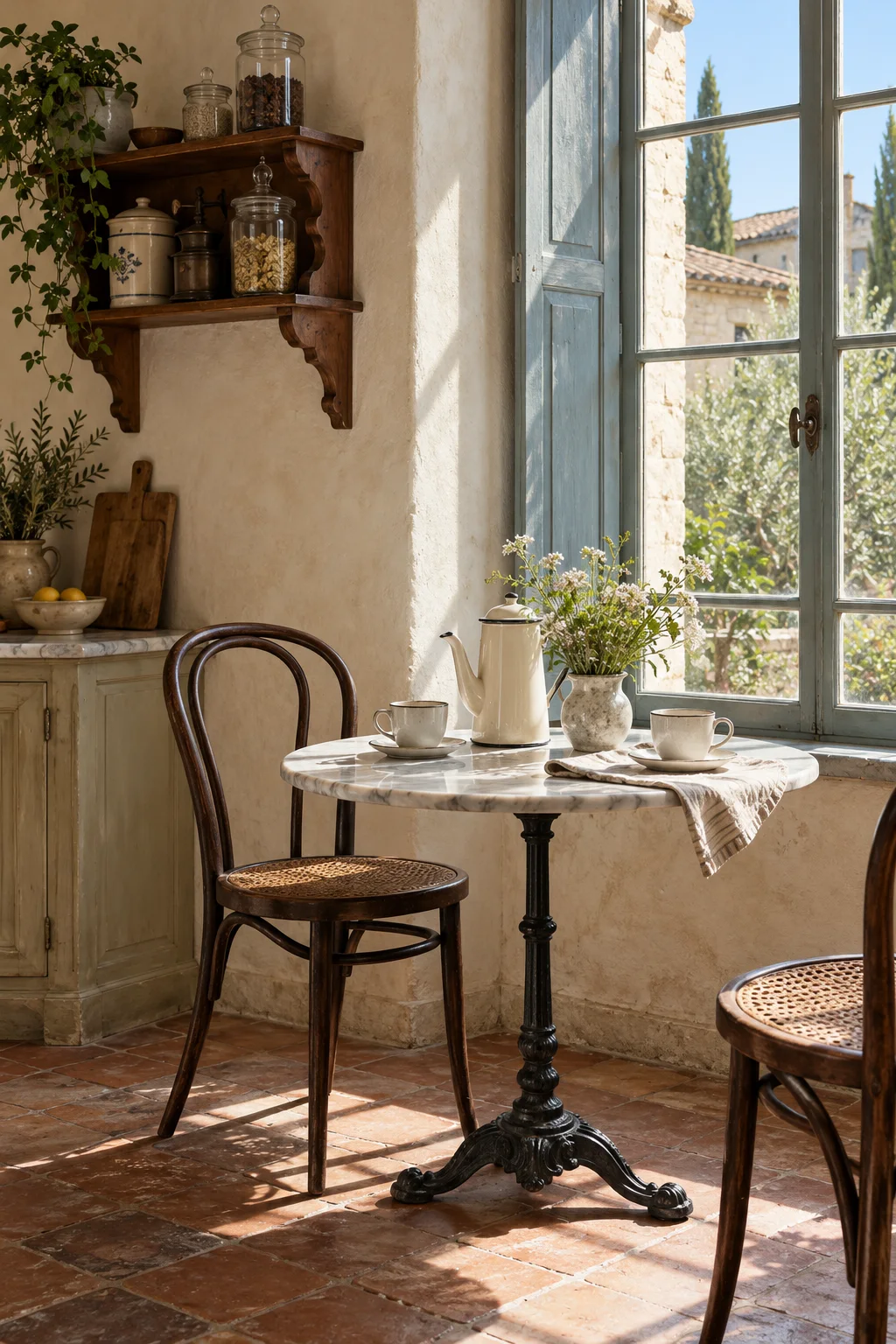
A pedestal table generally has a relatively compact top, often supported by a central base. A drop-leaf table provides a surface that expands; its actual footprint depends as much on the open leaves as on the closed top. A work table may include a drawer, stretcher or crosspiece, useful features that can also restrict legroom. These functional descriptions are more reliable than assigning a style from a single photograph.
Mark the proposed tabletop on the floor and add the space needed to pull out the chairs. In a circulation area, also consider corners and projecting feet. A round table may look light in a photograph, but its base can prevent chairs from tucking in. If the table will stand against a wall, check whether the back is finished and whether drawers can open without moving the furniture.
Read the Construction Without Mistaking Wear for Strength
Ask for photographs of the underside, every leg, the edge of the top and any mechanisms. A flattering overall photograph will not reveal an open joint or an added shim. Record surface wear separately from movement in the structure. A marked top may suit your plans; a loose leg calls for evaluation before use. Avoid turning a stability check into a load test.
Screws, pegs and replacement parts need to be described in context. None of these features, taken alone, dates a table. Record measured dimensions, disclosed repairs and the basis of any attribution. For a table that comes apart, obtain photographs of every component and information about reassembly. Delivery costs and access matter just as much as the advertised price.
Create a French Country Arrangement That Works Every Day
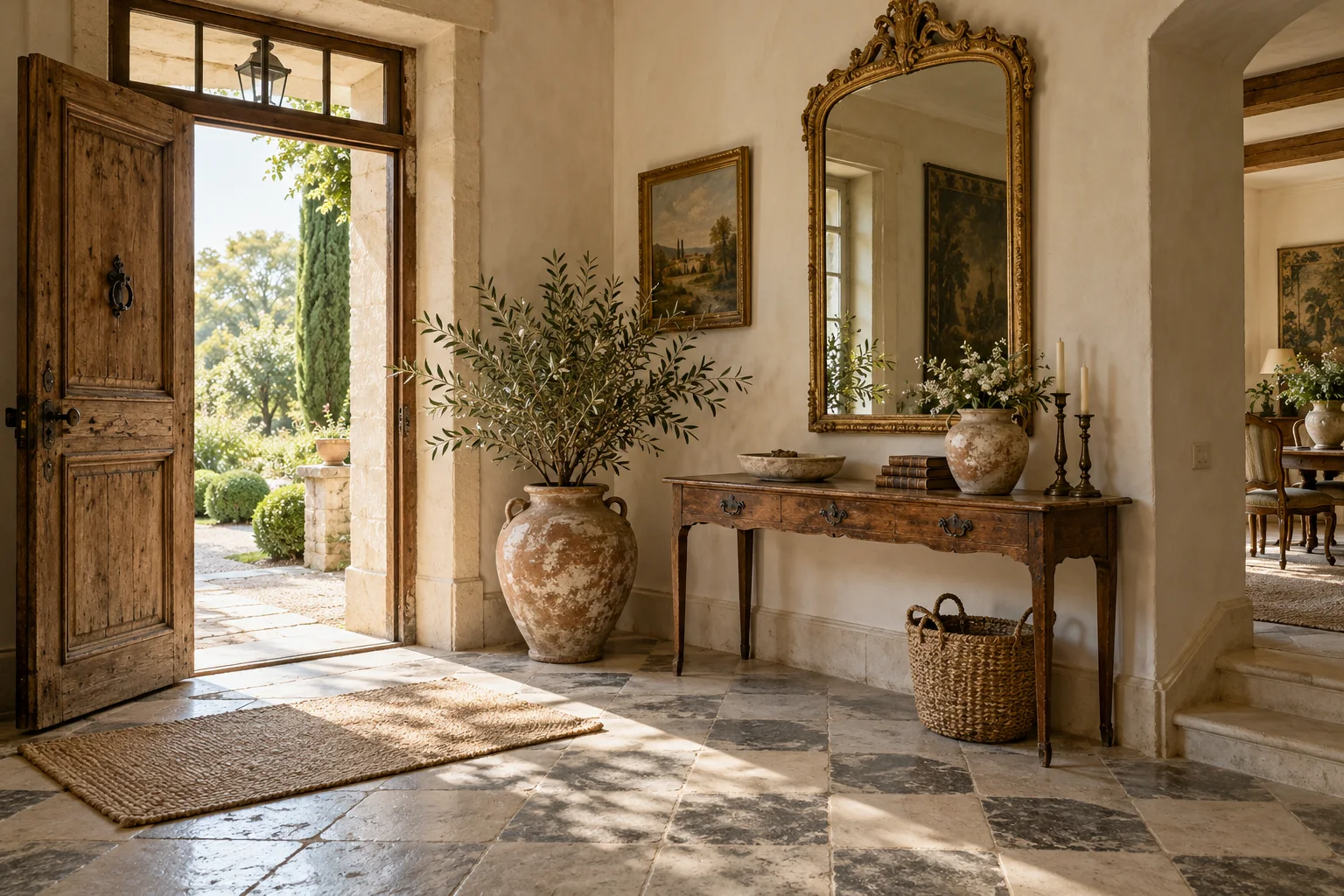
In an entryway, a small table can bring together a vase, a tray for keys and a soft light. In a study, a restrained table leaves more room for books and personal objects. We suggest choosing one main function: combining work, display and meals on a small surface soon makes the arrangement difficult to use.
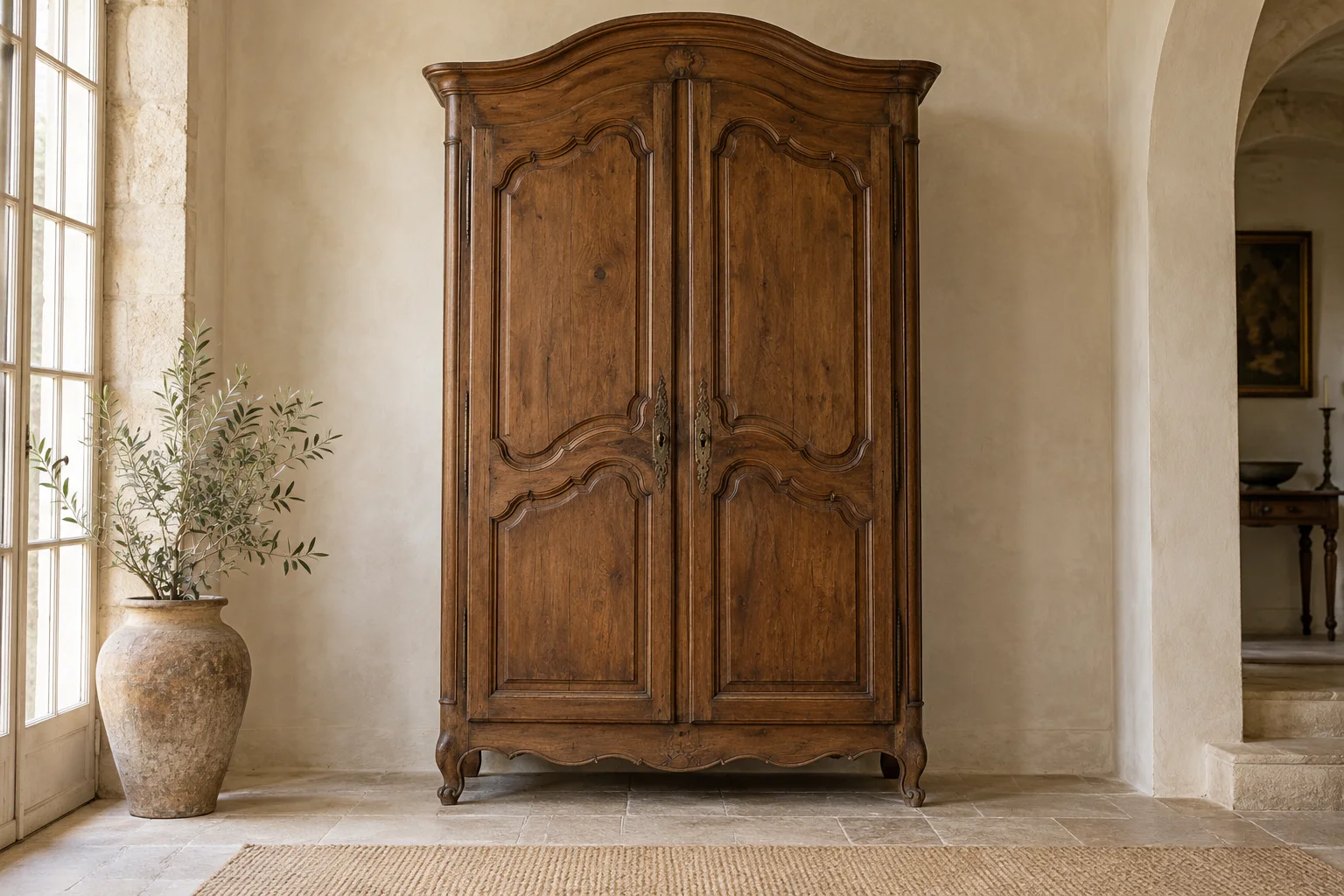
Pair expressive wood with quieter elements, such as a simple chair or a plain curtain. Preserve an empty area where you can actually set something down. The Canadian Conservation Institute explains that humidity changes affect wood, so favor a stable location. Before refinishing, document the existing finish and seek advice if its condition is uncertain; a uniform color is not necessary for a harmonious room.
What to compare
| Table Form | Useful Role | What to Check |
|---|---|---|
| Pedestal table | Reading or a small welcome area | Stability of the central base |
| Drop-leaf table | An adaptable surface | Operation of every support |
| Work table | Writing or crafts | Legroom and drawer clearance |
Your buying checklist
Continue planning your room
Frequently asked questions
How do I choose an antique table for a small room?
Start with its location and everyday movements: opening a door, pulling out a chair and walking through with a tray. Mark the furniture on the floor, then check the space left around it. A compact table with projecting feet can be more awkward than a slightly larger top on a contained base.
Can an antique table work as a desk?
Yes, if its height, depth and space under the top suit your working posture. Try it with the intended chair and the equipment you actually use. A low drawer or stretcher can make an attractive table uncomfortable; identifying that limitation before buying is better than discovering it at home.
Should I sand away marks on the top?
Do not decide from photographs alone. Distinguish acceptable wear from dirt and deterioration of the finish. Sanding changes the surface and can remove details. First establish what you want to preserve and what really requires treatment, rather than assuming every mark should disappear as part of the decorating process.
How can I use several small tables without clutter?
Give each a different purpose and maintain a clear route through the room. A lamp table and a game table can coexist if both are genuinely useful. Repeat a color or material, then avoid covering every surface with decorative objects that would make the tables difficult to move or use.
Sources & further reading
- Canadian Conservation Institute — Furniture and Wooden Objects — How environmental conditions affect wood and why existing finishes deserve preservation.