How water gilding and oil gilding differ on a gilt mirror frame
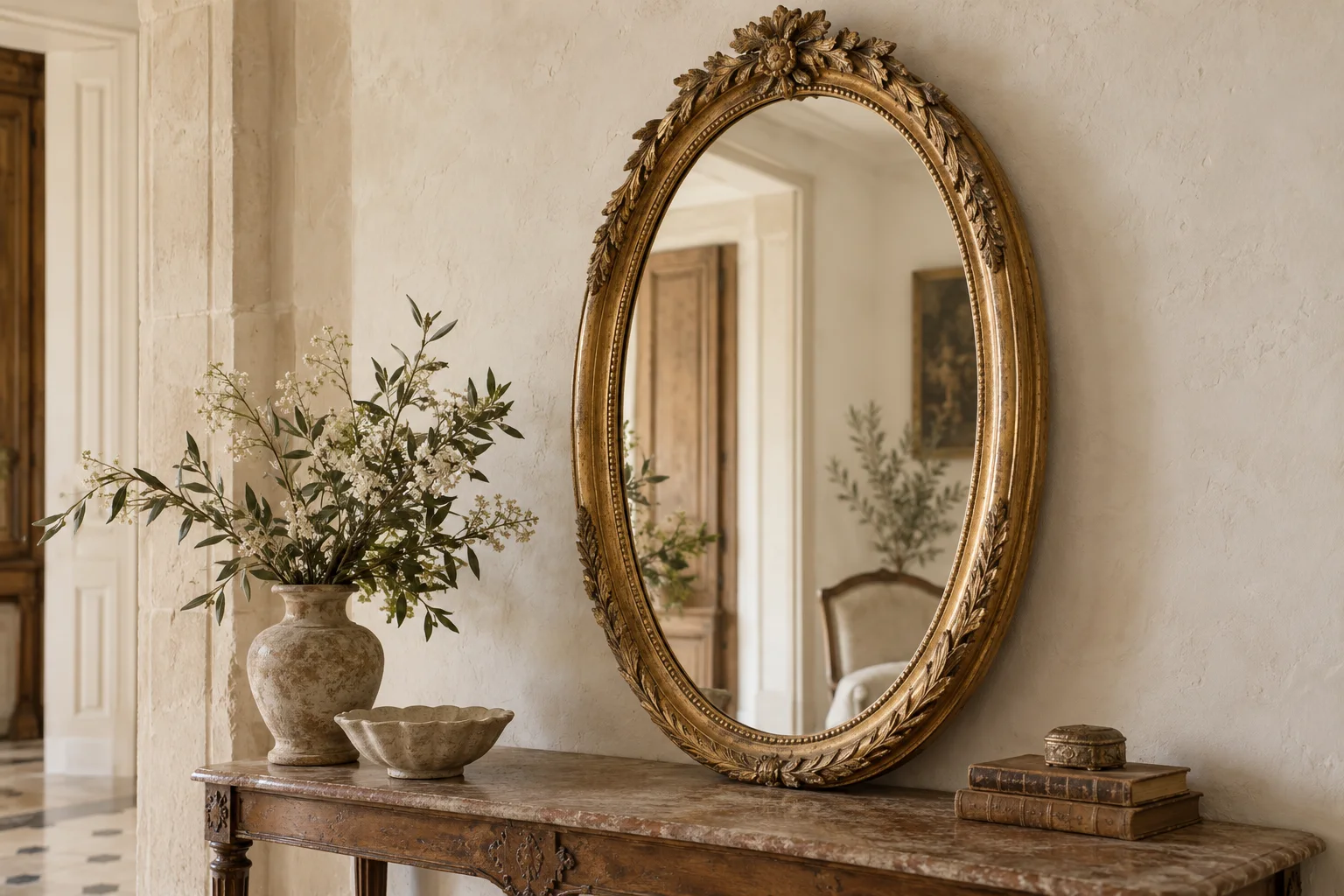
Water gilding is the finer method. The gilder applies gesso, then a layer of bole (a clay, usually red, yellow or dark gray), wets the surface and lays leaf that can be burnished to a bright metallic shine. Oil gilding uses an oil-based size as the adhesive; the leaf cannot be burnished and keeps a softer, matte look. Many 19th-century French frames combine both: burnished water gilding on the smooth mouldings and matte oil gilding on carved ornament.
To tell the methods apart, look at the high points under raking light. On water gilding, wear exposes the colored bole beneath the gold, so a worn edge reads red or ochre. On oil gilding, wear exposes a pale size or the gesso itself, so the same edge reads yellowish white. A frame with red showing through on the rubbed areas is not automatically older or better; the color only tells you which method was used on that part of the frame.
Where honest wear appears on a gilded mirror
A gilded mirror that has hung for a century wears in predictable places: the lower rail where it has been dusted most often, the outer corners that catch sleeves and furniture, and the highest points of the carving. Wear elsewhere, such as evenly rubbed gold across a flat recessed area, usually means a decorative treatment rather than age. Gesso cracks follow the grain of the wood beneath and often run in a fine network; cracks that stop neatly at the edge of each ornament suggest cast composition (a plaster-and-glue mixture) applied to a plain wood base.
Composition ornament is not a defect. It was the standard way to produce carved-looking frames from the late 18th century onward, and it survives well when the frame has stayed dry. What matters is the description: a seller should state whether the ornament is carved wood or applied composition, and whether losses have been filled. Losses show as chalky white gesso or as bare wood; fills show as slightly smoother areas with a different gold tone.
Original, regilded or painted gold: three surfaces, three descriptions
Original gilding has depth. The leaf sits on bole and gesso, so scratches reveal successive colors. Regilding, done well, uses the same materials and is a legitimate restoration; it changes the description, not necessarily the value for domestic use. Ask when it was done and whether the old surface was removed. A brassy, uniformly bright surface with no bole showing through usually means gold paint or metal leaf (brass alloy) applied over the old finish. Metal leaf tarnishes to a greenish or brownish tone over time; real gold does not.
The glass is a separate question from the frame. Old mirror glass with a mercury-tin amalgam shows a soft, gray reflection and crystalline spotting called foxing. Replaced glass is not a flaw, and a seller should say so. For a mirror that will be used daily, a clear modern plate inside an original gilt frame is often the practical choice. For a collector, the original plate matters, chips and spots included.
Cleaning and hanging a gilt frame without losing leaf
Never clean gilding with water, commercial sprays or a damp cloth. Water dissolves the glue in gesso and lifts the leaf in seconds. Use a soft, dry brush to move dust out of the carving, working from top to bottom, and stop if any flakes move. The Canadian Conservation Institute's guidance on wooden and gilded objects is clear that surface cleaning beyond dusting belongs to a conservator. Avoid hanging a gilded mirror above a working fireplace or a radiator; heat dries the gesso and accelerates cracking.
Weight decides the fixing. A 36 by 48 in (91 by 122 cm) gilt mirror with its glass can weigh 40 to 60 lb (18 to 27 kg). Use two fixings into studs or masonry anchors, and D-rings with picture wire rated above the weight, never the old wire that came with the frame. Leave the original hanging hardware in place if it is sound; it is part of the object's history.
What to compare
| Form | Suggested Use | Decisive Check |
|---|---|---|
| Water-gilded smooth moulding | Entryways and dining rooms where light catches the burnish | Red or ochre bole showing at worn edges |
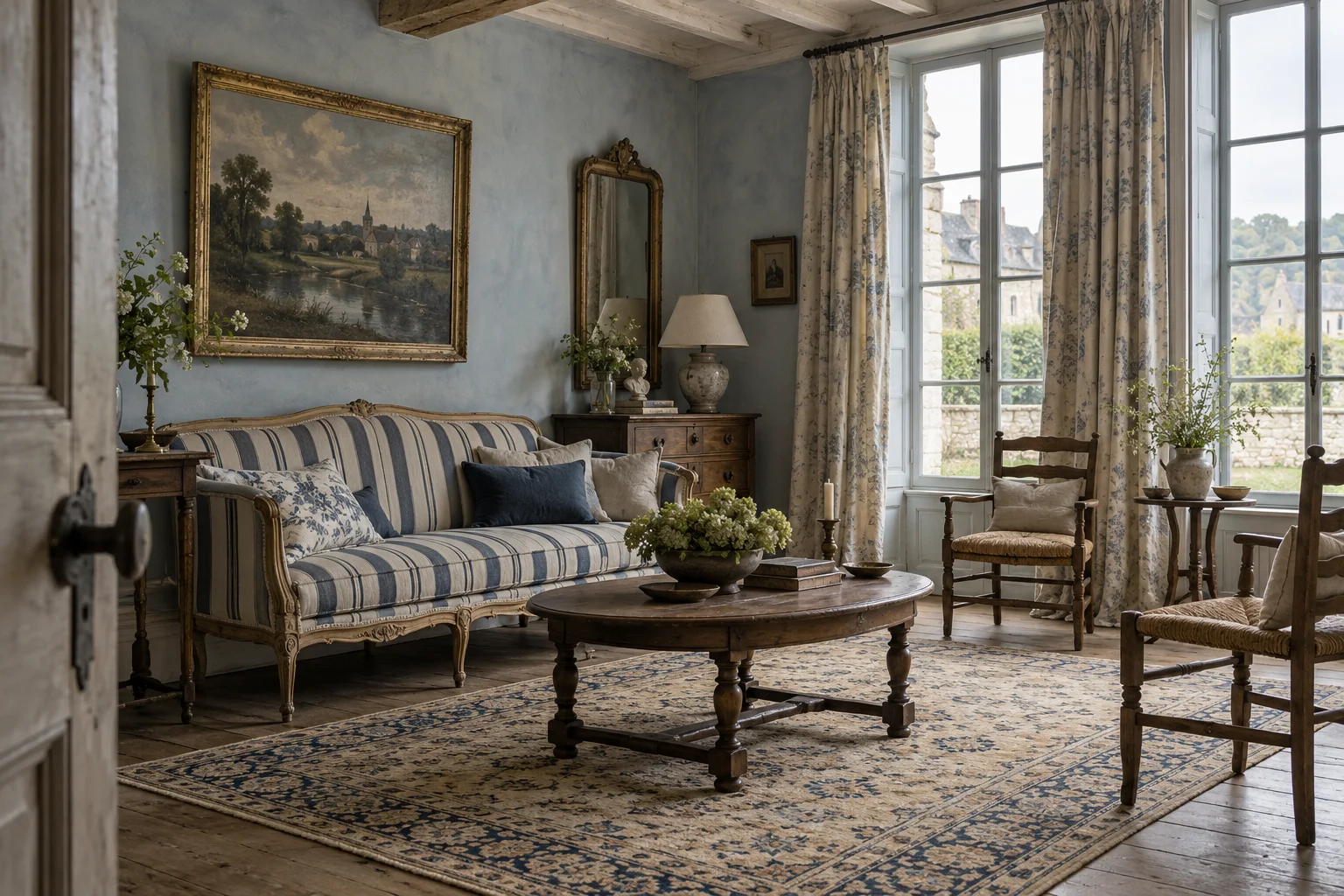
| Oil-gilded carved ornament | Living rooms, over a sofa or console | Pale size under wear; ornament carved or composition |
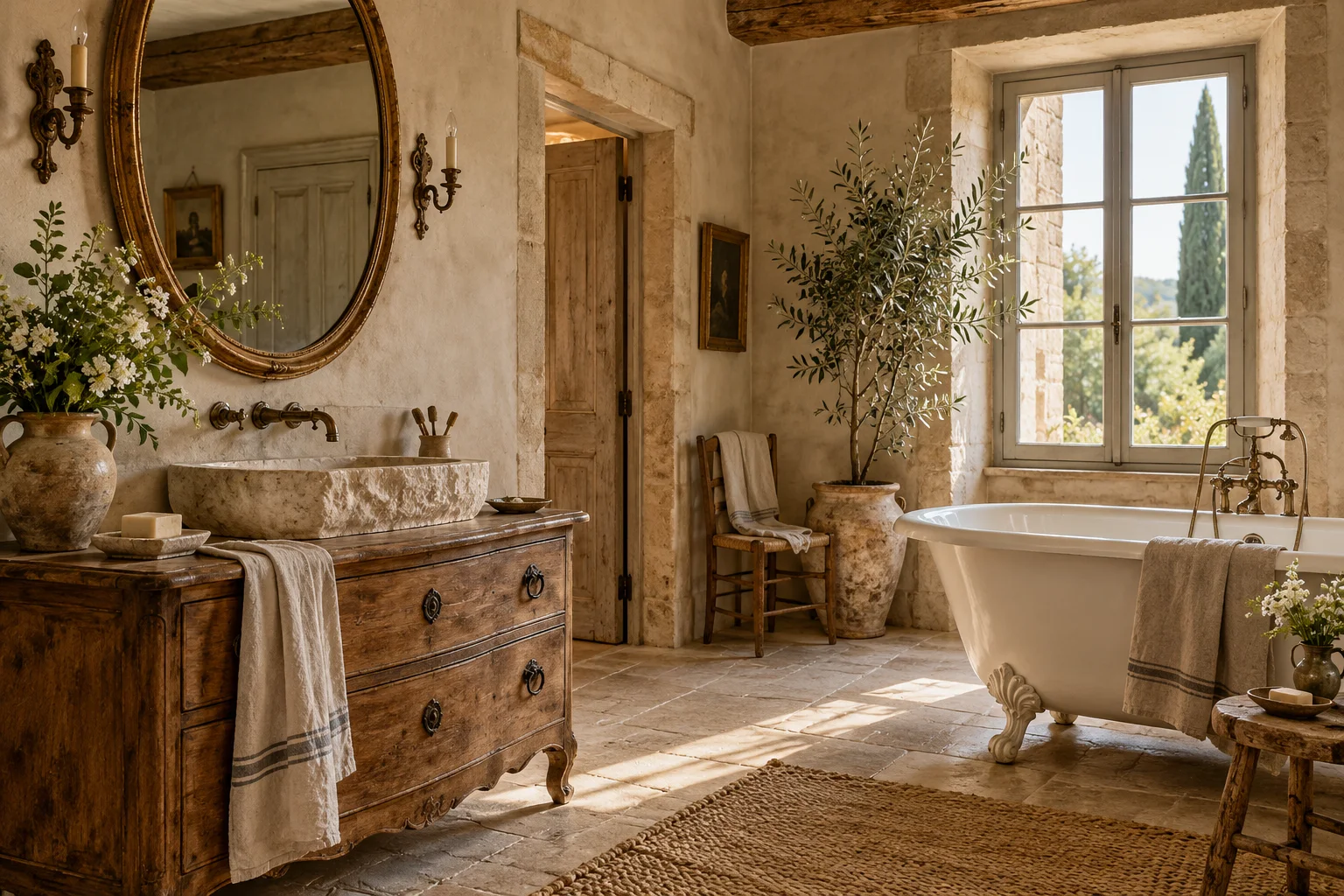
| Regilded or metal-leaf frame | Everyday use, bathrooms, hallways | Uniform brightness; tarnish on brass leaf; disclosed in listing |
Your buying checklist
Continue planning your room
Frequently asked questions
How can you tell if a gilded mirror is real gold leaf?
Look at the worn high points under strong side light. Real gold leaf over bole shows red, yellow or gray clay at the rubbed edges and never tarnishes. Brass leaf or gold paint shows no bole, looks uniformly bright and develops green or brown tarnish. A conservator can confirm the material with a simple spot test if the purchase price justifies it.
Does regilding reduce the value of an antique gilt mirror?
Regilding changes the description and must be disclosed, but a competent regilding in gesso and gold leaf is accepted restoration. For a mirror used in a home, it matters less than the frame's structure and the quality of the work. For a collectible frame, original surface commands a premium, so ask when the regilding was done and what was removed.
Can a gilded mirror hang in a bathroom?
Yes, with limits. Gesso and gold leaf tolerate humidity better than direct water, so a powder room without a shower is fine. In a full bathroom, keep the mirror away from the shower wall, ventilate the room, and accept faster wear. A regilded or metal-leaf frame is the sensible choice for a steamy room; keep original gilding for drier spaces.
What is the safe way to clean a gilt frame?
Dust it with a soft, dry brush, moving from top to bottom and stopping if any flake lifts. Do not use water, polish, sprays or a damp cloth, because moisture dissolves the glue in the gesso. Clean the glass with a cloth lightly dampened with glass cleaner applied to the cloth, not the mirror, and keep the cloth away from the frame edge.
Sources & further reading
- Canadian Conservation Institute — Basic care: furniture and objects made of wood — Supports dry dusting of wooden and gilded objects and referring further cleaning to a conservator; does not date the frames discussed.
- Canadian Conservation Institute — Caring for ceramic and glass objects — Supports the glass-care advice: cleaner applied to the cloth, not the object, and protection from moisture.