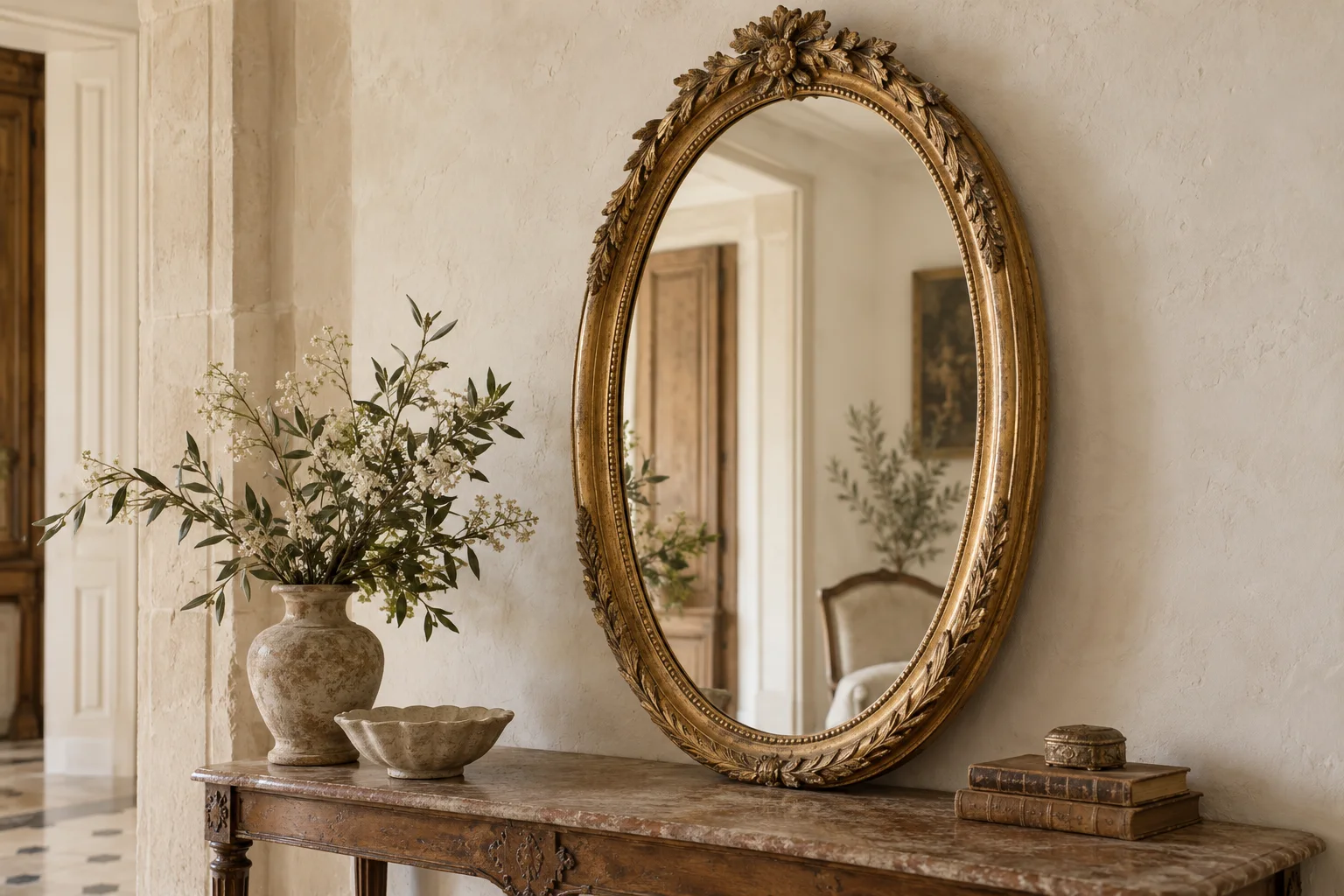
 AI-created styling idea
Mirrors
Antique mirrors
Choose a mirror for its reflection, proportions, and the condition of its separate components.
ExploreFrench Country · An inspiration catalogue
French antique mirrors carry the light in a country room; paintings, prints, plates and frames carry its character. This page explains the forms, what to check in the glass and the gilding, and how to compose a wall.
French antique mirrors do two jobs at once. Opposite a window they double the daylight of a low room; above a mantel or a console they give the wall its one strong piece, the rule that runs through French country decor in every room. The frame is the object; the glass is the surface that makes it useful.
Place the mirror where it reflects a window, a garden or a lamp, not a blank wall or a door. A mirror that reflects the ceiling is hung too high.
Carved and gilded wood, gesso ornament, painted pine, iron: the frame tells you the period or the style, the regional habit and the budget of the house it came from. Judge it as you would a piece of furniture.
"Louis XVI style" describes a form; "Louis XVI period" claims a date. A French provincial mirror from 1880 in the Louis XVI style is common, honest and useful, as long as it is described that way.
A trumeau is a tall panel, originally fitted between windows, with a painting or a carved panel above the glass. Heights of 60–80 in (150–200 cm) are usual, so measure the wall between the furniture top and the ceiling before buying. The painted panel should be assessed separately from the frame and the plate.
The Louis Philippe form (rounded upper corners, a simple gilt moulding, often 40–55 in / 100–140 cm tall) is the workhorse of French country walls and suits mantels and halls. Gilt frames of the 18th and 19th centuries are water-gilded over gesso and red bole; wear on the high points shows the bole through the gold, which is expected. Our journal guide to antique mirrors, placement, frames and condition works through one frame in detail; the antique mirrors category shows the forms.
Oval mirrors suit narrow walls and bathrooms; bistro mirrors with their etched advertising bring the café into a kitchen; wide overmantel mirrors (often 50–70 in / 127–178 cm) fill the chimney breast. French provincial mirrors in painted or waxed pine are the quietest option and the easiest to hang.
Old mirror glass is thinner at the edges, slightly uneven, and shows foxing (gray or black spots where the silvering has failed). A plate that reflects perfectly is probably replaced; that is acceptable in a mirror meant for use, as long as it is disclosed and priced accordingly. A bevel ground by hand has slight variations in width; a machine bevel is perfectly even.
Look for gesso losses at the corners and along the lower rail, where frames get knocked. Regilding, bronze paint over old gold and replaced ornament are common; raking light shows them. A small loss on an otherwise original surface is better than a complete regild.
A backboard of old, oxidized pine with hand-cut nails supports the age of the frame; a plywood back means a later intervention, often harmless. Replace old wire with two D-rings and a rated wire or French cleat: a 40 × 50 in gilt mirror can weigh 30–60 lb (14–27 kg).
A small oil of a river, a farmyard or a market square gives a French country wall its subject. Judge the painting by condition (craquelure, flaking, relining, overpaint) before any signature; attribute a work to an artist only with documentation. Explore paintings and prints for the kinds of scenes that suit the style, and keep a strong painting away from a strong mirror on the same wall.
French prints (botanical plates, fashion plates, engravings) hang well in groups of four or six with identical frames. Foxing and acid browning on the paper are condition issues, not charm; a conservator's mat and UV glazing slow them. Keep works on paper out of direct sun.
An empty antique frame is a purchase in itself: measure the rabbet (the inner recess) rather than the opening, since the artwork sits in it. See antique frames for the forms, from carved gilt to simple black Dutch-style mouldings that calm a busy print.
On an open wall, hang a mirror or a painting so its center is 57–60 in (145–152 cm) from the floor. Above a console, a sideboard or a mantel, leave 4–8 in (10–20 cm) between the furniture top and the frame, and keep the frame narrower than the piece below it.
A grouping needs one rule the eye can read: equal spacing (2–3 in / 5–8 cm), a shared center line or a shared frame color. The journal shows how to build a gallery wall above the sofa without clutter, including testing the layout on the floor first.
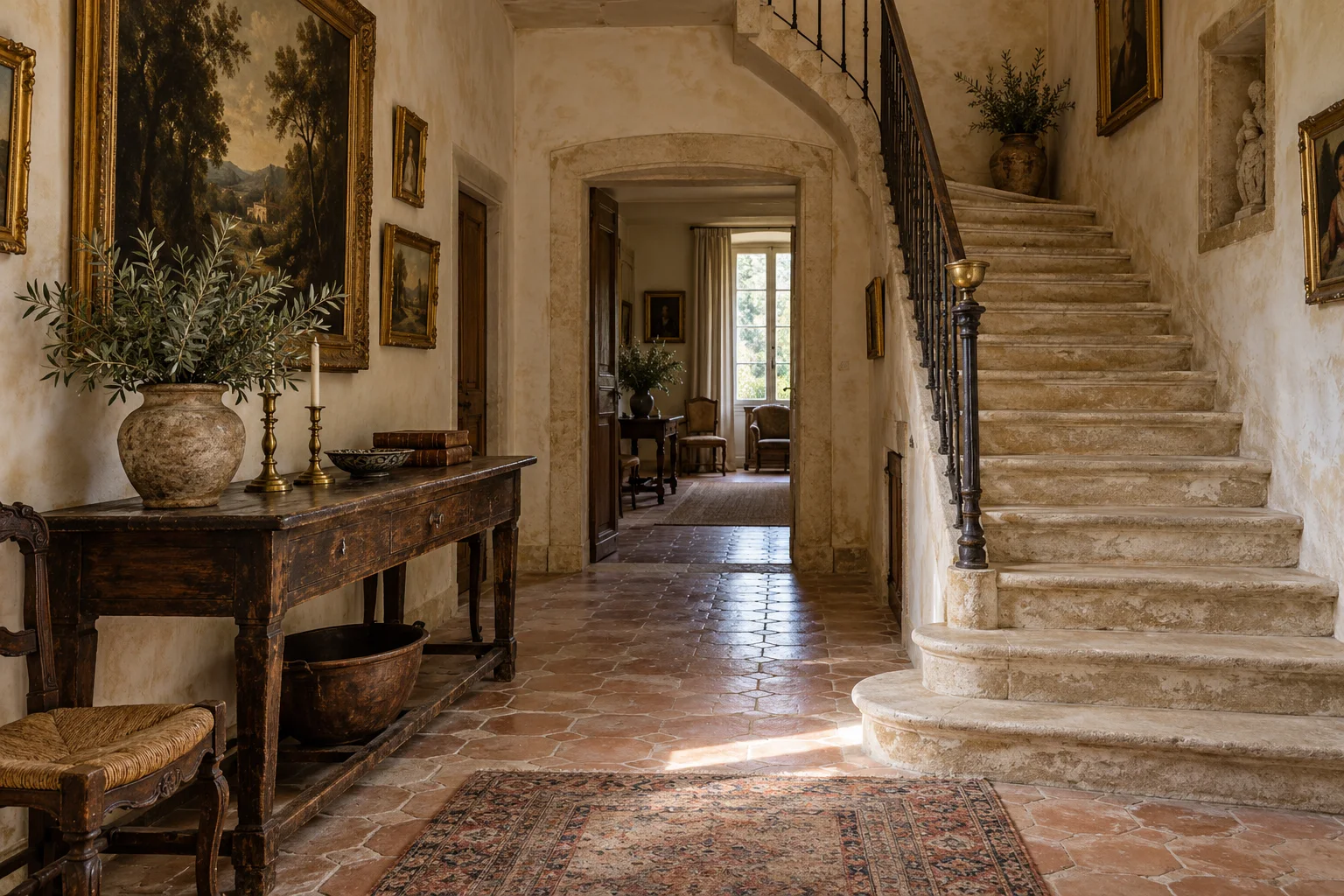
French decor for walls is not only framed: a column of faience plates on spring hangers beside a kitchen window, an enamel sign over a pantry door, a small verdure tapestry fragment above a bench in the hall. Browse vintage signs and wall decor and rugs and tapestries, and see how the entryway scenes use a single mirror to welcome.
Measure the wall, the furniture below and the window opposite. A frame should be 60–75 percent of the width of the piece it hangs above; a tall mirror needs a wall at least 10 in (25 cm) taller than the frame. In a bedroom, a mirror near the window gives dressing light; our French country bedroom guide covers where it goes.
Ask for photographs of the back, the corners in raking light and the plate at an angle. Lo Cantou lists antique mirrors with those views and dimensions. A designer working for a client can send a brief to Antiques 360 for three documented mirrors within 72 hours, with original glass where possible, every flaw photographed, and crating and freight quoted upfront; the French country antiques guide explains what a documented listing contains.
Dust gilding with a soft brush, never a damp cloth; clean the plate with a barely damp microfiber cloth kept away from the frame edge so moisture does not reach the silvering. The Canadian Conservation Institute's advice for wooden objects applies to frames: stable humidity, no direct sun, no polish on gilt.
AI-created styling ideaMirrors
Choose a mirror for its reflection, proportions, and the condition of its separate components.
Explore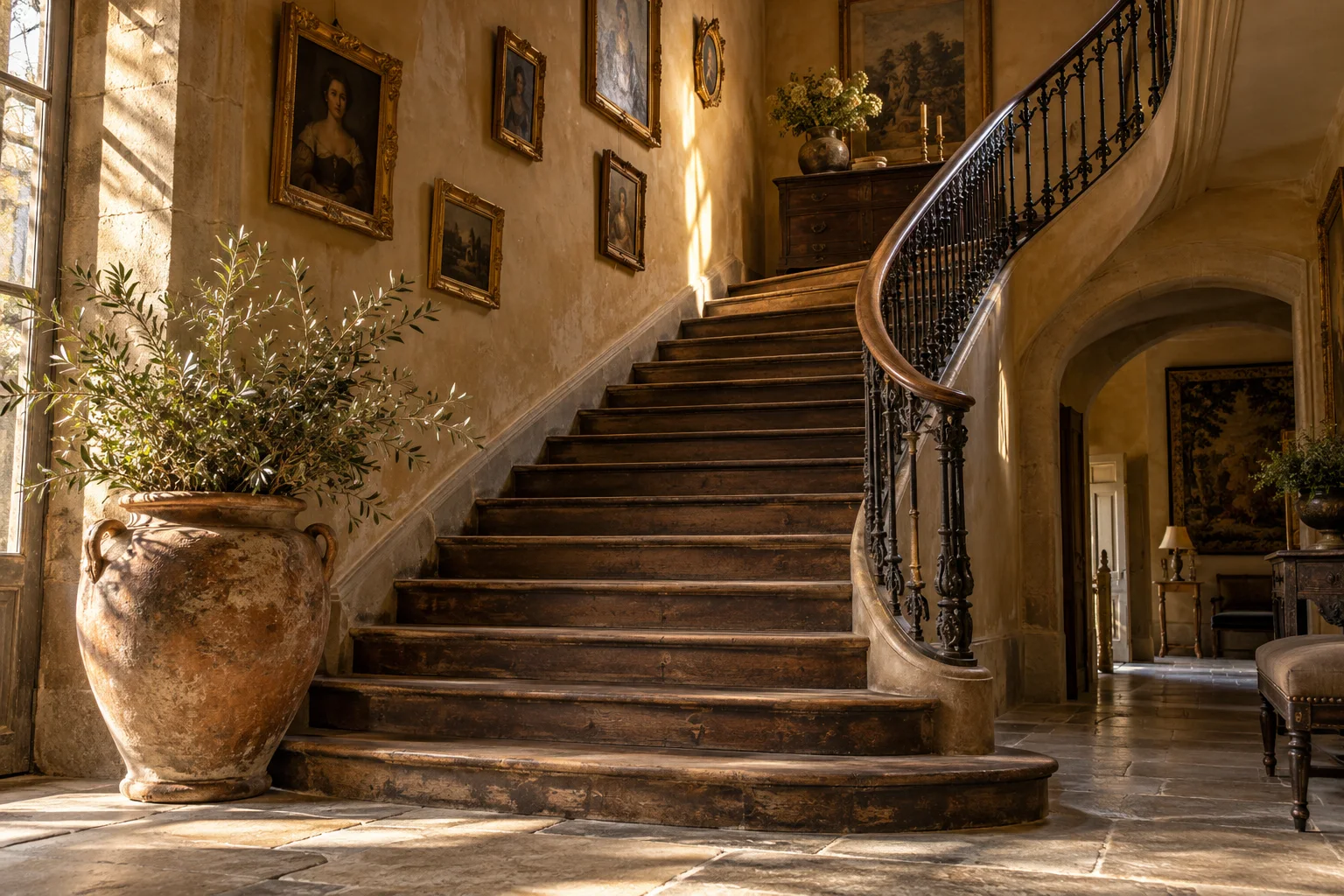 AI-created styling idea
Art & decorative objects
Measure the rabbet, not the opening; look at corners and the lower rail for gesso losses.
Explore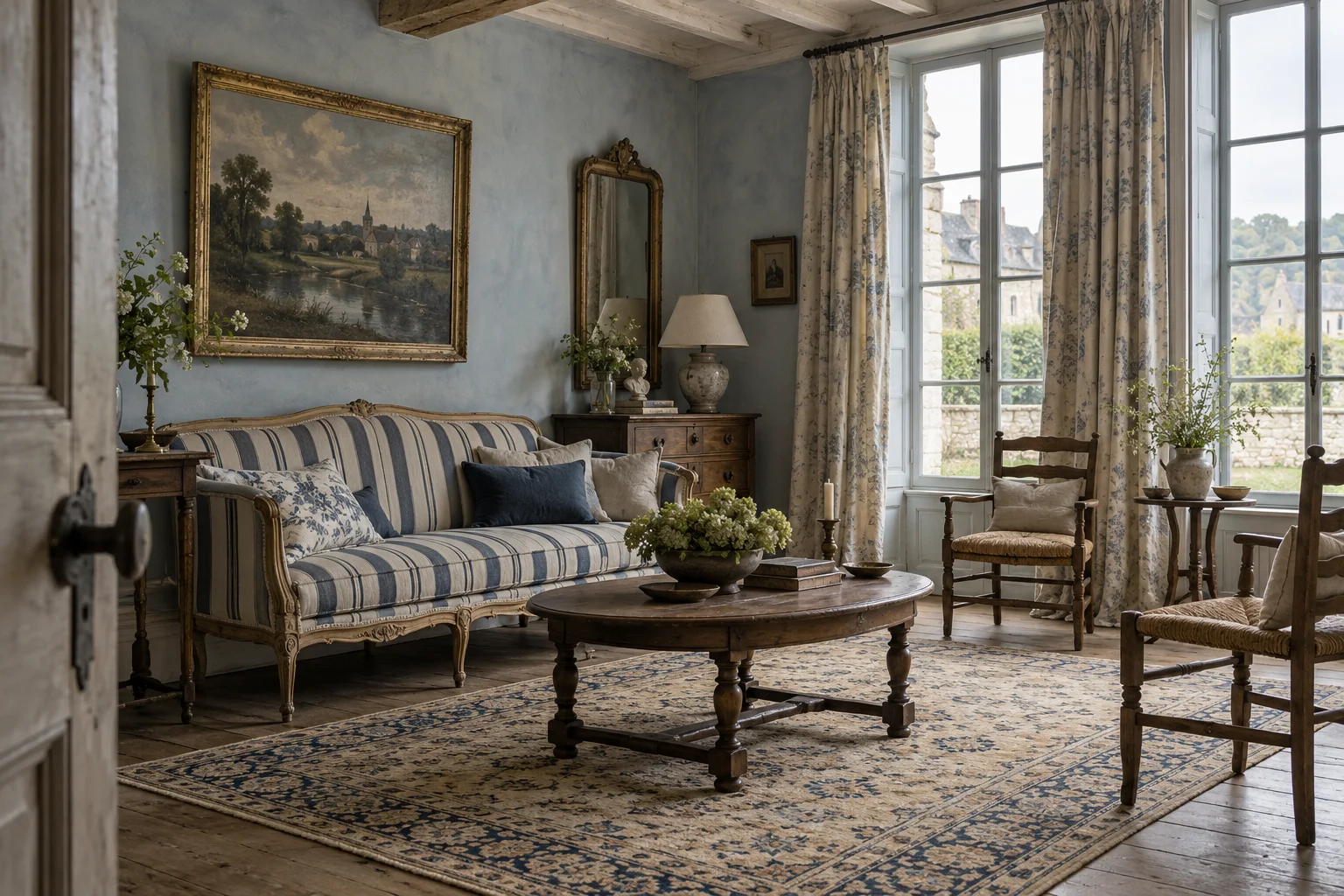 AI-created styling idea
Art & decorative objects
Distinguish decorative choice, physical condition, and attribution, then plan a coherent hanging arrangement.
Explore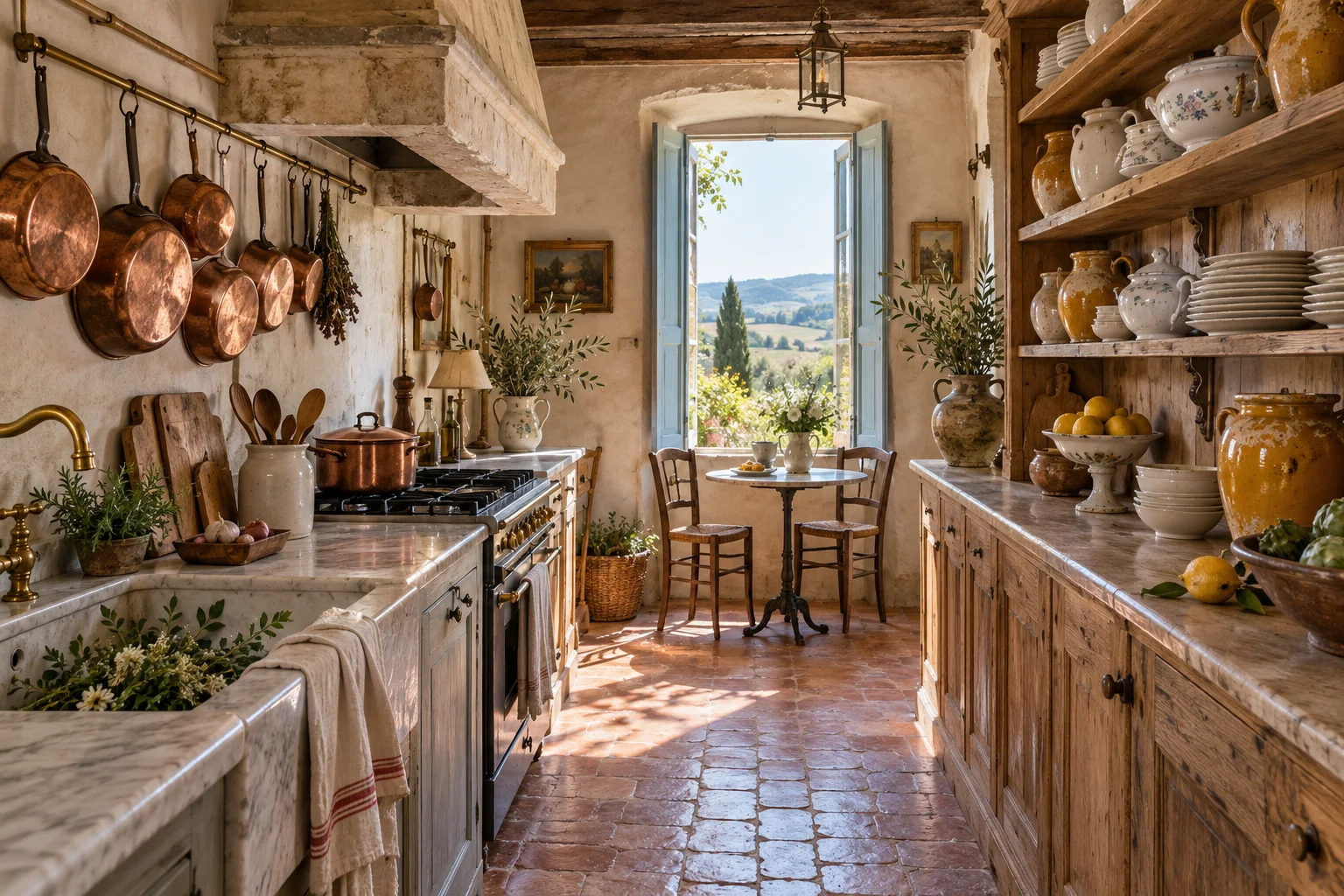 AI-created styling idea
Art & decorative objects
One sign per room; check enamel chips and rust at the edges before hanging over a door.
Explore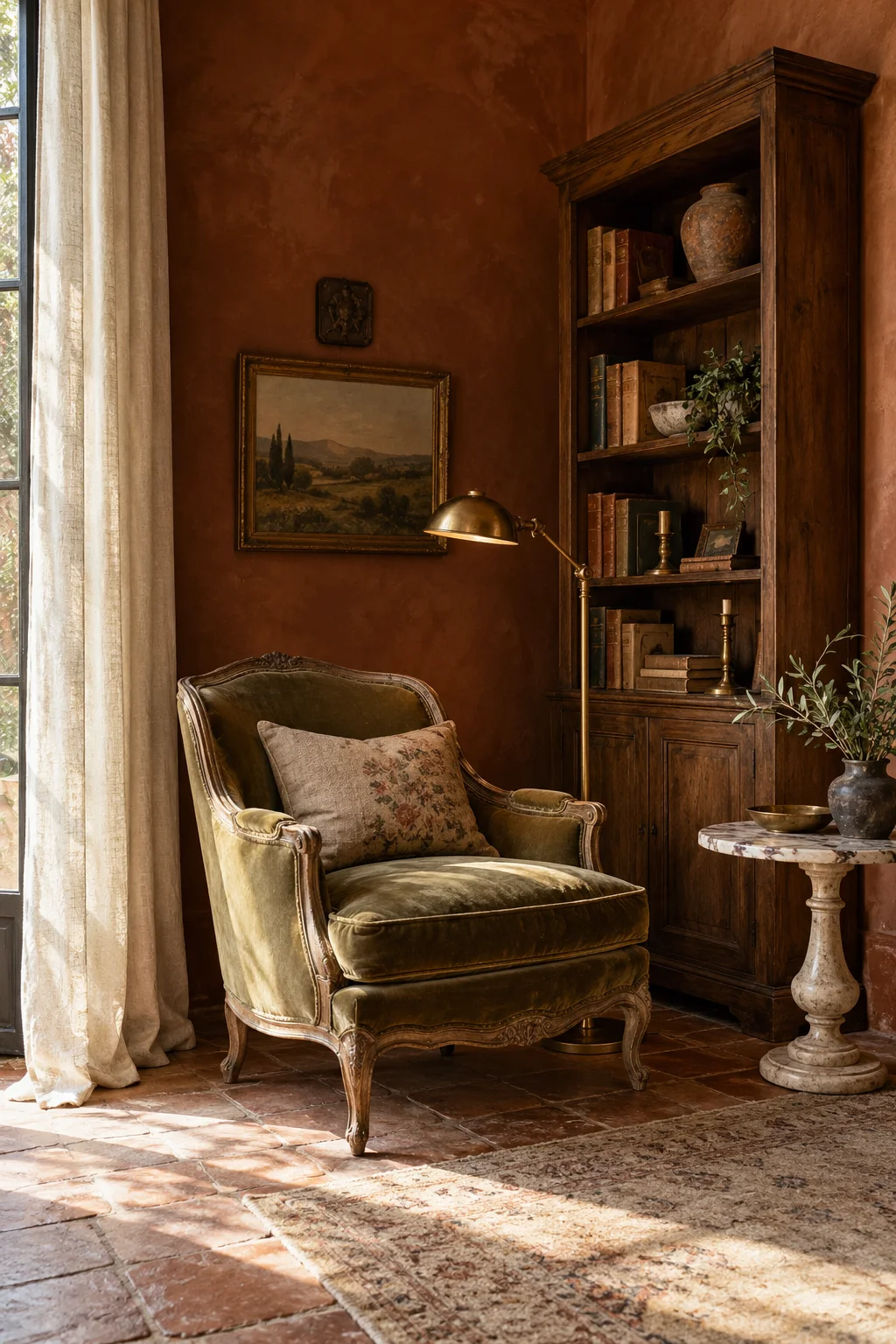 AI-created styling idea
Textiles
Hang a tapestry on a sewn sleeve and a batten, never on nails through the weave.
Explore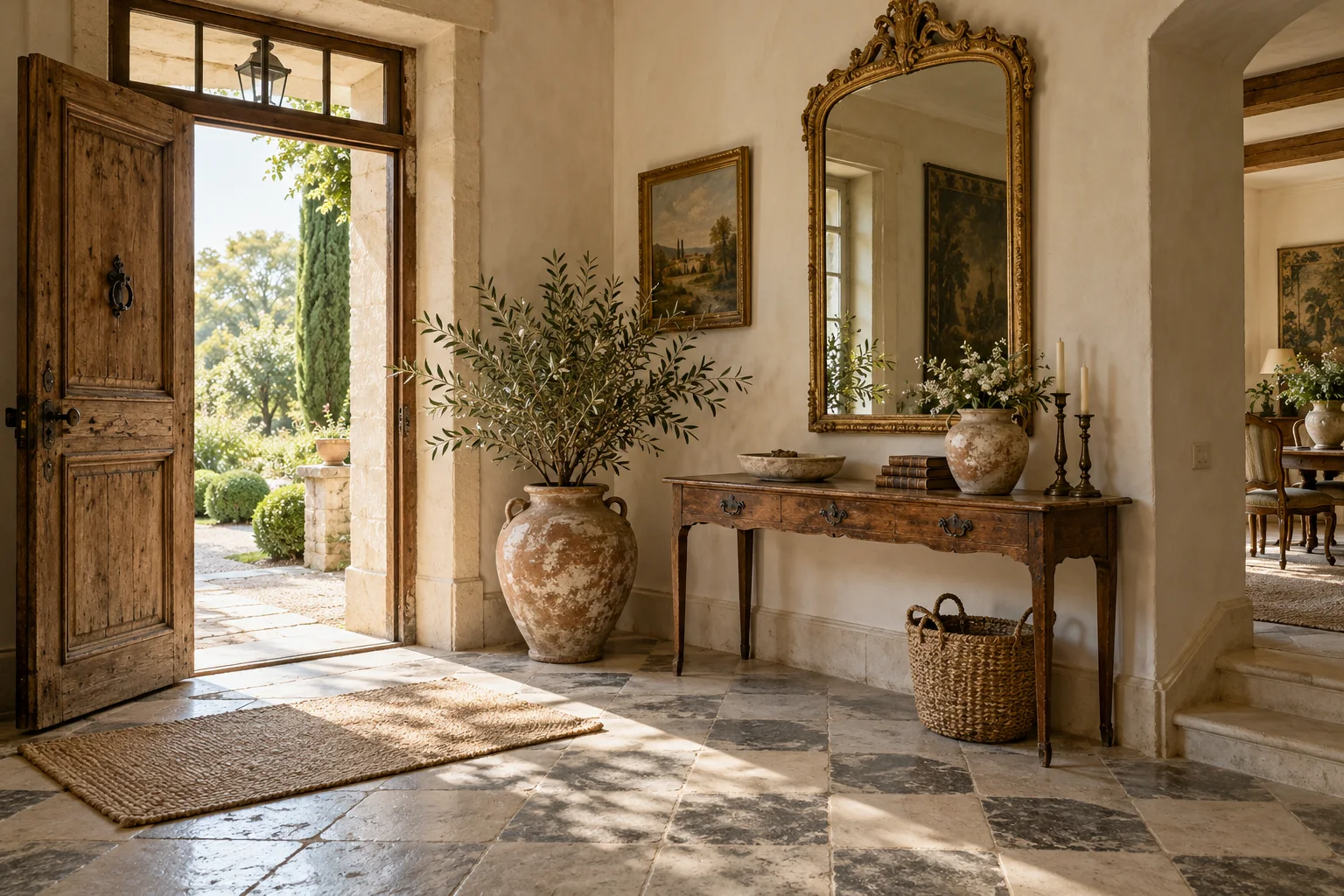 AI-created styling idea
Rooms
One mirror above one console: the simplest wall in the house, done five ways.
ExploreThe mirrors & wall decor subcategories, arranged by the room where they usually belong.
On an open wall, set the center of the mirror at 57 to 60 in (145 to 152 cm) from the floor, which is eye height for most adults. Above a console, a sideboard or a mantel, leave 4 to 8 in between the furniture top and the frame and keep the frame narrower than the piece below. Hang it where it reflects a window or a lamp rather than the ceiling.
Not for a mirror meant for daily use, provided the replacement is disclosed and the price reflects it. Original plates are thin, slightly uneven and often foxed; a new plate gives a clear reflection and adds weight. For a collector's purchase the original plate matters more, so ask for a photograph of the glass at an angle and of the backboard.
Look at the corners and the lower rail in raking light: a water-gilded antique frame shows red bole where the gold has worn on the high points, small gesso losses and an oxidized wooden back with old nails. Reproductions usually have even bronze paint or a uniform gold tone, moulded resin ornament that sounds hollow when tapped, and a clean plywood back.
Yes, with hardware rated for the weight and fixed into studs or with heavy-duty anchors rated well above the mirror's weight. A 40 by 50 in gilt mirror can weigh 30 to 60 lb, so use two D-rings with a rated wire or, better, a French cleat screwed into two studs. Replace any old wire or eyelets on the frame before hanging.
Oct 30, 2026 · Antique guide
French country decor ideas work best when each one is concrete: a measurement, a material, a place in the room.
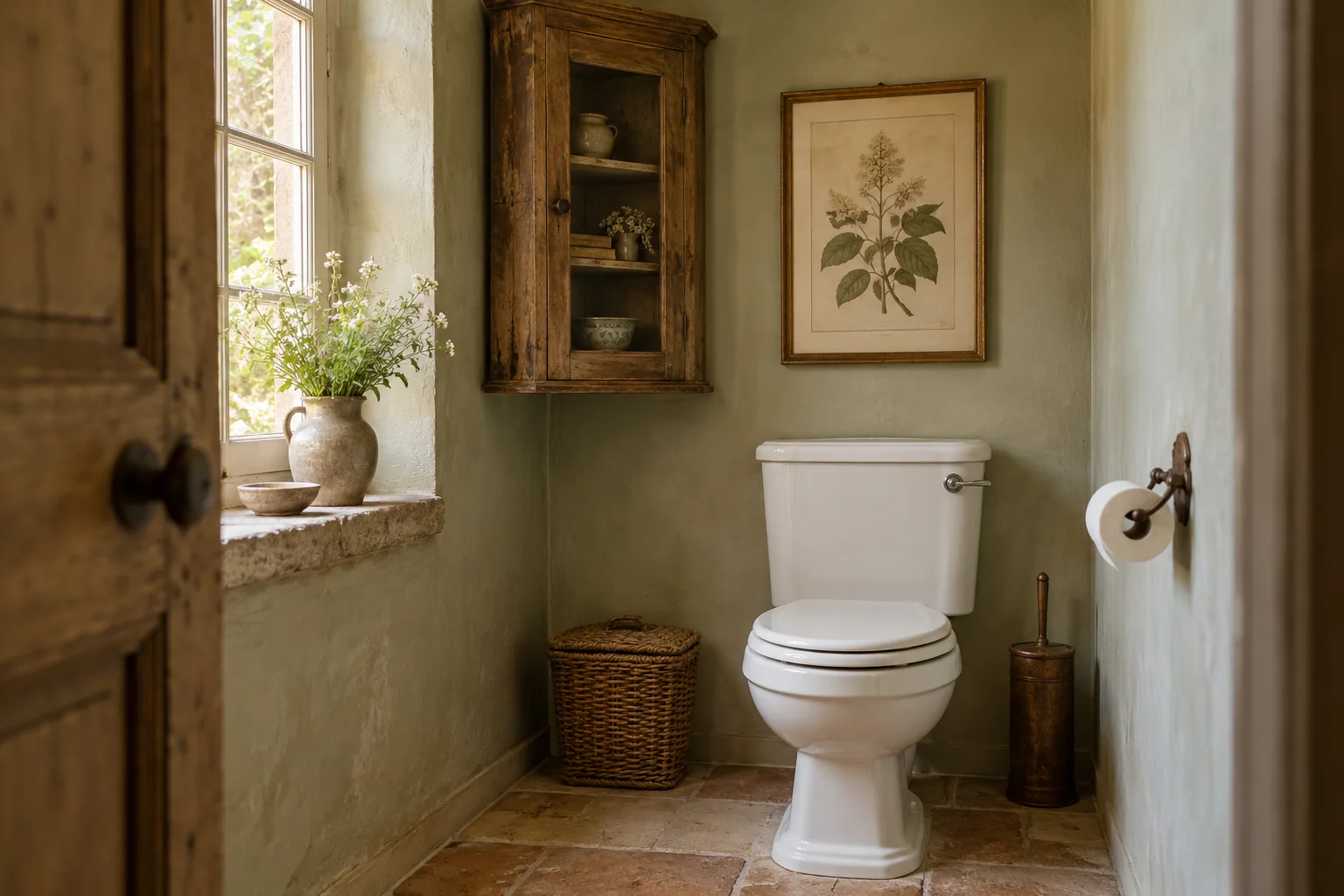
Oct 29, 2026 · Antique guide
A small oval mirror, 10 to 20 in (25 to 51 cm) tall, is the easiest antique to place and the easiest to waste.
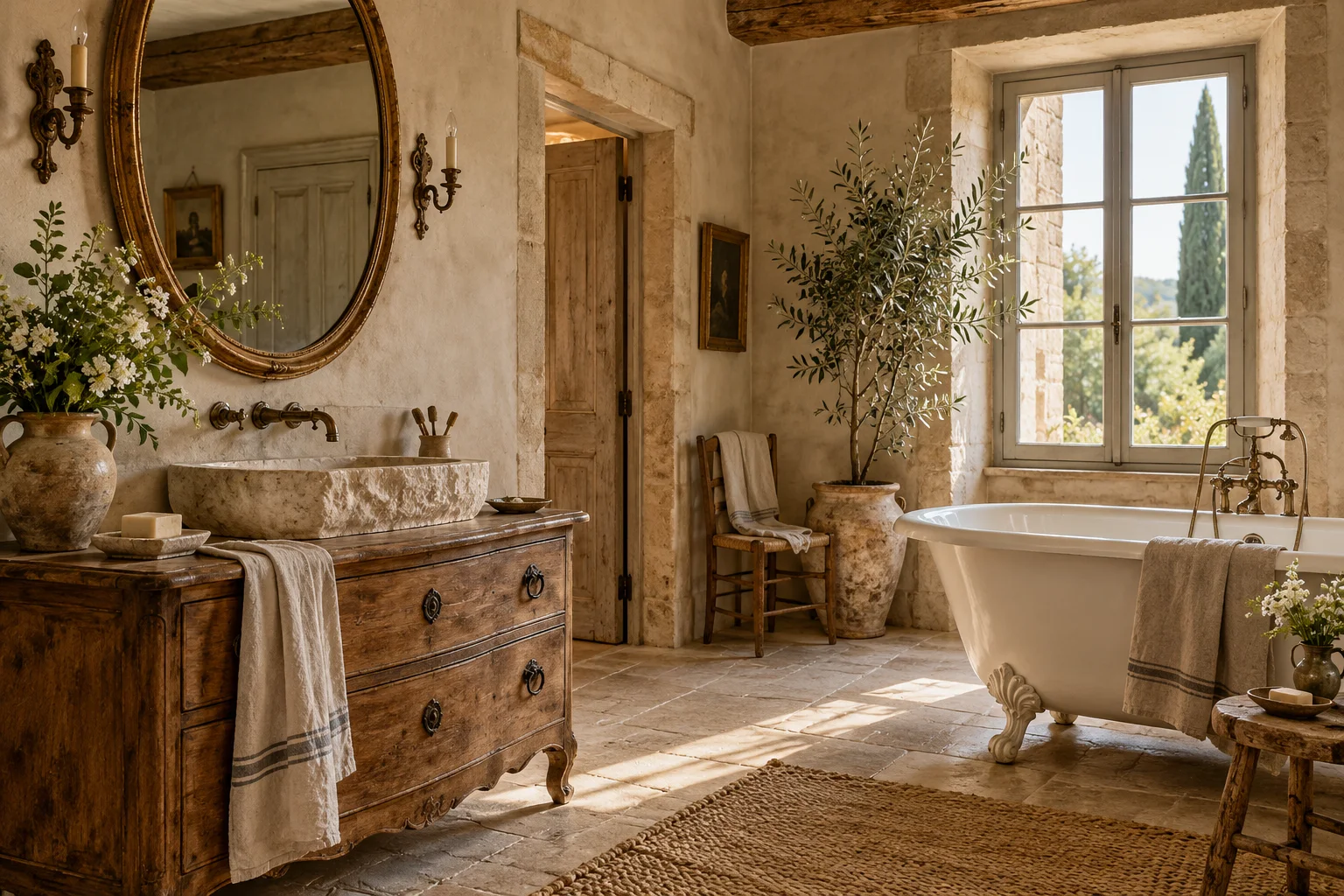
Oct 29, 2026 · Antique guide
Etched mirrors antique dealers describe as 'frosted' or 'engraved' share one technique: the design is cut into the glass surface so it reads matte against the bright…
Oct 29, 2026 · Antique guide
A large ornate mirror changes a room more than any other single antique: it doubles the light, adds a second window and brings carved or composition ornament to walls…
Oct 29, 2026 · Antique guide
A vintage oblong mirror is the workhorse of a country house: a long rectangle, horizontal over a mantel or sideboard, vertical in a hallway or beside a basin.
Oct 28, 2026 · Antique guide
A Venetian glass mirror is a mirror framed in glass: etched or engraved glass panels, rosettes and ribbons are fixed over a wooden carcass with small brass screws and…