The bistro glass and its relatives
The verre à vin de bistrot is thick pressed glass with a short stem or a solid foot, made to be stacked, dropped and refilled from a carafe. Wine was poured in small measures, so 4–6 oz (120–180 ml) was a full glass. Its relatives are the ballon of the brasserie, a round bowl on a short stem, and the verre à pied with a ribbed or faceted foot. From the 1950s to the 1970s French glassworks pressed them in the millions; a name or a capacity embossed on the base identifies a maker or a measure, never a year on its own.
These glasses carry the table in a French country kitchen. They sit well beside faience and enamel, they survive a crowd, and a broken one is replaced for the price of a coffee. The journal’s glasses and decanters catalogue groups them by form and capacity; the kitchen room ideas show them on open shelves rather than behind glass doors.
Pressed glass, blown glass and crystal: telling them apart
Pressed glass shows mould seams, usually two or three faint vertical lines, thicker walls and rounded pattern edges; it feels heavy for its size. Blown glass has no seams and thinner walls, and the stem is drawn from the bowl or applied with a visible join. Crystal is blown glass with a high metal-oxide content, traditionally lead oxide: it weighs more, refracts light into color at the rim and rings when tapped. A fingernail drawn across a cut pattern feels sharp on crystal and dull on pressed glass.
Attribute by mark only. French crystal houses etched signatures on the foot, but systematic marking is a twentieth-century habit, so an unmarked glass is described as crystal-style and priced accordingly, and a marked glass is attributed to its maker without a date. The distinction matters for care as much as for price: pressed glass tolerates daily washing, blown glass wants a hand and a cloth, and crystal should never meet a dishwasher. The Canadian Conservation Institute’s guidance on glass gives the same rule for every category: no thermal shock, no abrasives.
Sizes by wine and mixing a set
Vintage sizes run small. A Bordeaux glass of the 1950s holds 6–8 oz (180–240 ml) where a modern one holds 16–20 oz (470–590 ml); a Burgundy ballon is wider but not much taller; white wine and aperitif glasses are smaller still, down to the 1–2 oz (30–60 ml) liqueur glass that completes many French sets. Fill a vintage glass one third and the proportion looks right. For a modern pour, use the vintage glasses for white and aperitifs and keep one larger glass per guest for red.
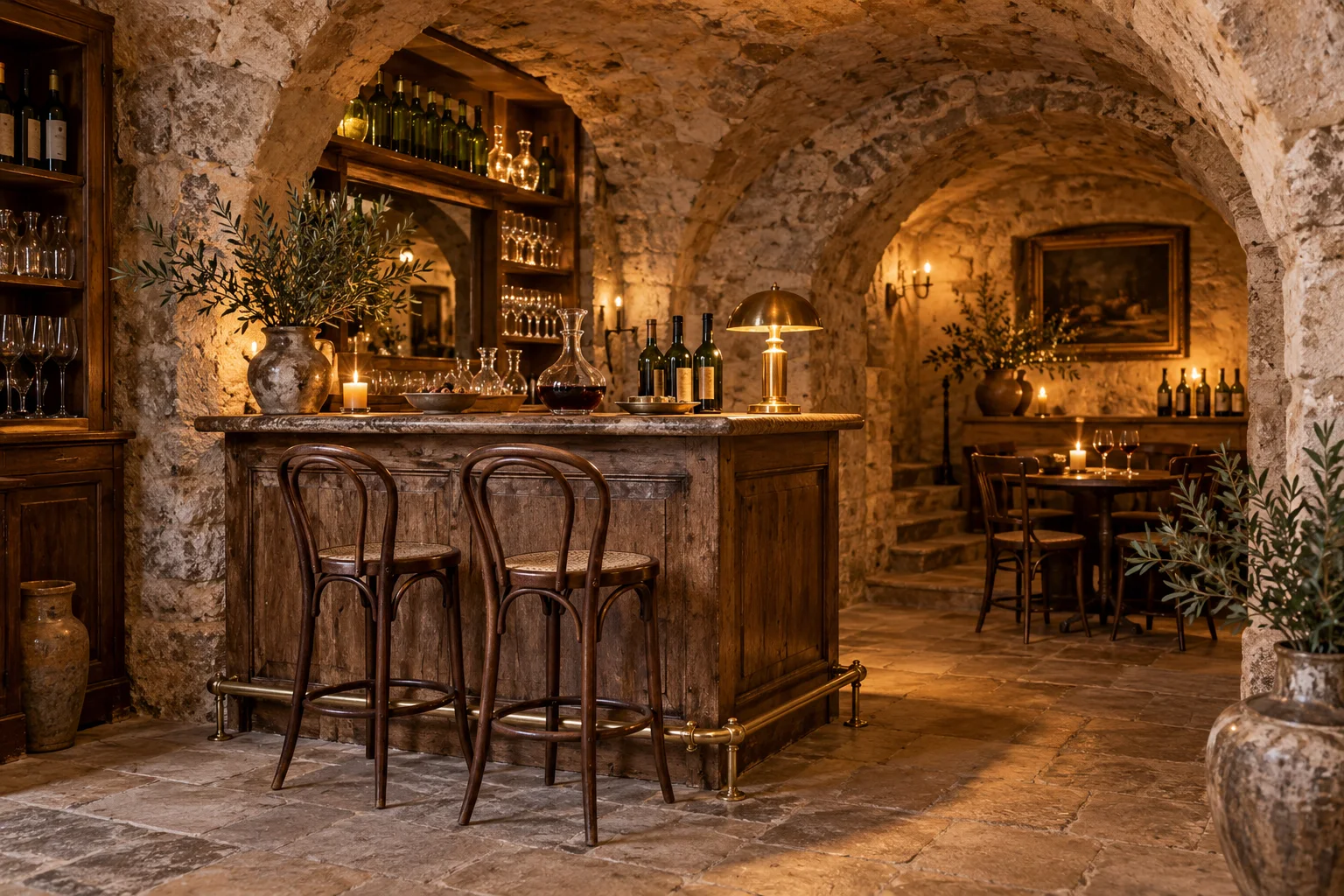
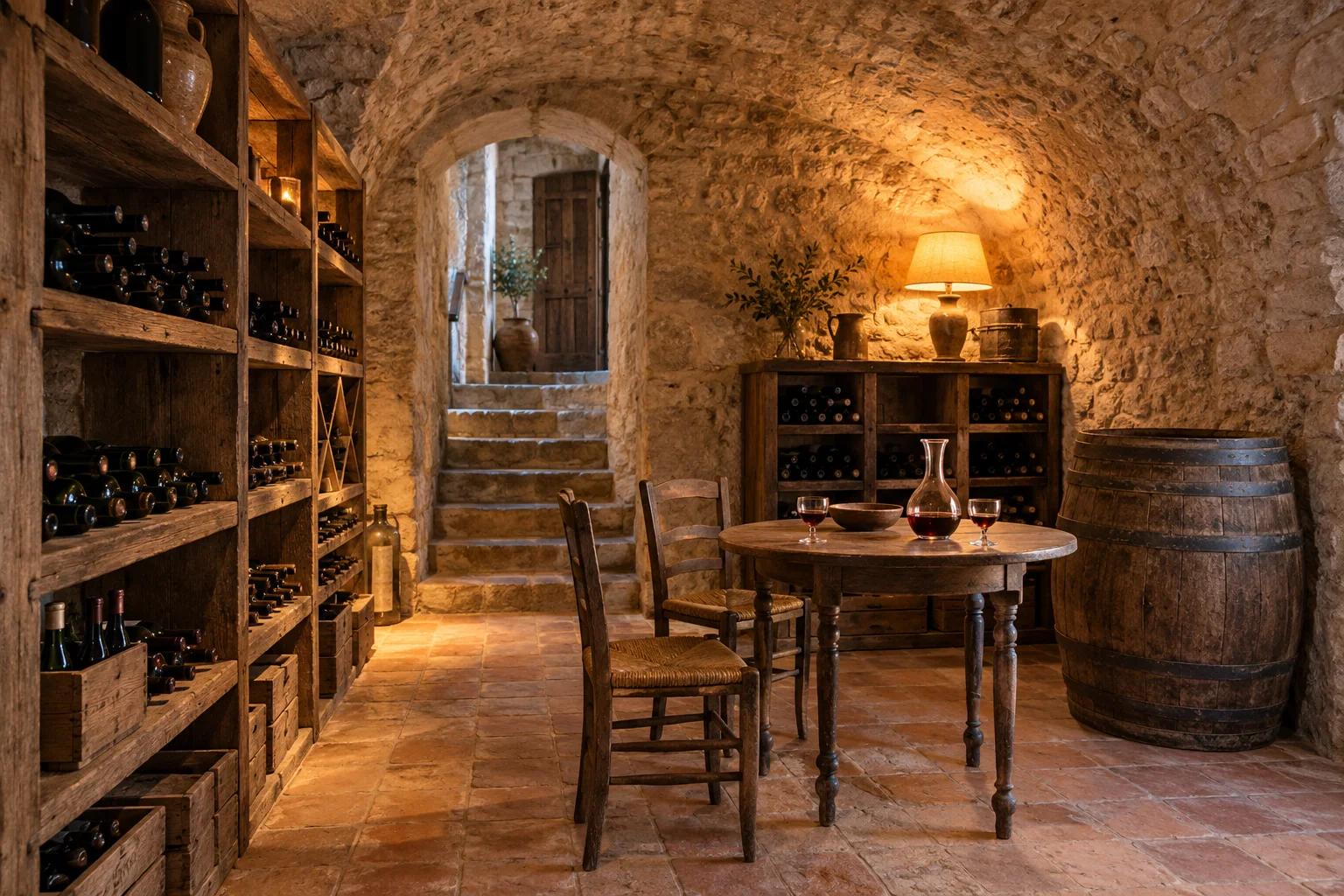
Mixing is the French country habit, and it works when heights agree within 0.5 in (1 cm) and stems share a character: all drawn, all faceted, all ribbed. Lay candidates in a row, sort by height, then by bowl shape. Wash by hand in warm water, rinse to remove detergent film, dry with a lint-free cloth and store upright. Our guide to French country tableware sets a mixed row of glasses beside plated flatware and faience; the wine cellar and tasting room ideas show where the larger glasses live.
What to compare
| Form | Suggested Use | Decisive Check |
|---|---|---|
| Bistro glass | Everyday red at the kitchen table | Rim chips and stacking scratches |
| Blown stemmed glass | Dinner service, mixed sets | Stem join and cloudiness |
| Crystal glass | Occasions and display | Etched mark on the foot and ring when tapped |
Your buying checklist
Continue planning your room
Frequently asked questions
Why are vintage French wine glasses so small?
Wine was poured in small measures from a carafe and refilled, so a bistro glass of 4–6 oz was a full glass. Modern glasses grew with the habit of a single large pour and with tasting fashions. Fill a vintage glass one third and use it for white wine and aperitifs; keep one larger glass per guest for red.
How do I know if French wine glasses are crystal?
Crystal is heavier and brighter than ordinary glass, shows color at the rim in daylight, rings when tapped and has no mould seams. An etched signature on the foot settles the maker. Without a mark, describe the glass as crystal-style rather than attributing it; many French houses only marked systematically in the twentieth century.
Can I mix different vintage wine glasses on one table?
Yes, and it is the French country habit. Keep heights within half an inch, give every glass the same stem character, and group by course rather than by pattern. A row of near-matching bistro glasses reads as a set; one tall crystal glass among them reads as a mistake. Count one glass per guest plus two spares.
How should vintage wine glasses be washed?
By hand, in warm water with a little detergent, one glass at a time, holding the bowl rather than the stem. Rinse well, dry with a lint-free cloth and store upright. Dishwashers etch old glass permanently and chip thin rims. Limescale haze responds to a short soak; etching does not.
Sources & further reading
- Canadian Conservation Institute — Caring for ceramic and glass objects — Supports hand washing, avoiding thermal shock and abrasive cleaning, and upright storage of glass.