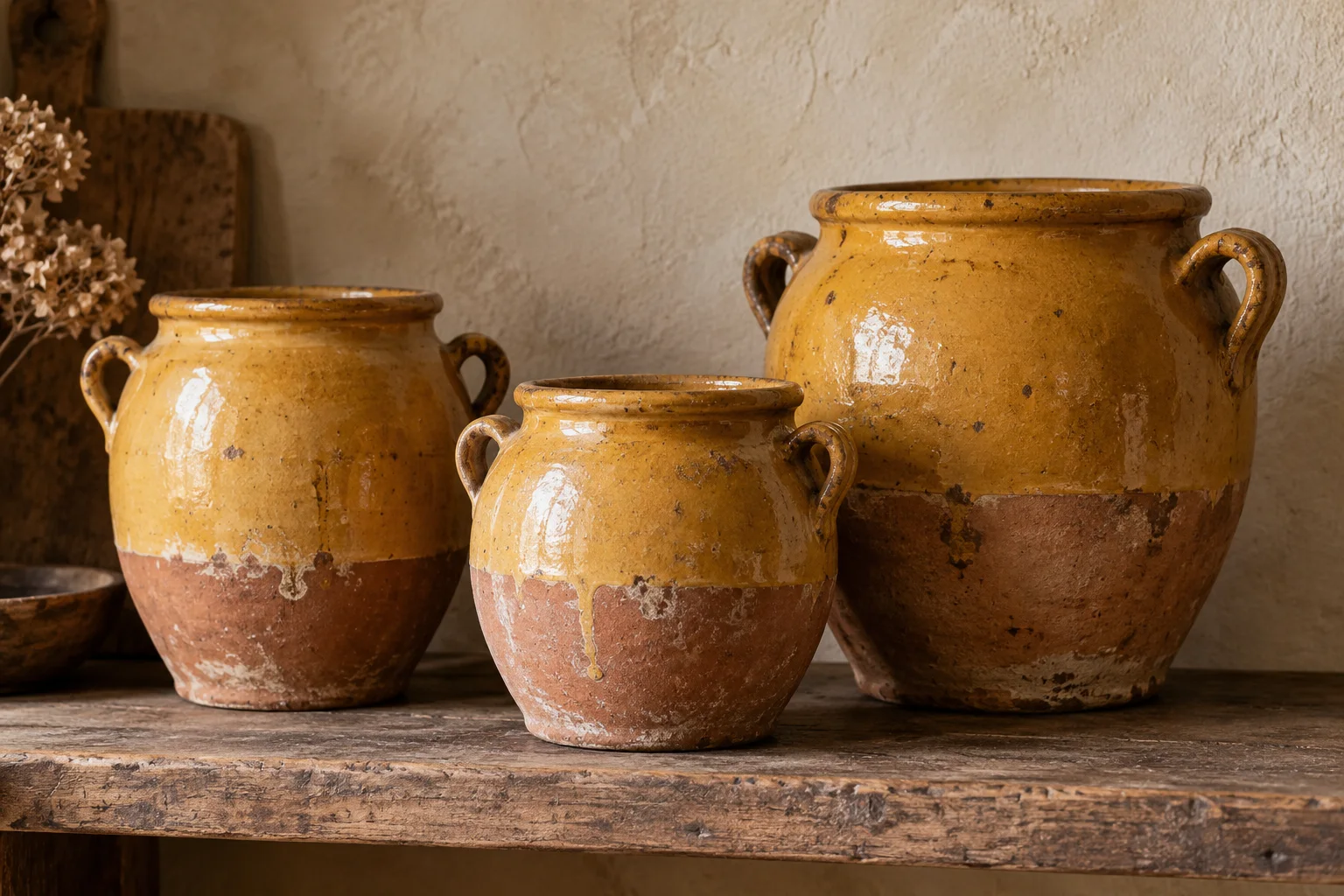
 AI-created styling idea
Tableware & kitchen
French confit pots
Describe a confit pot by material and condition before assigning an origin.
ExploreFrench Country · An inspiration catalogue
French country pottery is the everyday layer of the style: glazed earthenware, confit pots, faience plates and majolica, set alongside bistro glasses and silverplate on a scrubbed table.
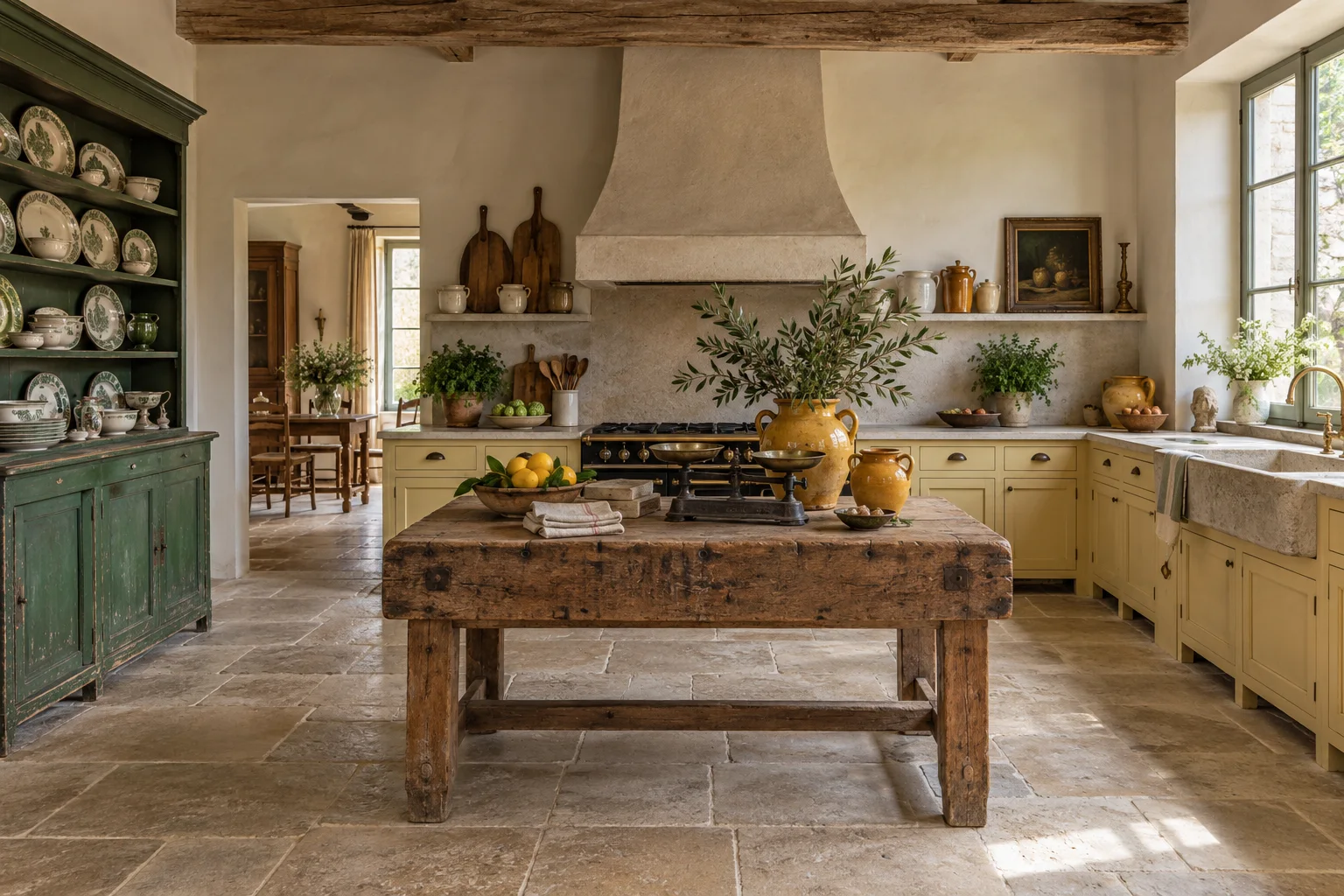
French country pottery covers three bodies and many glazes: earthenware (terre cuite, low-fired and porous), stoneware (grès, high-fired and dense) and faience (earthenware under a white tin glaze that takes painted decoration). The pieces that define the style were made for kitchens, not cabinets, which is why they sit so easily in French country decor today.
Earthenware shows a red or buff body at the foot and chips easily; stoneware rings when tapped and holds liquid without glaze; faience is lighter in the hand than it looks, with a soft, slightly pooled glaze. Turn every piece over: the foot tells you the body, the wear and often the mark.
Ochre and honey glazes from the southwest, green and brown lead glazes from the center, the yellow of Provençal tians, the white-and-blue of faience: choose two glaze colors for a table and repeat them. Glaze crazing (a fine network of cracks) is normal on old earthenware.
Quimper, Gien, Sarreguemines, Lunéville and Longchamp used printed or painted marks; a plate without one is "in the Quimper manner", not Quimper. The Metropolitan Museum's essay on French faience gives the history behind the main centers.
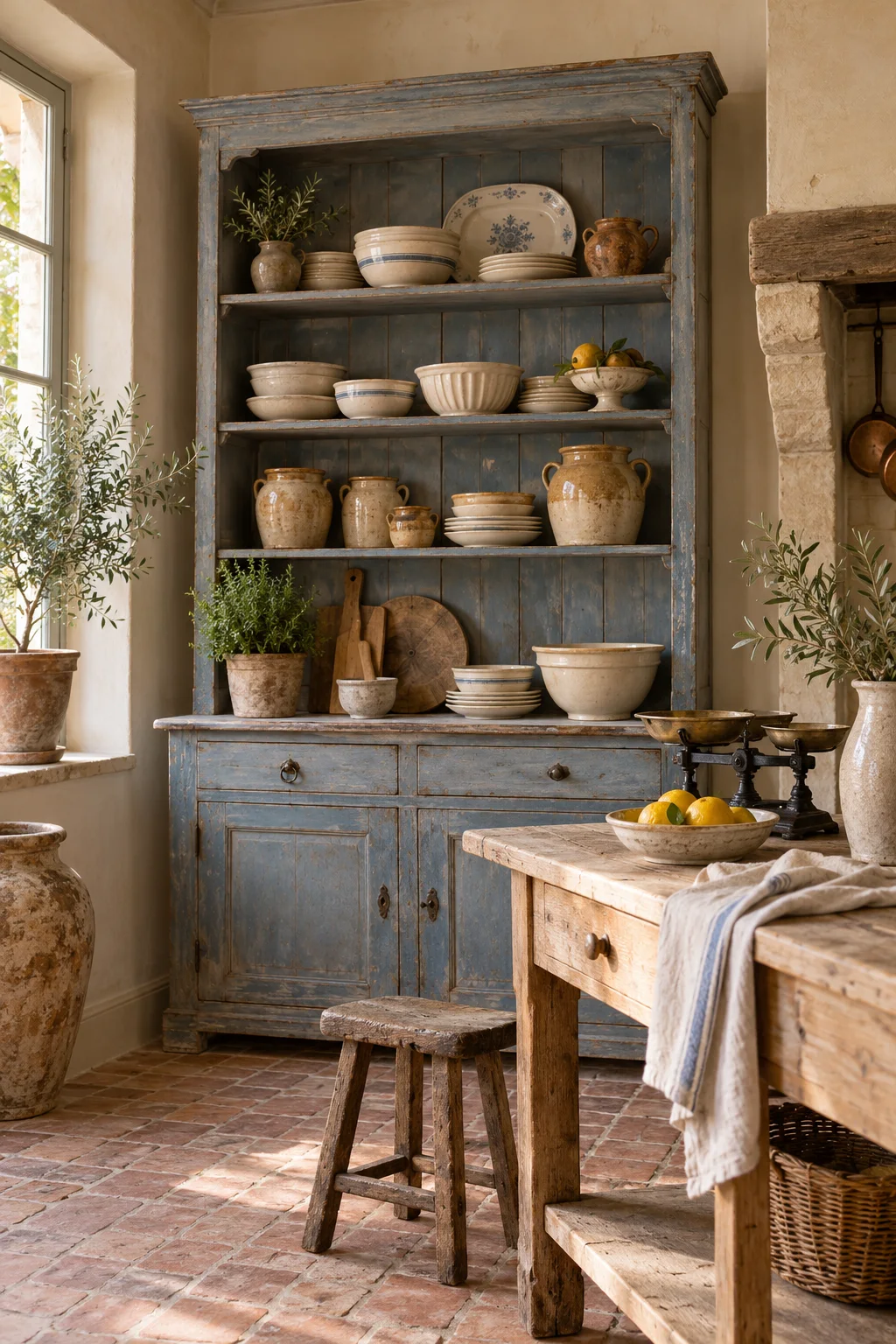
The glazed-top, bare-bottom pot à confit of the southwest held preserved duck and goose; the unglazed lower half sat in the cool earth of a cellar. Sizes run from 6 to 16 in (15–40 cm) tall. Describe a confit pot by material and condition before assigning an origin; see French confit pots.
Oval terrines with lids, shallow tians, round gratin dishes in glazed earthenware: the pieces that go from oven to table. Check for hairline cracks by tapping (a dull sound means a crack) and avoid using cracked earthenware for hot food.
Stoneware jars for olives and lard, enamel pitchers, faience water jugs: the vertical pieces that make a shelf read as a kitchen. Browse kitchen pots and jars and pitchers and teapots; a pitcher of garden flowers is the quickest French country centerpiece.
Dinnerware for a French country table rarely comes as a matched service of twelve. Eight plates in one color family, from two or three makers, read as collected rather than mismatched. Look for stable glaze (no flaking at the rim) and a foot without a chip that would scratch a table; explore serving dishes and tableware.
Antique majolica plates (barbotine in France) carry relief fruit, leaves and shellfish under bright lead glazes. Treat them as display pieces or for dry foods; old lead glazes can leach into acidic foods. Chips on the high relief are common and should be described.
Oyster plates with six or twelve wells, fish plates with painted species, asparagus cradles: the specialist French services that hang as well as they serve. Compare forms in vintage oyster plates, and attribute by mark only.
Thick bistro glasses and pressed-glass tumblers take daily use; stemmed crystal (attributed only when marked or documented) comes out for the Sunday table. French wine glasses of the early 20th century are smaller than modern ones, about 4–6 oz (12–18 cl) for wine. Test crystal for cloudiness (mineral deposits that rarely clear) and for chips at the rim; see glasses and decanters.
French silverplate (métal argenté) is marked with the maker and often the grams of silver used per dozen; wear through to the base metal shows on fork tines and spoon bowls. Build a mixed service by function (eight dinner forks, eight knives, eight soup spoons) rather than by pattern. Browse silver-plated flatware.
A tole tray, a zinc pitcher, a wire egg basket or a wooden salt box finishes the table without matching anything. See trays and serving accessories.
Choose the glaze color first (ochre, green or blue-and-white), then add one metal (silverplate or copper) and one glass. Everything else stays neutral: linen, wood, candlelight.
For eight guests: 8 dinner plates, 8 dessert or salad plates, 16 glasses (water and wine), 24 pieces of flatware, 2 serving dishes, 1 pitcher, 2 candlesticks. Buying in those quantities from several sources is easier than hunting a single service of eight.
A plain linen cloth or runner, napkins that do not match it, and brass or glass candlesticks: see antique linens and candlesticks and candelabras. The French country kitchen page shows where these pieces live between meals.
Crazing is cosmetic on display pieces but lets liquids into earthenware, which can stain and smell; a hairline crack means the piece should not hold hot or acidic food. Chips at the foot are the least serious, chips at the rim the most visible. Ask for a photograph of the back and of the rim in raking light before buying.
Use old lead-glazed earthenware and majolica for display, bread or dry foods, not for storing wine, vinegar or tomato dishes. Keep silverplate, gilded faience and crystal out of the dishwasher: hand wash, dry at once. The Canadian Conservation Institute's guidance on caring for ceramic and glass objects covers handling, cleaning and storage.
Lo Cantou lists antique French tableware and art de la table with marks photographed and chips described. A designer assembling a table for a client project can send a brief to Antiques 360, which curates copper, faience, silverplate and glass from the 1880–1950 period into cohesive sets, documented before you see them, with the landed cost quoted upfront; the French country antiques guide explains what the documentation covers.
AI-created styling ideaTableware & kitchen
Describe a confit pot by material and condition before assigning an origin.
ExploreAI-created styling ideaTableware & kitchen
Eight plates in one color family from two or three makers read as collected, not mismatched.
Explore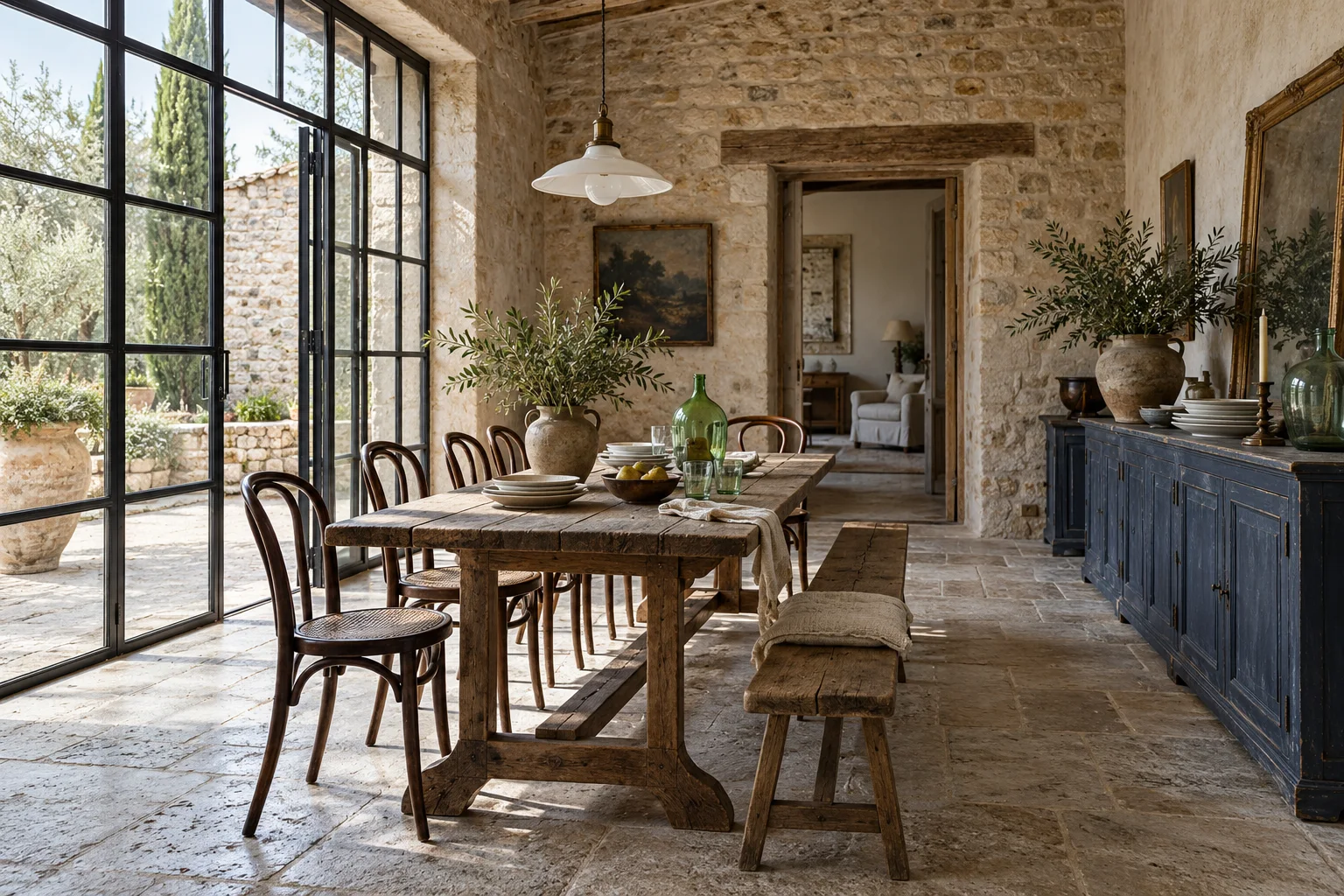 AI-created styling idea
Tableware & kitchen
Six or twelve wells, a mark on the back, and a wall hanger rated for the weight.
Explore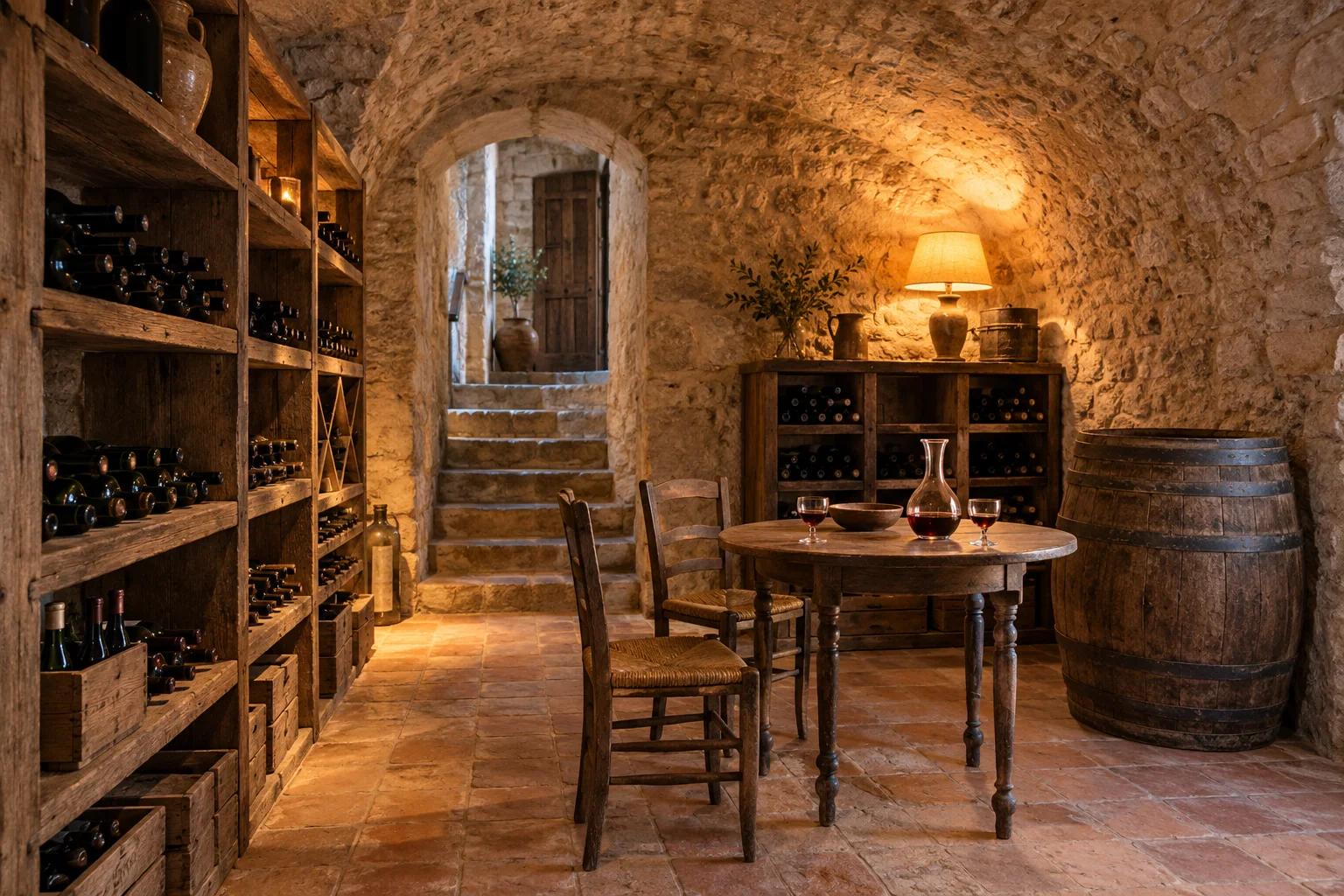 AI-created styling idea
Tableware & kitchen
Bistro glass for every day, crystal for Sunday; check rims and cloudiness before buying.
Explore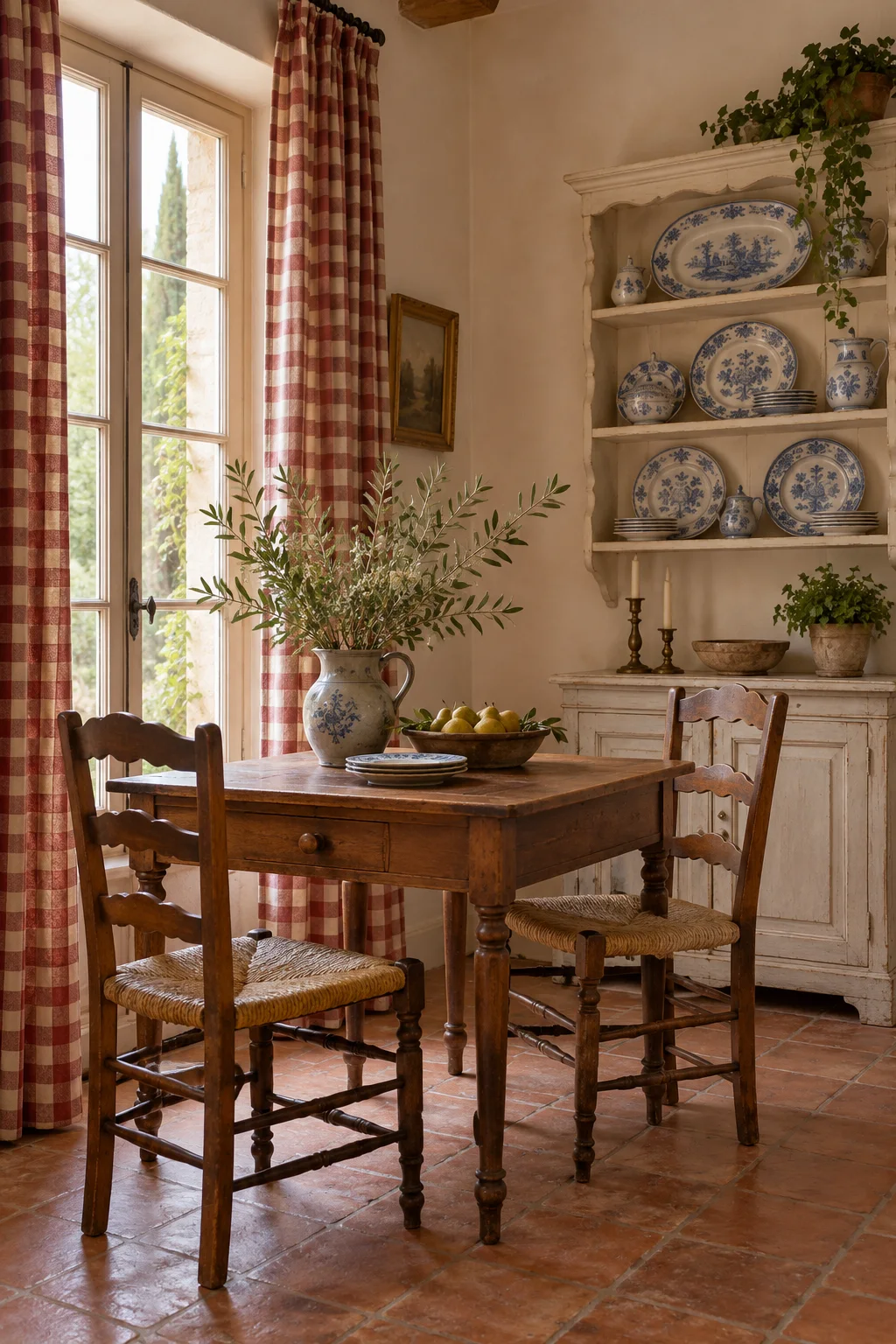 AI-created styling idea
Tableware & kitchen
Build the service by function and distinguish tarnish, plating wear, and composite components.
Explore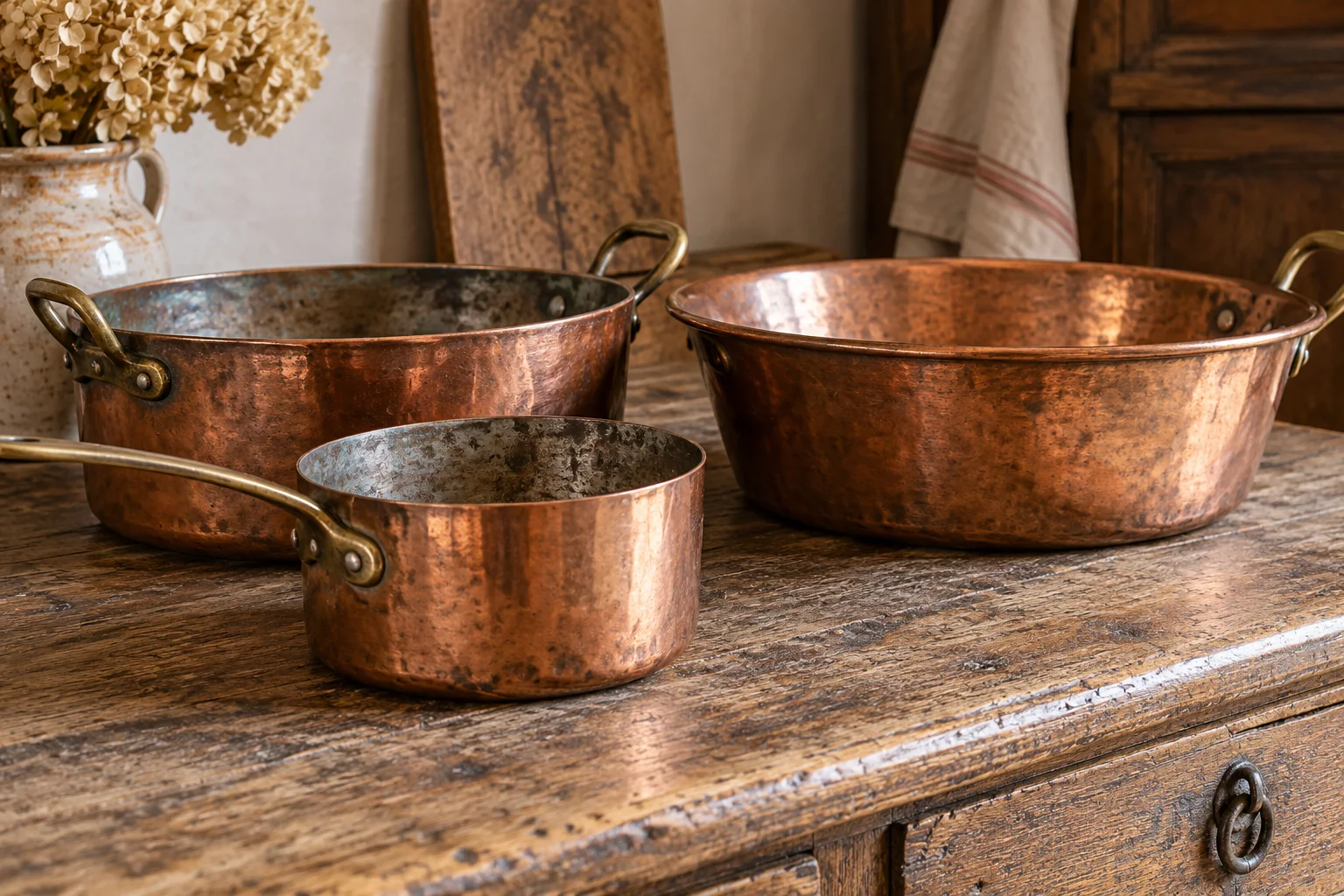 AI-created styling idea
Tableware & kitchen
The metal that pairs with ochre glaze: check tinning and gauge before cooking in it.
ExploreThe tableware subcategories, arranged by the room where they usually belong.
Sound, uncrazed stoneware and later faience are generally fine for everyday food. Old lead-glazed earthenware and majolica should be used for display, bread or dry foods rather than for acidic dishes or long storage, and any piece with a hairline crack should stay away from hot liquids. When in doubt, use the antique piece to serve and a modern plate to eat.
Turn the piece over and look for a printed or painted factory mark; Quimper, Gien, Sarreguemines and Lunéville all marked their wares, often with a pattern or decorator code. A plate in the Quimper manner without a mark should be described as such, not as Quimper. Compare the glaze, the weight and the foot with marked examples before deciding what you have.
Thick bistro glasses and pressed-glass tumblers for daily use, small stemmed glasses of 4 to 6 oz for wine, and one set of crystal for the Sunday table. Mix forms but keep one tone, clear or faintly green. Check rims for chips and bowls for cloudiness, which comes from mineral deposits and rarely clears, before buying a set.
It is better not to. Detergent and heat dull the plating, loosen old knife handles and can cause pitting where the silver has worn through to the base metal. Hand wash in warm water, dry at once with a soft cloth, and store the pieces in a lined drawer or roll. A light polish once or twice a year is enough for a service in regular use.
Nov 6, 2026 · Antique guide
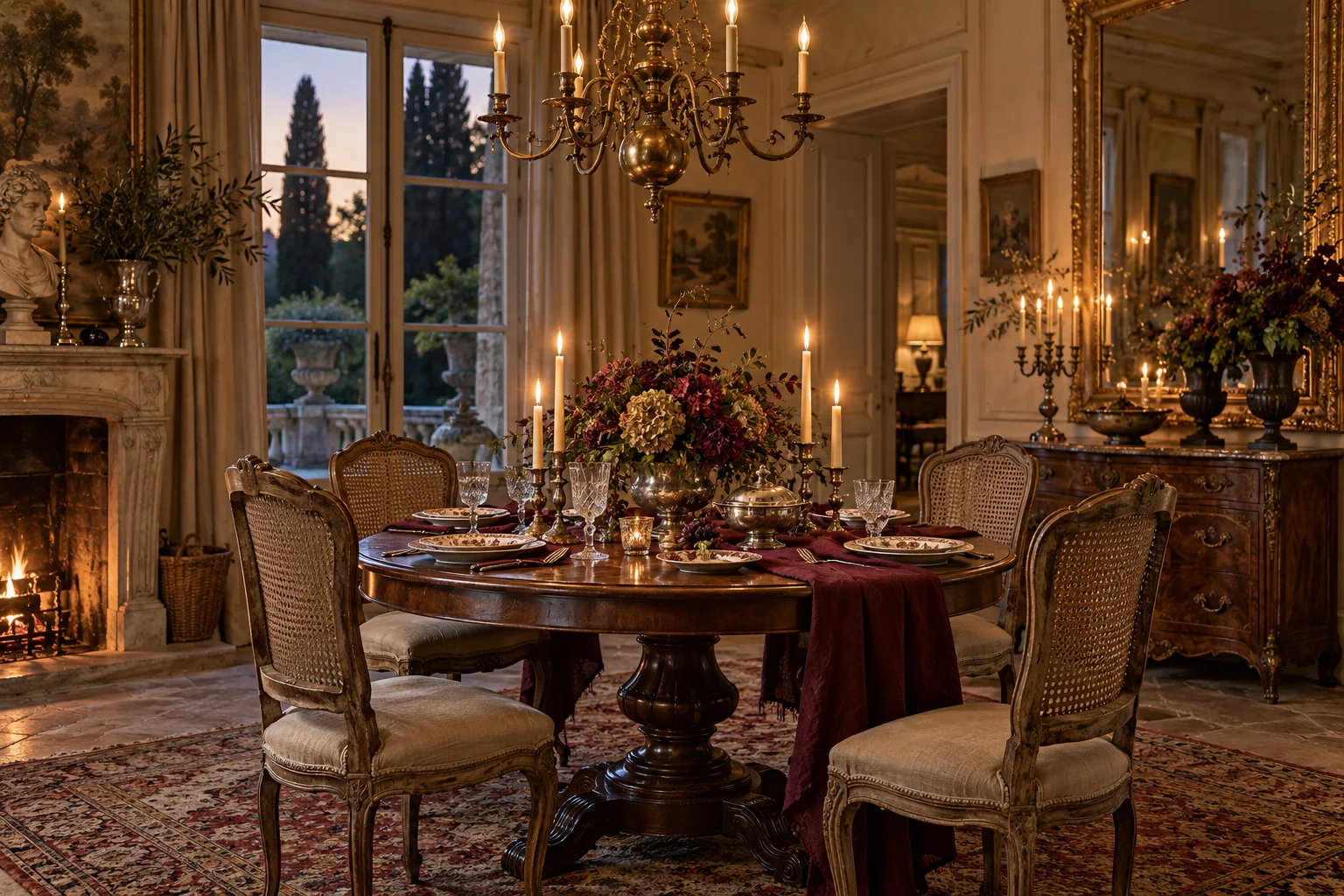
A French country Thanksgiving table takes its look from the farmhouse: a linen cloth, white ironstone or faience plates, mixed silverplate, short bistro glasses,…
Nov 6, 2026 · Antique guide
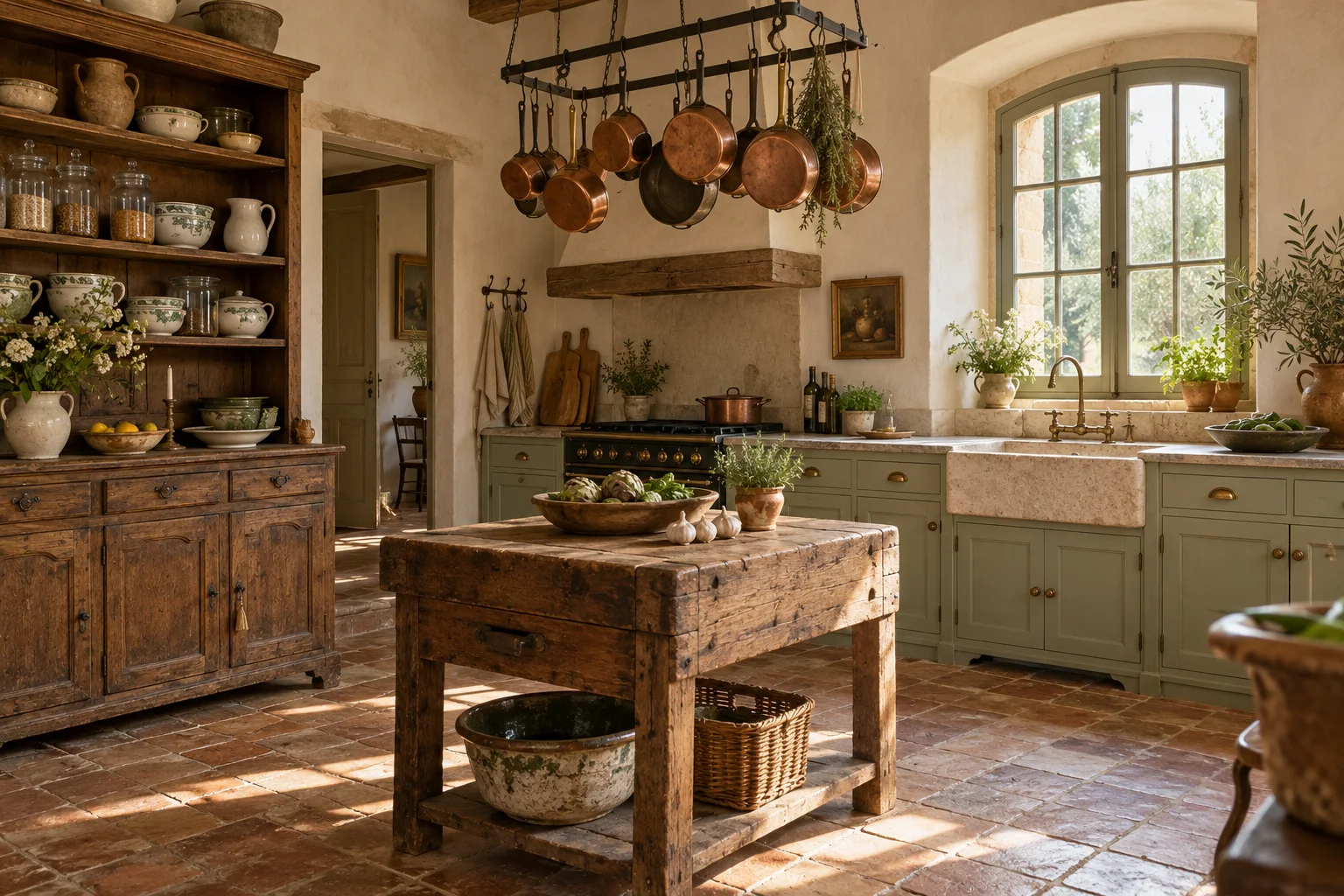
French kitchenware from 1880 to 1960 was made for daily work, which is why the good pieces are still at it.
Nov 6, 2026 · Antique guide
Samadet faience is the tin-glazed tableware made in a single village of the Landes, in the Tursan hills south of Mont-de-Marsan, from about 1730 to 1840.
Nov 5, 2026 · Antique guide
Vintage silver and vintage silverplate look alike on a sideboard and behave differently in the hand, in the sink and at resale.
Nov 5, 2026 · Antique guide
Vintage pottery from French kitchens and workshops falls into two bodies and three glazes.
Nov 5, 2026 · Antique guide
An antique magazine rack is one of the few small antiques that still does its original job and several new ones.