Sizes that fit a bottle
A standard champagne bottle is about 12.5 in (32 cm) tall and 3.5 in (9 cm) across the base. A single-bottle bucket therefore needs an inside height of 7.5 to 9 in (19 to 23 cm) and an inside diameter of 7 to 8 in (18 to 20 cm), so that ice and water reach the shoulder of the bottle. Buckets below 7 in (18 cm) tall were often made for wine or as ice pails for cubes, and a bottle in them stands proud and chills slowly. Measure the inside, not the rim, because flared rims add an inch of nothing.
Two-bottle buckets, oval or wide, run 10 to 12 in (25 to 30 cm) across; magnum buckets are taller still. A bucket with a stand of 24 to 28 in (60 to 70 cm) frees the table. Weight is a clue to quality: a heavy-gauge silverplate bucket for a single bottle weighs 2 to 3 lb (1 to 1.4 kg) empty; thin ones dent at the rim and belly.
Silverplate, copper and glass: what wear means
Silverplate is a thin layer of silver on a base of nickel silver or brass. Where the plate wears through, the base shows as yellow or pink patches, usually on the rim, the handles and the belly where hands held it. Light wear is honest and does not affect use; patches larger than a coin can be replated, which changes the appearance and should be stated. Hotel ware, marked with a hotel or restaurant name, is heavier and often the best value for everyday use. The Canadian Conservation Institute recommends the mildest cleaning that works: wash, dry at once, and polish rarely, because every polish removes silver.
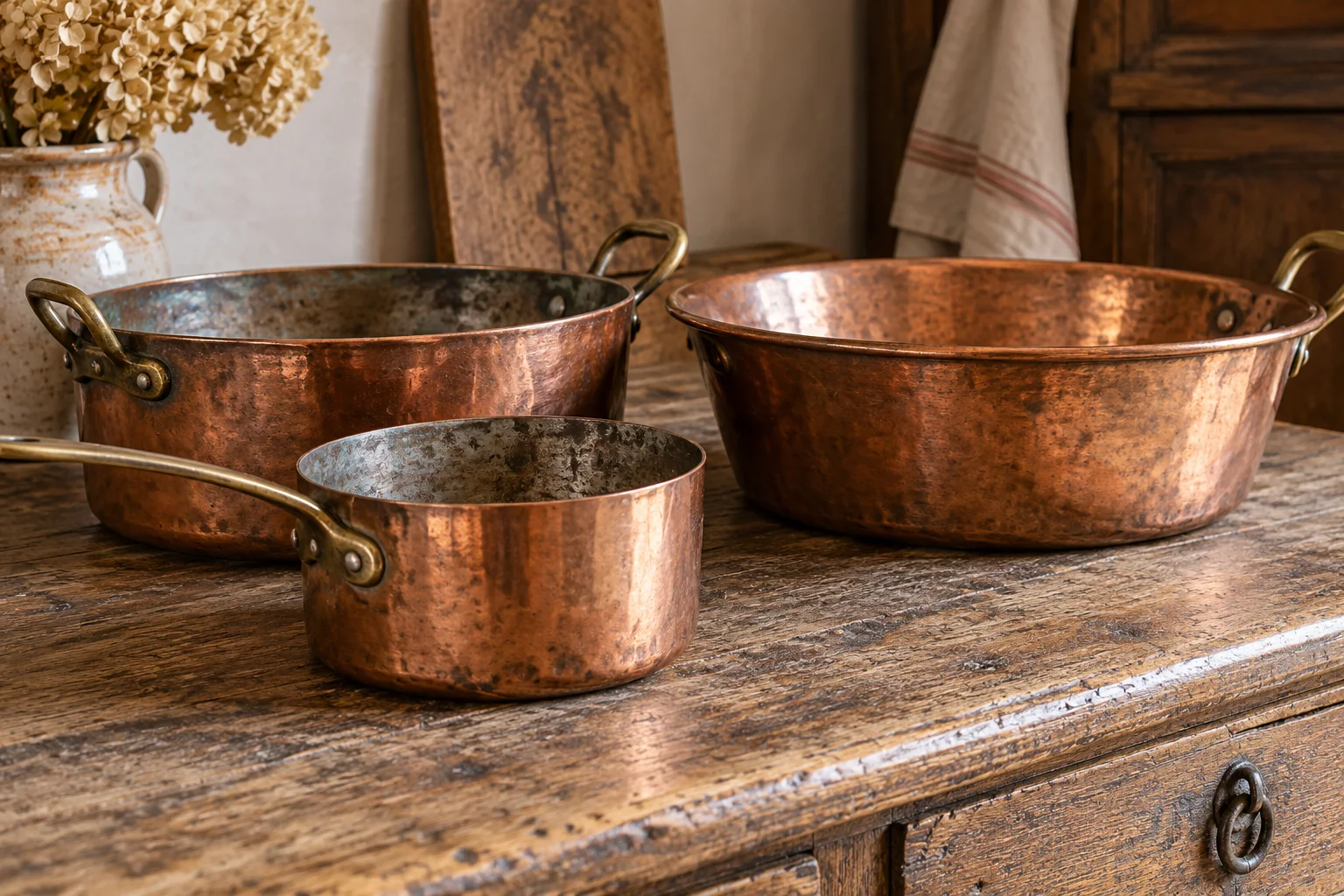
Copper buckets are often tin-lined; bare copper is fine for ice but will mark. Dents in copper and silverplate are cosmetic unless the base is pushed in and the bucket rocks. Glass and crystal buckets are heavy and cold to the touch; check the rim and base for chips and the interior for cloudiness, which is deposit etched into the glass and rarely comes out. A glass bucket should sit on a cloth or a tray to spare the table.
Serving from a vintage bucket
Fill the bucket one third with ice, then add cold water to the shoulder of the bottle: the water carries the cold to the glass far faster than ice alone, and a bottle at room temperature reaches serving temperature in 20 to 30 minutes. Put a folded napkin over the rim to catch drips and to wipe the bottle before pouring. On a wooden table, set the bucket on a tray or a thick cloth; condensation forms a ring in minutes.
After use, empty the bucket, rinse, and dry inside and out with a soft cloth; water left standing stains silverplate and spots glass. Store with the lid or a cloth inside to keep dust off. A bucket is also a good vase for a tall arrangement and a cooler for a carafe of water; our note on barware and wine accessories lists the pieces that go with it.
What to compare
| Form | Suggested Use | Decisive Check |
|---|---|---|
| Heavy silverplate hotel bucket | Everyday table, one bottle | Inside height 7.5 to 9 in / 19 to 23 cm |
| Tin-lined copper bucket | Kitchen or bar display and use | Base flat, lining intact |
| Cut glass or crystal bucket | Formal table on a tray | Rim chips and interior cloudiness |
Your buying checklist
Continue planning your room
Frequently asked questions
What size should a champagne bucket be?
For one standard 75 cl bottle, an inside height of 7.5 to 9 in (19 to 23 cm) and an inside diameter of 7 to 8 in (18 to 20 cm) lets ice and water reach the bottle’s shoulder. Measure the inside of the bucket, not the rim, and allow more for a magnum or two bottles.
Can a vintage silverplate champagne bucket be used every day?
Yes, if the base is flat and the body sound. Worn plating is cosmetic. Wash and dry it after each use, avoid leaving ice water standing overnight, and polish only occasionally, since polishing removes a little silver each time.
Is a dented champagne bucket worth buying?
Small dents on the belly are normal on soft metal and do not affect use. A dent in the base that makes the bucket rock, a split seam, or a loose handle socket are reasons to pass or to budget for a repair by a metalworker.
How long does champagne take to chill in a bucket?
In a mix of ice and cold water, a bottle at room temperature reaches about 45 °F (7 °C) in 20 to 30 minutes. Ice alone takes roughly twice as long because air between the cubes insulates the glass.
Sources & further reading
- Canadian Conservation Institute — Care of metal objects — Cleaning and care of silverplate and other metal objects.
- Canadian Conservation Institute — CCI Notes 9/3: The Cleaning, Polishing and Protective Waxing of Brass and Copper — Cleaning and protective waxing of copper and brass.