Copper and metal gifts for home cooks
Metal pieces go straight to the stove, so their checks matter most. Our guide to French copper cookware covers linings and weights in more depth.
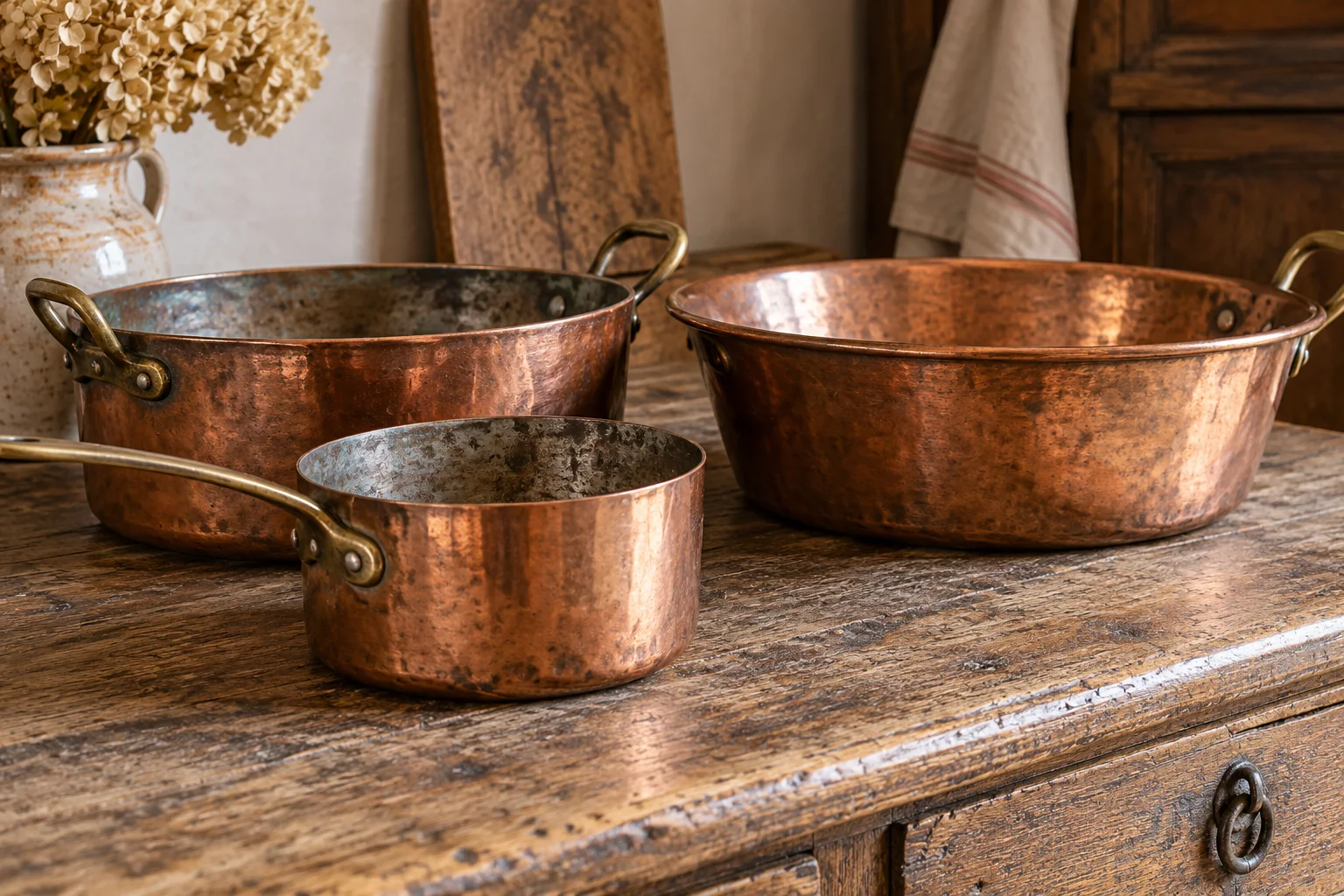
- A tinned copper saucepan. A casserole of 6–7 in / 16–18 cm. The tin must cover the cooking surface; copper showing through means retinning before use. Never heat a tinned pan empty: tin melts at about 450 °F / 232 °C. See tinning, gauge and stamps. Packing: wrap the handle, box. Budget: moderate.
- A copper jam pan. The bassine à confiture, wide, sloped and usually unlined, 14–16 in / 36–40 cm across. An unlined pan is for fruit cooked with sugar and emptied at once. Check for splits around the rivets. Packing: paper inside, large flat box. Budget: moderate to generous.
- A balance scale. A Roberval-type balance with two brass pans and a set of weights. Check that the weights are complete and stamped, and that the pans sit level when empty. Our page on vintage kitchen scales shows the forms. Packing: weights wrapped apart. Budget: moderate.
- A tinned pastry mold. A fluted mold for brioche or tarts. Check the tin in the flutes and rust on tin-plate. A worn mold still decorates a wall. Packing: nest small molds. Budget: modest.
Earthenware, enamel and wood: French kitchen gifts for the counter
Glazed earthenware needs one specific check. Some older glazes contain lead, which can leach into acidic or fatty food; a home swab test shows surface lead only and is not a guarantee.
- A confit pot. The glazed Southwest pot à confit, 8–12 in / 20–30 cm tall. Check for hairlines with a light tap. Unless tested, use the pot for utensils or dry goods; see French confit pots. Packing: heavy; fill, wrap, double box. Budget: moderate.
- A glazed gratin dish. An earthenware plat à gratin. Same glaze rule; crazing also traps grease. Packing: wrap, double box. Budget: modest.
- Enamel canisters. Enameled steel, tôle émaillée. A chip exposes steel that rusts, and a chip inside rules out food storage. Packing: pad rims and corners. Budget: modest to moderate.
- A bread board. A planche à pain in beech or oak, 12–16 in / 30–40 cm. Check for cracks along the grain and a board that rocks. Oil it with food-grade mineral oil. Packing: wrap the corners. Budget: modest.
Linen, prints and vintage kitchen gifts for the shelf
- Linen tea towels. Three or four torchons, striped or monogrammed. Check for holes at the folds; wash before giving. Packing: flat in tissue. Budget: modest.
- A marble mortar. With a wooden pestle. Check the bowl for cracks and the rim for chips. Packing: pestle wrapped apart, padding under the base. Budget: moderate.
- An enameled cast-iron casserole. Check that the interior enamel is unchipped and the lid fits. A 9.5 in / 24 cm casserole weighs roughly 9–11 lb / 4–5 kg. Packing: lid wrapped separately, strong box. Budget: moderate.
- A framed cookery print. A plate from an old cookbook or a kitchen engraving. Ask whether it is an original plate or a reproduction. Keep it away from stove steam. Packing: acrylic glazing, protected corners. Budget: modest to moderate.
Budget tiers and the note in the box
Modest means wood, linen or a small piece; moderate, copper, a confit pot or a complete scale; generous, a large or marked copper piece. Condition and completeness move a piece within its tier more than age does. For a list of what to buy first, see twelve French kitchenware essentials.
The note in the box should say plainly whether the piece is for cooking or for display, with the reason: a lining to renew, an untested glaze. Add the French name and a line of care.
What to compare
| Form | Suggested Use | Decisive Check |
|---|---|---|
| Tinned copper saucepan | Daily cooking | Tin covers the cooking surface |
| Unlined jam pan | Fruit with sugar only | No splits at the rivets |
| Confit pot or gratin dish | Utensils or display unless tested | No hairlines; glaze tested for lead |
| Enamel canister | Dry storage | No chips inside; no rust |
Your buying checklist
Continue planning your room
Frequently asked questions
Can you cook in a vintage copper saucepan?
Yes, if the tin lining is intact over the cooking surface. Copper showing through the tin means the pan needs retinning before it touches food. Heat a tinned pan with fat or liquid in it, never empty, because tin melts at about 450 °F / 232 °C. Wooden tools help the lining last longer.
Are old French glazed pots safe for food?
Not without a check. Some older earthenware glazes contain lead, which can leach into acidic or fatty food. A home swab test detects surface lead but is not a guarantee. Use an untested confit pot or gratin dish for utensils, dry goods or display, and keep acidic food and long storage out of it.
What is a good vintage gift for a home cook on a modest budget?
Linen tea towels, a wooden bread board or a small enamel canister. Each is useful at once, easy to check and easy to ship. Wash the towels, oil the board with food-grade mineral oil and check the canister for chips inside before wrapping. Add a note with the French name and its care.
Why is a French jam pan made of unlined copper?
Copper spreads heat quickly and evenly, which helps fruit and sugar reach setting point fast. Jam pans were traditionally left unlined and used only for fruit cooked with sugar, emptied as soon as the jam is done. Do not store food in an unlined copper pan or use it for other acidic dishes.
Sources & further reading
- Canadian Conservation Institute — CCI Notes 9/3: The Cleaning, Polishing and Protective Waxing of Brass and Copper — Supports gentle cleaning and polishing of copper and brass, relevant to pans and scale pans kept for display.
- Canadian Conservation Institute — Caring for ceramic and glass objects — Supports handling glazed ceramics with care and checking for cracks; it does not address food safety.