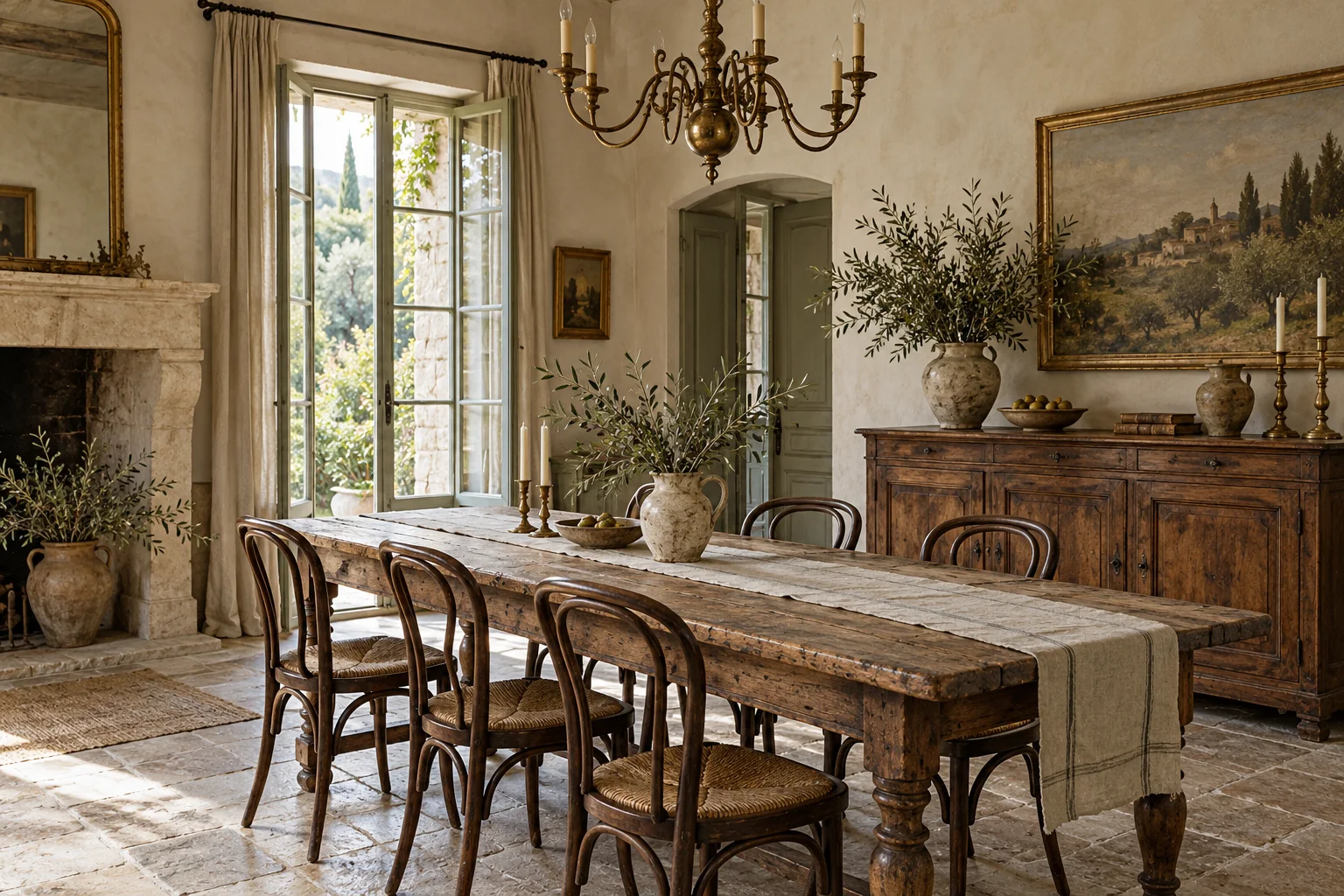
 AI-created styling idea
Lighting
Candlesticks & candelabras
Weight, seams and matching bases tell cast from sheet and a pair from two singles.
ExploreFrench Country · An inspiration catalogue
French country accents are the small pieces that finish a room: brass, glass, pottery, copper, linen and baskets, chosen for use as much as for looks.
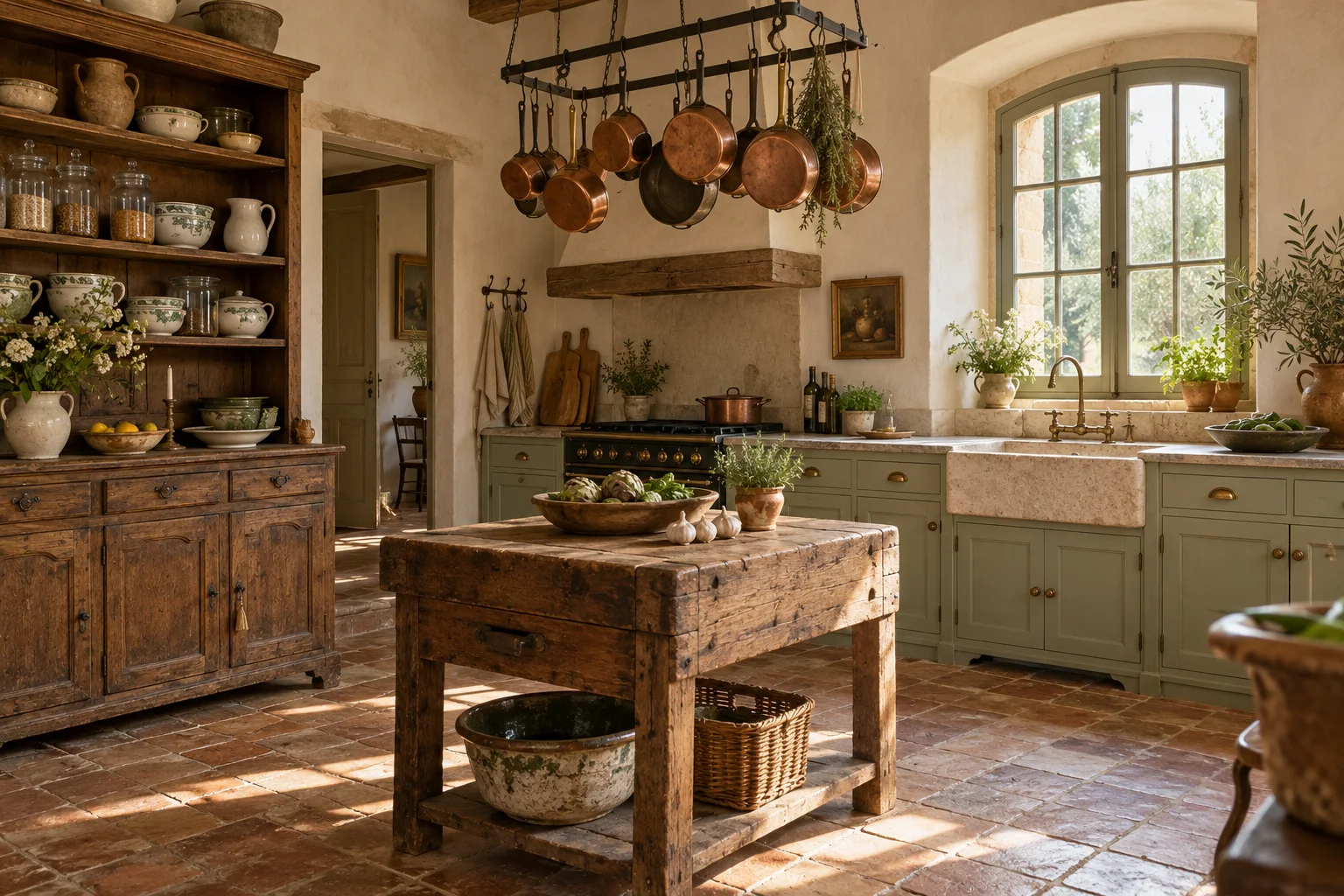
French country accents work because they were made to be used: a pair of candlesticks on the table, a carafe for water, a confit pot for wooden spoons, a basket for bread. Left in view, they decorate without being decoration. The rule that follows is simple: choose an accent for a job, then let it stay where the job happens. A room furnished this way reads as lived in, which is the whole point of the style described in our French country decor guide.
Three materials repeated across a room do more than twelve different objects. Brass on the candlesticks, the lamp and the drawer pulls; glass on the carafe and the hurricane shade; linen on the runner and the cushions. Keep one surface empty in every room, usually the top of the buffet or the mantel, so the pieces you do show have air around them.
Tarnish on brass, cloudiness in old glass, crazing on faience and softness on a washed linen sheet are not defects to be corrected but states to be decided on. Some can be reversed, most can be kept. Decide before you buy: a polished pair of candlesticks and a dark, untouched pair are two different objects at two different prices, and both are honest when described as such.
French candlesticks and candelabras come as single sticks, pairs and garnitures of three or five. Cast brass is heavy for its size; sheet brass is light and dents. Many 18th- and 19th-century sticks have a push-up ejector in the stem and a seam where two castings meet. For a dining table, 8–12 in / 20–30 cm keeps the flame above eye level when seated; taller sticks belong on a mantel or a buffet. Matching pairs are worth more than two singles, so check that the bases and the drip pans agree.
The bouillotte lamp, with its tole shade sliding on a central rod, and the oil lamp converted to electricity are the two classic French antique lamps in brass. Rewiring to US standards with listed components is normal and should appear on the invoice; a reversible conversion that keeps the original font and burner is better than one that drills through them. Shades are proportion more than style: the shade diameter roughly equals the lamp height to the socket.
Escutcheons, drawer pulls, fiches hinges, curtain tie-backs and door knockers are the brass most people overlook. Original hardware on a piece of furniture is a reason to keep it; replaced hardware is common and should be disclosed. Small brass is the easiest antique to ship and often carries the most charm per dollar.
Decide first whether the surface is lacquered: lacquered brass only needs dusting and a damp cloth, and polishing will streak it. Bare brass can be cleaned with a mild commercial brass polish on a soft cloth, avoiding abrasive powders and wire wool, then protected with a thin coat of microcrystalline wax. Never polish gilt bronze or gilded mounts as if they were brass; the gilding is thinner than the polish.
The bistro water carafe, the wine decanter with a ground stopper and the pressed-glass pitcher are the working glass of a French table. Our page on glasses and decanters compares the forms. A stopper should drop into the neck and seat with a slight turn; a loose stopper is a replacement, a tight one may be the wrong size. Cut crystal rings when tapped, pressed glass does not; attribute a maker only from a mark on the base.
Green and amber demijohns, with or without their wicker, are display pieces, not vessels for drinking: the glass is thick, the interior cannot be cleaned and the old wicker may hold damp. One large demijohn on the floor beside a buffet does the work of a plant; three in a window become a composition. Check the base for chips, which are common and stable, and for cracks, which are not.
Hold the piece against daylight. Cloudiness that will not wash out is mineral etching inside the glass, sometimes called sick glass, and it is permanent. Tiny chips at the rim can be ground by a specialist; a crack cannot. Old crystal often contains lead: use it for serving, not for storing drinks for weeks. Wash by hand, warm not hot, and never put vintage glass through a dishwasher.
The yellow-glazed confit pot of the southwest, glazed on the upper half only, is the single most recognisable French country accent. Describe a pot by its material and condition before assigning an origin: unglazed body, drips in the glaze, chips at the rim, a crack from frost. Use them for utensils, flowers or nothing at all; a row of three on a shelf in descending size is a classic arrangement.
Pans, moulds and jam basins in copper bring the warmest color in the palette. For cooking, the tin lining must be intact and the gauge heavy, 2.5–3 mm; for display, dents and worn tinning are part of the story. Hang copper on a rail where the kitchen light reaches it; polished or not, it changes color with every season.
Hand-painted faience plates, oyster plates and odd pieces of a dinner service make the cheapest wall decor in the style. See serving dishes and tableware and, for sets you can actually use, the antique tableware at Lo Cantou. Use spring plate hangers sized to the rim; wire hangers scratch the glaze.
French silver-plated flatware is the accent most often bought in quantity. Build a service by function rather than by pattern, and distinguish tarnish, which cleans, from plating wear, which does not. A mixed service of forty pieces costs less than a matched one and looks more French.
Old French sheets in métis, a linen and cotton blend, and in pure linen are heavy, cool and nearly indestructible. The embroidered monogram at the turn-back was the family's inventory mark; today it is the detail buyers look for. Our page on antique linens and cushions explains why the fiber and the condition decide the washing, not the habit.
Willow and chestnut baskets, wooden boxes and the wire egg basket are the storage of the style. One basket per task: bread, logs, linen, post. A dry, cool room keeps the fibers sound; a damp cellar does not.
Cushions cut from old ticking, grain sacks or faded toile, and a plain linen runner down a scrubbed table, are the quickest way to warm a room. Keep the palette to the faded reds, blues and ochres of old French textiles and let the wood show around them.
The best French country gift is the one that arrives intact. Candlesticks, a confit pot, a small mirror, a pair of oyster plates, a bread board or a set of flatware ship as small parcels; on a landed-cost estimate they fall in the smallest tier, the lamp, mirror or object, with crating and freight a fraction of a piece of furniture. Glass and faience need double boxing; copper and brass need almost nothing.
Give something that will be used weekly: a water carafe, a tray, a pitcher for flowers, barware for someone who entertains. A single documented antique says more than a box of new things in an old style.
Small pieces over 100 years old are antiques like any other and benefit from the same paperwork; our guide to French country antiques explains what a documented listing contains. For a gift, ask the seller for a short written note of what the object is, where it was bought and what has been repaired, and give the note with the piece.
The categories below gather the small pieces by use; the complete list is in the tableware and kitchen catalogue. For brass sold with condition details, see the brass candlesticks at Lo Cantou.
AI-created styling ideaLighting
Weight, seams and matching bases tell cast from sheet and a pair from two singles.
Explore AI-created styling idea
 AI-created styling idea
Tableware & kitchen
Hold old glass to the light: cloudiness is permanent, a chip can be ground, a crack cannot.
ExploreAI-created styling ideaTableware & kitchen
A pitcher that pours is an accent that works; check the spout and the handle join.
Explore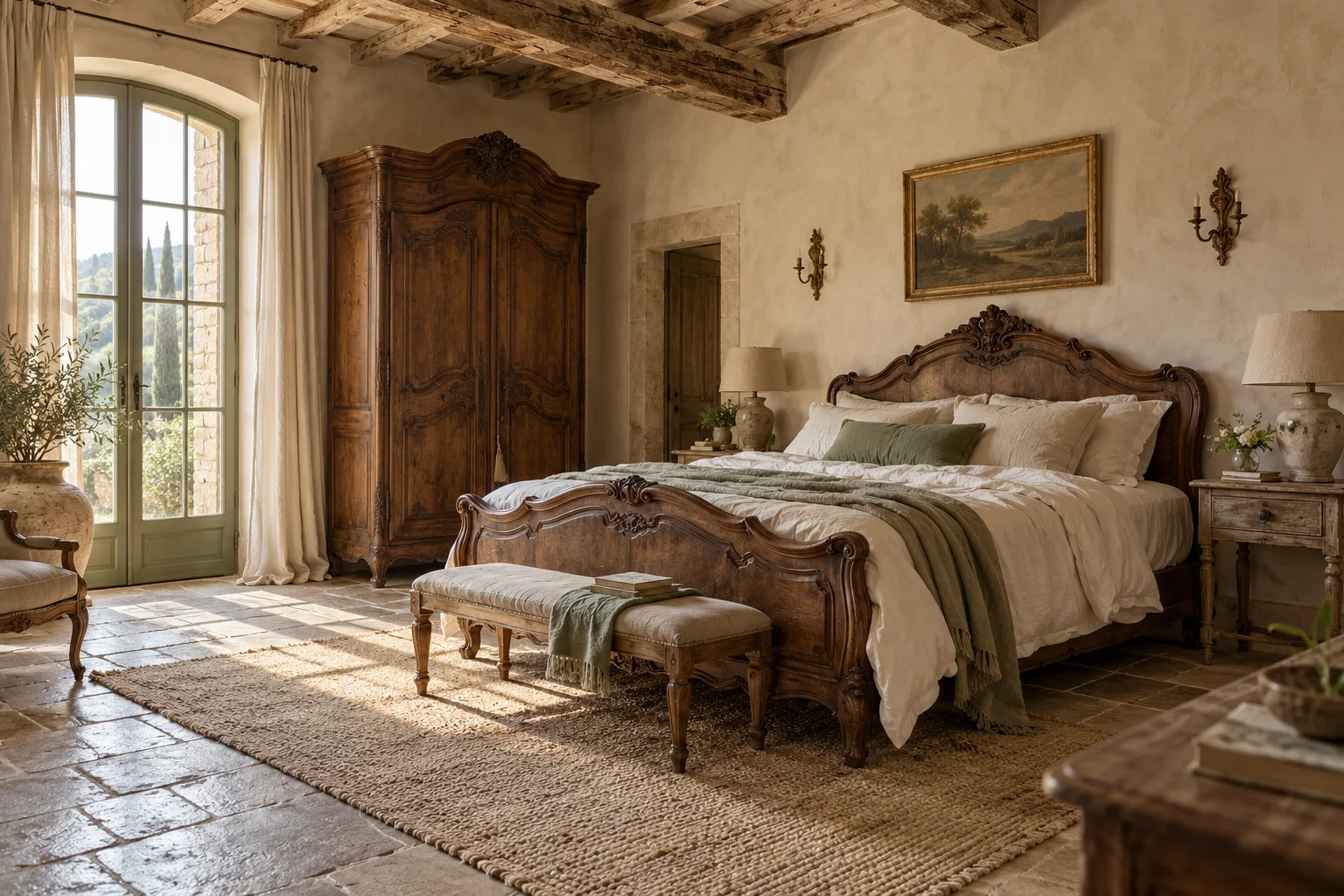 AI-created styling idea
Textiles
Adapt the project to the linen's fiber and condition without automatic washing or alteration.
Explore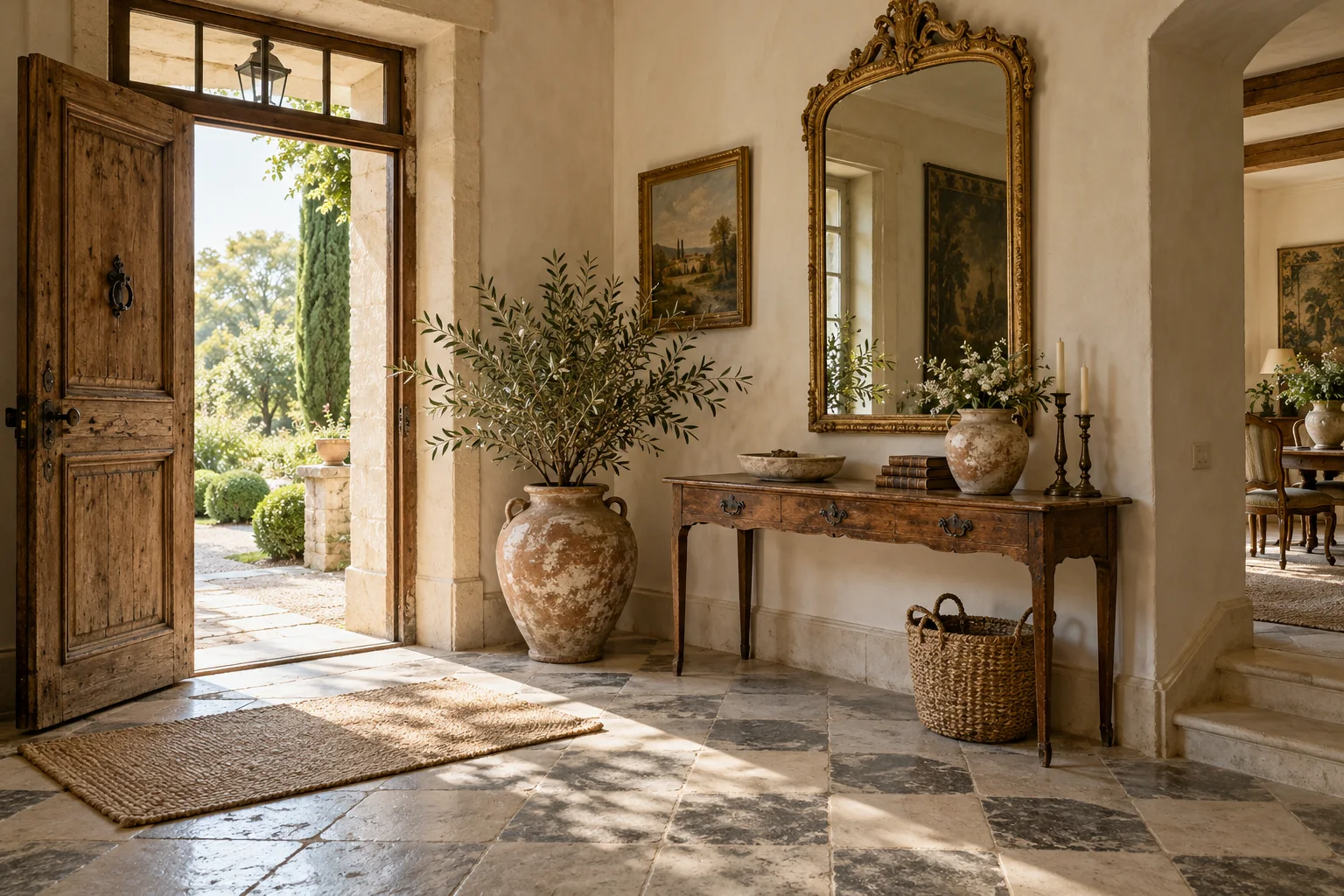 AI-created styling idea
Tableware & kitchen
One basket per task, kept in a dry room, outlasts any storage bought new.
ExploreThe decorative accents subcategories, arranged by the room where they usually belong.
The small, useful objects that finish a French country room: brass candlesticks and lamps, carafes and decanters, confit pots and faience, copper pans, silverplate, linen sheets and cushions, baskets and trays. They are chosen for a job first, left where the job happens, and repeated in two or three materials across the room rather than multiplied.
Check first whether the brass is lacquered; if it is, dust it and wipe with a damp cloth only. Bare brass takes a mild brass polish on a soft cloth, never abrasive powder or wire wool, followed by a thin coat of microcrystalline wax to slow tarnish. Gilt bronze and gilded mounts must not be polished at all, because the gilding is thinner than the polish.
For serving, yes. Wash by hand in warm water, check the rim and the stopper for chips, and do not use a piece with a crack. Old crystal often contains lead, so pour and serve rather than storing wine or spirits in it for weeks. Permanent cloudiness inside the glass is mineral etching; it is harmless but cannot be washed out.
Something used every week and small enough to ship as a parcel: a pair of brass candlesticks, a confit pot, a water carafe, a bread board, oyster plates or a set of silverplate flatware. Give it with a short written note of what it is, where it was bought and what has been repaired; a single documented antique says more than a box of new things in an old style.
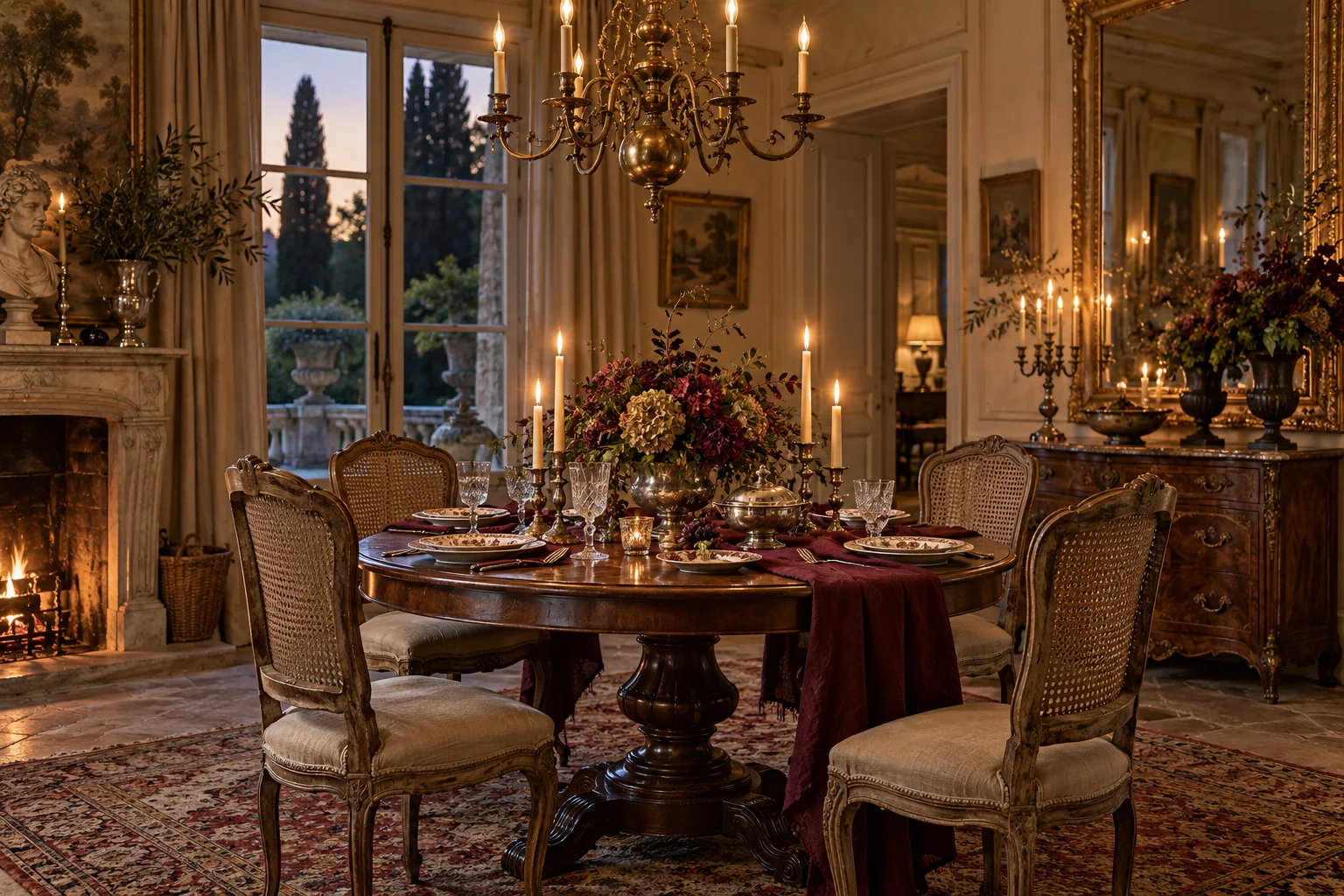
Nov 6, 2026 · Antique guide
A French country Thanksgiving table takes its look from the farmhouse: a linen cloth, white ironstone or faience plates, mixed silverplate, short bistro glasses,…
Nov 6, 2026 · Antique guide
French kitchenware from 1880 to 1960 was made for daily work, which is why the good pieces are still at it.
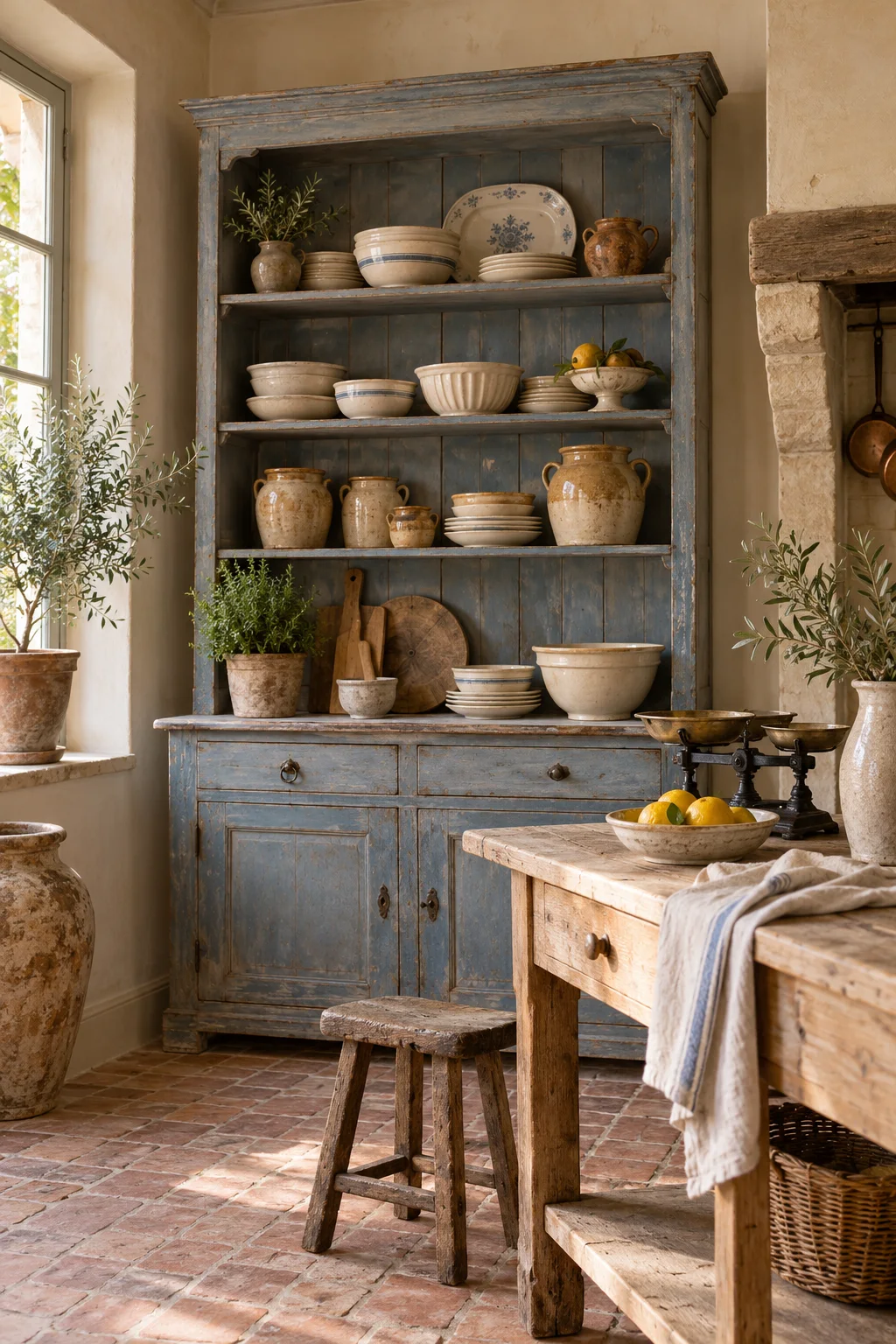
Nov 6, 2026 · Antique guide
Samadet faience is the tin-glazed tableware made in a single village of the Landes, in the Tursan hills south of Mont-de-Marsan, from about 1730 to 1840.
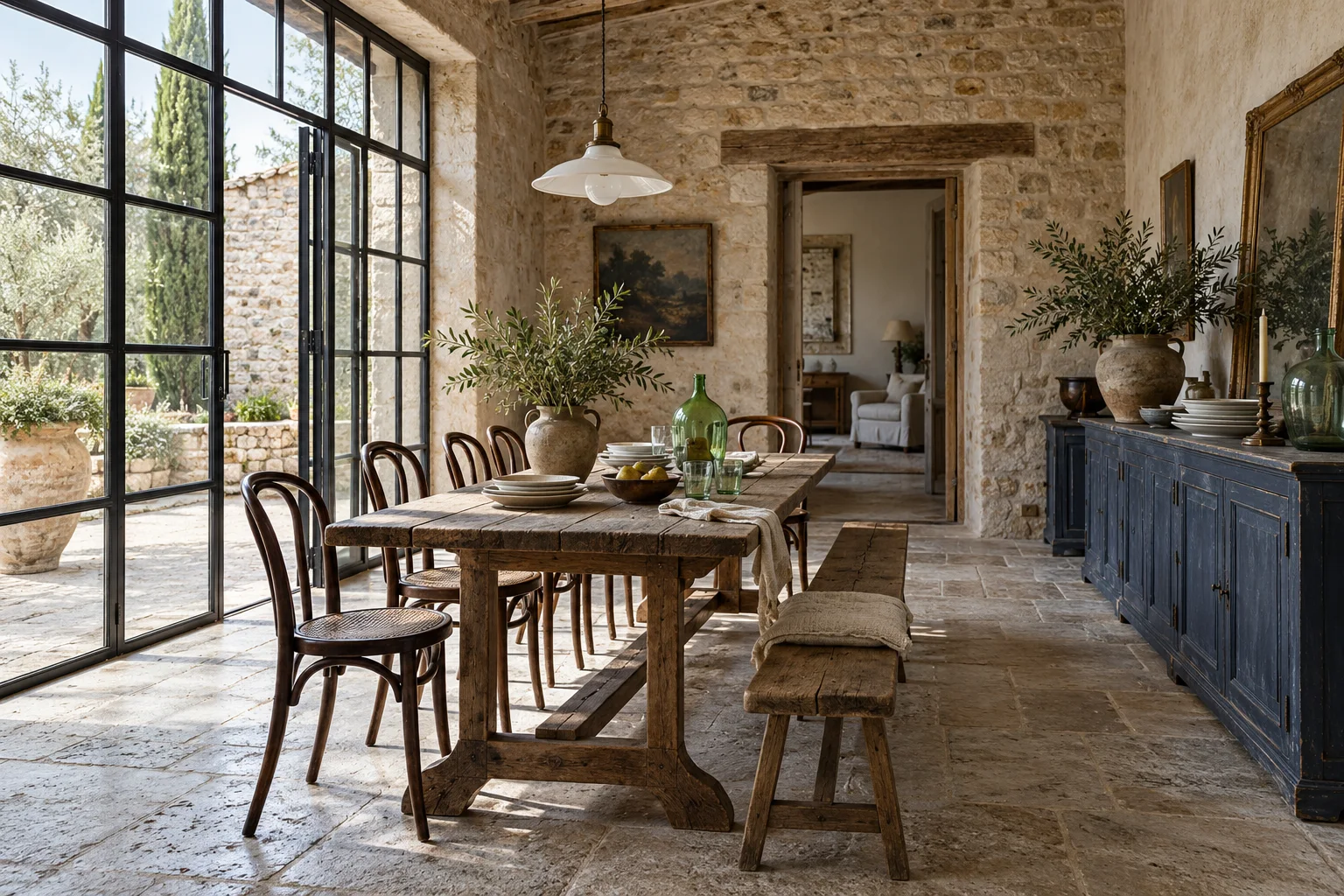
Nov 5, 2026 · Antique guide
Vintage silver and vintage silverplate look alike on a sideboard and behave differently in the hand, in the sink and at resale.
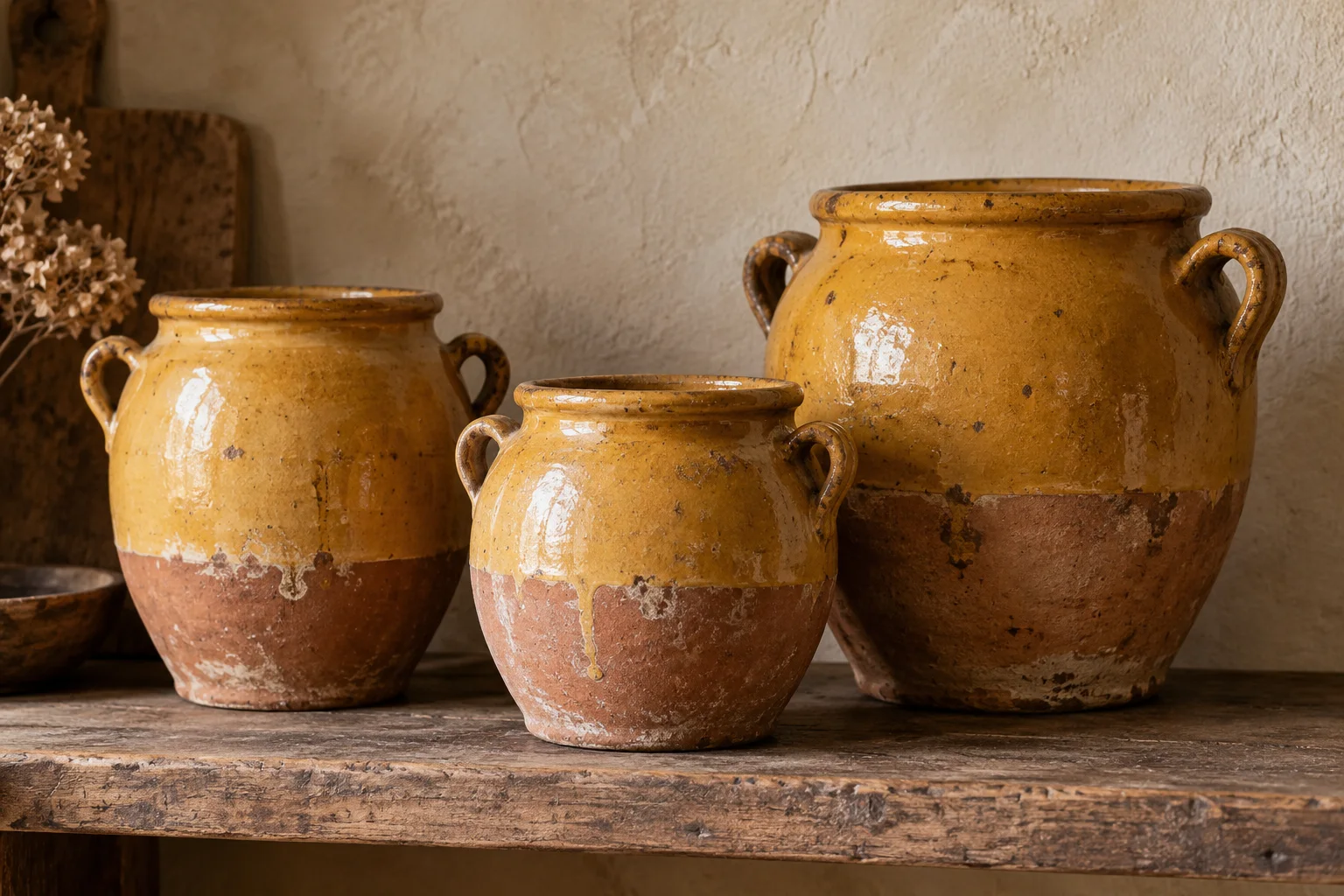
Nov 5, 2026 · Antique guide
Vintage pottery from French kitchens and workshops falls into two bodies and three glazes.
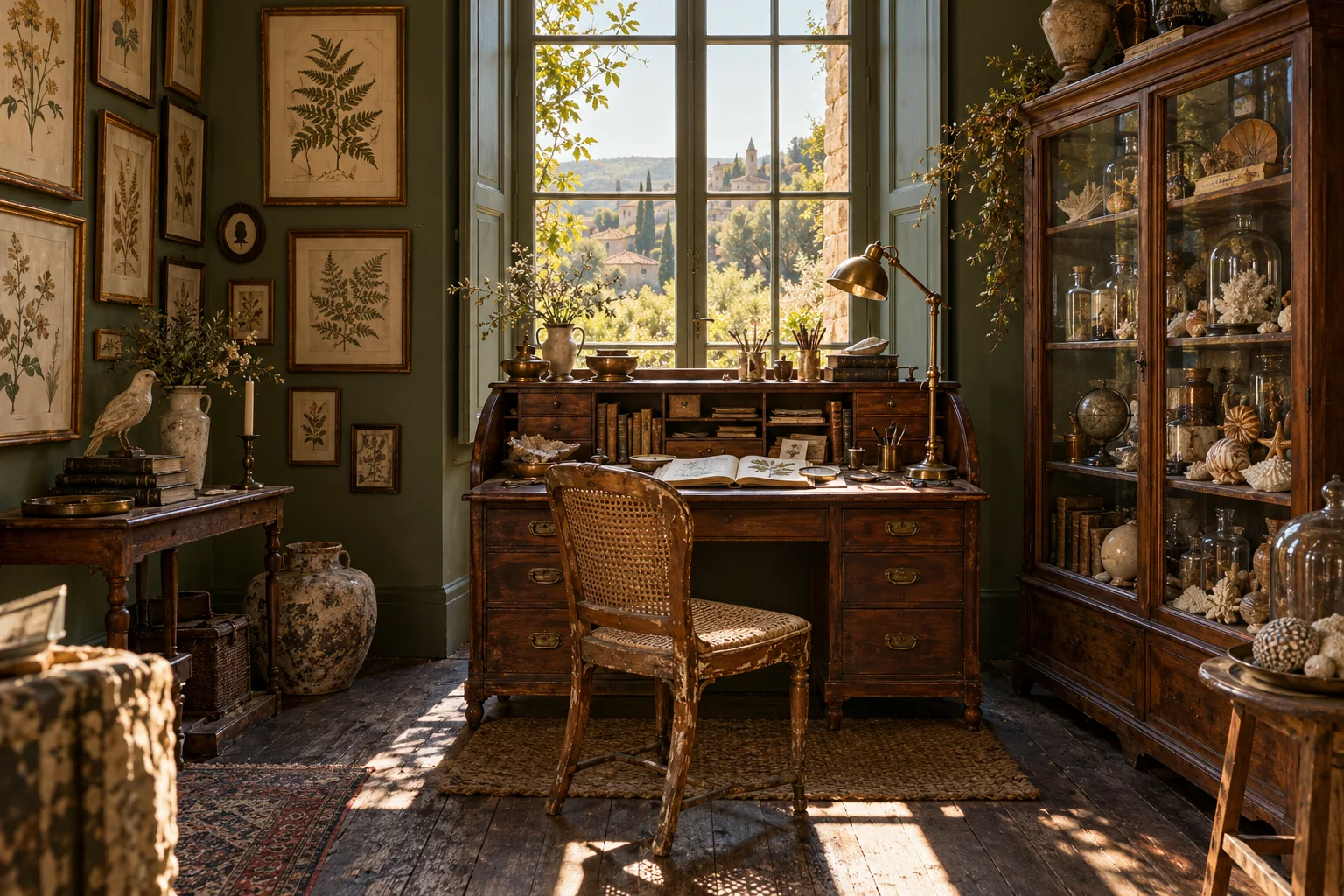
Nov 5, 2026 · Antique guide
An antique magazine rack is one of the few small antiques that still does its original job and several new ones.