 AI-created styling idea
Furniture
Buffets & sideboards
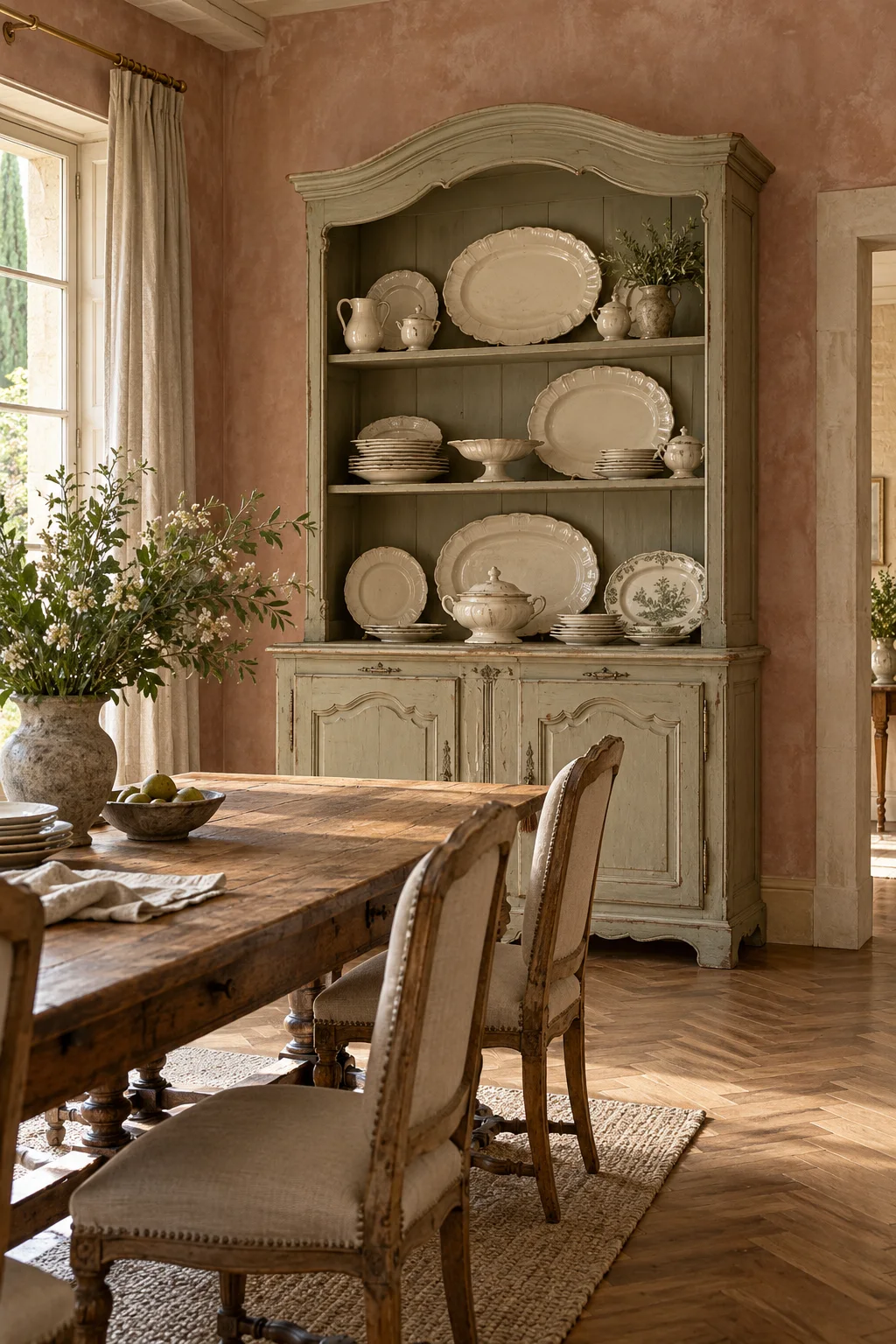
Choose a sideboard around your serving dishes, access needs, and useful serving surfaces.
ExploreFrench Country · An inspiration catalogue · Updated November 2026
French country decor combines relaxed rustic charm with refined provincial details. Discover ideas and pieces that bring softness and character to every room, from weathered wood and natural fibers to gentle colors, curved lines and decorative accents. Whether you are refreshing one corner or redesigning an entire space, find inspiration to create a warm, harmonious interior that feels elegant without being formal.
What is French country style? It is the decor of rural and provincial France adapted to modern homes: practical wood furniture, linen, stone and terracotta, a soft palette, and a few refined details such as a gilt mirror or a crystal chandelier, with patina left in place.
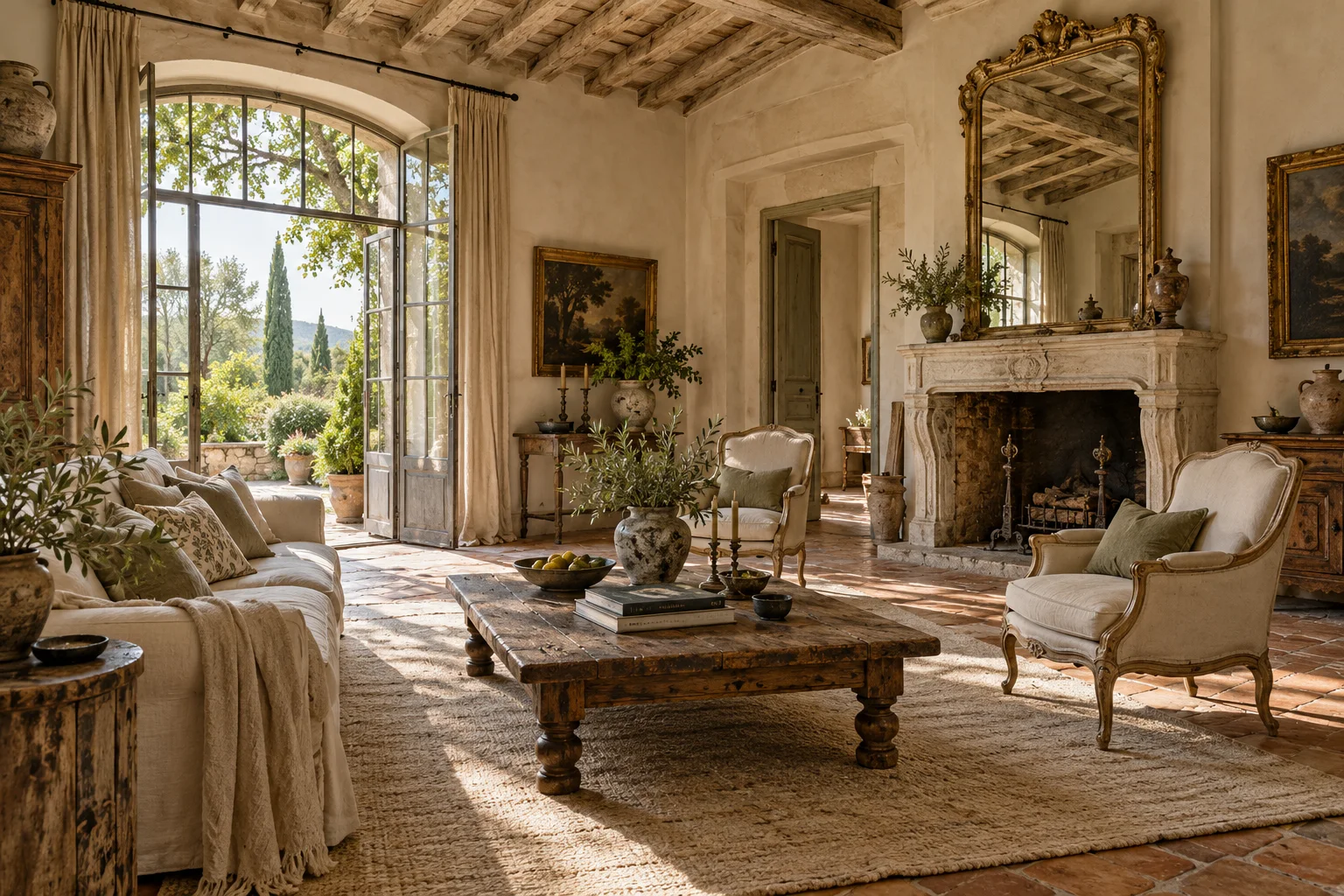
French country decor grew out of rural houses in Provence, the southwest, Burgundy and Normandy. Furniture was made by local joiners in local wood, usually walnut, oak, cherry or chestnut, and built to last several generations. Kitchens held copper, glazed earthenware and baskets in plain view because they were used every day.
Provincial workshops simplified the curves of court furniture, which is why a farmhouse armoire may carry a carved cornice or a cabriole foot. American decorators adopted the look in the twentieth century, and the term French country now describes that mix of rustic structure and refined detail. A style name describes an inspiration; it does not date or attribute a particular piece.
French country decor draws inspiration from rural homes and provincial interiors. It combines practical furniture and natural materials with graceful shapes, decorative details and a sense of history. A distressed wood table may sit beneath an elegant chandelier, while a simple linen sofa can be paired with a carved mirror or a vintage armchair.
The style is neither strictly rustic nor overly formal. Its character comes from contrast: rough and smooth textures, simple and ornate shapes, old and new pieces. The result should feel comfortable and lived-in rather than staged.
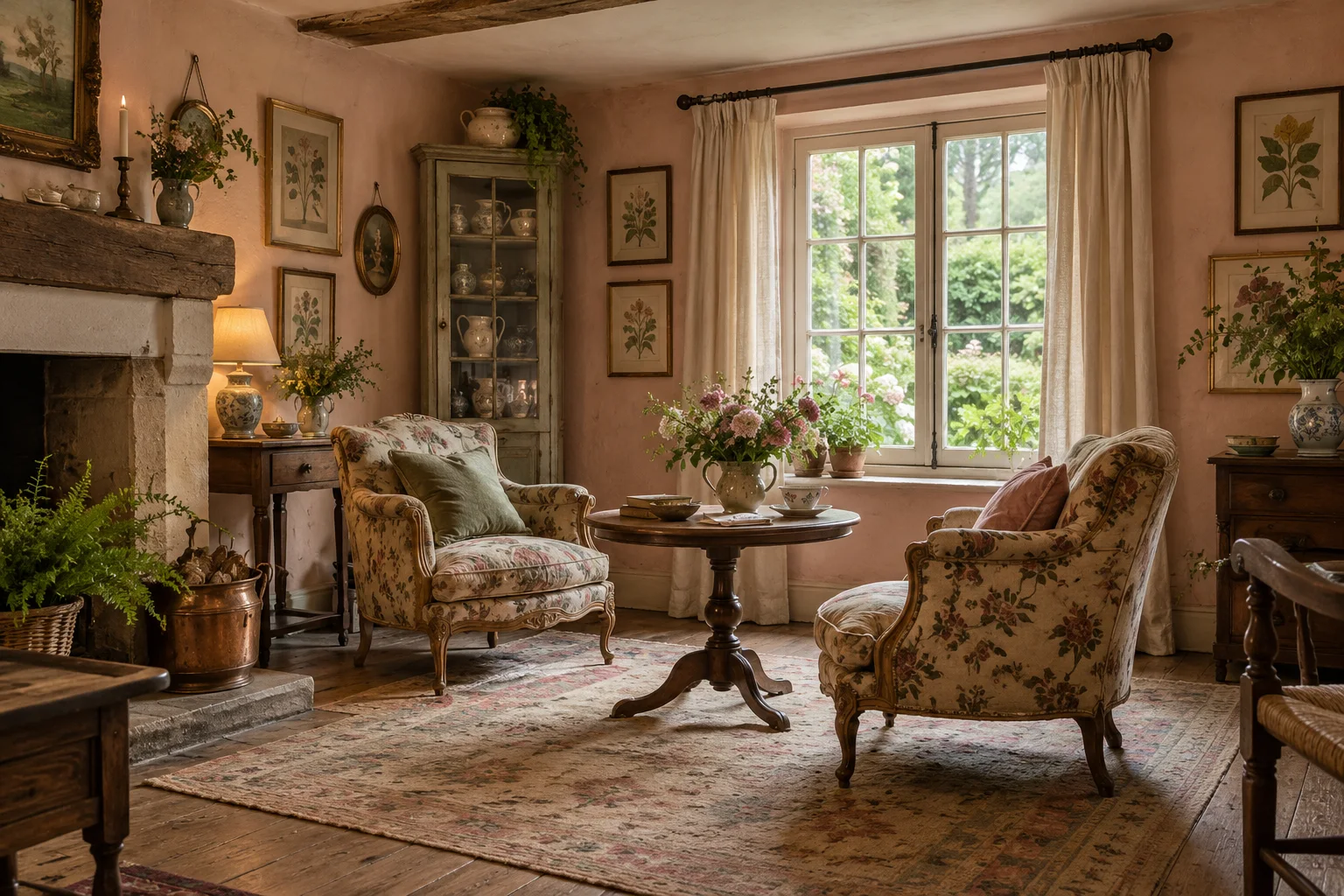
A French country palette usually starts with warm, understated colors. Cream, ivory, beige and soft white create a versatile backdrop, while muted blue, sage green, dusty rose or gentle terracotta add depth without overwhelming the room.
Materials bring just as much character as color. Wood, linen, cotton, stone, ceramics and wrought iron can be layered to create a welcoming atmosphere. Visible grain, natural variations and a softly aged finish often add more personality than a perfectly uniform surface.
Thirty French country decor ideas, from walls and floors to the table, each with a size or a check. The journal adds more ways to bring the style home.
Hang a gilt mirror beside or opposite a window to double the daylight. Size it to about two-thirds of the furniture below: a 60 in / 152 cm buffet takes a mirror near 40 in / 100 cm wide. Read gilt, gesso and wear.
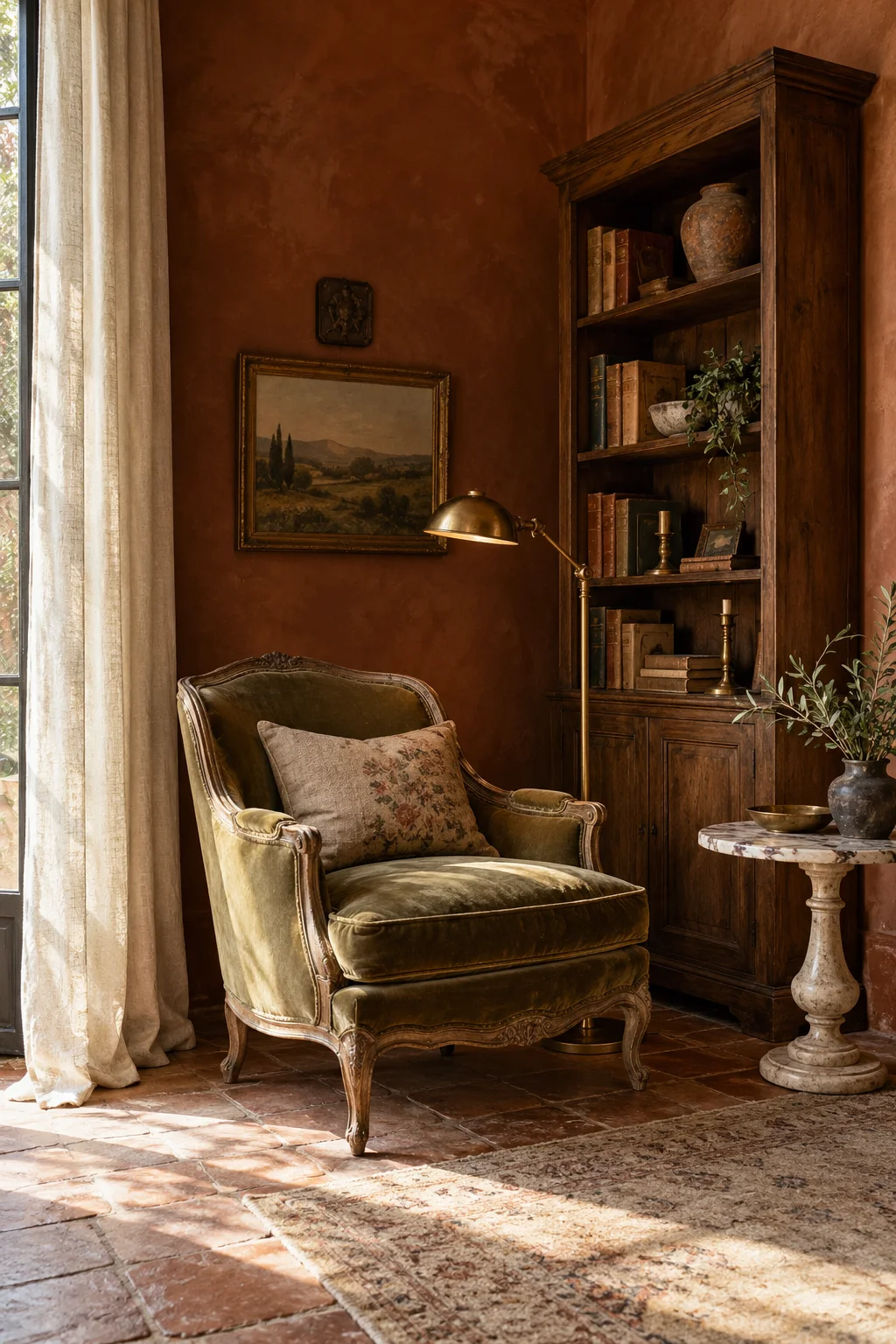
Limewash gives a soft, chalky finish that shifts with the light, in three or four thin coats. It needs a mineral surface such as plaster; on drywall, use a mineral paint. Choose the shade from a French country paint palette.
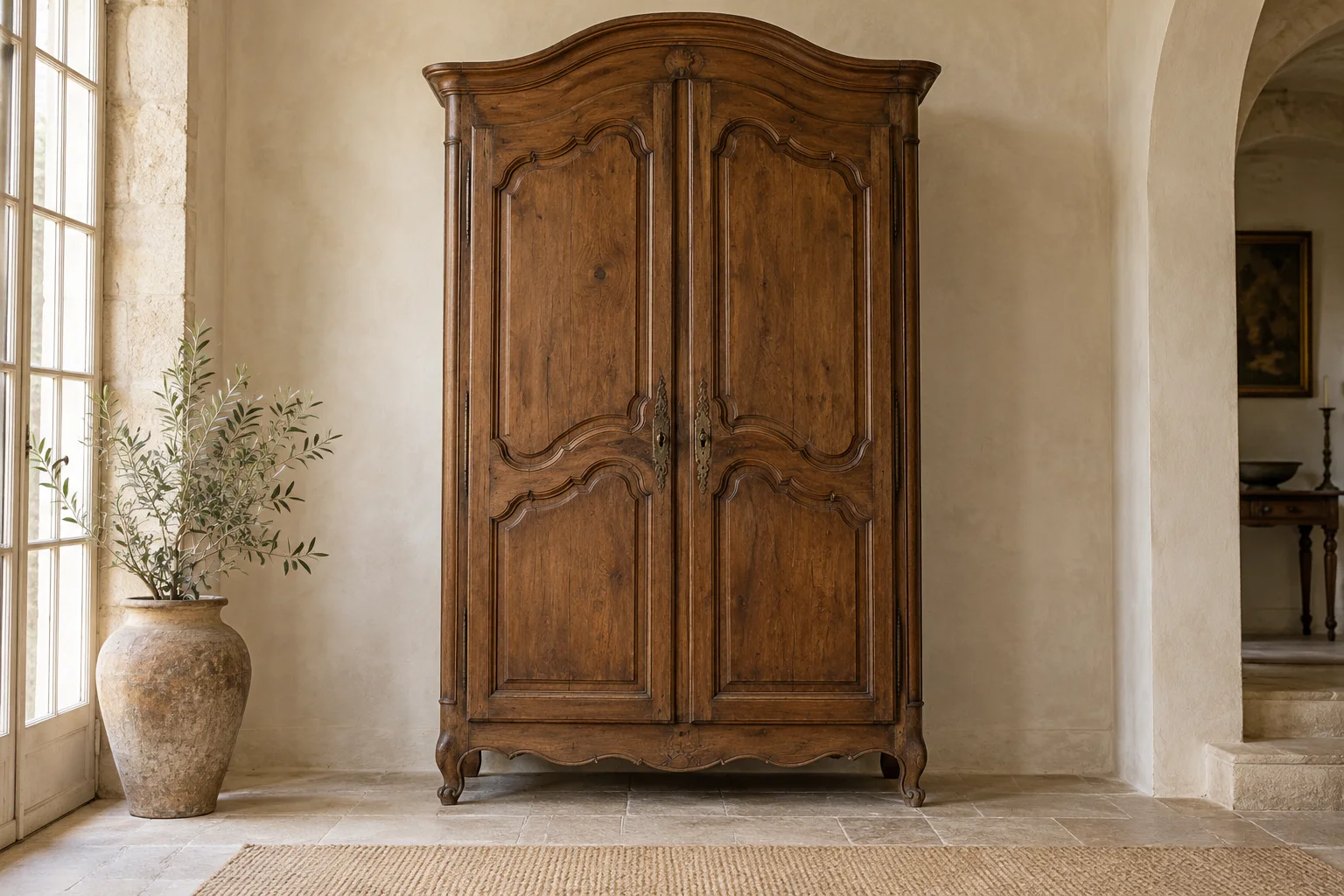
One armoire, usually 86–95 in / 220–240 cm tall, gives a room its structure, so the rest can stay plain. Use it for linen, books or a television. Measure the ceiling and stairs, then read how French country armoires come apart.
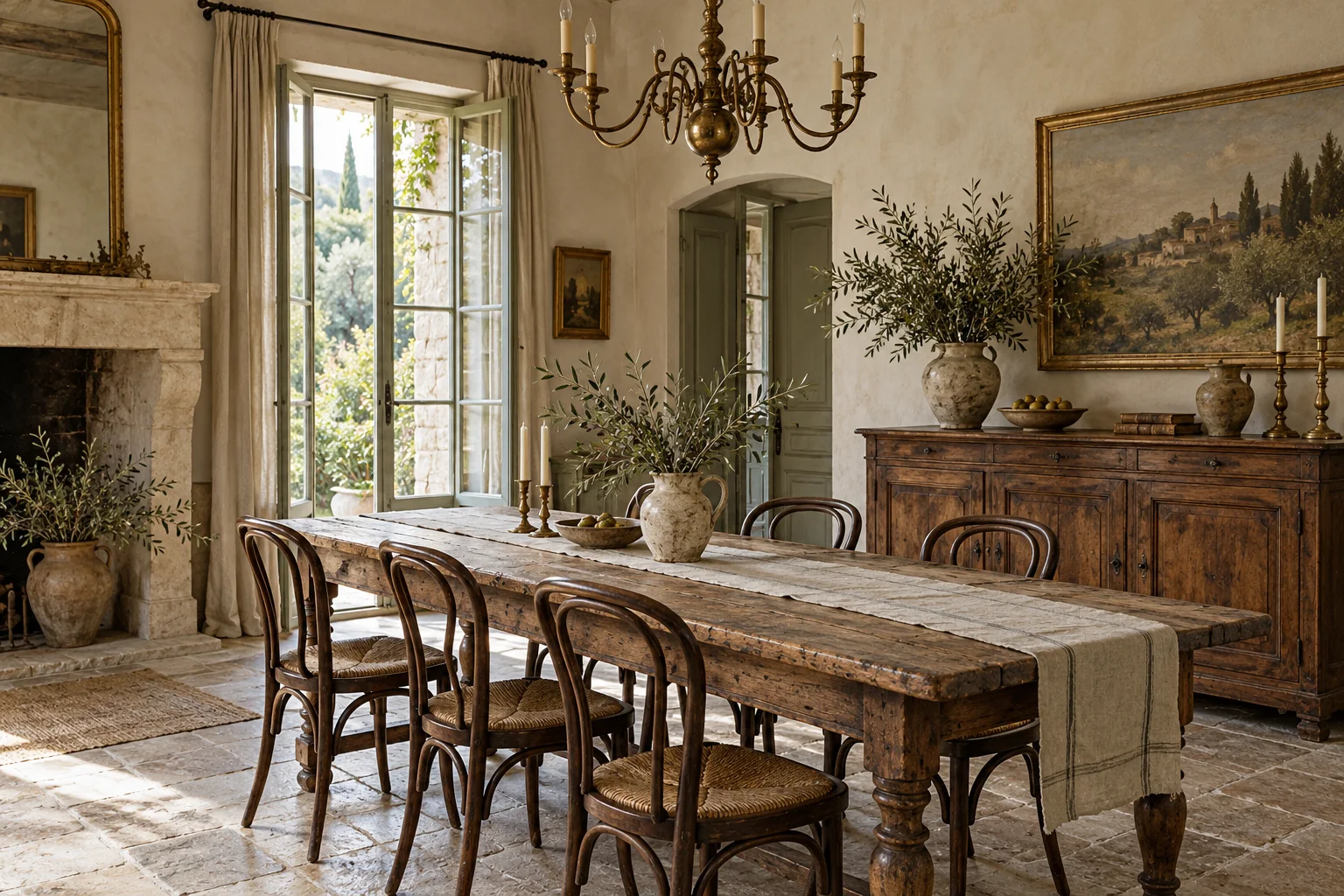
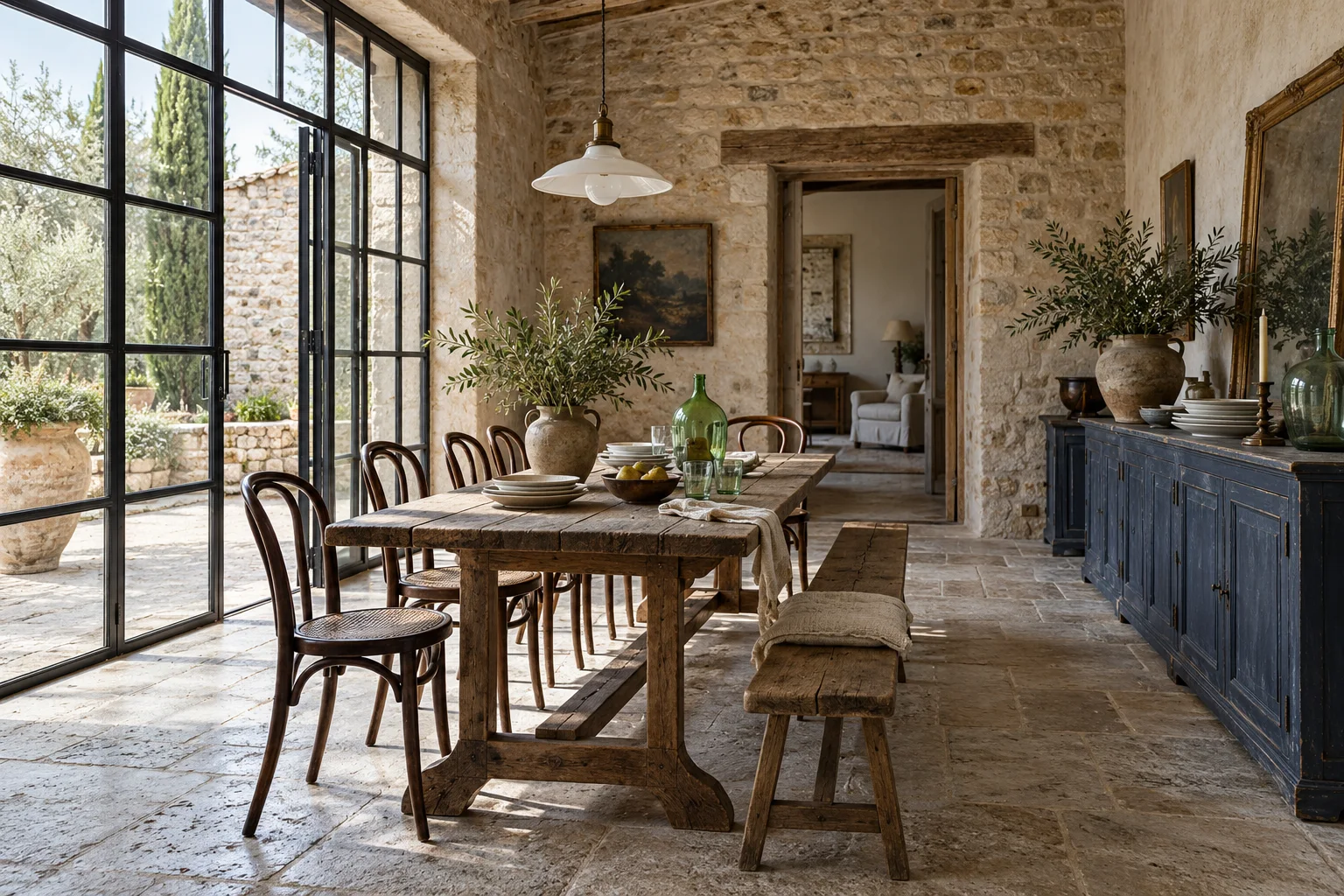
A table de ferme of 7–8 ft / 2.1–2.4 m seats eight and serves for cooking, homework and long meals. A scrubbed top shows the grain and forgives marks. The encyclopedia entry on the French farm table names its parts.
Mismatched chairs read as collected when they share one element: the wood, the color or a seat height of 17–19 in / 43–48 cm. Put armchairs at the ends. See antique dining chairs in sets and odd numbers.
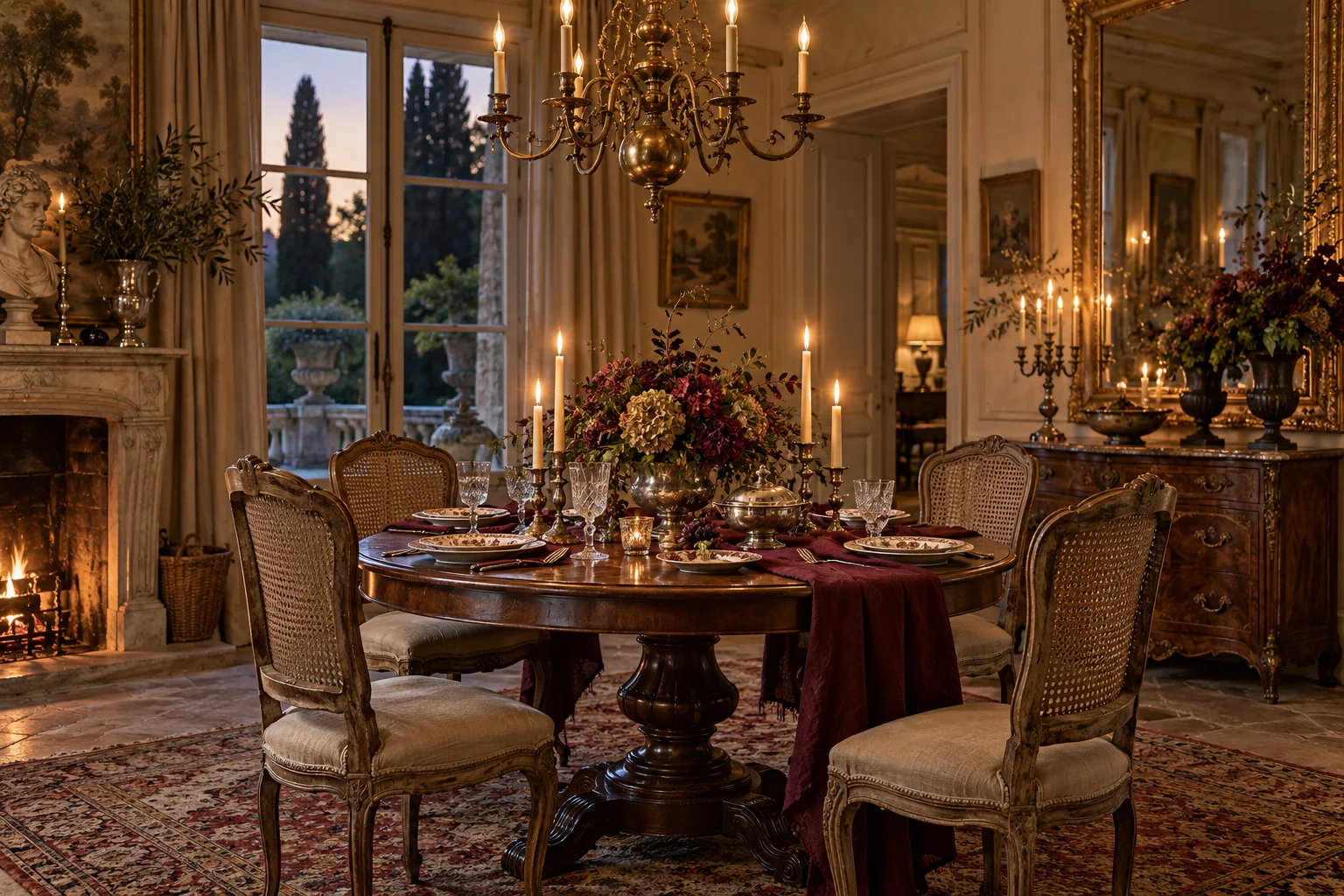
Hang the chandelier 30–34 in / 76–86 cm above the table, with a diameter of about half to two-thirds of the table's width. Count missing drops and ask for the rewiring invoice. See antique crystal and brass chandeliers.
Sconces mounted about 60–66 in / 152–168 cm from the floor give a soft side light that a ceiling fixture cannot. Pair them either side of a mirror. Antique sconces are rewired before use: French wall lights and sconces.
Four colors are enough for a whole house: chalk white on walls, stone on woodwork, sage and faded blue in textiles and painted furniture. Repeat each color three times in a room. The guide to French country fabrics shows it in cloth.
Washed linen softens with each use and suits a bed as well as a table. For a tablecloth, allow a drop of 8–12 in / 20–30 cm per side. Antique hemp and métis are heavier than new linen. Browse French tea towels and vintage napkins.
Toile de Jouy works as a single statement: curtains, a headboard or one armchair. Keep the rest in plain linen or a small check in the same color. A repeat of 25 in / 64 cm needs a large surface. See upholstered walls and papered ceilings.
Provençal prints, small flowers and paisleys in ochre, red and blue, are easiest on cushions, seat pads and tablecloths, which change with the seasons. Two prints of different scale sit well together; three compete. See old cushion covers and table linen.
A silver-plated coffee pot, bread basket or set of serving spoons belongs on the sideboard because it is used. Regular use keeps silverplate bright and limits polishing, which wears the plating. Read silverplate marks, wear and services.
Pressed glass and crystal look calmer grouped on one tray than scattered across shelves. Keep to clear glass or one tint, and three heights. Do not keep wine or spirits in lead crystal for long. See vintage crystal glassware and safe use.
A comtoise, the tall country clock about 90 in / 230 cm high in its case, marks a hall; a mantel clock does the same on a chimneypiece. Ask when the movement was last serviced. See French clocks, from comtoise to carriage clocks.
Candlesticks read best in pairs or in a group of three of different heights; a row of five looks like a shop window. Brass candlesticks of 8–12 in / 20–30 cm suit a table without blocking the view. Browse candlesticks and candelabras.
A dough trough, carved from one block or made of boards, holds bread, fruit or rolled linen on a table or buffet. A split along the grain is stable when it does not move. See farmhouse antiques such as pétrins and dough troughs.
Floral faience plates stand upright on a dresser rack or hang on a wall in an odd number. Mix patterns within one color family. Check rims for chips and backs for marks before naming a factory: faience plates, marks and care.
Copper pans on an iron rail at about 60 in / 150 cm stay in use and warm the kitchen's color. A pan for cooking needs an intact tin lining; a worn one is kept for display. Our page on French copper cookware explains retinning.
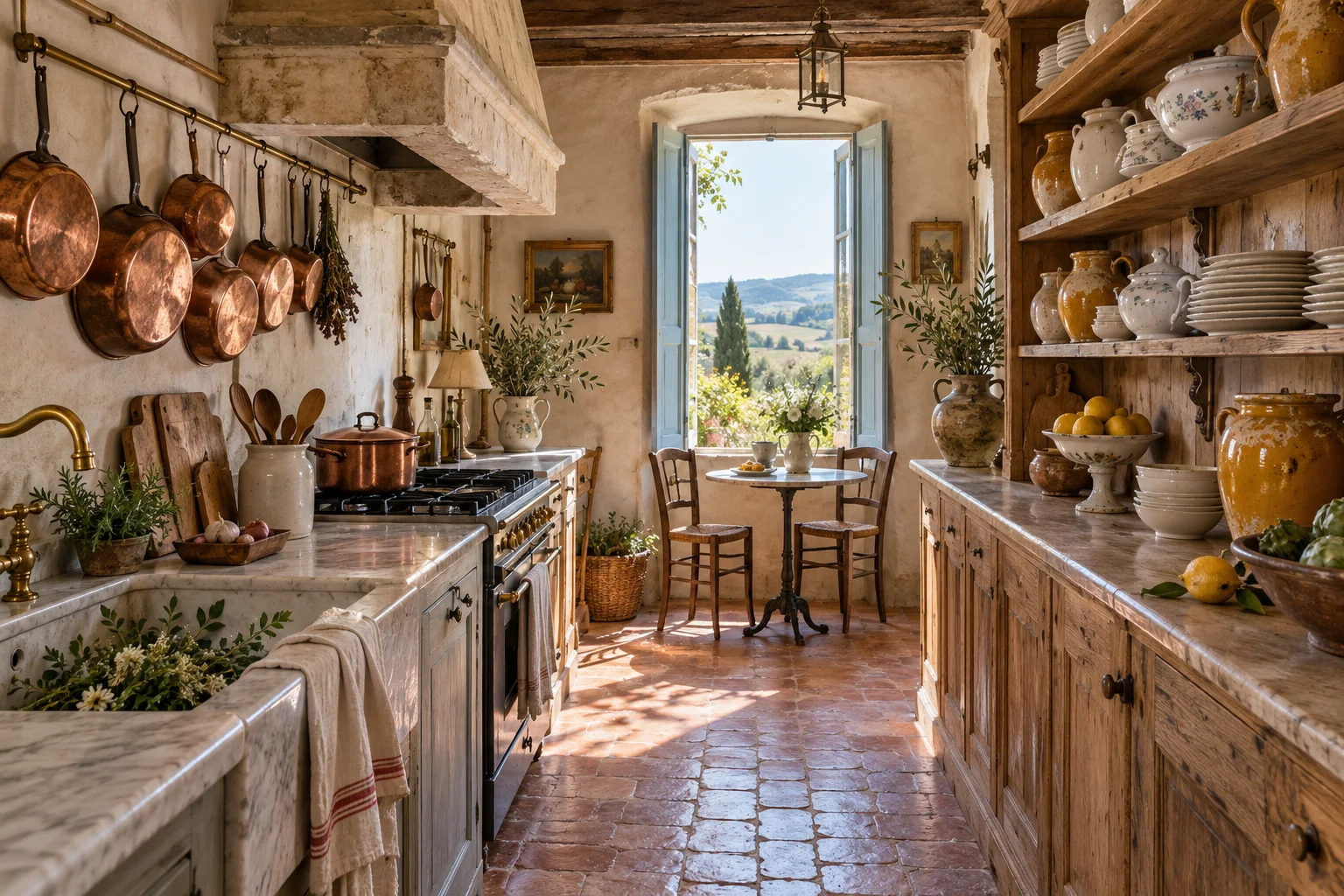
An ochre-glazed confit pot, 8–14 in / 20–35 cm tall, holds wooden spoons by the stove or long branches on a table. A cracked pot can still hold dry stems, but not water. More forms appear among the glazed confit pots in room scenes.
Cut lavender, olive branches and dried hydrangeas last for weeks in a pitcher with little or no water. Keep a table arrangement under 12 in / 30 cm so guests can see each other. The vessels are compared in French country floral arrangements.
A pair of cast-iron urns, 20–30 in / 50–76 cm tall, frames a door or a terrace step. Check for a drainage hole before planting, and raise the urn off the ground in frost. Casting marks are explained in cast-iron urns and planters.
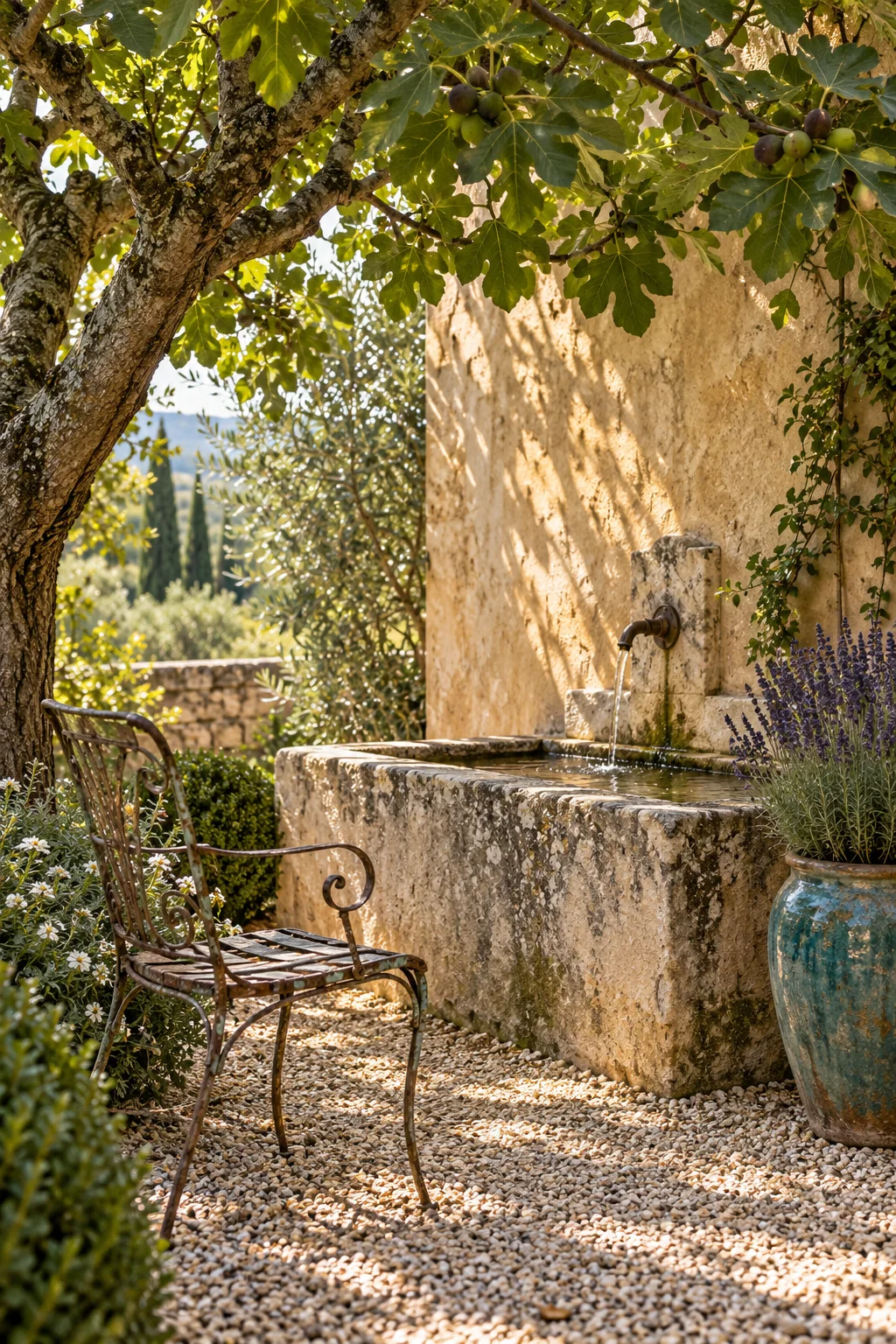
One stone or terracotta figure at the end of a path does more than several in a row. Set it on a level base, and check terracotta for frost cracks before winter. Browse the garden statues and ornaments for scale.
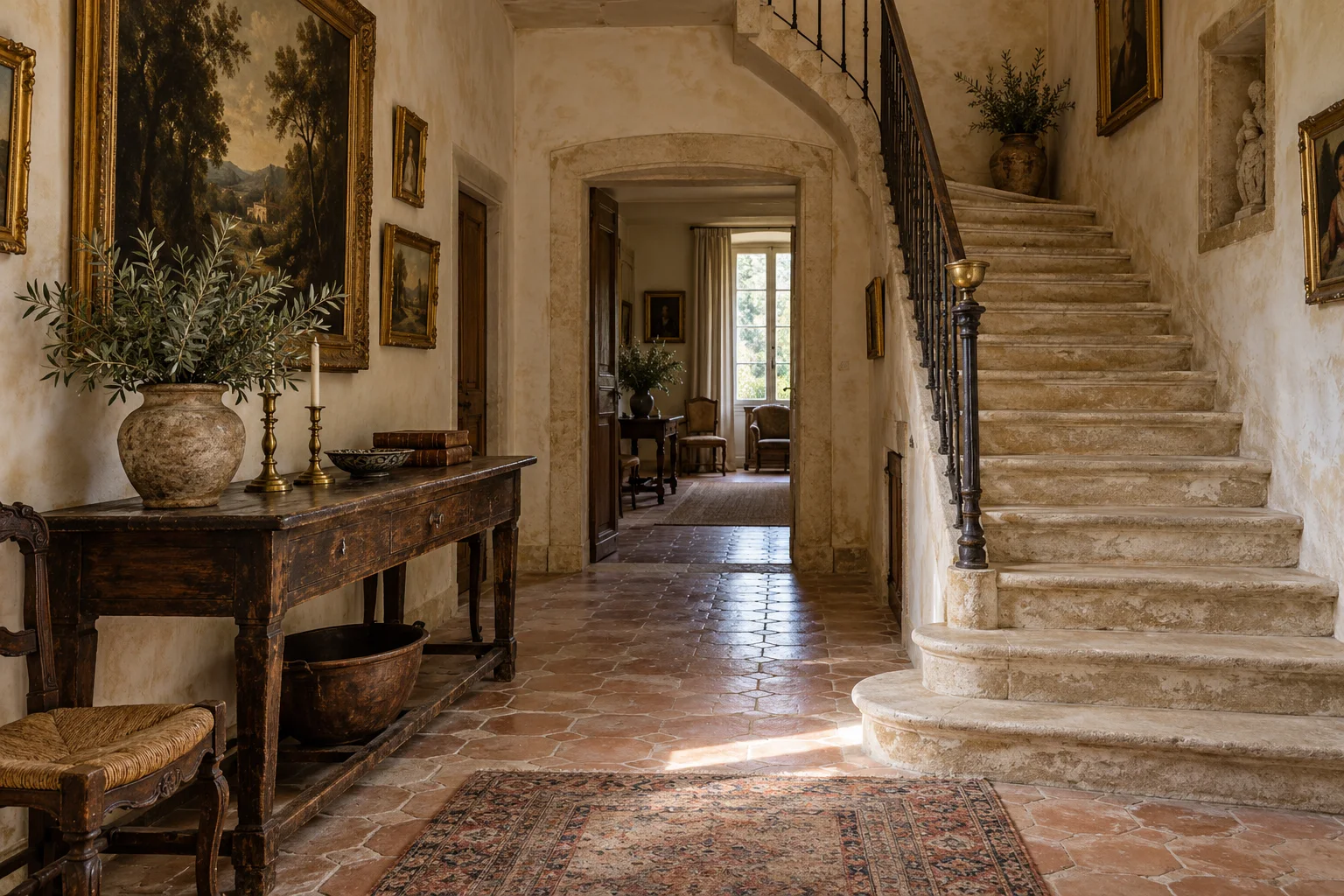
Terracotta tomettes, stone flags and oak boards 6–10 in / 15–25 cm wide are the classic French country floors. Reclaimed tiles need a mortar bed and an oil or wax finish rather than a glossy sealer. The architectural materials and ornaments page shows the options.
Exposed beams give a room its scale. Clean them with a dry brush and leave the wood bare or limewashed, not varnished. Do not add thin imitation beams under a low ceiling. The French farmhouse decor ideas show real examples.
Willow baskets and old wooden wine boxes keep shoes, logs and toys out of sight on open shelves. Choose two or three sizes and repeat them. Old baskets wear first at the base. See antique French baskets.
Botanical prints in plain frames work in a group of four or six, hung 2–3 in / 5–8 cm apart. A single old oil portrait suits a hall or a stair landing. The encyclopedia entry on the botanical print explains the methods.
In a hall under 40 in / 100 cm wide, a bench 12–14 in / 30–36 cm deep leaves the passage clear and gives a place to sit. Add hooks above it and a basket below for shoes. See French benches, banquettes and bancs.
Patina is the record of use: darkened wax, worn edges, dulled brass. Clean it, do not strip it. Polish brass handles sparingly and leave old paint where it is sound. Our article on real wear versus decorative distressing explains the difference.
A clean-lined sofa in linen gains character from one old commode, a pair of antique side tables or a carved mirror. Keep the sofa neutral so the old pieces lead the room. Read how to pair a contemporary sofa with an antique chest.
A mantel, a buffet or a side table reads best with three objects of different heights, such as a lamp, a jar and a small frame. Remove one object before adding another. The guide to modern French country decor applies the same rule.
Eight objects carry most French country rooms. The table shows where each works and when an antique is worth choosing over a new piece.
| Object | Where to place it | Antique or new | Explore |
|---|---|---|---|
| Large gilt mirror | Over a mantel, buffet or console | Antique for old glass and gilding; new is lighter | Mirrors & wall decor |
| Chandelier | Above the dining table | Antique, rewired to US standards | Lighting |
| Armoire or buffet | Bedroom, dining room | Antique for joinery and wood | Sideboards & buffets |
| Farm table | Kitchen or dining room | Antique, or new on an old top | Dining tables |
| Linen | Beds, tables, windows | Either; antique for hemp and métis | Linen & textiles |
| Copper and earthenware | Kitchen rail and shelves | Antique, for use and patina | Country tableware |
| Candlesticks | Table and mantel, in pairs | Antique brass or new | Brass & bronze |
| Urns and pots | Door and terrace | Antique cast iron or terracotta | Garden |
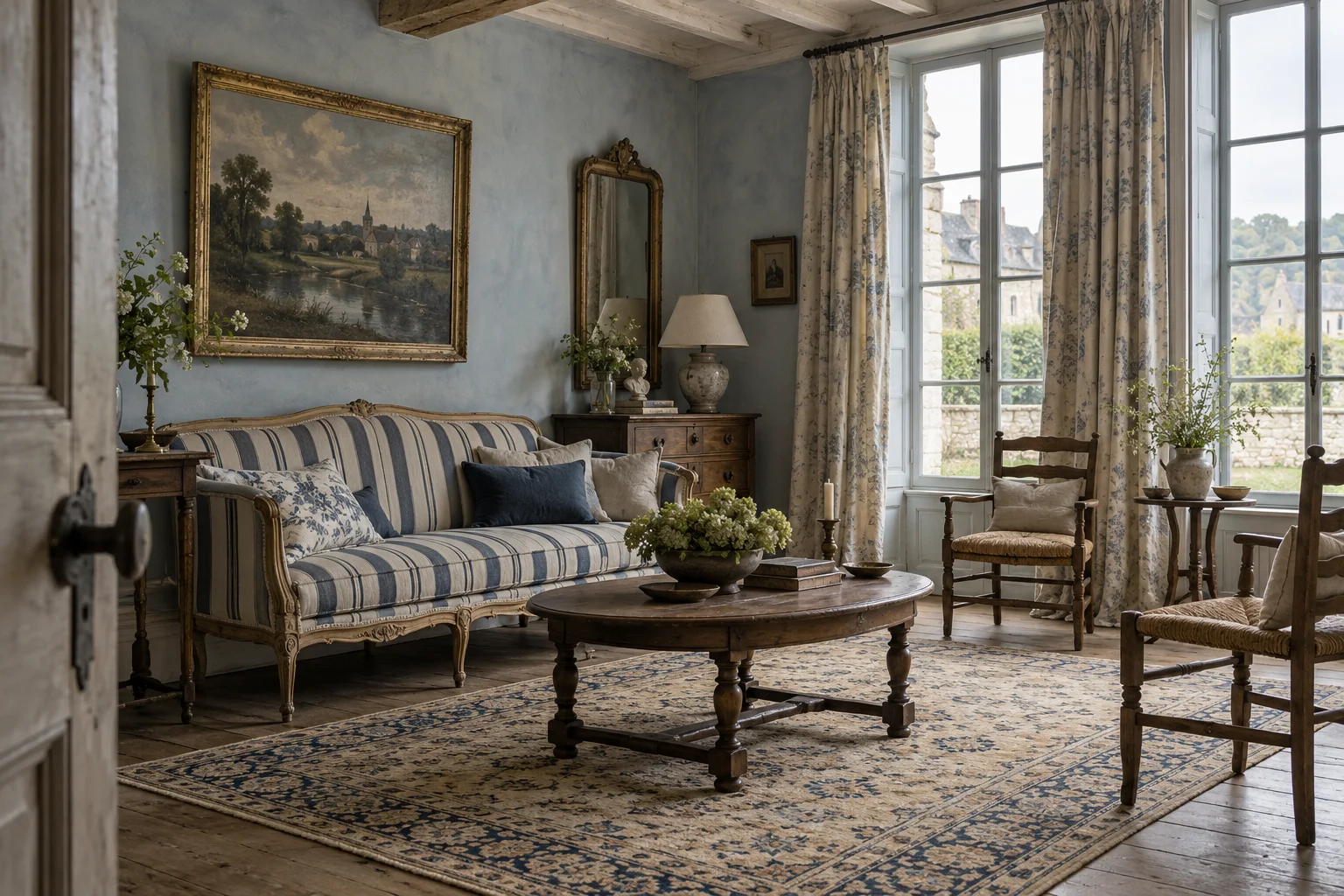
Start with comfortable seating and one or two anchor pieces, such as a wood coffee table, a sideboard or a vintage-inspired armchair. Soft cushions, linen upholstery and a muted rug can make the room feel inviting without adding visual clutter.
For the finishing touches, consider a carved mirror, ceramic table lamps or a small arrangement of framed prints. Mixing a contemporary sofa with an older table or cabinet is an effective way to create a balanced French country living room.
In the kitchen and dining room, French country decor should feel both attractive and practical. A sturdy dining table, open shelving and accessible storage provide a functional foundation. Wood, ceramics and woven textures can then soften the space.
Display a few useful objects rather than filling every surface: serving bowls, pitchers, baskets or everyday tableware can double as decoration. For the dining area, upholstered chairs, a simple table runner and warm lighting help create an atmosphere suited to long meals and conversation.
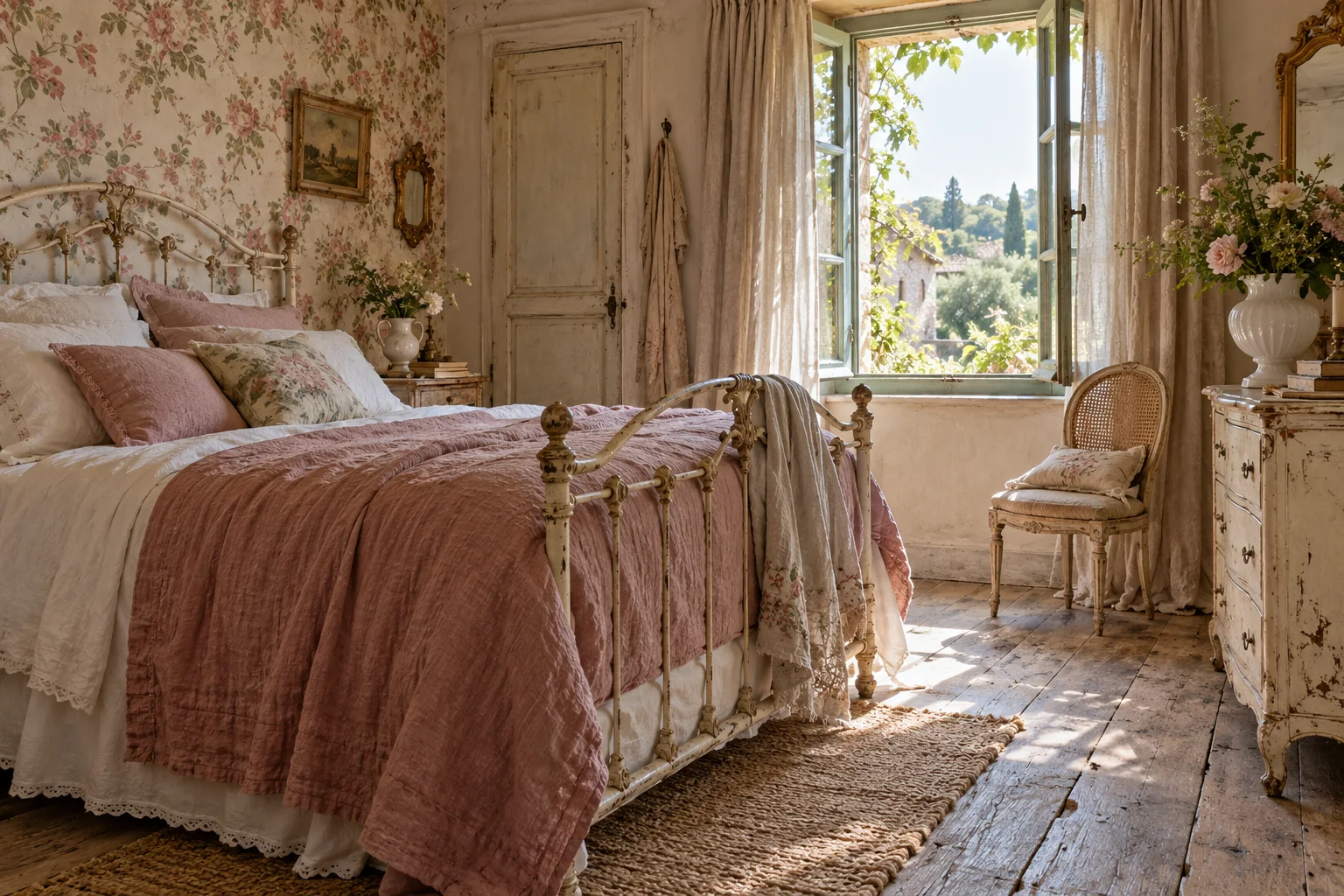
A French country bedroom benefits from a calm palette and soft, tactile materials. Begin with neutral bedding, then add texture through a quilt, a linen throw or cushions in complementary tones. A wood bed frame, an upholstered headboard or a painted bedside table can introduce provincial character.
Keep the decorative scheme restful. A vintage-style mirror, a pair of table lamps and one distinctive piece of furniture are often enough to give the room personality without disturbing its sense of calm.
In an entryway or smaller room, choose a few pieces that combine decoration and function. A narrow console, a wall mirror and a basket for everyday items can establish the style while keeping the space organized.
Light colors and reflective surfaces help smaller rooms feel open. Instead of adding numerous ornaments, select one piece with a distinctive shape or patina and allow it to become the focal point.
Large furniture sets the direction of the room before smaller accessories are added. A dining table, armoire, sideboard or sofa can establish the desired balance between rustic simplicity and provincial elegance.
Look for proportions that suit the room and finishes that work with your existing interior. A versatile anchor piece will be easier to keep and restyle than an item chosen only for a passing trend.
French country decor does not require every item to be old. New furniture can provide everyday comfort and reliability, while vintage or antique pieces add variation and a sense of history.
A practical approach is to combine dependable foundational furniture with a smaller number of distinctive older objects. This creates contrast without making the room feel like a period reconstruction.
A successful mix of materials prevents the decor from appearing flat. Pair wood with soft textiles, ceramics with woven fibers, or wrought iron with linen and cotton. Stone, glass and aged metal can introduce additional texture when used in moderation.
Repeating a material or finish in several places helps the room feel coordinated. For example, a wood tone used on a table can reappear in a frame or a smaller decorative object.
Decorative pieces should contribute to the atmosphere of the room rather than simply fill empty space. Look for interesting shapes, tactile finishes, subtle color variations or signs of age.
Leaving some space between objects allows their details to remain visible. A few carefully chosen accents usually have more impact than a crowded arrangement.
French country and French provincial decor share inspiration, but they do not create exactly the same atmosphere. French country interiors generally feel more relaxed and rustic, with practical furniture, natural textures and an informal mix of objects.
French provincial decor often places greater emphasis on curved silhouettes, carved details and refined elegance. In practice, the two styles can complement each other: a provincial mirror or chair can add sophistication to a simpler country room.
Farmhouse decor also values comfort, utility and rustic materials, but it often uses simpler lines and a more straightforward decorative approach. French country decor typically introduces softer curves, more ornamental details and a broader range of muted colors.
Both styles use wood, vintage objects and practical furniture. The difference often lies in the finishing touches: French country rooms tend to balance rustic elements with a stronger sense of elegance.
French country decor can work well in a modern home when its elements are used selectively. Clean-lined furniture can be paired with a vintage mirror, natural linen, weathered wood or a muted color palette.
The key is to avoid adding every traditional feature at once. A modern room needs only a few French country references to gain warmth and character while retaining a contemporary feel.
Choose a neutral base and two or three complementary accent colors. Repeating these colors across textiles, ceramics and wall decor creates continuity without making every item match exactly.
Curved chair backs, rounded mirrors and decorative lighting can soften the straight lines of cabinets, tables and shelving. This balance gives the room elegance while preserving its everyday function.
Group a small number of objects by color, material or theme, and leave open space around them. Storage pieces such as baskets, sideboards and armoires can keep everyday clutter out of sight while contributing to the decor.
Small variations in wood, ceramics or metal can make an interior feel more personal. Patina should add interest rather than create an artificial distressed effect. Combine aged pieces with well-maintained furniture and fresh textiles to keep the room comfortable and balanced.
Lighten the room rather than redecorate it. Swap wool throws for linen, fill a pitcher or a zinc bucket with cut branches, and move a bistro table outdoors for meals in the shade. Pale ticking and gingham suit the season, and terracotta pots at the door make the change visible from the street.
Bring back texture and warmer tones. Copper pans, stoneware crocks and wicker baskets carry the season without seasonal decorations. Arrange late flowers and branches in a confit pot, and add a wool throw over a linen sofa.
Candlelight does most of the work: brass candlesticks in pairs, a crystal chandelier dimmed low and greenery along a mantel. For the holiday table, layer linen, faience and silverplate, and keep the centerpiece under 12 in (30 cm) so guests can see each other. Our guide to French country accents and gifts lists small pieces that suit the season.
Three patterns carry most French country decor. Toile de Jouy is a single-color scene printed on a pale ground, usually red, blue or sepia; it reads best on one surface at a time, such as curtains or a headboard, rather than on every cushion. Gingham, called vichy in French, is a small even check that suits kitchens, seat pads and table linen. Provençal prints, descended from the printed cottons called indiennes, use small repeating flowers and paisleys in ochre, red and blue.
Choose one large-scale pattern per room, one small-scale pattern and one plain texture such as linen. Keep the three in two or three related colors. A toile curtain, a gingham seat pad and a plain linen tablecloth work together because the scales differ. Ticking stripes and antique monogrammed sheets add pattern quietly; our guide to French linen and antique textiles explains how to read the weave and care for old fabric.
For individual pieces, look for listings that state the material, the dimensions in inches and centimeters, the condition with every repair photographed, and whether the piece is antique, vintage or a reproduction. Lo Cantou lists French pieces from southwest France with condition details for each one. Interior designers sourcing for a client can send a brief to Antiques 360 and receive three documented pieces within 72 hours, with the landed cost known before committing. In France, brocantes and vide-greniers remain the classic hunting ground, but large pieces then need crating and export paperwork.
Begin with furniture that establishes the atmosphere of the room. Tables, seating, storage and bedroom furniture can introduce natural wood, curved silhouettes or painted finishes while providing a practical foundation for the rest of your decor. Read the full guide to French country furniture, piece by piece.
Mirrors can reflect natural light and add an elegant focal point, while lighting helps soften the room after dark. Wall decor, frames and decorative objects provide additional opportunities to introduce shape, texture and provincial character. Documented pieces over a century old are covered in our guide to French country antiques.
Ceramics, serving pieces, trays, baskets and smaller accents can bring French country style into everyday routines. Choose pieces that are useful as well as decorative, and arrange them so that each item has enough space to be appreciated. The smaller pieces are gathered in our guide to French country accents, and listings with condition details are at Lo Cantou.
AI-created styling ideaFurniture
Choose a sideboard around your serving dishes, access needs, and useful serving surfaces.
Explore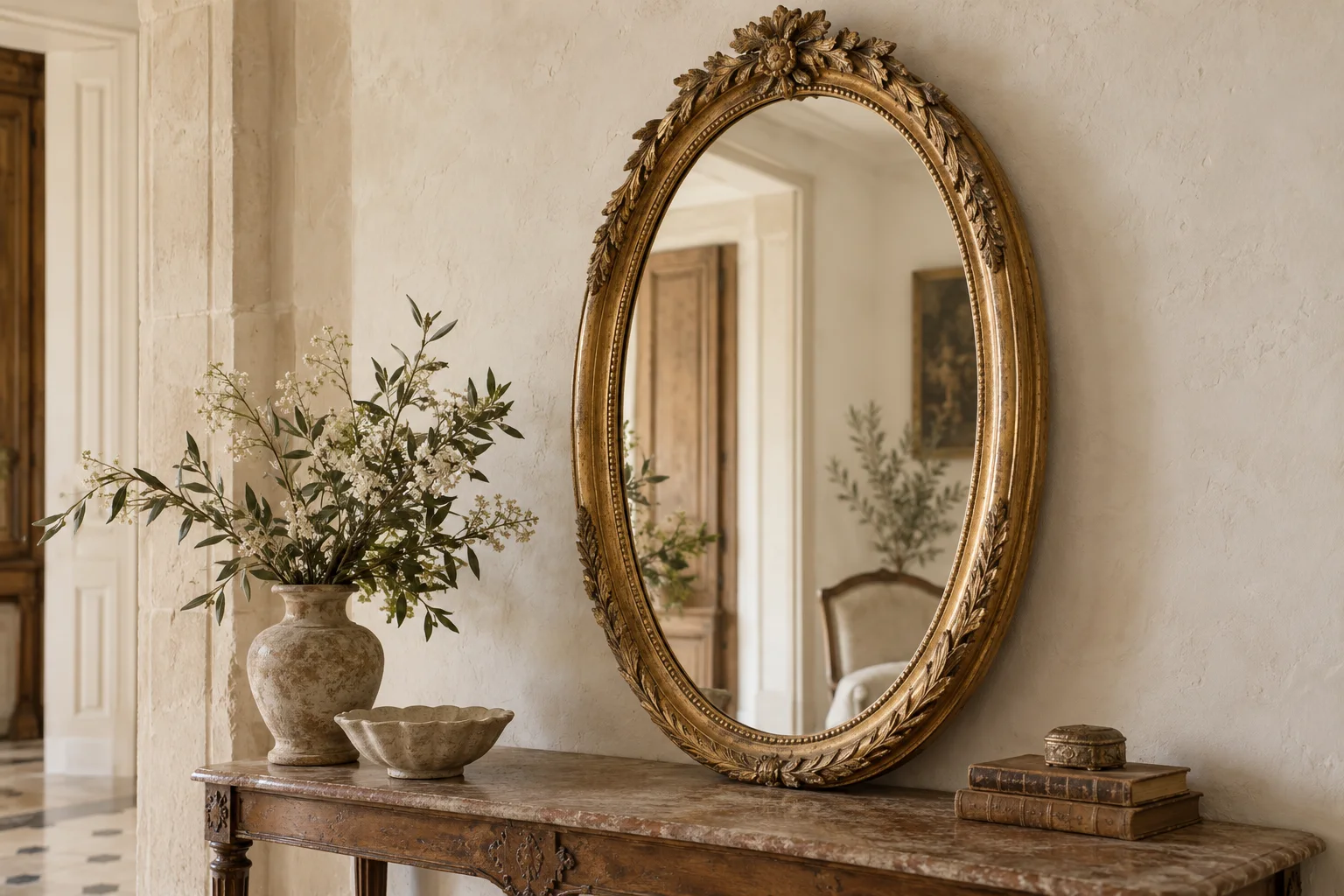 AI-created styling idea
Mirrors
Choose a mirror for its reflection, proportions, and the condition of its separate components.
Explore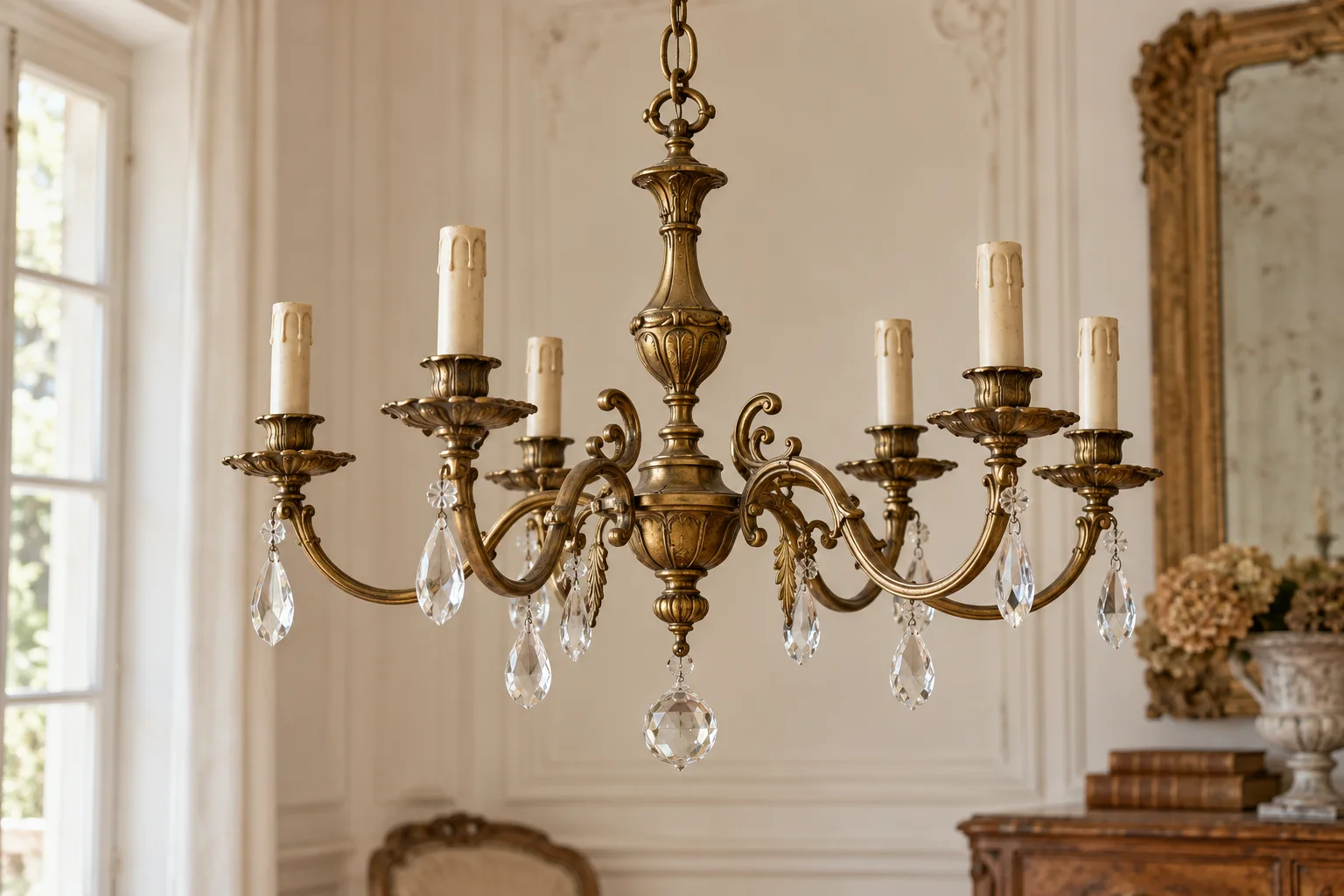 AI-created styling idea
Lighting
Assess a chandelier's volume, decorative elements and installation before planning the lighting.
Explore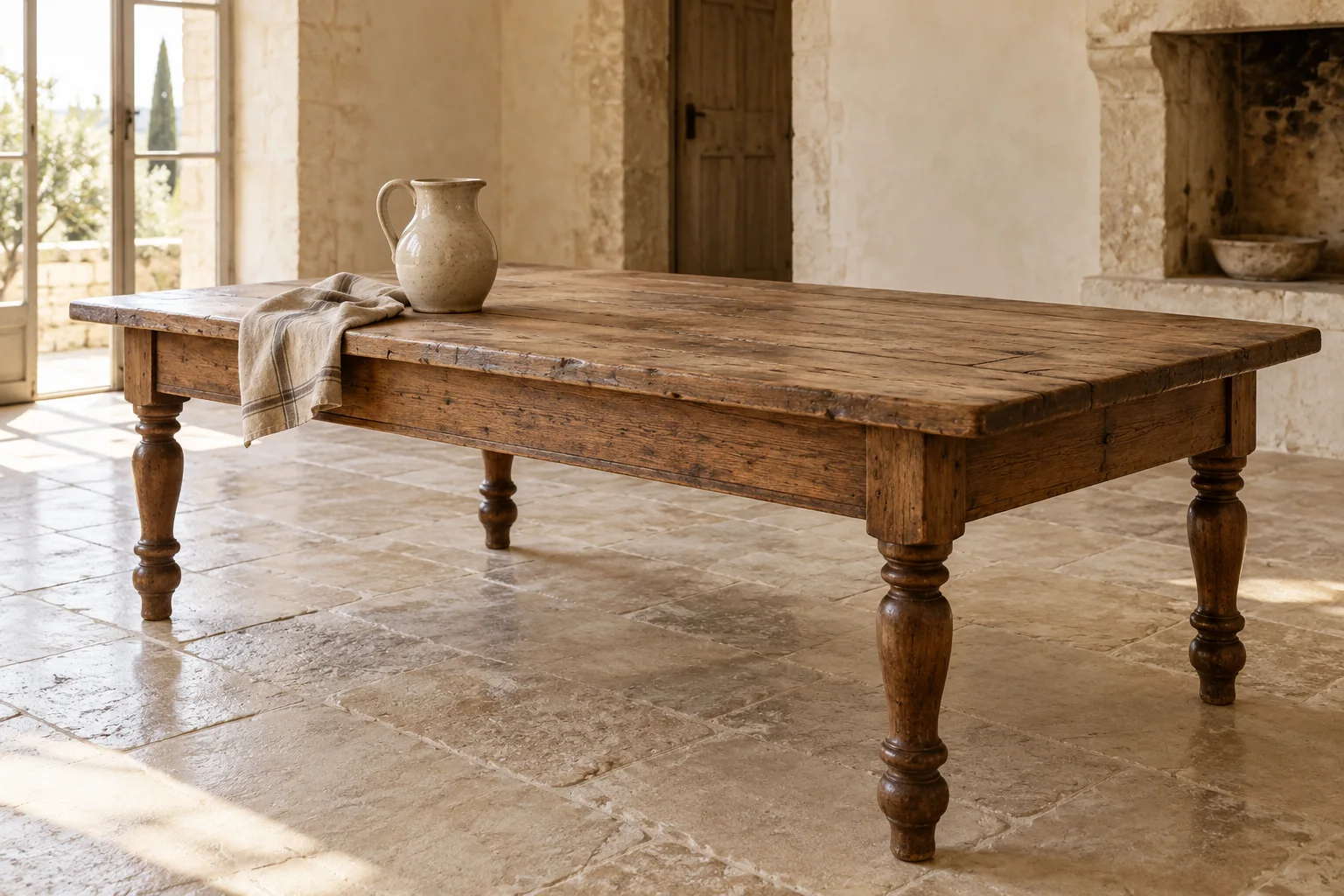 AI-created styling idea
Furniture
Measure the room with chairs pulled out before choosing a length, then check the top and the stretchers.
Explore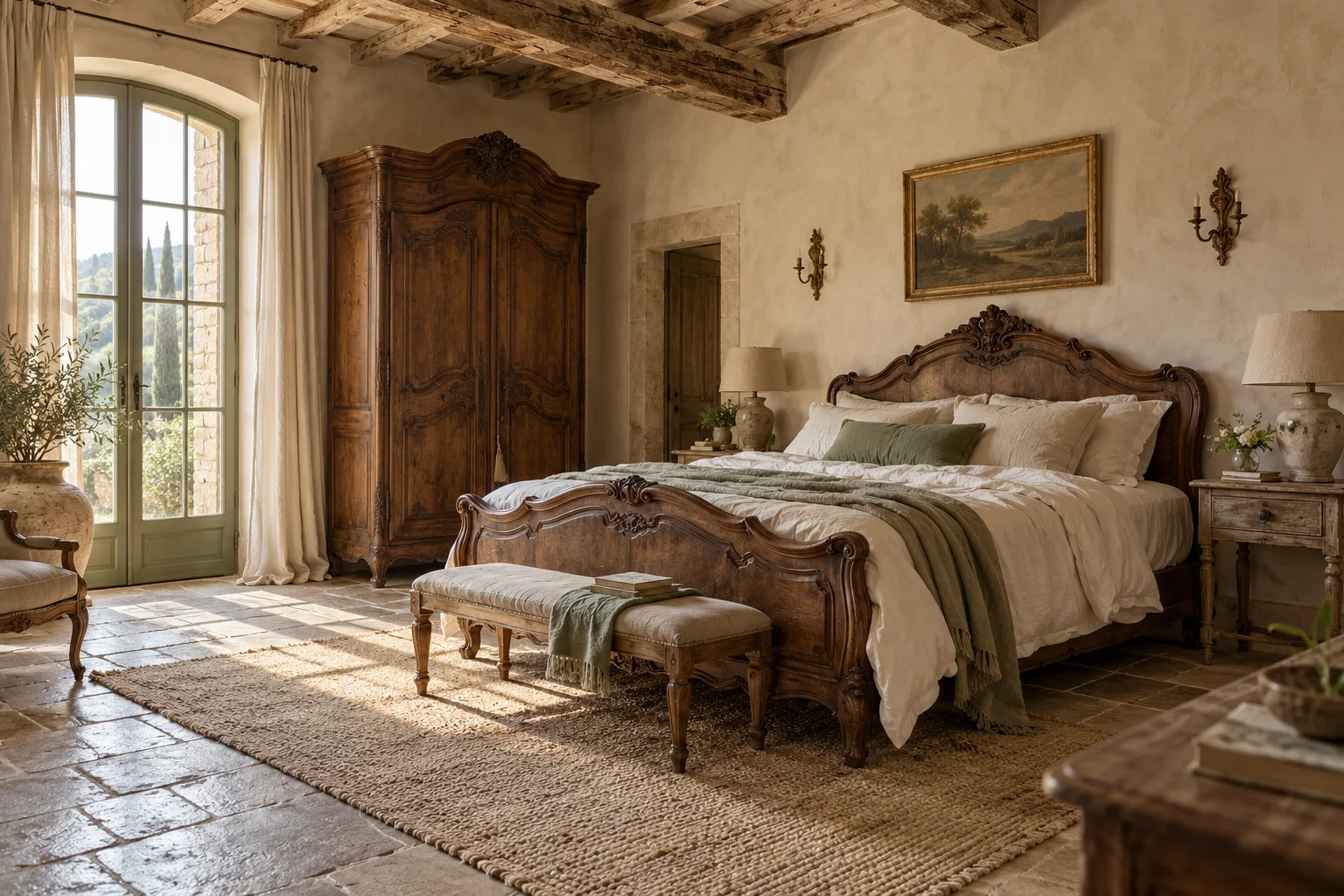 AI-created styling idea
Textiles
Adapt the project to the linen's fiber and condition without automatic washing or alteration.
Explore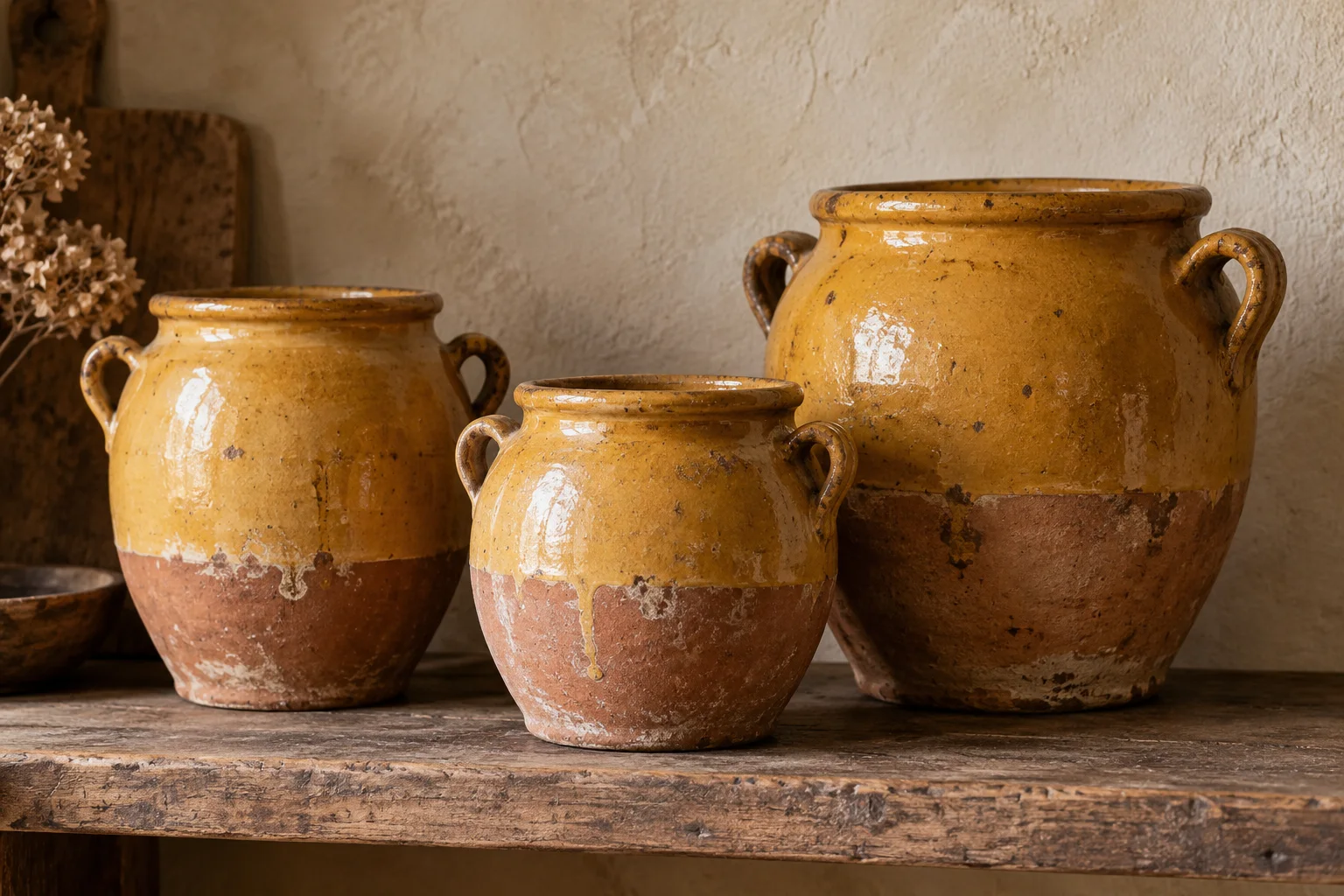 AI-created styling idea
Tableware & kitchen
Describe a confit pot by material and condition before assigning an origin.
ExploreFrench country decor is organized here in three ways: by the room you are furnishing, by the type of piece, and by the material it is made of. Each guide leads to its subcategories and then to detailed buying guides.
Warm white, cream and beige provide an easy foundation. Muted blue, sage green, soft grey, dusty rose and restrained terracotta work well as accents. The most effective palette depends on the room’s natural light and the tones already present in its furniture and flooring.
Yes. Modern furniture can provide clean lines and everyday comfort, while French country pieces add warmth and character. A contemporary sofa paired with a vintage table, or a minimalist room softened with linen and weathered wood, can create a balanced combination.
Start with textiles, lighting and a few decorative accents. Cushions, a table runner, a mirror, ceramic objects or a woven basket can introduce the style without replacing major furniture. Changing the color palette gradually can also make a significant difference.
French country decor is generally more rustic and informal, while French provincial decor often emphasizes refined curves, carving and decorative detail. The two styles overlap and can be mixed, especially when you want to balance comfort with elegance.
Nov 6, 2026 · Antique guide
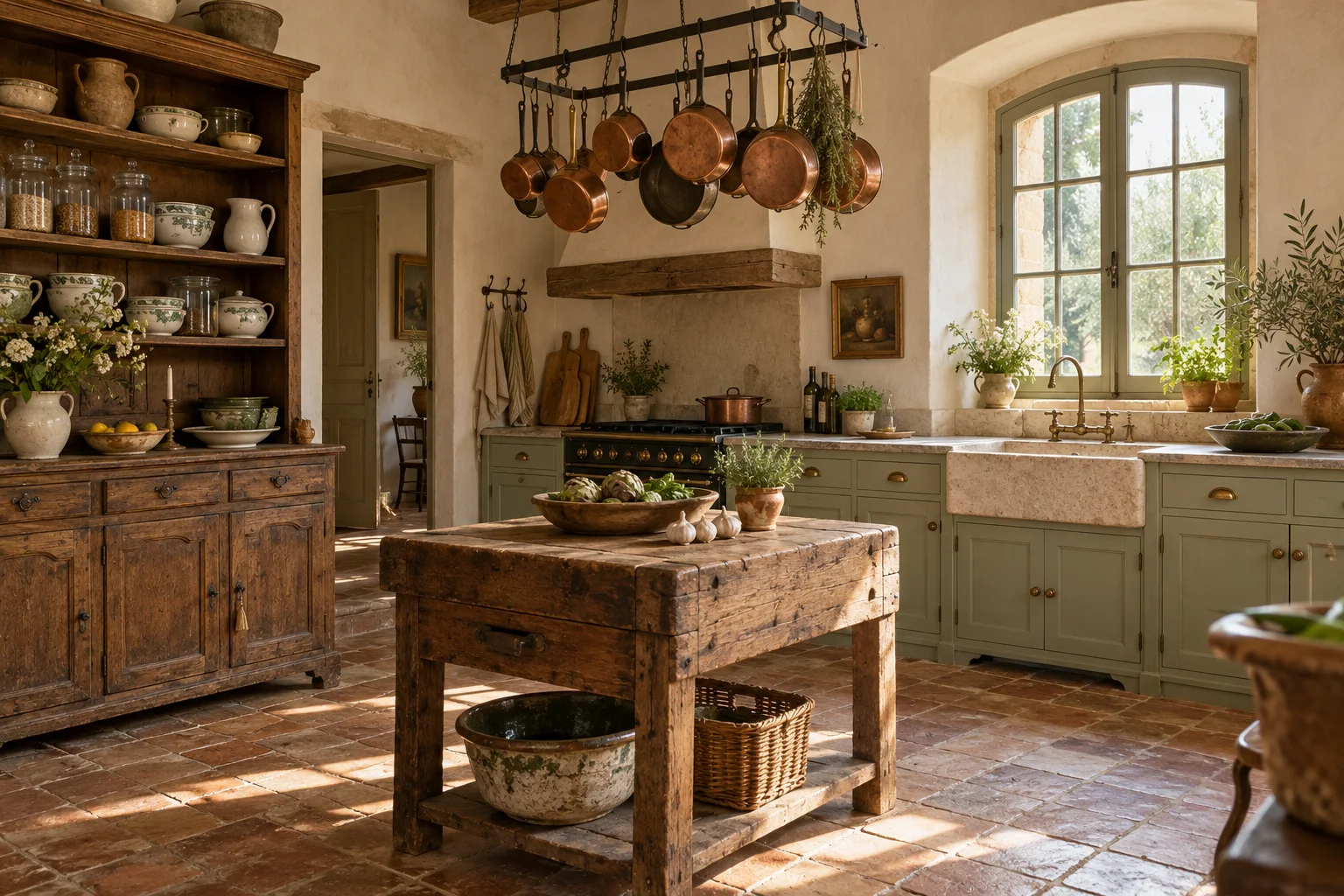
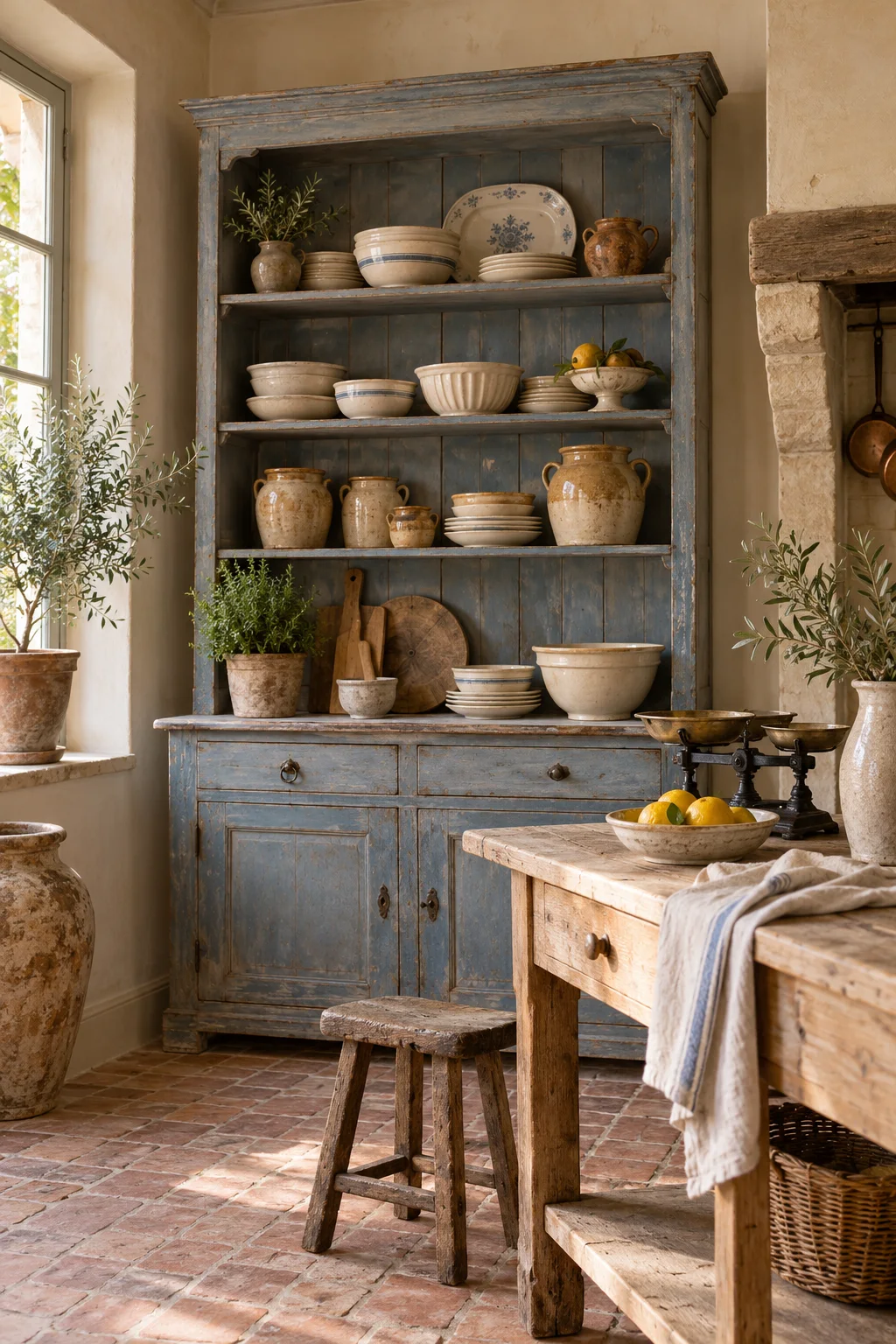
French kitchenware from 1880 to 1960 was made for daily work, which is why the good pieces are still at it.
Nov 5, 2026 · Antique guide
French country Christmas decor works best when it borrows from the house rather than from a store: brass candlesticks taken down from the mantel, greenery cut from…
Nov 3, 2026 · Antique guide
French country paint colors come from the landscape and from old materials: limewash whites, warm ochre, sage, Provençal blue, faded red and soft greige.
Nov 1, 2026 · Antique guide
Vintage French country decor draws on the objects of French homes, cafés and kitchens made between about 1920 and 1970: bistro chairs, enamel coffee pots, opaline…
Oct 31, 2026 · Antique guide
Modern French country decor keeps the warmth of the style, worn wood, linen, stone and old glass, and sets it in rooms with clean lines, fewer objects and more open…
Oct 30, 2026 · Antique guide
French country decor ideas work best when each one is concrete: a measurement, a material, a place in the room.