What a casting tells you
A cast iron urn is poured into a sand mould in two or more parts. Run a finger around the bowl and the socle: the faint raised lines are mould seams, and a slightly soft definition in the pattern means the mould was taken from an existing urn, which is how patterns were copied for decades. Sharp, crisp detail usually means an original pattern or a well-made later casting.
Foundry marks sit on the base, inside the foot, or on the plinth: a name, a town, a pattern number. A mark names a foundry only when it is present and legible; many good urns are unmarked, and a mark can be worn to nothing by a century of paint. The classic forms are the campana (bell-shaped bowl, often with handles) and the Medici type with a frieze; both were cast in every size and are still cast today, so the form does not date the piece.
Look for the joins. A bowl, a socle and a plinth are separate castings held by a central threaded rod or bolts. Rust at the join and a slight tilt mean the rod has stretched or corroded.
Weight, assembly and safe placement
A campana urn with a 24 in (61 cm) bowl can weigh 60–100 lb (27–45 kg), and a plinth adds as much again. Ask for the weight before shipping, and plan two people and a trolley for delivery. Assemble on the final spot: set the plinth level on a stone or concrete pad, thread the rod, and tighten so the bowl does not rotate.
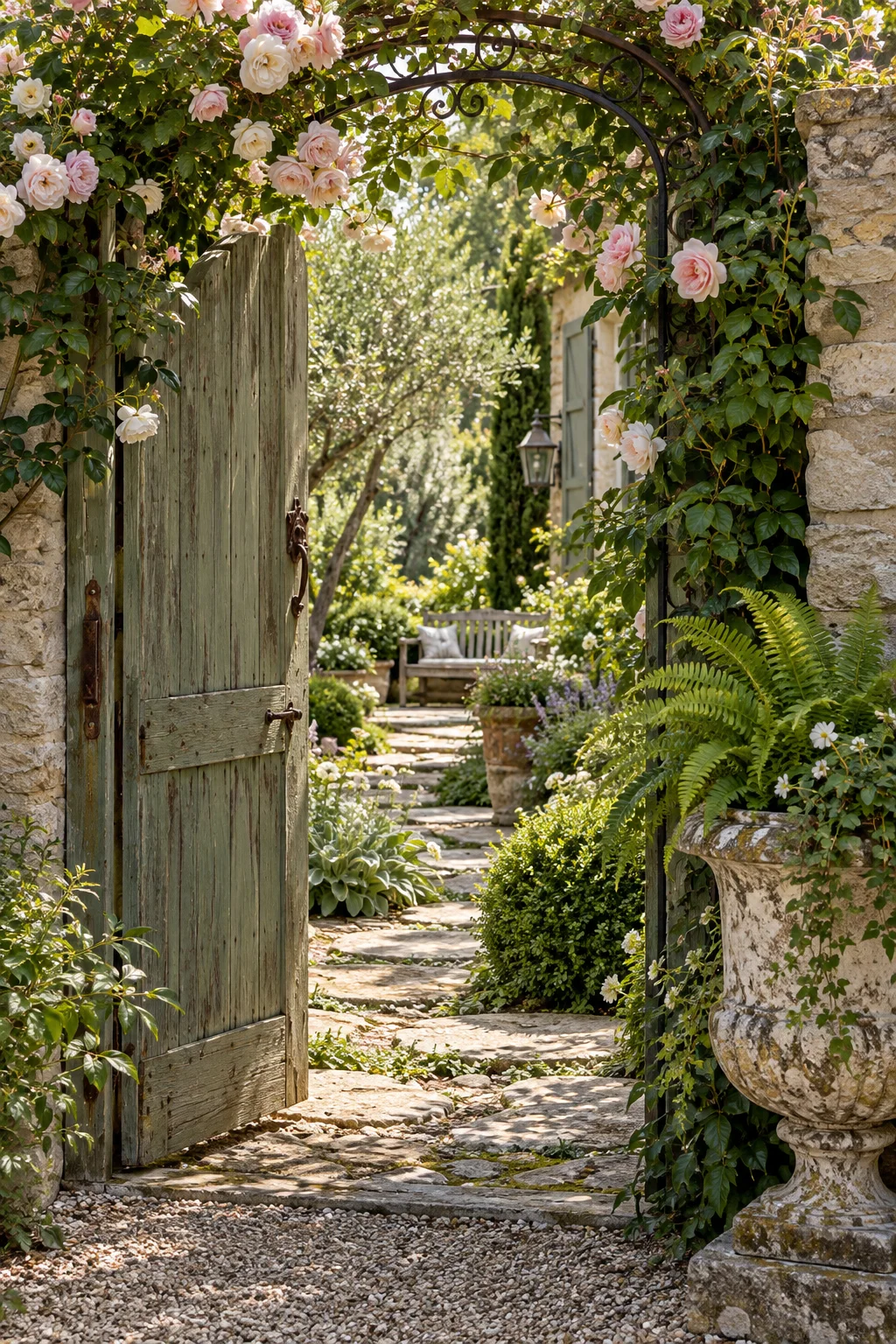
Place urns where their weight is an asset and not a risk: flanking a door or the top of steps, at the end of a gravel path, on gate piers. An urn on a tall pedestal near a play area needs a fixed base. Pairs are the classic arrangement; a single urn works as a full stop at the end of an axis.
Drainage, planting and winter care
Check that the bowl has a drainage hole; if not, drill one or plant into a plastic liner pot. A liner keeps wet soil off the iron, lets you change plants without disturbing the urn, and makes emptying before winter a two-minute job. Keep the soil surface 2 in (5 cm) below the rim so water does not run over the paint.
Paint is the urn’s protection. Brush back loose rust, prime and repaint in dry weather; the Canadian Conservation Institute guidance on metal objects supports a sound coating and dry conditions as the main defence against corrosion. In freezing climates, empty the bowl or lift the liner out; wet soil expands as it freezes and can split a cast bowl along a seam.
What to compare
| Form | Suggested Use | Decisive Check |
|---|---|---|
| Campana urn with handles | A pair flanking a door or steps | Mould seams, rod tightness, drainage hole |
| Medici-type urn with frieze | A single focal point on an axis | Crispness of the frieze, repairs |
| Low cast iron planter or trough | Window ledges and terrace edges | Rust at the base, drainage |
Your buying checklist
Continue planning your room
Frequently asked questions
How can I tell if a garden urn is antique cast iron or a modern reproduction?
Weight, seams and detail are the clues, but none is proof. Old and new urns are both cast iron with mould seams; a reproduction taken from an old urn shows slightly softer detail and often thinner walls. A legible foundry mark, layers of old paint under the current one, and a documented provenance support an older date. Without those, describe it as a cast iron urn of unverified age.
How heavy is a cast iron garden urn?
A campana urn with a 24-inch (61 cm) bowl weighs roughly 60 to 100 pounds (27 to 45 kilograms), and a cast plinth can add as much again. Smaller urns of 14 to 18 inches (36 to 46 cm) weigh 25 to 45 pounds (11 to 20 kilograms). Ask the seller for the measured weight, because freight and crating are priced on it.
Should I plant directly into a cast iron urn?
It is better to plant into a plastic liner pot that sits inside the bowl. The liner keeps wet soil off the iron, allows a quick change of plants, and can be lifted out before the ground freezes. If you plant directly, make sure the bowl has a drainage hole and keep the soil 2 inches (5 cm) below the rim.
Do cast iron urns crack in winter?
They can, when wet soil freezes and expands inside the bowl or when water collects in the socle. Empty the bowl or lift the liner out in late autumn, keep the drainage hole clear, and make sure the sections drain. A sound coat of paint and a dry base pad prevent the slow rust that weakens the casting at the seams.
Sources & further reading
- Canadian Conservation Institute — Care of metal objects — Supports coating, dry conditions and early rust treatment for iron objects kept outdoors.