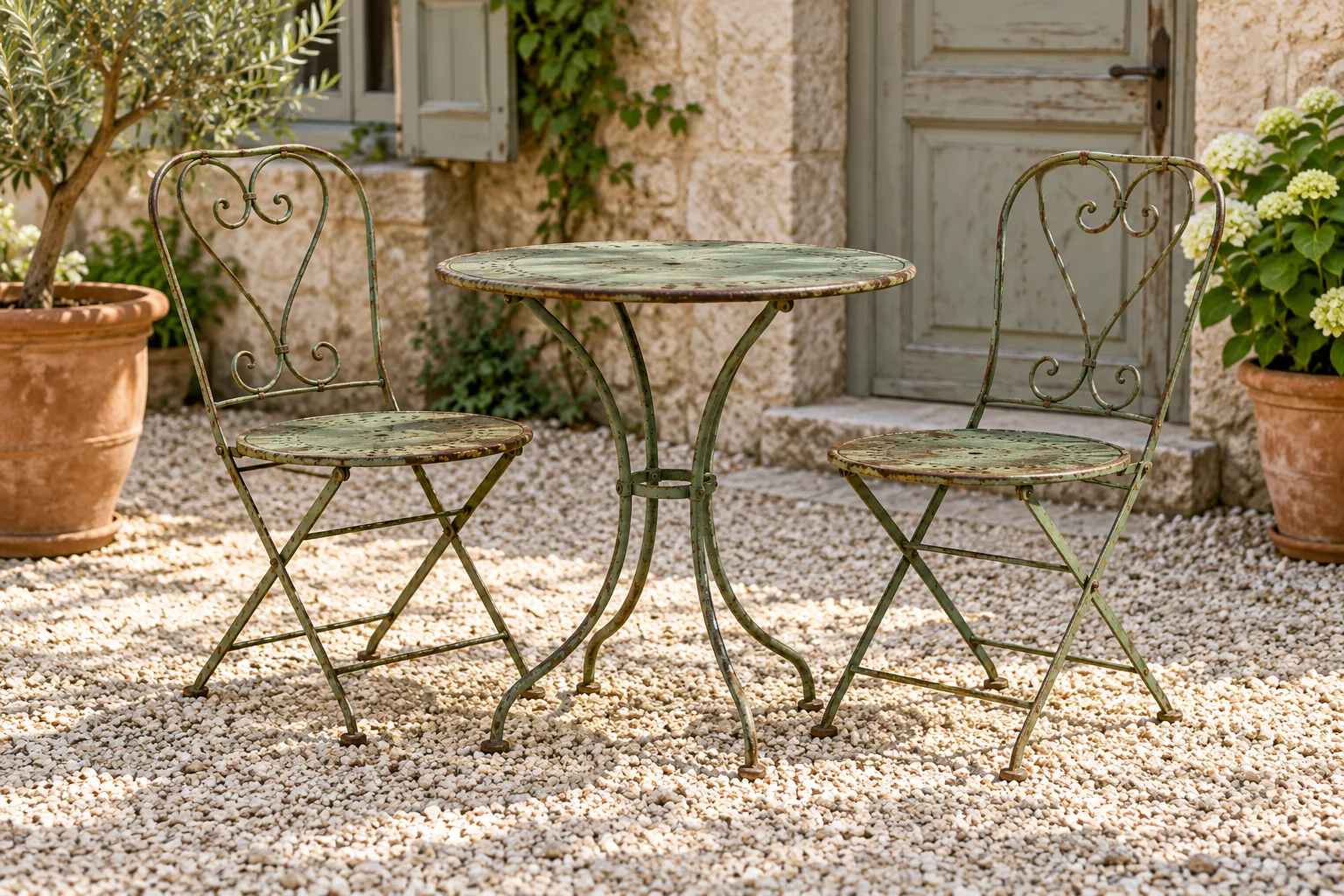
 AI-created styling idea
Garden
Antique garden furniture
Wrought or cast: check welds, feet and the underside before you sit, and weigh the move.
ExploreFrench Country · An inspiration catalogue
French country gardens are made of structure, gravel and clipped green, with iron furniture, stone basins and terracotta jars doing the decorating; this page covers the design, the antiques that live outdoors and how they survive the weather.
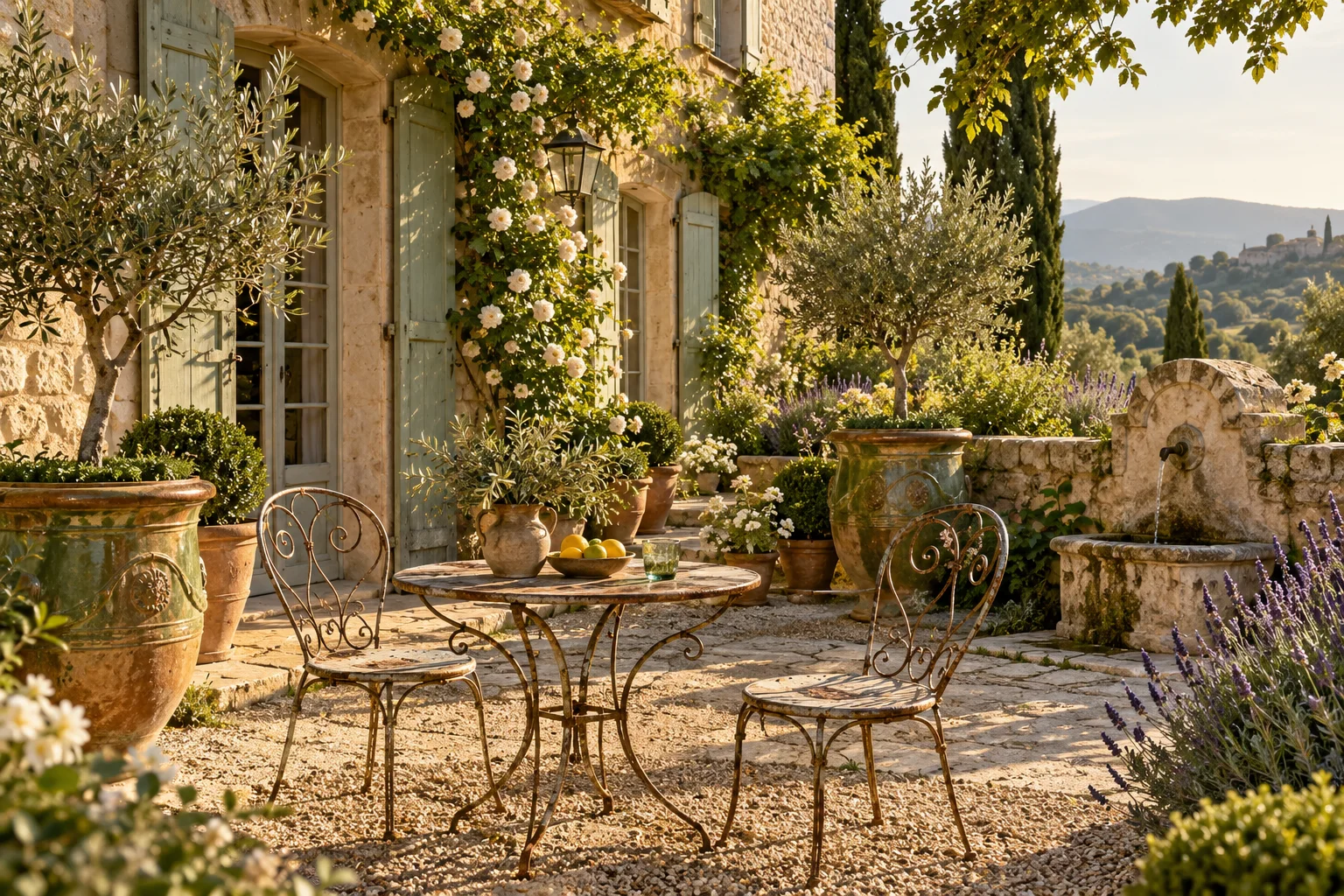
French country gardens borrow the discipline of the formal garden and relax it: straight gravel paths, low clipped hedges and a few large pots give the structure, while roses, lavender and vegetables are allowed to spill over it. The objects are the same materials as indoors, iron, stone, terracotta and zinc, which is why the garden reads as another room of the French country house.
Plant the lines first: a path from the door, a hedge that frames a view, a tree that gives shade at lunch. Flowers come last and change every year; the lines do not.
Pea gravel (3/8 in / 10 mm) over a compacted base is the French country surface: it drains, crunches underfoot and takes iron furniture without staining. Boxwood or its disease-resistant substitutes (Japanese holly, yew) form the low hedges; an allée of pleached limes or fruit trees makes a short garden feel longer.
A square vegetable garden with gravel cross paths, edged in box or stone, is both productive and decorative. Espaliered pears on a wall, a quince, a fig: the orchard can be three trees.
Stand at the main door and at the kitchen window: the paths should run from those two points, and the best object (a basin, an urn, a bench) should sit at the end of each line. Everything else is placed in relation to those axes.
Divide the garden into two or three outdoor rooms with hedges, a wall or a change of level, each with one purpose: eating, growing, sitting in shade. Mark each threshold with a pair of pots, a gate or an arch; see trellises and arbors.
A stone basin (bassin) or a wall fountain gives the garden its sound. An antique stone trough can be planted or filled; an old fountain needs a modern pump and a frost plan. Browse fountains and basins for the forms and their weights.
French country patio furniture is mostly iron: wrought (forged, bent, light) for chairs and bistro tables, cast (moulded, heavy, ornate) for benches and bases. Wrought iron rusts slowly and bends before it breaks; cast iron is brittle and can crack if dropped or frozen with water inside. Check welds, feet and the underside of seats, then weigh the piece in your mind: a cast iron bench can exceed 100 lb (45 kg). Explore antique garden furniture.
Cast iron garden urns with foundry marks, cast stone (reconstituted) urns and carved limestone pieces anchor an axis or a pair of steps. Look for the casting seam and the maker's mark under the foot; expect frost damage on cast stone and chips on limestone edges. See garden statues and ornaments.
French planters range from the glazed, garlanded Anduze jar to plain terracotta pots and zinc tubs. Terracotta cracks when water in the clay freezes, so old pots in cold climates are emptied, raised on feet or moved under cover for winter; glazed Anduze jars are more resistant but not immune. Zinc planters need drainage holes and a liner if they hold soil. Compare sizes in pots and planters; Lo Cantou lists terracotta jardinières with dimensions and frost notes.
A slatted wooden bench against a wall, an iron bench at the end of the path, a stone bench under the fig: each is a destination as much as a seat. Wood benches should sit on stone or gravel, not grass, to keep the feet dry; see benches and banquettes.
A trellis of painted wood or iron trains roses up a wall; an arbor or tonnelle makes the dining spot. Both take the wind: anchor them below the frost line in cold regions.
A zinc watering can by the door, a wooden trug, a wire basket for eggs or tomatoes: the tools that stay in view are part of the decor. Browse watering cans and garden tools.
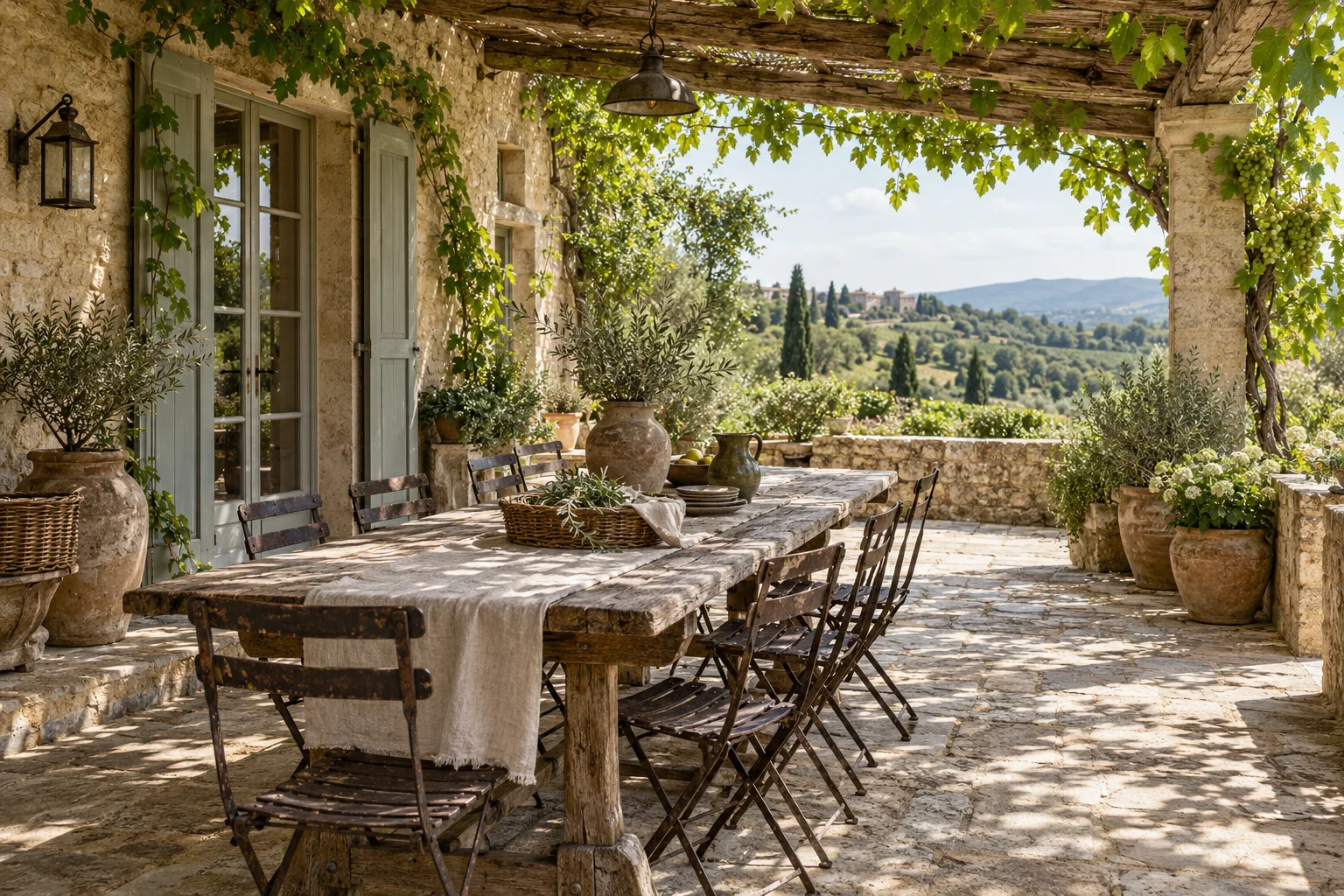
A metal bistro table with four folding chairs, or a long slatted table under the vine, sets the scene the patio pages show: lunch that lasts all afternoon. Keep chair seats at 17–18 in (43–46 cm) and the table at 28–30 in (71–76 cm), the same proportions as indoors.
A grapevine or wisteria on an iron arbor gives dappled shade by the third summer; a canvas umbrella in natural cotton fills the gap until then.
Candle lanterns on the table, a wall lantern by the door, and no uplighters in the trees: the garden at night should look like the house, warm and low. The French country lighting page explains which antique lanterns can live outside.
In USDA zones 7 and colder, assume anything porous (terracotta, cast stone, limestone) can crack over winter when it holds water. Drain basins, empty pots, raise everything on feet, and store the most fragile pieces under cover from November to March.
Stable surface rust on wrought iron is a patina and can be sealed with a clear wax; flaking paint over deep pitting is a repair. Repaint only when the old paint is failing, and keep a record of what was done. Old paint on garden iron may contain lead; strip it professionally or seal it.
Garden antiques are the heaviest objects in this catalogue: a cast iron urn weighs 60–150 lb (27–68 kg), a stone basin often more than 200 lb (90 kg). For pieces bought in France, sea freight of 6–12 weeks is the realistic route. A designer specifying garden antiques for a project can send a brief to Antiques 360 and receive documented options with crating, freight and brokerage quoted before committing; the French country antiques guide explains what the documentation includes, and the garden room scenes show the pieces in place.
AI-created styling ideaGarden
Wrought or cast: check welds, feet and the underside before you sit, and weigh the move.
ExploreAI-created styling ideaGarden
Distinguish planting from decorative display before choosing a location for an antique pot.
Explore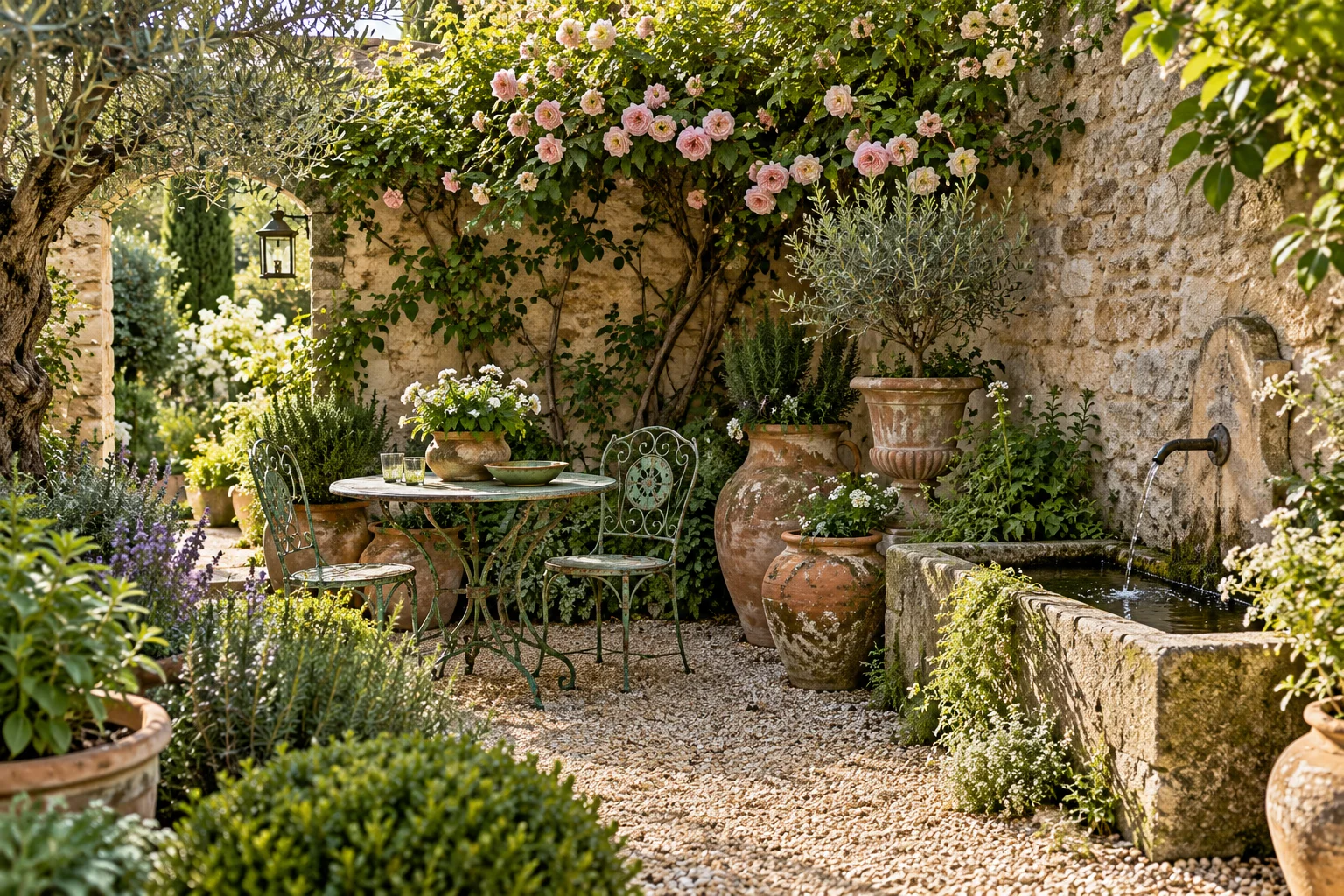 AI-created styling idea
Garden
One urn at the end of an axis does more than six along a path; check the foot and the mark.
Explore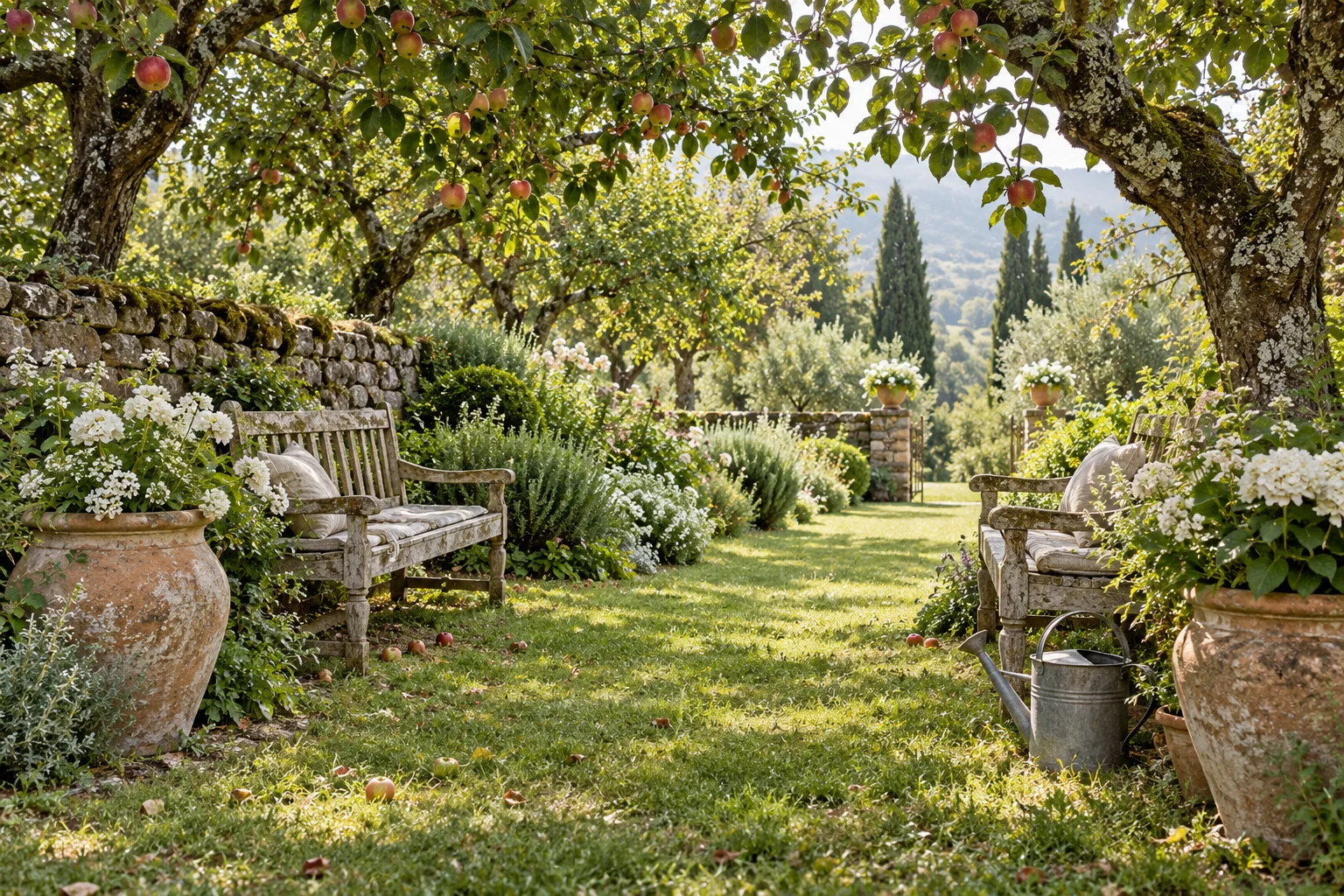 AI-created styling idea
Garden
The sound of the garden; plan the pump, the drain and the winter before the stone arrives.
Explore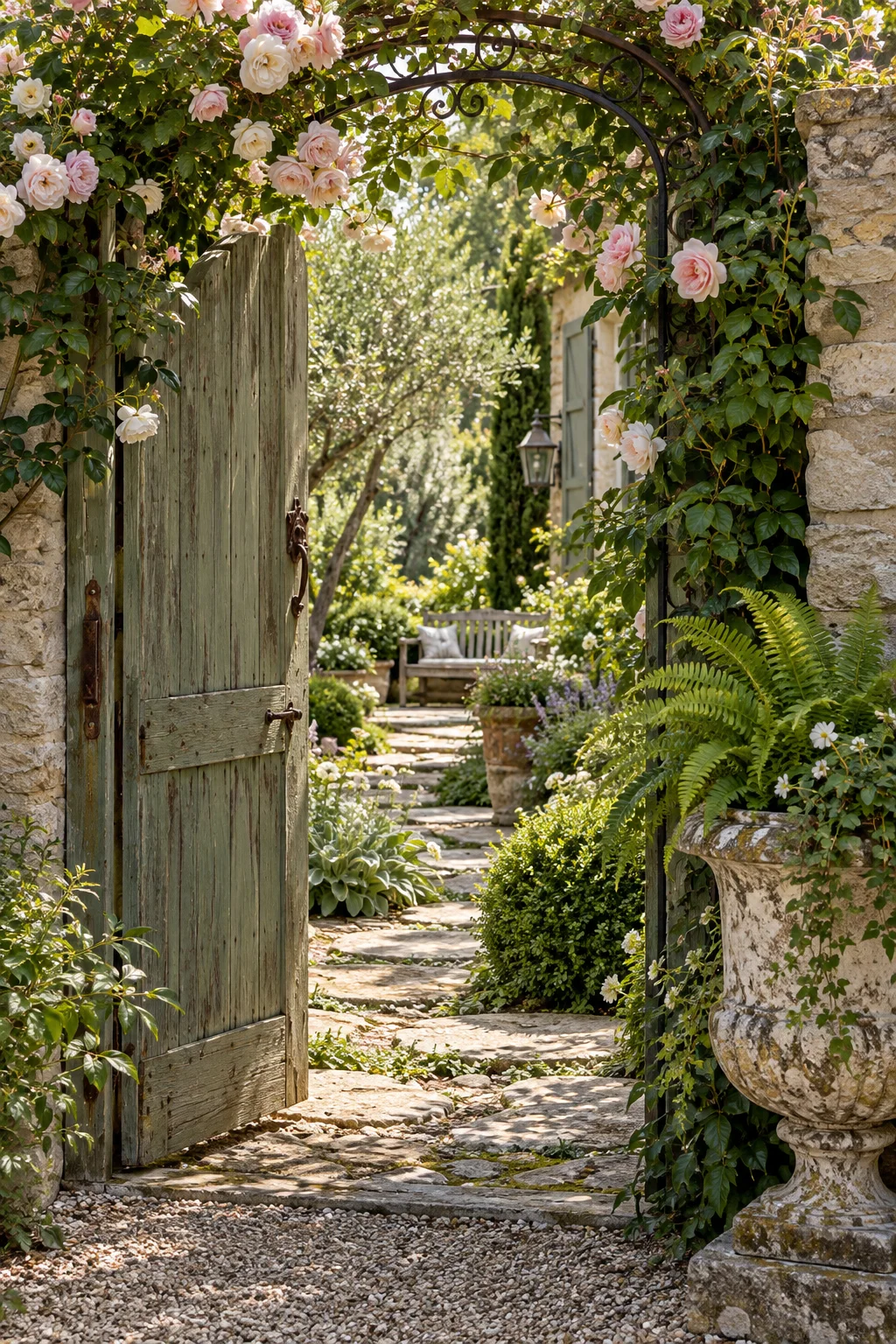 AI-created styling idea
Garden
Mark a threshold or shade the table; anchor below the frost line where winters bite.
Explore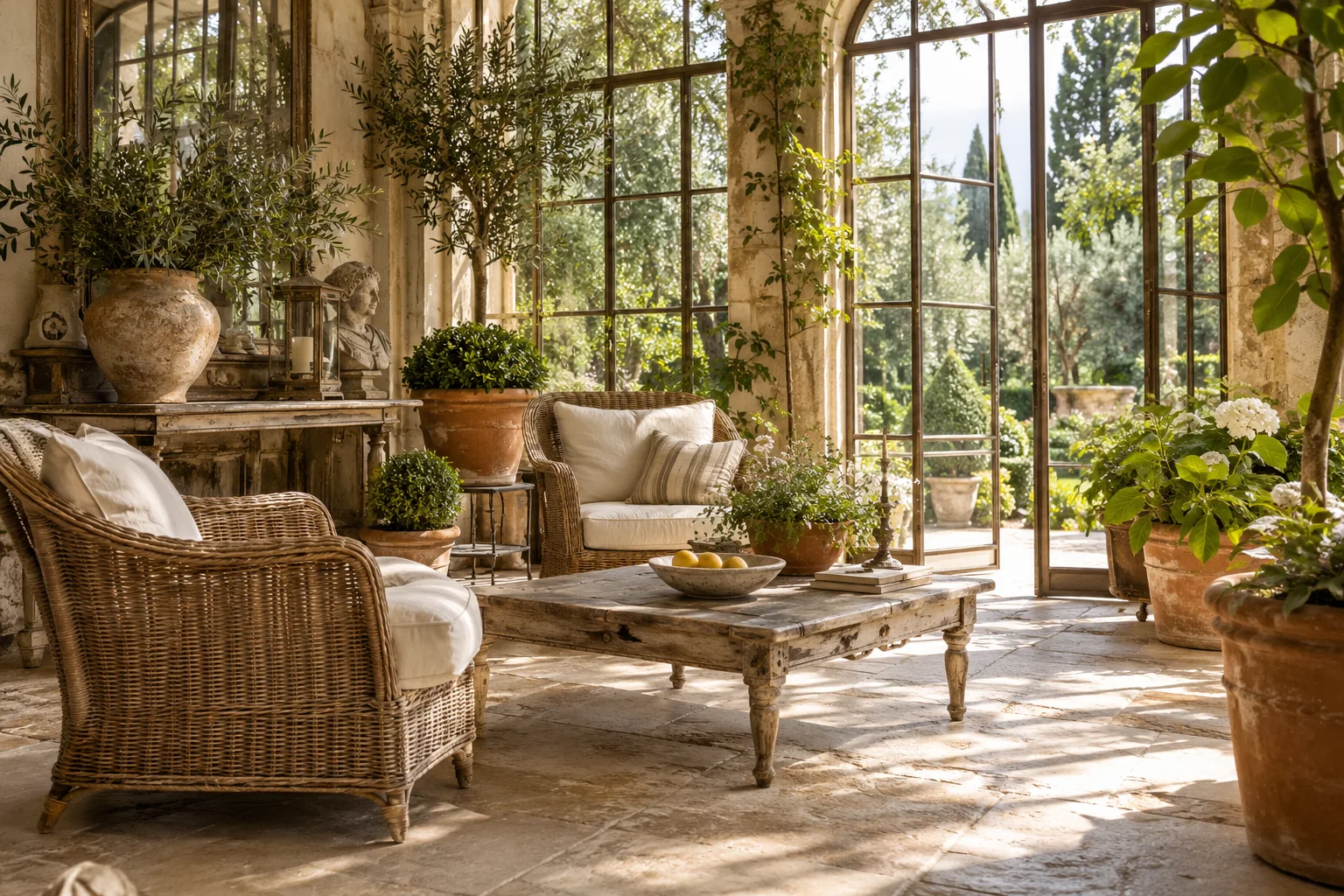 AI-created styling idea
Garden
Zinc, copper or enamel: the tools that stay in view, checked for leaks and loose handles.
ExploreEvery piece for the garden in one place, grouped by category. Each subcategory page explains what to check before you buy and links to the detailed guides.
Structure. A French country garden keeps straight gravel paths, low clipped hedges, a few large pots and one object at the end of each view, then lets roses, lavender and vegetables soften the lines. A cottage garden starts from the planting and lets it dictate the shape. Both use old iron and terracotta; the French version places them on an axis.
Not in cold climates. Water held in the clay freezes and splits the pot, so in USDA zone 7 and colder empty the pots, raise them on feet so they drain, and move the most valuable ones under cover from November to March. Glazed Anduze jars resist frost better than plain terracotta but can still crack when full of wet soil.
Brush off loose rust in spring, treat any deep pitting with a rust converter, and seal stable surface rust with a clear outdoor wax so the patina stays. Repaint only when old paint is failing, and have old paint tested or stripped professionally because it may contain lead. Stand the feet on gravel or stone rather than grass to keep them dry.
Beside a door, a pair of urns or pots 18 to 24 in (45 to 60 cm) tall reads well against a standard door; on a terrace, one urn of 30 to 40 in (75 to 100 cm) on a plinth anchors the view. Keep the urn narrower than a third of the door or step width, and remember that a cast iron urn of that size weighs 60 to 150 lb.
Nov 6, 2026 · Antique guide
Vintage metal chairs bring the terrace indoors.
Nov 6, 2026 · Antique guide
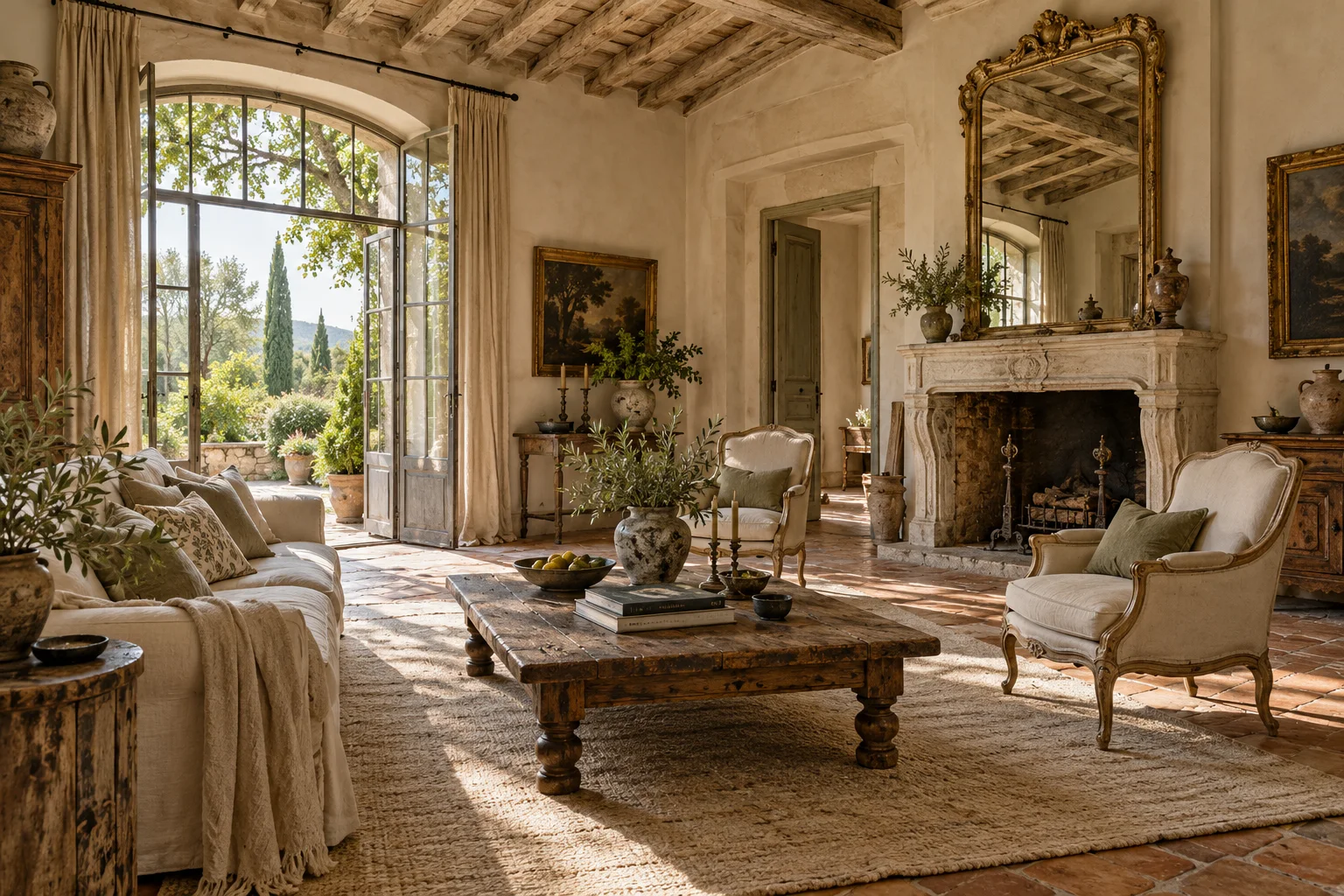
An antique fireplace mantel sets the scale of a living room before any furniture arrives.
Nov 6, 2026 · Antique guide
Terra cotta pots give a French country garden its color and weight: a pair of glazed Anduze vases at the top of the steps, a Biot jar in a bed of lavender, rows of…
Nov 5, 2026 · Antique guide
A French enamel sign, the plaque émaillée, is not paint on metal: it is powdered glass fused onto a steel sheet in a kiln, one color at a time.
Nov 4, 2026 · Antique guide
Garden chairs in wrought iron are the ones that survive: bars bent and riveted by hand, light enough to carry to the shade and strong enough to be left out for fifty…
Oct 31, 2026 · Antique guide
Fall floral arrangements suit French vintage vessels because autumn stems are sturdy, branching and warm in color, and old pots and pans already carry those tones.