Three families of French prints and how to tell them apart
Botanical prints come from illustrated flora published in Paris from the late eighteenth century onward. Many were printed from engraved plates and finished by hand with watercolor. A genuine intaglio print shows a plate mark: a faint rectangular impression pressed into the paper around the image, visible in raking light. Later photomechanical reproductions have no plate mark and show a regular dot pattern under a 10x loupe.
Fashion plates were issued with Paris fashion journals through the nineteenth century, usually around 8 x 11 in (20 x 28 cm), with hand-applied color over an engraved or lithographed outline. Look for the journal name printed in the lower margin. Engravings and etchings of views, monuments and rural scenes form the third family; they range from small book plates to large separately published sheets, and the margin often carries the names of the draftsman and the engraver.
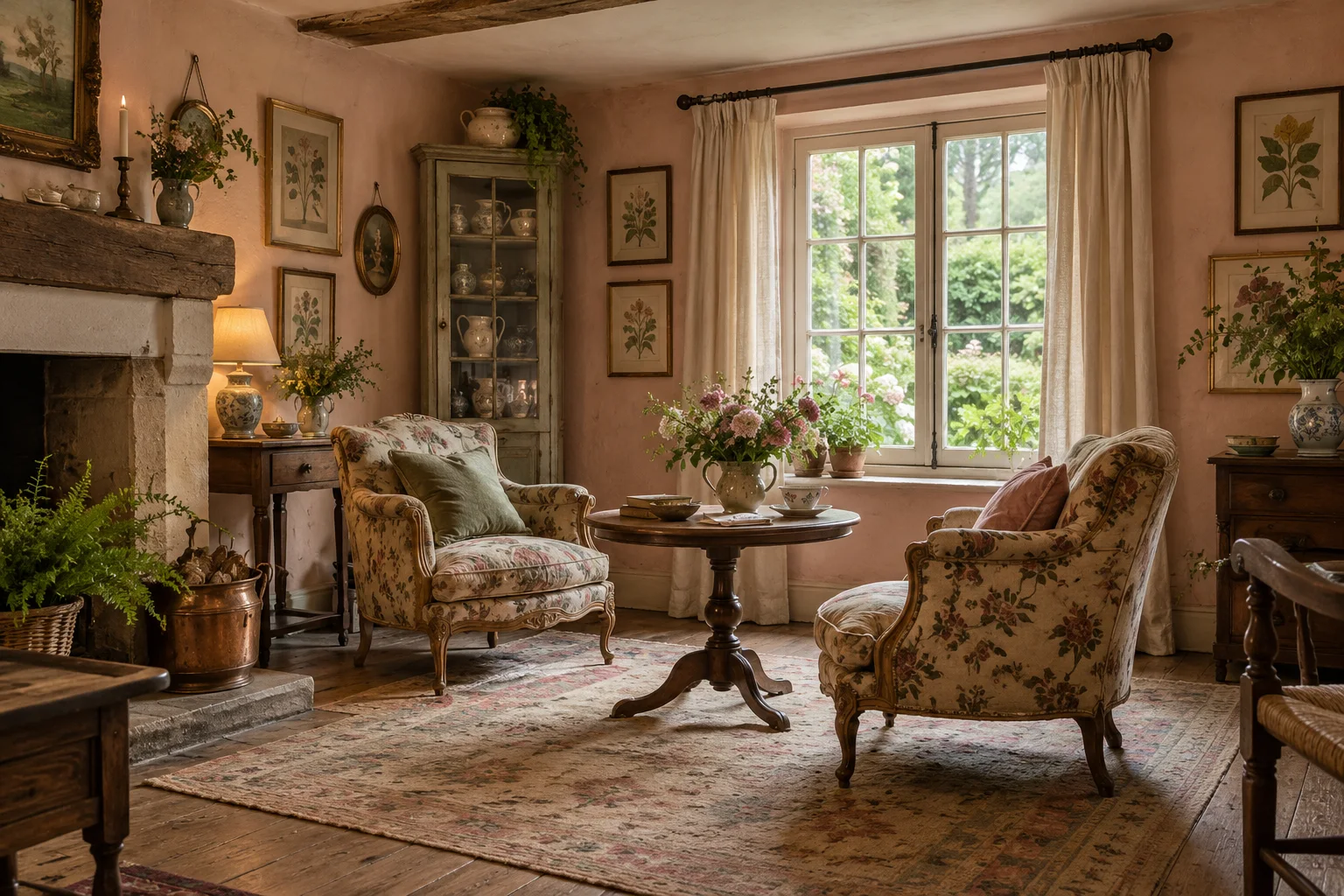
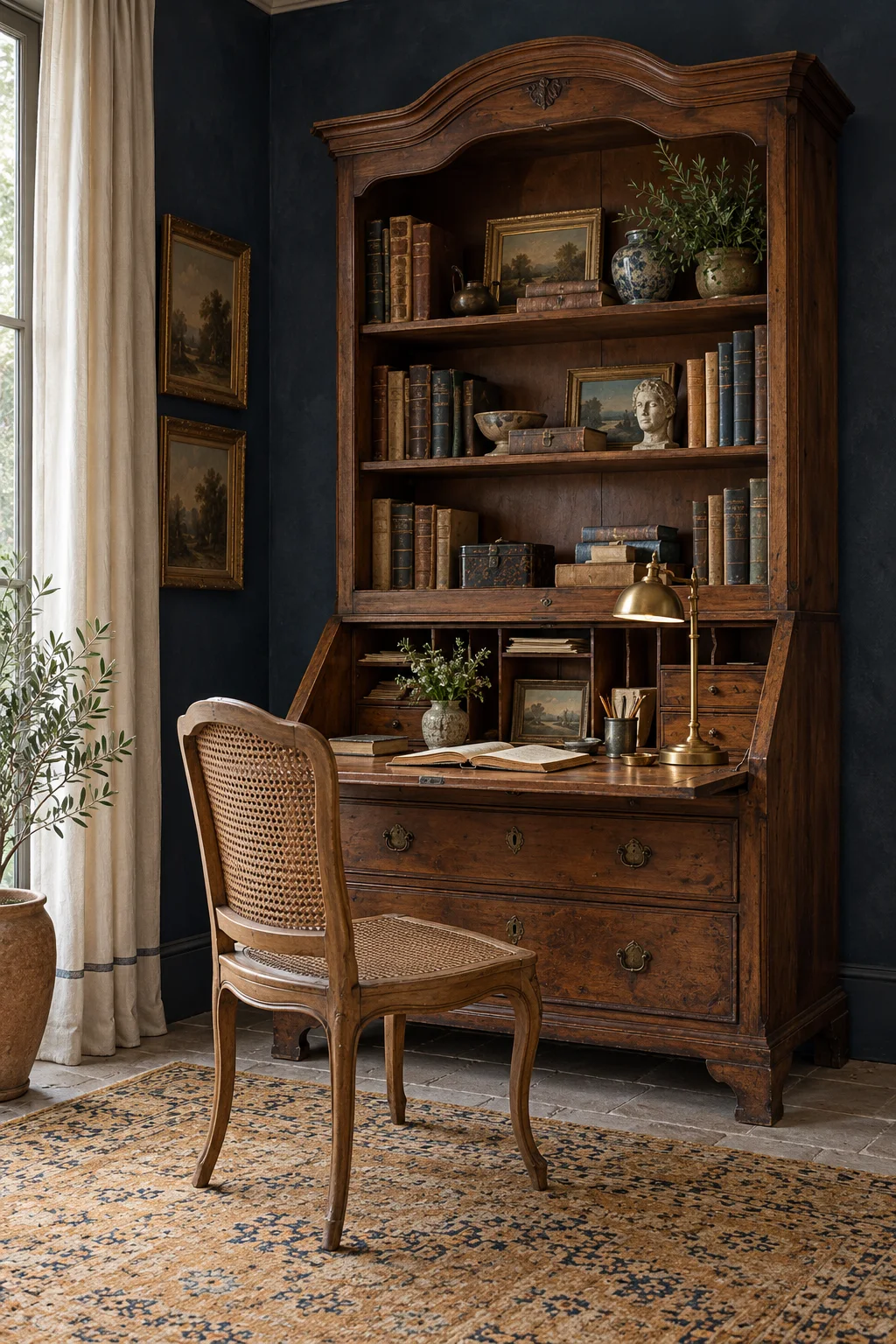
Group the three families by what they do in a room. Botanicals read well in sets of four or six with identical frames, and they suit a bedroom or a hallway. Fashion plates belong in a dressing room or a bathroom. A single large engraving can anchor a home office above a desk.
Reading paper condition: foxing, mat burn and fading
Foxing is the scatter of small brown spots that develops on old paper in damp conditions. Light foxing in the margins is common on French prints older than a century and does not need treatment; foxing across the image lowers the decorative value and is costly to reduce. Ask for a photograph of the whole sheet, margins included, before buying.
Mat burn is a brown line that follows the window of an old wood-pulp mat. Acid migrated from the mat into the paper over decades. The line can be hidden by a slightly larger window, but the paper under it stays brittle. Fading is the third check: compare the colors near the old mat edge with the exposed area. A fashion plate whose reds have turned to pink has lived in sunlight.
Tears, pinholes and trimmed margins are reported honestly by serious sellers. A sheet trimmed inside the plate mark has lost part of its identity as a print. Water stains show as tide lines with a darker edge. None of these faults is dangerous, but each should lower the price and appear in the description.
Framing French prints so they last
Use a window mat and a backing board that are both acid-free and lignin-free. The mat keeps the paper away from the glass, where condensation would otherwise stick the sheet to the glazing. Attach the print with two hinges of Japanese paper and wheat-starch paste at the top edge only; never use self-adhesive tape, which stains within a few years.
Choose glazing with ultraviolet filtering, either glass or acrylic. Acrylic weighs less and does not shatter, which matters for a group of six frames in a hallway. Avoid non-glare glass that touches the sheet. For the frame itself, a simple black or gilt moulding suits engravings; narrow natural wood suits botanicals. Our note on antique frames covers rebates and fitting.
Hang prints on a wall that gets no direct sun and no heat from a radiator or chimney breast. Center a single print at 57 to 60 in (145 to 152 cm) from the floor. For a grid, keep 2 to 3 in (5 to 8 cm) between frames and align the outer edges. Our guide to French country mirrors and wall decor gives composition rules for mixed groups.
What to compare
| Form | Suggested Use | Decisive Check |
|---|---|---|
| Hand-colored botanical plate | Sets of four to six in a bedroom or hall | Plate mark present, margins untrimmed |
| Fashion plate from a Paris journal | Dressing room, bathroom, small groups | Journal name in margin, colors not faded |
| Engraving of a view or monument | One large sheet above a desk or console | Foxing confined to margins, no mat burn |
Your buying checklist
Continue planning your room
Frequently asked questions
How can I tell an original French print from a reproduction?
Look at the sheet in raking light for a plate mark around the image, which an intaglio print shows and a photographic reproduction does not. Under a 10x loupe, a reproduction shows a regular dot screen while an engraving shows continuous lines. Hand coloring sits slightly on top of the printed lines and may overlap them.
Is foxing on a print a reason not to buy?
Light foxing in the margins is normal on paper older than a hundred years and can be hidden by the mat. Foxing across the image is a decorative fault that is expensive to reduce, so it should lower the price. Store and hang the print in a dry room so the spots do not spread.
What frame and glass should I use for antique prints?
Use an acid-free mat and backing, hinge the sheet with Japanese paper at the top edge, and choose glazing with ultraviolet filtering. The mat keeps the paper off the glass. A simple gilt or black moulding suits engravings, while narrow natural wood suits botanicals. Avoid tape and non-glare glass that touches the paper.
Where should French prints hang in a country home?
Choose walls without direct sun, radiators or chimney heat. Botanicals in sets work in a bedroom or hallway, fashion plates in a dressing room or bathroom, and a large engraving above a desk. Center single pieces at 57 to 60 in from the floor and keep 2 to 3 in between frames in a group.
Sources & further reading
- Canadian Conservation Institute — Basic care: furniture and objects made of wood — Supports keeping wooden frames and backing boards away from heat and damp, which also protects the paper they hold.
- 1stDibs — 2026 Interior Design Trends Survey (November 17, 2025) — Context for the growing share of vintage and antique pieces, prints included, in designers’ projects; does not date any individual print.