Oils, prints and engravings: what you are looking at
An oil painting shows brushwork and relief under raking light; the paint sits on canvas or a wooden panel, and the back shows the weave, a stretcher and often old labels. A print reproduces an image: under a loupe, a photomechanical print breaks into regular dots, while an etching or engraving shows ink lines standing on the paper and a plate mark pressed into the sheet around the image. A lithograph has a soft, grainy tone without dots or plate mark.
Condition speaks before the subject. Fine cracking (craquelure) across an oil is age; a canvas that has been relined (a second canvas glued to the back) has been conserved, which should be disclosed. Foxing, the brown spots on old paper, and a sun-faded margin are normal on prints and should be priced in, not hidden by the frame.
Signatures, frames and the fit
A signature is a mark on the picture; an attribution is a judgement supported by documents, exhibition history or an expert opinion. “Signed” means only that a name is written on the work. Listings that say “attributed to”, “circle of” or “school of” are using cautious terms on purpose, and a country wall does not need more than that. Pay for the picture you can see.
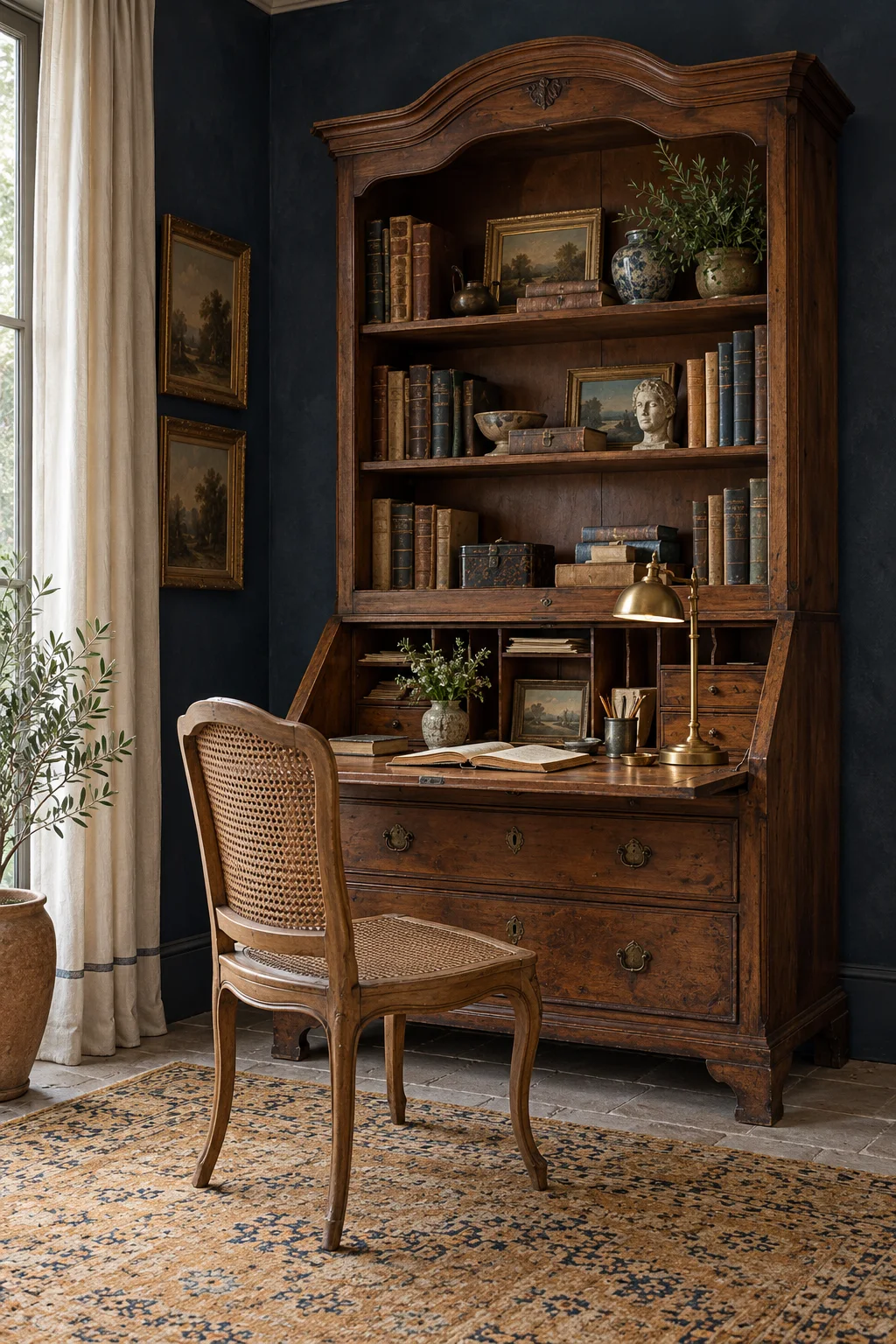
Frames are often later than the pictures in them. Look at the fit: the picture should sit in the rebate without being cut down, with a backing board and hanging fittings that match the weight. Gesso losses on a gilt frame are cosmetic; a broken corner joint is structural. The Canadian Conservation Institute guidance on wooden objects supports keeping frames away from heat sources and damp walls, which matters in stone houses.
Hanging: heights, groups and light
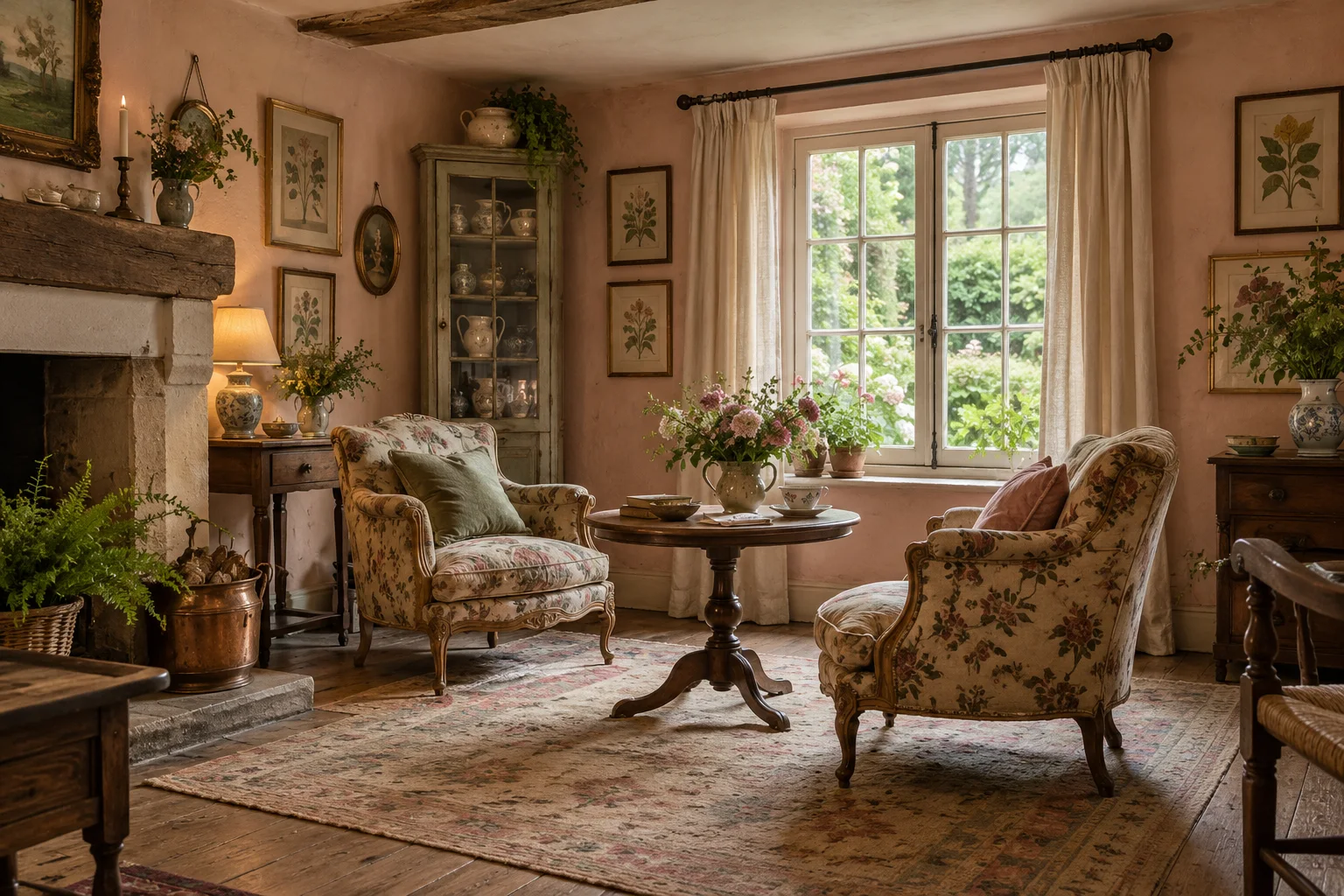
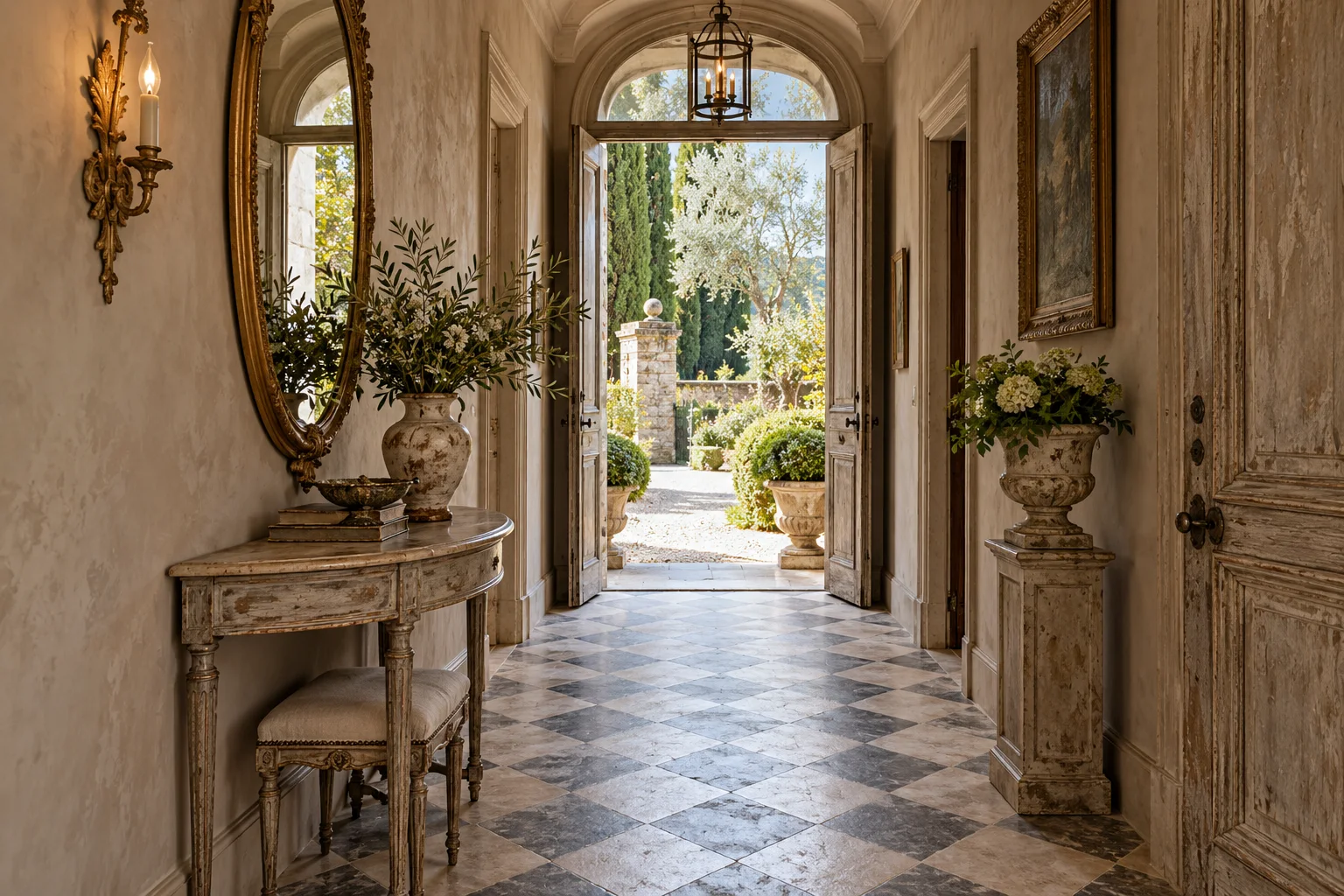
Hang a single picture with its centre at 57–60 in (145–152 cm) from the floor; above a sofa or a sideboard, leave 6–10 in (15–25 cm) between the top of the furniture and the bottom of the frame. For a row of prints along a hallway, align the centres, not the tops. A grouping above a sofa follows the method in our guide to composing a gallery wall above the sofa.
Keep oils and works on paper out of direct sun and off exterior walls that run damp in winter. Works on paper need glazing, ideally UV-filtering glass, with a mount so the paper does not touch the glass. Use two fixings for anything over 24 in (61 cm) wide, and plugs rated for plaster or stone rather than picture pins. A picture lamp is a decorative choice; a small, cool LED does less harm than a hot bulb.
What to compare
| Form | Suggested Use | Decisive Check |
|---|---|---|
| Oil on canvas or panel | A single focal point over a mantel or sofa | Craquelure, relining, stretcher and labels |
| Engraving or etching | A row along a hallway or stairs | Plate mark, foxing, glazing and mount |
| Lithograph or photomechanical print | Groups in a kitchen or bedroom | Dots under a loupe, fading, paper tone |
Your buying checklist
Continue planning your room
Frequently asked questions
How can I tell an oil painting from a print?
Look at the surface under raking light: an oil shows brushstrokes in relief and a texture that changes across the picture, while a print is flat. Under a loupe, a photomechanical print breaks into regular dots and an engraving shows ink lines with a plate mark around the image. The back helps too: canvas on a stretcher for an oil, paper for a print.
Does a signature prove who painted a French picture?
No. A signature shows that a name is written on the work, nothing more. Attribution rests on documents, provenance, exhibition records or an expert opinion, which is why careful listings use terms such as attributed to, circle of or school of. For a country wall, buy the picture you can see and treat the name as a note, not a guarantee.
How high should I hang artwork in a country living room?
Centre a single picture at 57 to 60 inches (145 to 152 cm) from the floor. Above a sofa or a sideboard, leave 6 to 10 inches (15 to 25 cm) between the furniture and the frame so the two read together. In a row, align the centres rather than the tops, and use two fixings for any frame wider than 24 inches (61 cm).
Should works on paper be framed behind glass?
Yes. Prints, drawings and watercolours need glazing to protect them from dust, handling and light, with a mount that keeps the paper off the glass. UV-filtering glass or acrylic slows fading. Oils are usually left unglazed. Keep all works away from direct sun and from exterior walls that run damp in winter.
Sources & further reading
- Canadian Conservation Institute — Basic care: furniture and objects made of wood — Supports keeping wooden frames and panels away from heat sources, damp walls and rapid changes in humidity.