The forms: buffet bas, enfilade, deux-corps and vaisselier
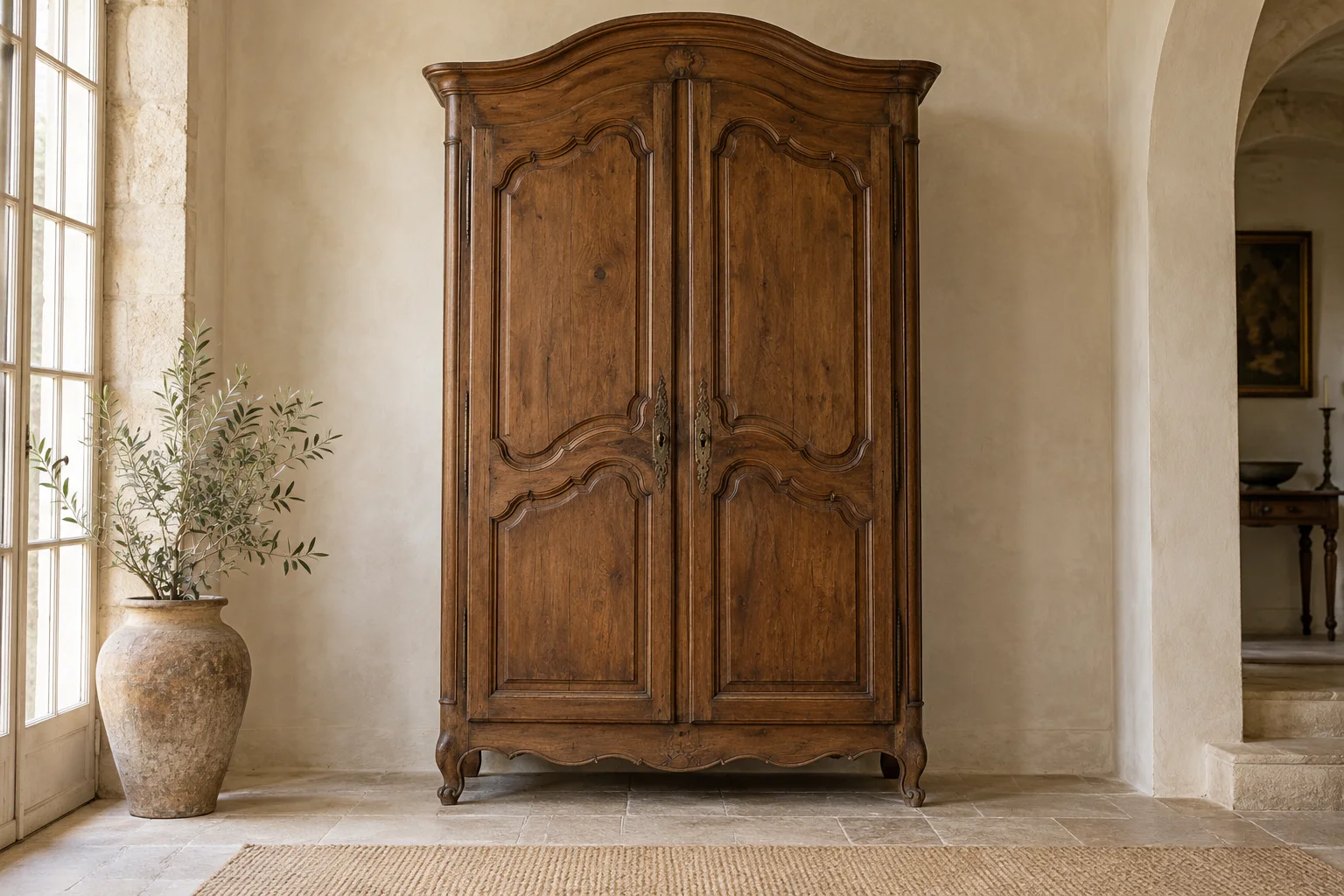
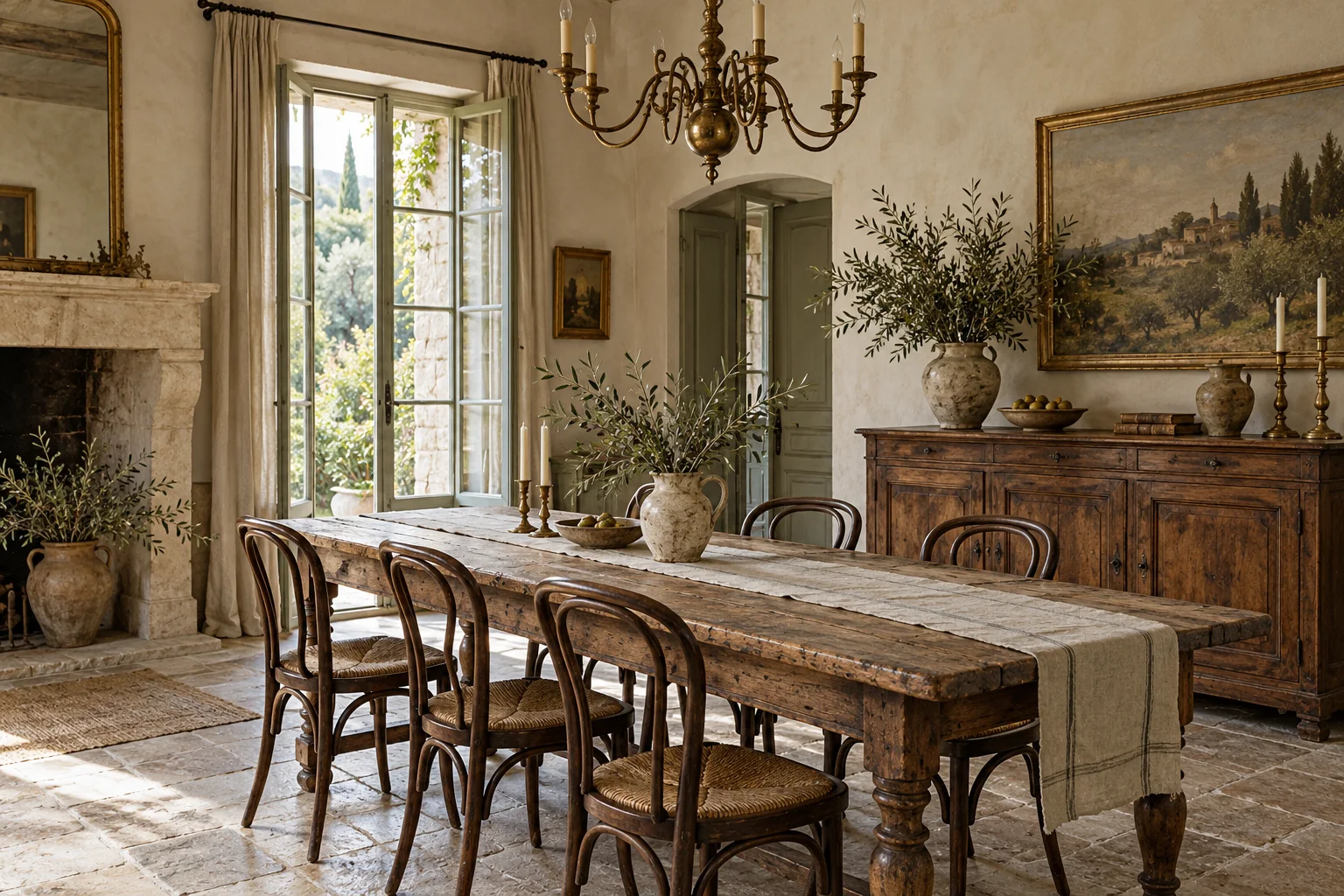
The buffet bas has two doors, one or two drawers above them, and stands 36 to 40 in (91 to 102 cm) high and 48 to 60 in (122 to 152 cm) wide. The enfilade stretches the same idea to three or four doors and 70 to 100 in (178 to 254 cm) of length. The buffet deux-corps stacks a second, slightly recessed body on the first and rises to 80 to 90 in (203 to 229 cm). The vaisselier replaces the upper body with an open rack for plates, and the Provençal buffet à glissants adds a low row of sliding panels between the two. The buffets and sideboards catalogue shows each form in a room.
Regional woods follow the forms. Walnut dominates the south-west, oak the north and west, cherry and other fruitwoods the centre; chestnut and pine serve as secondary woods for backs and drawer sides. Louis XV provincial buffets carry carved doors and shaped aprons; Louis-Philippe buffets are plainer, often with a marble top. These are style names, used by makers from the eighteenth century to the twentieth. A period attribution needs construction evidence, not a name on a label.
Woods, backboards and tops: reading the construction
Turn the buffet around before you look at the front. Backboards on an old piece are rough-sawn planks, nailed, hand-planed on one face, with shrinkage gaps between them and an even oxidized brown; plywood or machine-planed boards mean a replaced back or a later piece. Look under the top for the same oxidation and for screw or nail holes that match nothing above, which show a top that has been moved from another carcass.
Tops are the commonest replacement. A nineteenth-century buffet may carry its original plank top, a marble top fitted later, or a new top cut to hide a damaged one. A marble top is checked for cracks, old repairs and a profile that matches the carcass; a wooden top for thickness, since planing to remove stains leaves a top thin at the edges. The Getty catalogue entry for a pair of commodes shows how a documented piece records replaced tops, and the same discipline applies to a buffet in your dining room.
Doors, drawers, locks and the sizes that fit
Open everything. Doors hang on pin hinges called fiches or on pivot hinges; a door that drops or rubs has worn pins or a racked carcass. Panels should float in their frames, with shrinkage visible at the edges, not glued tight. Drawers show hand-cut dovetails with slight irregularities, and the runners wear into grooves that make a drawer stick. Locks are often present without keys; a locksmith cuts keys for most French warded locks, but missing escutcheons must be found in brass of the right pattern.
Then measure. A buffet needs 36 in (91 cm) between its front and the backs of the dining chairs when they are pulled out. Depth runs 20 to 24 in (51 to 61 cm); check the room for the door swing. An enfilade usually travels in one piece and weighs 150 to 300 lb (68 to 136 kg); a deux-corps separates into two bodies and is the easier piece to move up a staircase. The Canadian Conservation Institute advises on moving and caring for wooden furniture without stressing old joints.
What to compare
| Form | Suggested Use | Decisive Check |
|---|---|---|
| Buffet bas, two doors | Small dining room, hallway or kitchen | Hinges, door drop and the backboards |
| Enfilade, three or four doors | Long wall, serving and storage | Length, one-piece weight and the route in |
| Buffet deux-corps | Display above, storage below | Fit of the upper body and stability |
| Vaisselier with plate rack | Kitchen or dining room with plates on show | Rack original to the base, grooves and back |
Your buying checklist
Continue planning your room
Frequently asked questions
What is the difference between a sideboard and a buffet?
In American usage the words overlap: a sideboard is a dining-room storage piece, and a buffet is the same piece, often lower and used for serving. In French the buffet is the general term, with buffet bas for the low two-door form, enfilade for the long form and buffet deux-corps for the stacked form.
How long is a French enfilade?
Most enfilades measure 70 to 100 in (178 to 254 cm) long, 36 to 40 in (91 to 102 cm) high and 20 to 24 in (51 to 61 cm) deep, with three or four doors. They usually travel in one piece and weigh 150 to 300 lb, so measure the route into the room, including stairs and door frames, before buying.
Does a replaced top on an antique buffet matter?
It changes the description and should be disclosed, but it does not always matter for use. A sound replacement top, wooden or marble, suits a dining room. For a collectible purchase, ask for photographs of the underside, where oxidation and old holes show whether the top belongs to the carcass.
How do I move an antique buffet safely?
Empty it, remove the drawers and any marble top, and lock or tie the doors. Lift from the base, never by the top or the cornice, and keep the piece upright. A deux-corps separates into two bodies. Protect floors and door frames on the route and use two or more people for anything over 100 lb.
Sources & further reading
- Getty — Pair of commodes (documented example with replaced tops) — A documented example of case furniture with later tops, showing how replacements are recorded.
- Canadian Conservation Institute — Basic care: furniture and objects made of wood — Moving, handling and caring for wooden furniture without stressing joints and finishes.