 AI-created styling idea
Furniture
Buffets & sideboards
Choose a sideboard around your serving dishes, access needs, and useful serving surfaces.
ExploreFrench Country · An inspiration catalogue
French country sideboards and buffets store the dishes, carry the serving plates and set the long horizontal line of a dining room or kitchen.
French country sideboards and buffets start with the buffet bas, the low buffet: two doors below, two drawers above, a molded top and short feet. It usually stands 36–40 in / 92–102 cm high, 47–59 in / 120–150 cm wide and 20–24 in / 50–60 cm deep. In walnut, oak, cherry or chestnut, with iron or brass escutcheons and long fiches hinges, it is the most common storage piece in the French farmhouse.
The enfilade extends the buffet to three or four doors in a row, with a drawer above each, and reaches 71–98 in / 180–250 cm in length. It suits a long dining room wall and gives a serving surface for a full meal. Its length makes it heavy and difficult on stairs; check the route before anything else.
The two-part buffet places a narrower upper cabinet, often with glazed or panelled doors, on a lower buffet. It reaches 79–94 in / 200–240 cm in height and separates into two pieces for moving. Check that the two parts belong together: matching wood, moldings, hardware and wear suggest a marriage was not made later, though some sound pieces are honestly described as married.
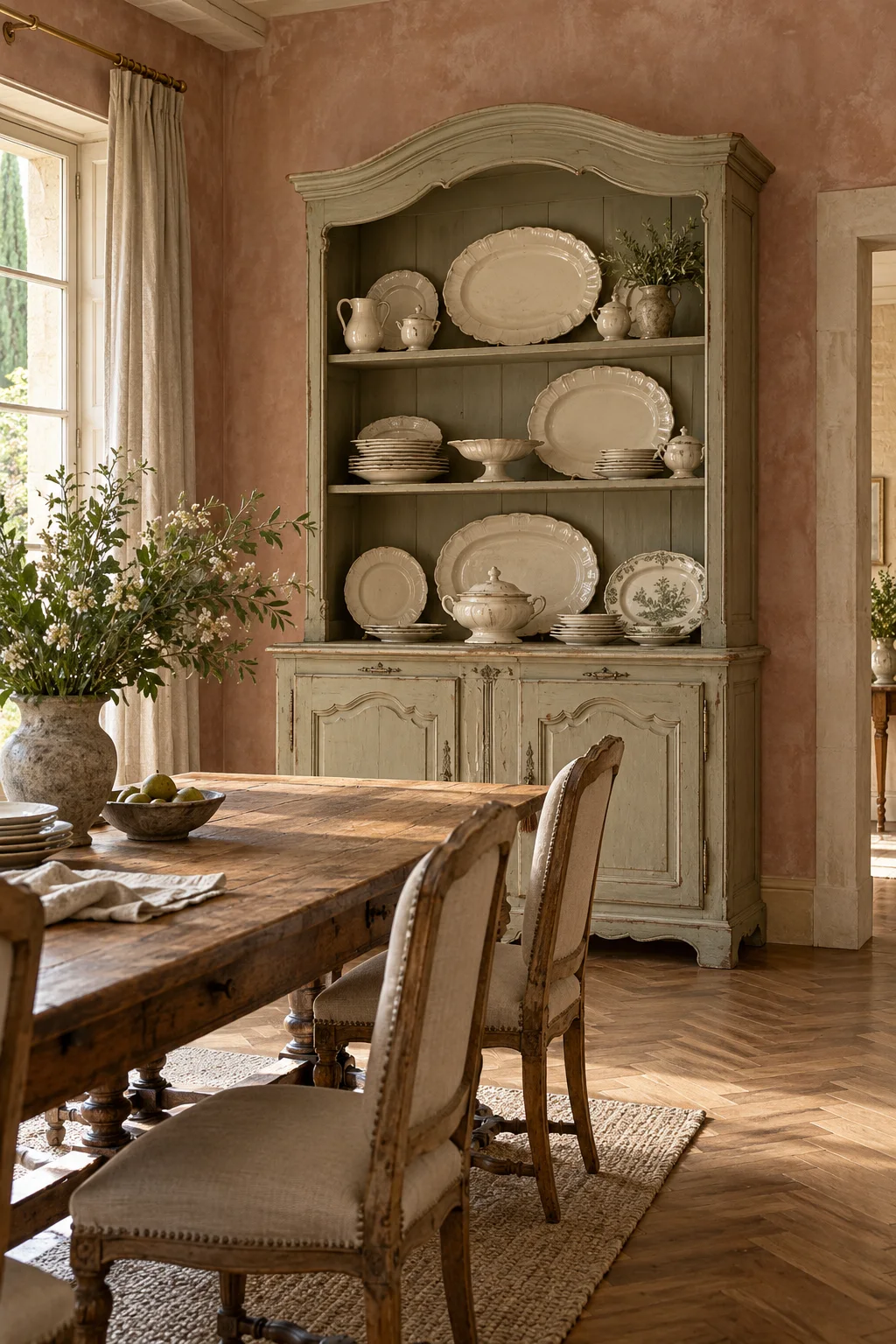
The vaisselier adds open plate racks above a buffet, with rails to hold plates on edge. It is the centerpiece of a French country kitchen and is covered in our guide to the French country kitchen.
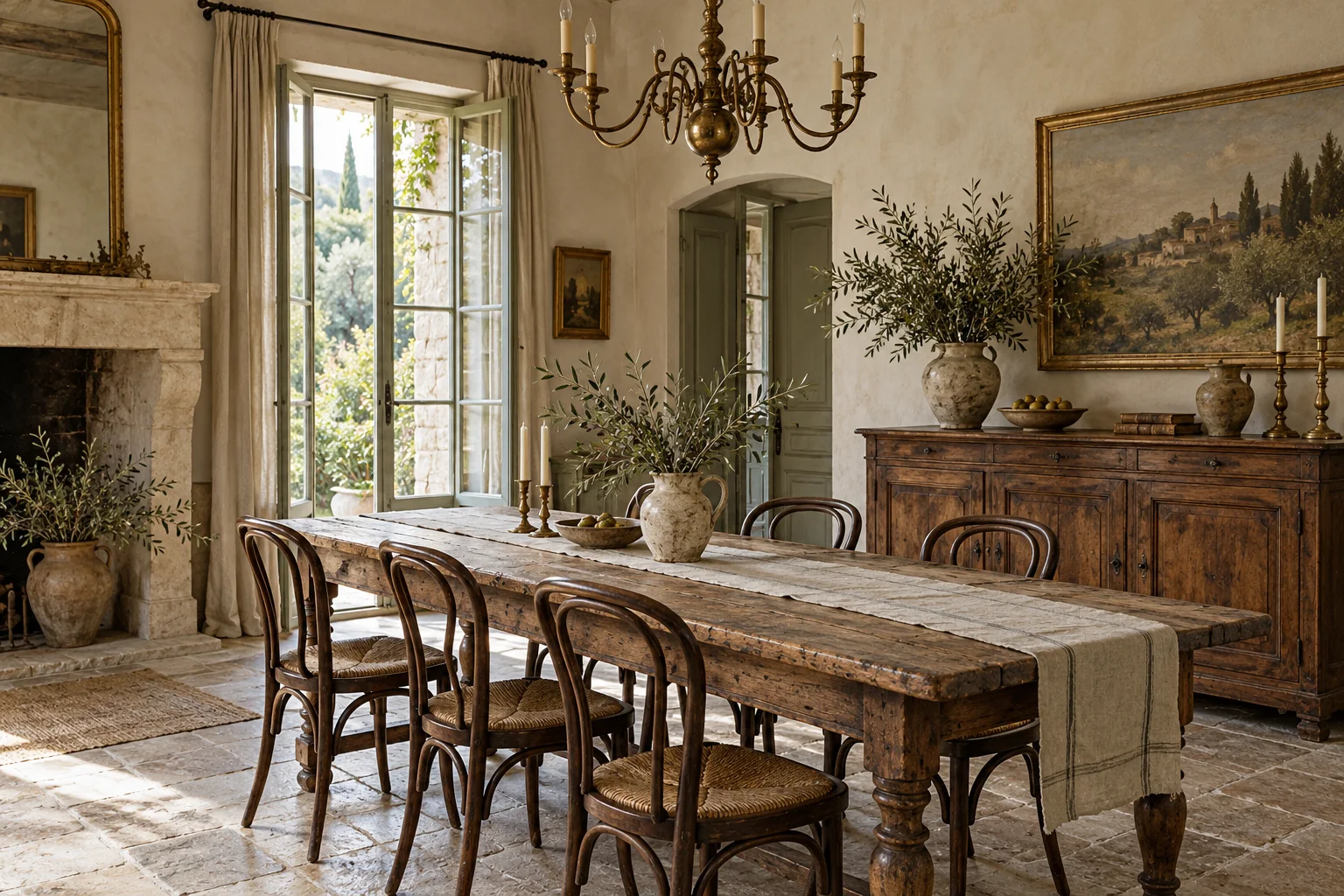
Place the buffet on the long wall, opposite or beside the table, at least 36 in / 90 cm from the chairs. The top serves dishes during a meal and displays a pair of lamps or candlesticks the rest of the time. Hang a mirror or a painting above it, centered, with its lower edge 6–10 in / 15–25 cm above the top. See the dining room scenes.
A buffet replaces a run of fitted cabinets and gives a freestanding piece that can follow you to the next house. Use the lower shelves for heavy dishes and pots and the drawers for linen and cutlery. See the kitchen scenes.
Under a television, behind a sofa or in a wide entrance, a low buffet holds games, records and anything that should be out of sight. In an entryway, a narrower model with a mirror above acts as a console with storage.
Turn the buffet around before admiring the doors. Original backboards are usually planks set in grooves, with tool marks and darkened wood; replaced backs are plywood or fresh boards. Tops are often replaced or reversed because they suffer the most; a replaced top is acceptable when disclosed, and the Getty's catalogue entry for a pair of commodes shows that even museum furniture can carry later tops that must be described.
Open each door and drawer. Doors should close without forcing and should not drag at the bottom; sagging usually means loose hinges or a frame out of square. Drawers should run on their runners without catching; worn runners can be rebuilt. Locks may lack keys; a working key is a bonus, a forced lock a repair to note. Check that hinges and escutcheons match from door to door.
Ask for the interior depth and the height between shelves. Backboards and door frames can reduce usable depth by 2–4 in / 5–10 cm compared with the exterior. Measure your largest serving plates and platters; a buffet that does not hold them becomes a display piece.
An antique buffet is more than 100 years old and should come with written age documentation. Many 20th-century country buffets are well made and cheaper; they are vintage and should be described as such. Our guide to French country furniture explains how construction and wear separate the three.
Two lamps or two candlesticks at the ends and one object in the middle, a tureen, a bowl or a stack of plates, is the simplest arrangement and the one that works best. Leave at least a third of the top empty. See candlesticks and candelabras.
A mirror should be roughly two thirds of the buffet's width. A painting can be narrower but should not be wider than the piece. See antique mirrors.
Display only what you use. Confit pots, faience and a few serving dishes work on top; the rest belongs inside. The broader rules are in our French country decor guide.
Remove the drawers, lock or tape the doors and lift the piece by the frame, never by the top. A deux-corps separates into two parts; enfilades are heavy and need two to four people. Measure doorways, stair turns and landings with the piece at its smallest dimension.
Keep the buffet away from radiators and sunny windows, which dry and fade the wood. Wax once or twice a year, dust with a soft cloth and avoid silicone polishes. The Canadian Conservation Institute recommends preserving old finishes when their condition allows rather than stripping them.
The listings at Lo Cantou show buffets with dimensions and condition details. Designers working on a client project can send a brief to Antiques 360 and receive three documented buffets within 72 hours, with photographs of every flaw, age documentation and a landed-cost quote that includes the ISPM 15 crate, freight, insurance and brokerage.
AI-created styling ideaFurniture
Choose a sideboard around your serving dishes, access needs, and useful serving surfaces.
Explore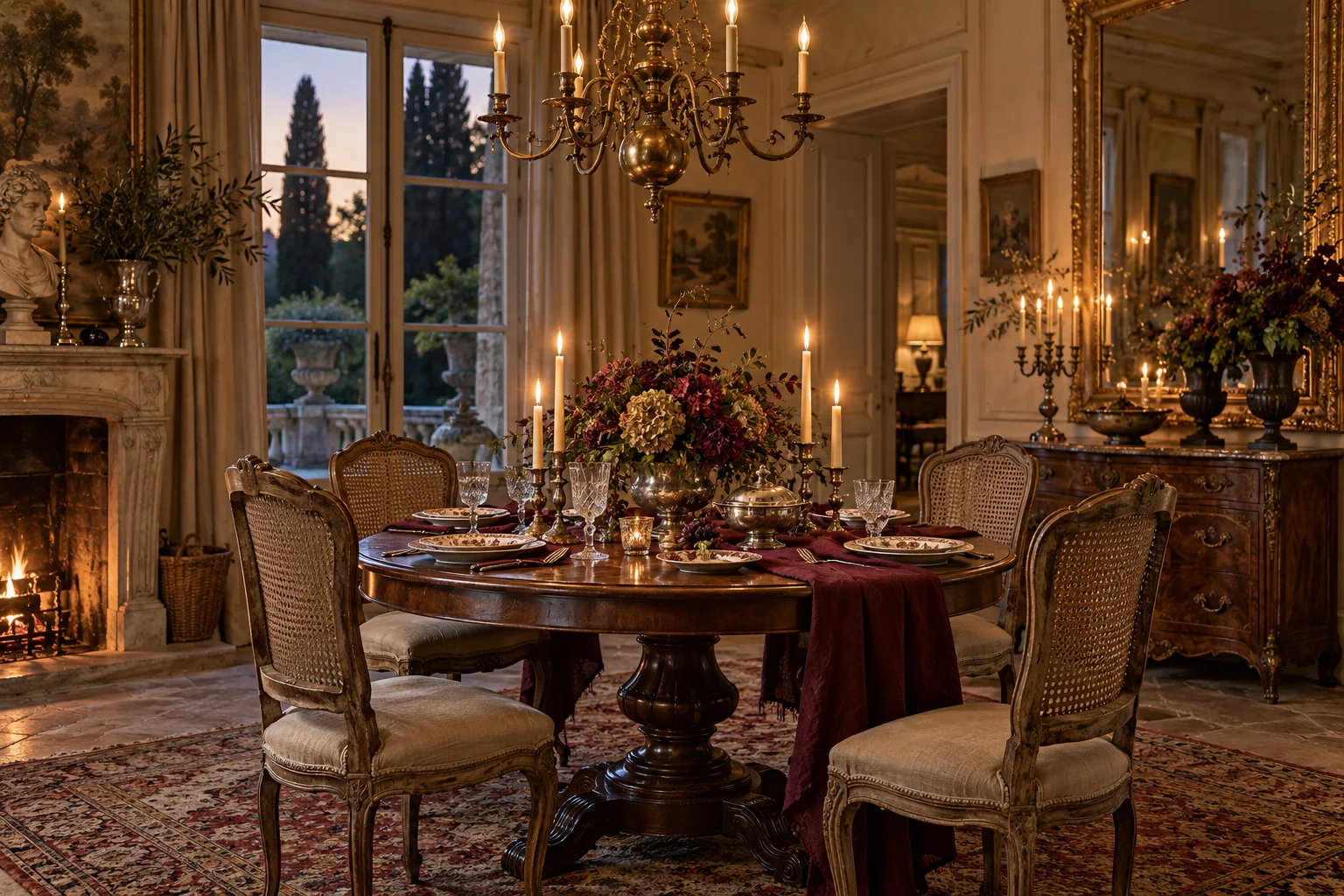 AI-created styling idea
Furniture
Cupboards and cabinets for linen, dishes and everything that should be out of sight.
Explore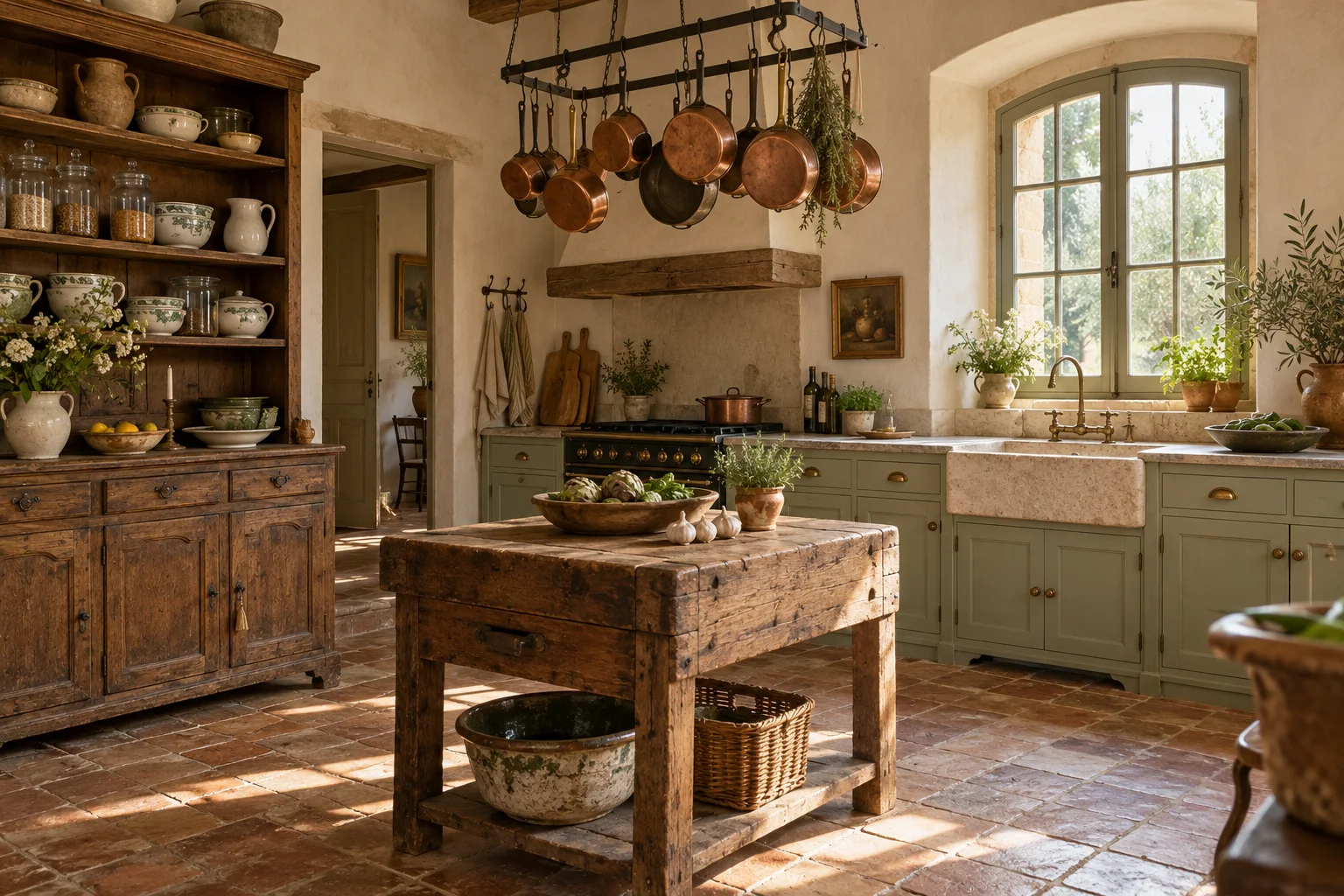 AI-created styling idea
Furniture
Glazed display cabinets for the pieces you want to see but not dust every week.
Explore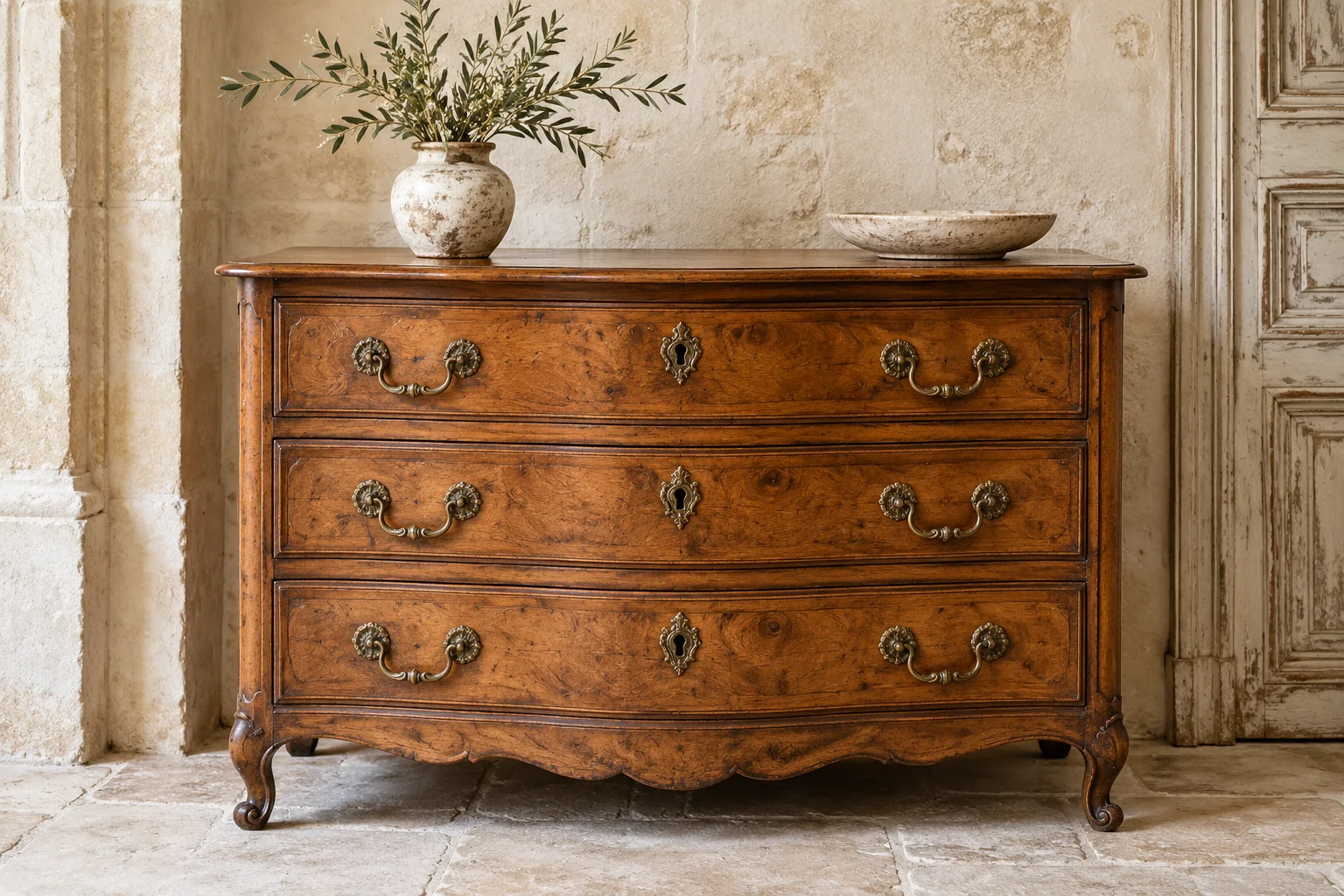 AI-created styling idea
Furniture
Understand volume, veneer, and drawers before selecting antique storage furniture.
Explore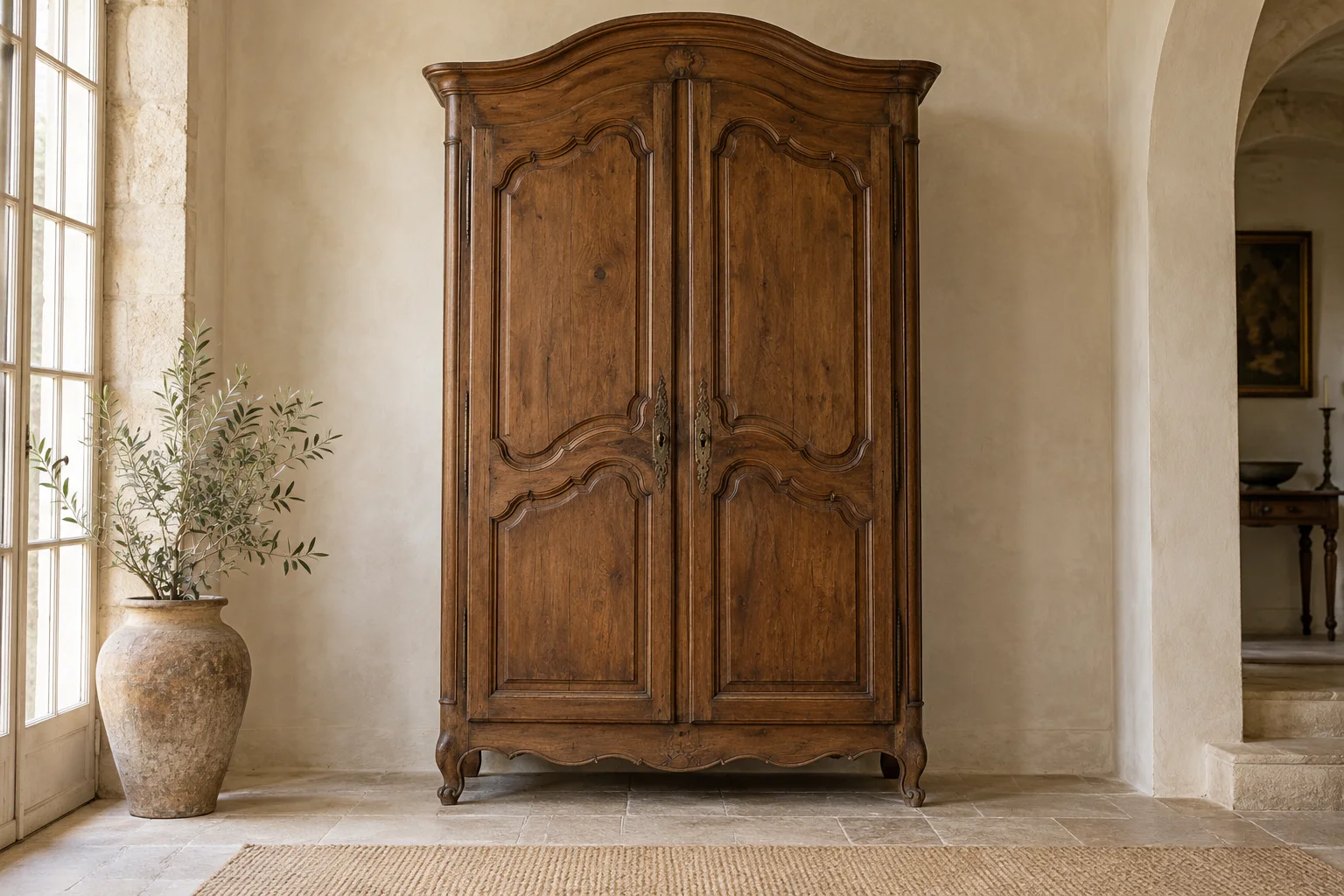 AI-created styling idea
Furniture
Check the cornice height, the pegged joints and the route into the room before anything else.
ExploreIn French country furniture the words overlap. A buffet bas is a low cabinet with doors below and drawers above; an enfilade is a longer version with three or four doors in a row; a sideboard is the general English term for both. A buffet deux-corps adds an upper cabinet, and a vaisselier adds open plate racks.
Most French country buffets stand 36–40 in or 92–102 cm high, which gives a comfortable serving surface beside a table of 28–30 in. Enfilades are similar in height but longer, often 71–98 in. Choose the length to suit the wall, leaving space on each side, and keep 36 in or 90 cm between the buffet and the dining chairs.
Look at the back, the top and the inside. Plywood or fresh backboards, a top with clean undersides and modern screws, mismatched hinges or new drawer runners all indicate restoration. Restoration is common and acceptable when disclosed; ask the seller for photographs of the back and the inside of the drawers before buying.
Yes. A low buffet bas makes a good media cabinet. Drill cable holes only in a replaced or plywood back, never in original backboards, and use the drawers for remotes and cables. Check that the top can carry the weight of the screen and that the cabinet stands level, since old feet are often uneven.
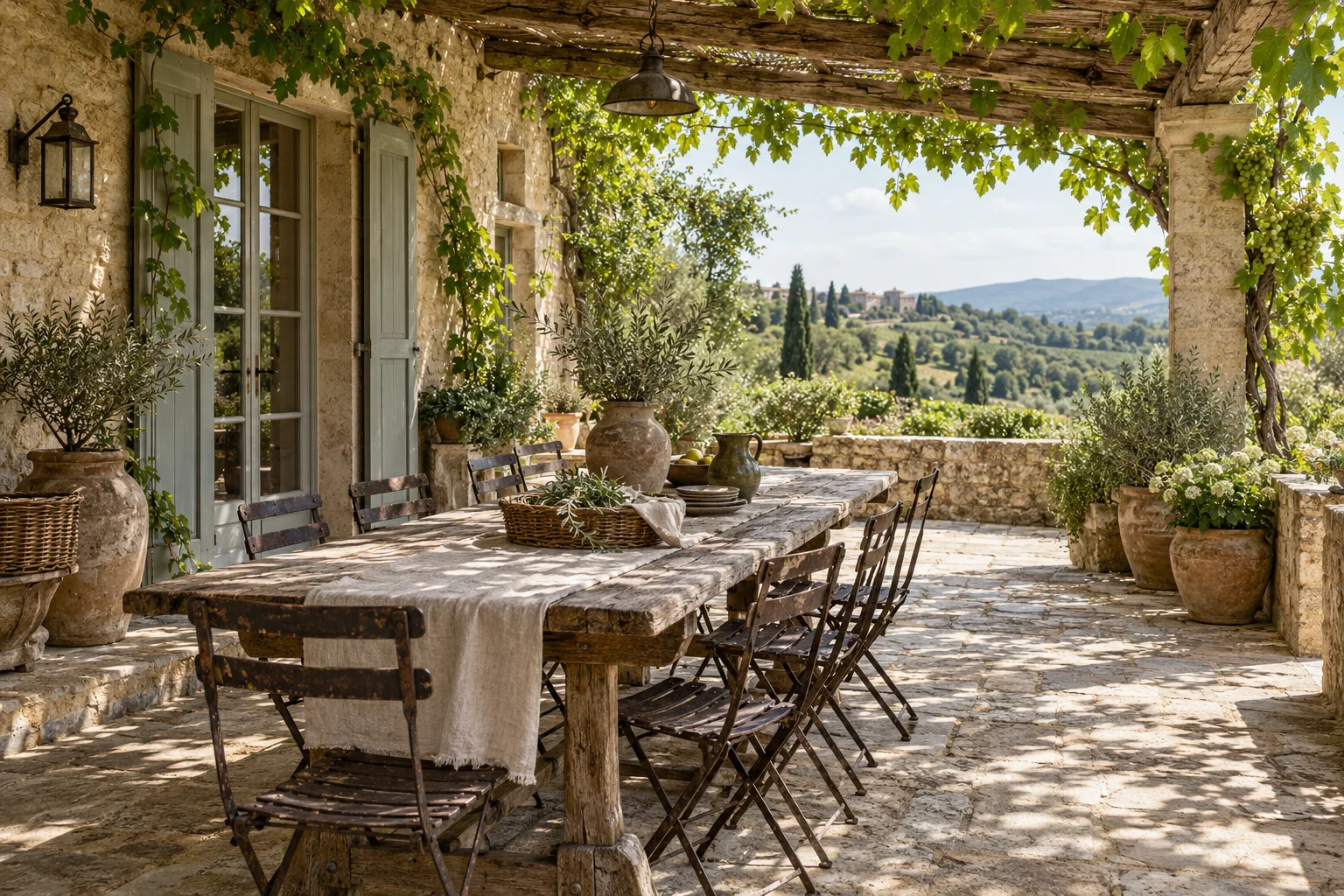
Nov 6, 2026 · Antique guide
Vintage metal chairs bring the terrace indoors.
Nov 6, 2026 · Antique guide
A French country Thanksgiving table takes its look from the farmhouse: a linen cloth, white ironstone or faience plates, mixed silverplate, short bistro glasses,…
Nov 6, 2026 · Antique guide
French kitchenware from 1880 to 1960 was made for daily work, which is why the good pieces are still at it.
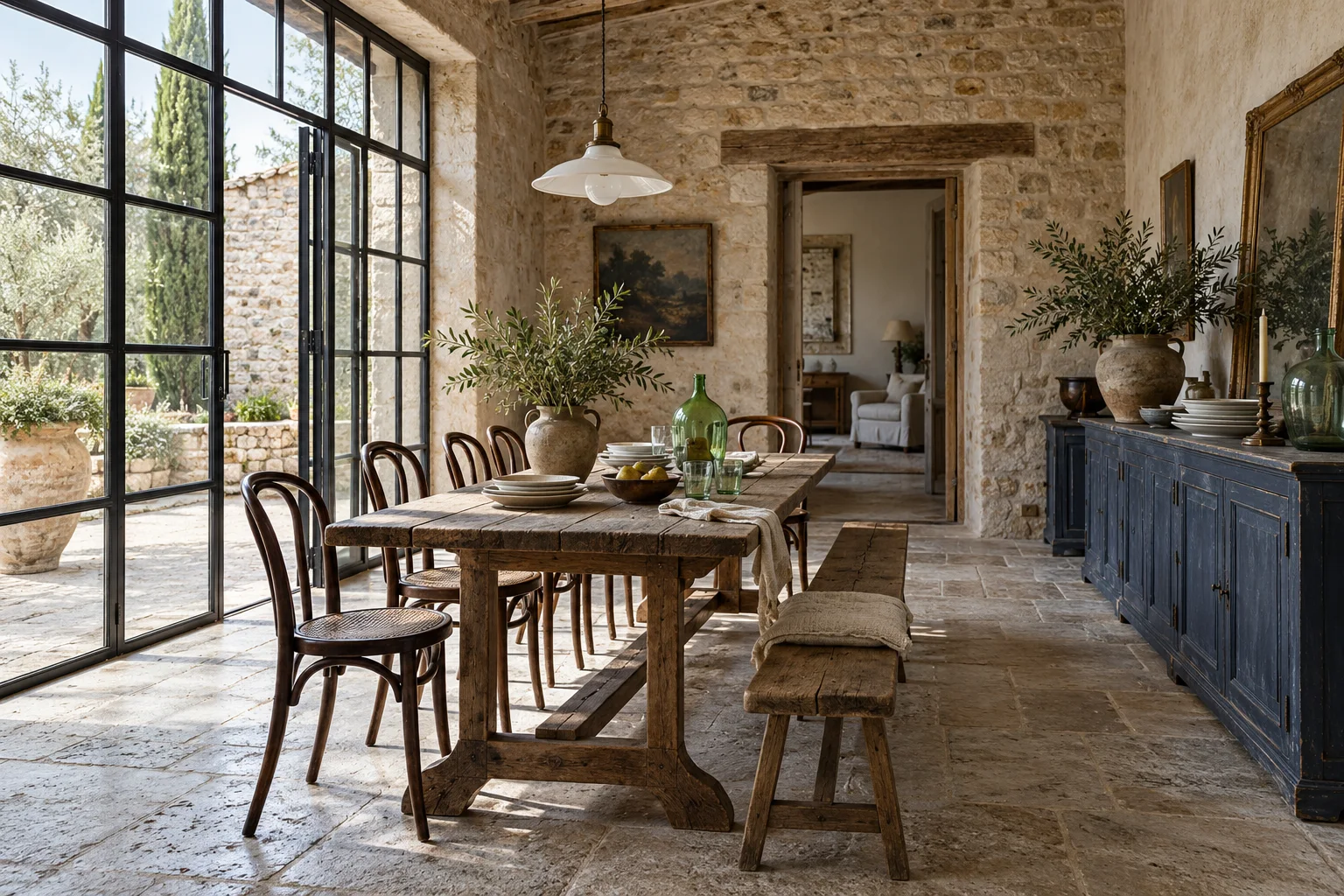
Nov 5, 2026 · Antique guide
Vintage silver and vintage silverplate look alike on a sideboard and behave differently in the hand, in the sink and at resale.
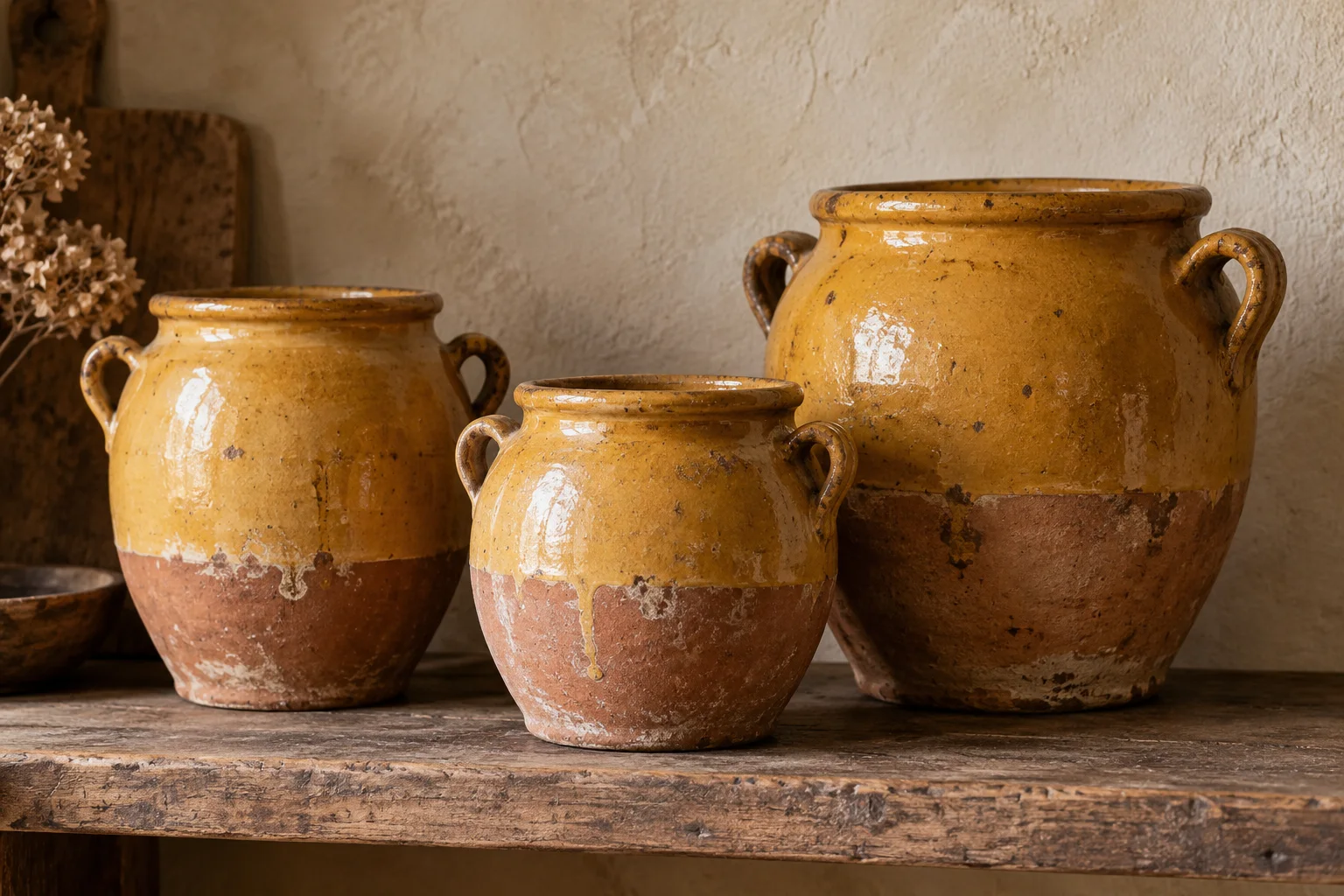
Nov 5, 2026 · Antique guide
Vintage pottery from French kitchens and workshops falls into two bodies and three glazes.
Nov 5, 2026 · Antique guide
French country Christmas decor works best when it borrows from the house rather than from a store: brass candlesticks taken down from the mantel, greenery cut from…