Wrought iron, cast iron or steel: telling them apart
Wrought iron is worked hot from bars: look for bends with no seams, rivets or collars where bars cross, hammer marks, and a slight irregularity between the two sides of a chair. Cast iron is poured into a mold: it shows crisp repeated ornament, a seam line from the mold, and a brittle, heavy body that cracks rather than bends. Welded steel, from the 1920s on, has round or flat section with smooth weld beads at the joins and often a factory stamp.
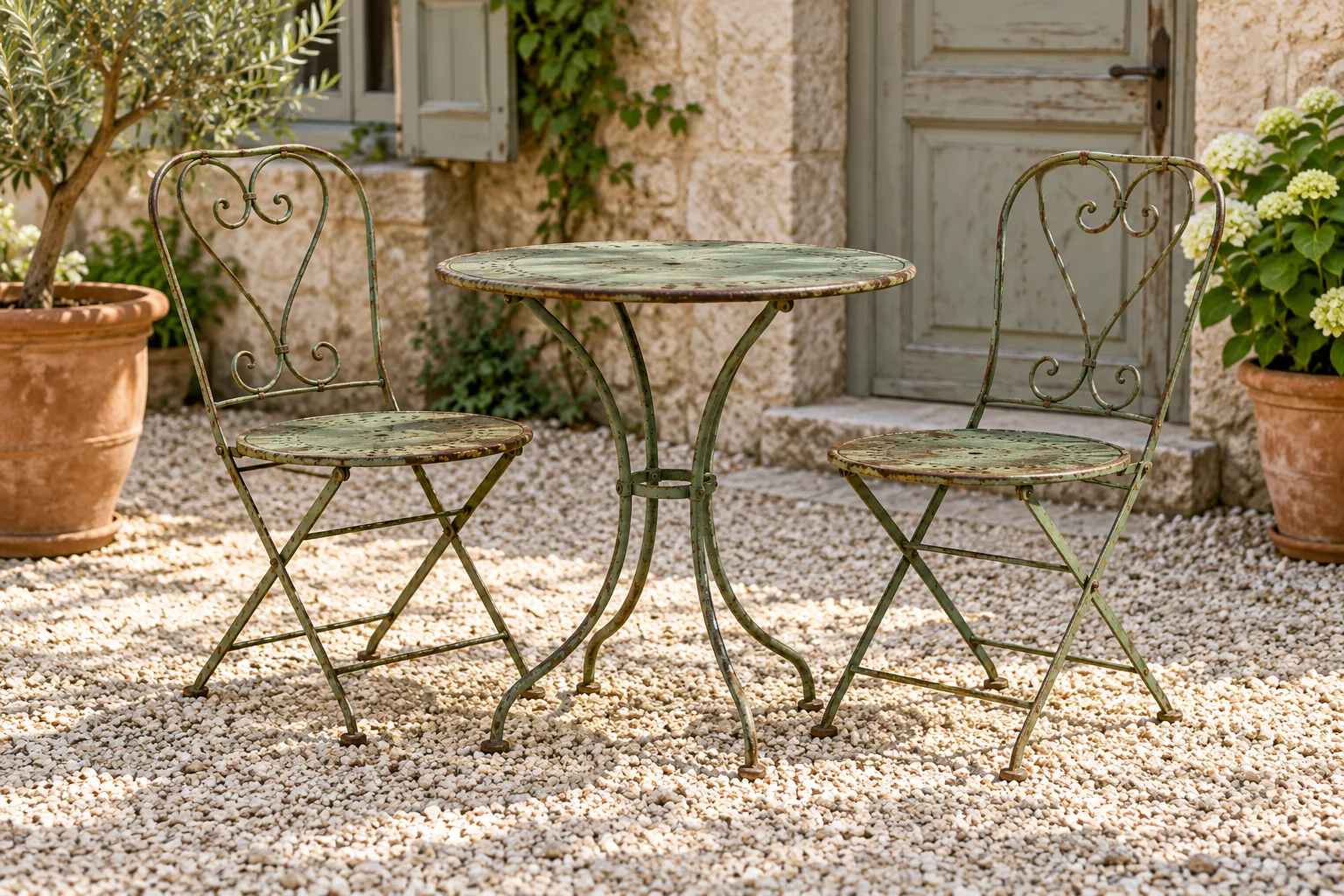
Weight sorts them quickly. A wrought iron garden chair weighs 10 to 20 lb (5 to 9 kg); a cast-iron chair 25 to 40 lb (11 to 18 kg); a steel bistro chair 8 to 12 lb (4 to 5 kg). French patterns include the scroll-back with a pierced sheet seat, the lattice or diamond grid, and the slatted bench chair; a style name describes the pattern, not a maker or a date, unless a stamp is present.
Rust: what to accept and what to refuse
Surface rust, orange and powdery or a stable brown skin, is normal on iron that lived outdoors and comes off with a wire brush. Structural rust is different: flaking layers that lift in sheets, pitting deeper than the thickness of a coin, bars thinned to a point at the feet where water stood, and seats rotted through at the rivets. Press a screwdriver into the worst spot; if it goes in, the metal is gone.
The feet and the seat pan are where chairs die. Feet that stood on wet gravel lose their lower inch; a pierced sheet seat rusts around every hole. Both are repairable by a blacksmith or welder who can let in new metal, at a cost that depends on the pattern. The Canadian Conservation Institute recommends removing loose corrosion, keeping the metal dry, and applying a protective coating; for garden iron that means brushing, a rust-converting primer and two coats of exterior paint, renewed when it chips.
Repair, cushions, weight and winter
Rivets that have loosened can be re-set hot or replaced with bolts; a cracked cast-iron part can be brazed but will remain a weak point, which is one reason to prefer wrought iron for chairs that are moved. After repair, paint the whole chair, including the underside of the seat and the inside of the feet, where rust starts. Traditional colors are black, dark green and grey; white shows rust fastest.
Cushions make iron chairs usable for a long lunch: a 2 in (5 cm) pad tied at the back corners, in a fabric that dries fast. Set the chairs on stone, gravel or a hard path rather than on grass, where damp rises into the feet. In winter, stack them under cover or at least off the ground on blocks. Our French country garden guide shows how a set sits with urns and planters, and the categories for antique garden furniture and benches and banquettes give more forms.
What to compare
| Form | Suggested Use | Decisive Check |
|---|---|---|
| Wrought iron scroll-back chair with sheet seat | Everyday garden and terrace seating | Rust around the seat perforations |
| Cast-iron ornate chair | Fixed position on a terrace | Cracks at the seat and arm joins |
| Welded steel bistro chair | Café table, easy to move | Weld beads intact, feet not thinned |
Your buying checklist
Continue planning your room
Frequently asked questions
How can I tell wrought iron from cast iron garden chairs?
Wrought iron is bent from bars and joined with rivets or collars, with hammer marks and slight irregularities; it weighs 5 to 9 kg (10 to 20 lb) per chair. Cast iron is molded, with crisp repeated ornament, a mold seam and a heavy brittle body of 11 to 18 kg (25 to 40 lb) that cracks rather than bends.
Is rust on a wrought iron chair a problem?
Surface rust is normal and brushes off. Structural rust, flaking in layers, deep pitting, feet thinned to a point or a seat rotted around its holes, means metal has been lost. Probe the worst spot with a screwdriver; if it sinks in, the chair needs new metal let in by a welder.
How do you restore an old iron garden chair?
Brush off loose rust, treat with a rust-converting primer, repair feet or seat with new metal if needed, then apply two coats of exterior paint over every surface including the underside and the inside of the feet. Renew the paint when it chips, before rust returns.
Can wrought iron chairs stay outside all year?
They can, but they last longer on stone or gravel than on grass, and longer still stacked under cover in winter. Raising the feet on blocks keeps them out of standing water, which is where the lower inch of a leg rusts away.
Sources & further reading
- Canadian Conservation Institute — Care of metal objects — Removing corrosion, keeping iron dry and applying protective coatings.