Hand-thrown, pressed or moulded: reading a pot in the hand
Turn the pot upside down and look inside. A hand-thrown pot shows spiral throwing rings and sometimes finger marks near the base; the wall thickness varies slightly from rim to foot. A pressed or moulded pot has an even wall, a smooth interior and often a faint vertical seam on the outside. Neither method is older or better by itself, but the listing should match what you see.
Maker stamps sit on the shoulder, the rim or the base: a name, a town, sometimes a size number or a date. Stamps from southern French potteries are common on garden jars and large pots, but a stamp names a maker only when it is actually present and legible; an unmarked pot is simply unmarked. Clay color is a regional hint, not proof: Provençal clays fire pink to orange, northern clays paler and buff.
Measure the rim diameter and the height. Nursery pots were made in graded sizes, so a set of three in steps of about 2 in (5 cm) is a usable find for a windowsill or a terrace step.
Frost, firing and where a pot can winter
Low-fired terracotta is porous. Water soaks into the wall, freezes, expands and pushes off flakes of the surface; a pot full of wet soil cracks from the inside. Higher-fired, denser pots resist frost better, which is why some old pots survive a century outdoors and others fail in one season. Tap the pot with a knuckle: a clear ring means a sound wall, a dull thud usually means a hidden crack.
In climates with hard frost, empty old pots in late autumn, or move planted pots against a wall under an eave, raised on feet so the drainage hole stays open. A pot that sits in a saucer of water will split. The Canadian Conservation Institute guidance on ceramic objects supports the same cautions for unglazed earthenware: keep it dry, avoid soluble salts, and do not seal a wet pot.
Patina, lichen and cleaning without harm
The white bloom on an old pot is efflorescence: salts from the soil and water migrating to the surface. It is harmless and part of the look; brush it lightly if you prefer, but do not scrub it off with acid. Lichen and moss grow on the north side of a pot that has stood still for years, and they are the surest sign of a pot that has lived outdoors.
Clean with water and a soft brush only. Pressure washers open the surface and remove the skin that resists frost; glossy sealers trap moisture and peel. If you want to plant a valuable old pot, use a plastic liner pot inside it with a gap for air, keep the drainage hole clear, and lift the pot onto feet.
What to compare
| Form | Suggested Use | Decisive Check |
|---|---|---|
| Hand-thrown garden pot with stamp | A terrace step or doorway, in pairs | Clear ring when tapped; legible stamp |
| Moulded nursery pot | Windowsills and groups of three sizes | Even wall; chips at the rim |
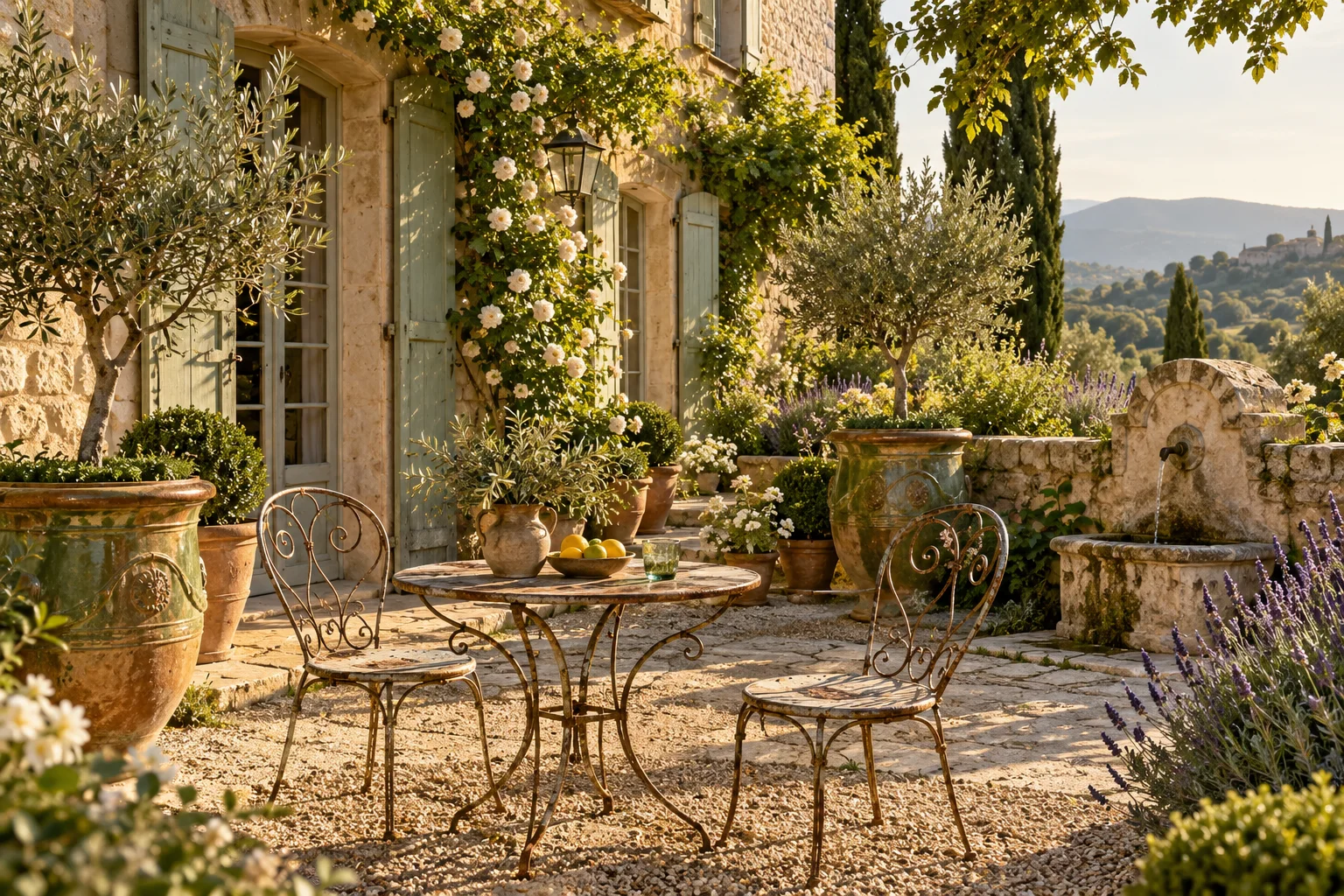
| Large glazed jar (Anduze type) | A focal point by a door or on an axis | Glaze losses and a liner before planting |
Your buying checklist
Continue planning your room
Frequently asked questions
Are old terracotta pots frost proof?
Some are and many are not, and age is not the deciding factor. Density and firing are: a dense, high-fired pot sheds water and survives, a soft, low-fired pot absorbs water and flakes. Tap the pot for a clear ring, keep it raised on feet with the drainage hole open, and empty or shelter it where winters bring hard frost.
How do I know if a terracotta pot is French?
Only a legible maker’s stamp or a documented provenance tells you. Stamps with a name and a town appear on the shoulder, rim or base of many southern French pots, but unmarked pots were made everywhere. Clay color, throwing rings and form are hints that support a description; they do not prove an origin on their own.
Should I clean the white deposits off terracotta pots?
You can brush them lightly, but you do not have to. The white bloom is salt that has migrated through the porous clay, and it is harmless to the pot. Avoid acids and pressure washing, which damage the surface skin that helps the pot resist frost. Water and a soft brush are enough for soil and loose dirt.
Can I plant directly in an antique terracotta pot?
Yes for a sound pot in a mild climate, with the drainage hole clear and the pot raised on feet. For a fragile or valuable pot, plant into a plastic liner pot that sits inside it, leaving an air gap, so wet soil never presses against the old wall and the pot can be emptied quickly before a frost.
Sources & further reading
- Canadian Conservation Institute — Caring for ceramic and glass objects — Supports keeping porous ceramics dry, avoiding soluble salts and gentle cleaning without sealers.