What patina looks like on each material
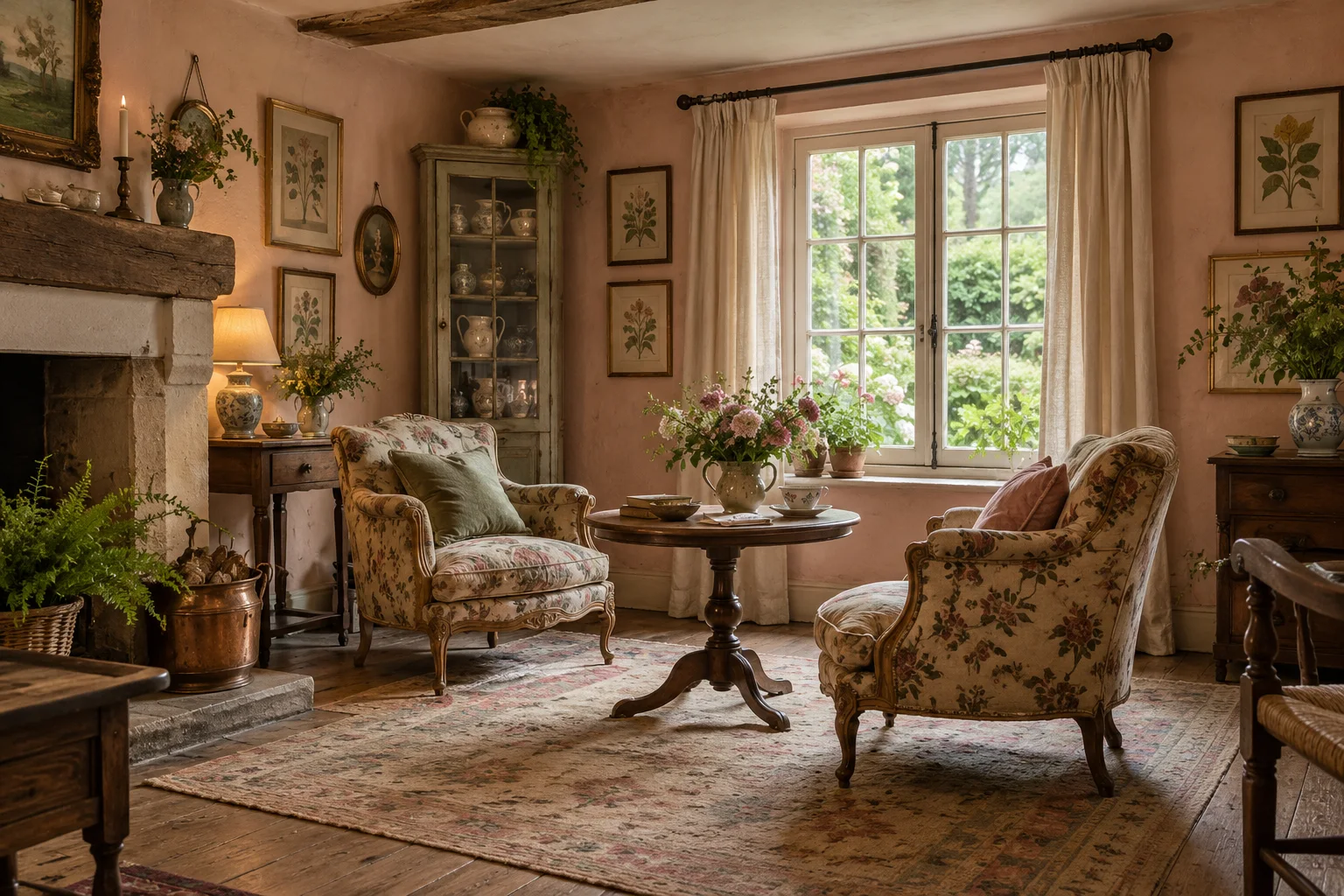
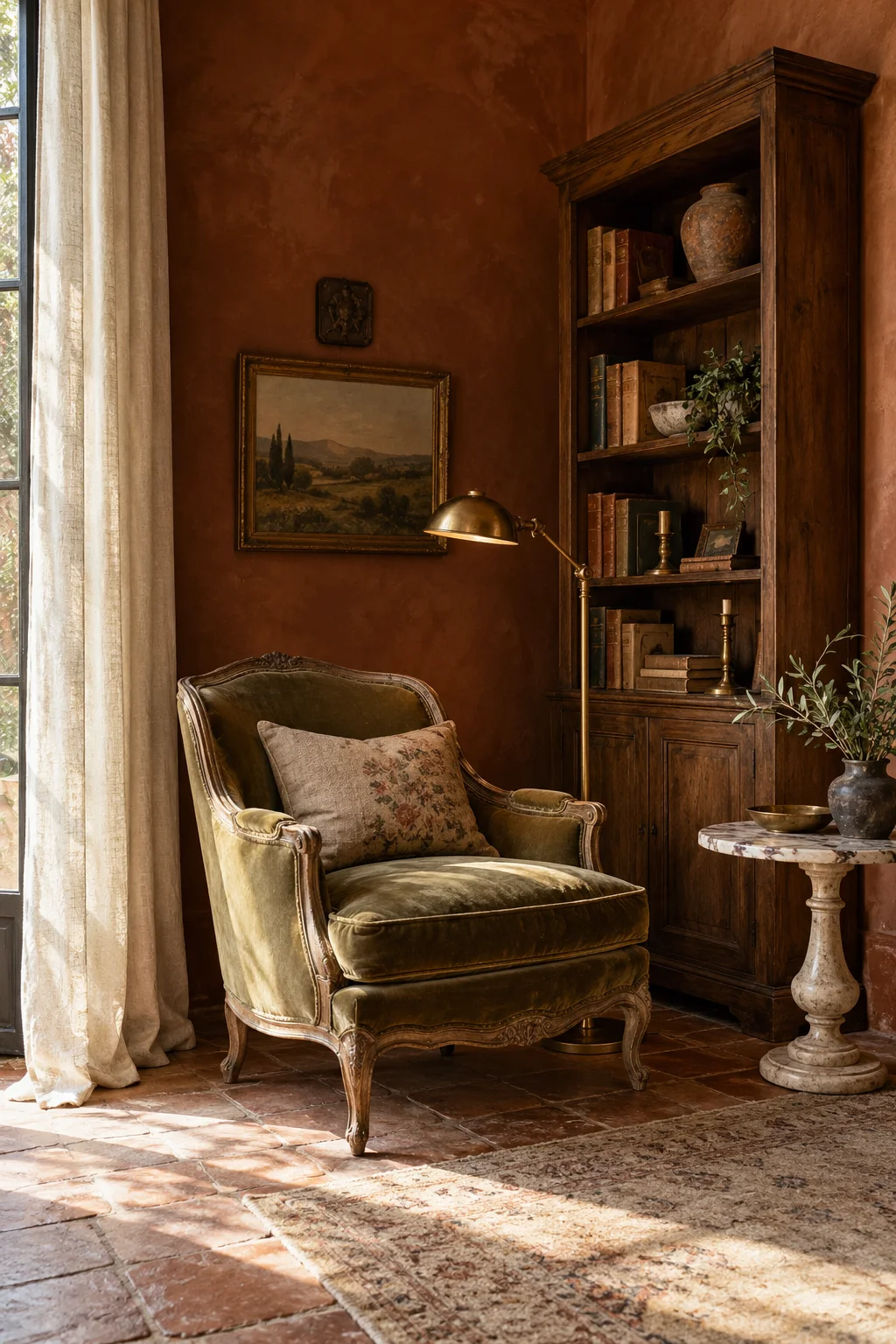
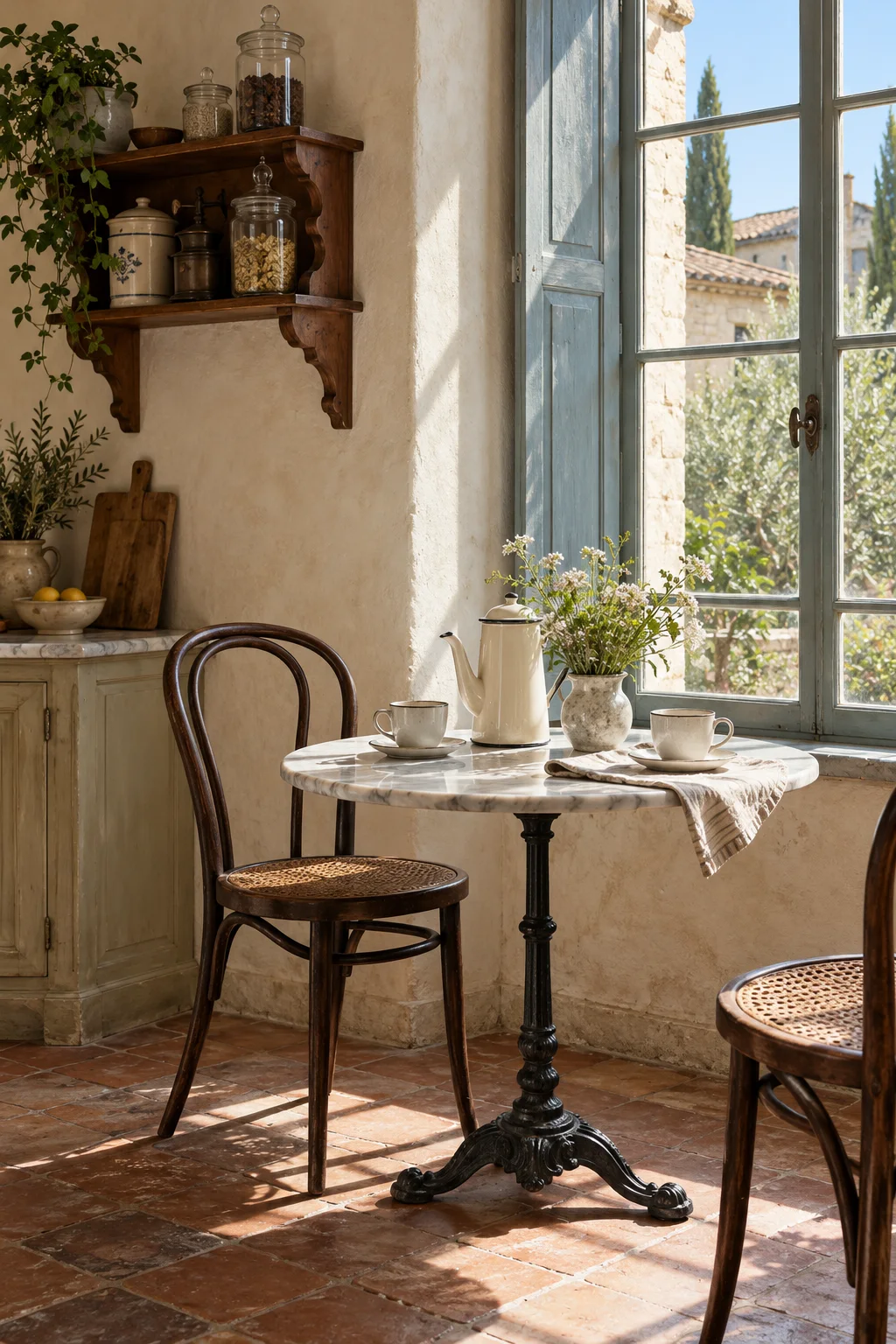
On wood, patina is a combination of oxidation, handling, dust and wax built up over decades. The color deepens, the grain shows through a slightly uneven sheen, and edges round off where hands and sleeves passed. The underside and the inside of drawers stay paler, which is one way to read a piece. Our furniture family page shows these surfaces across forms.
On brass and bronze, patina is a thin brown or gray oxide film; on copper it can become green verdigris, which is corrosive and should not touch food. Wrought iron develops a stable dark skin, different from active orange rust that leaves powder on the fingers. On stone, feet wear a hollow into a threshold, and lime walls take on a soft mottling.
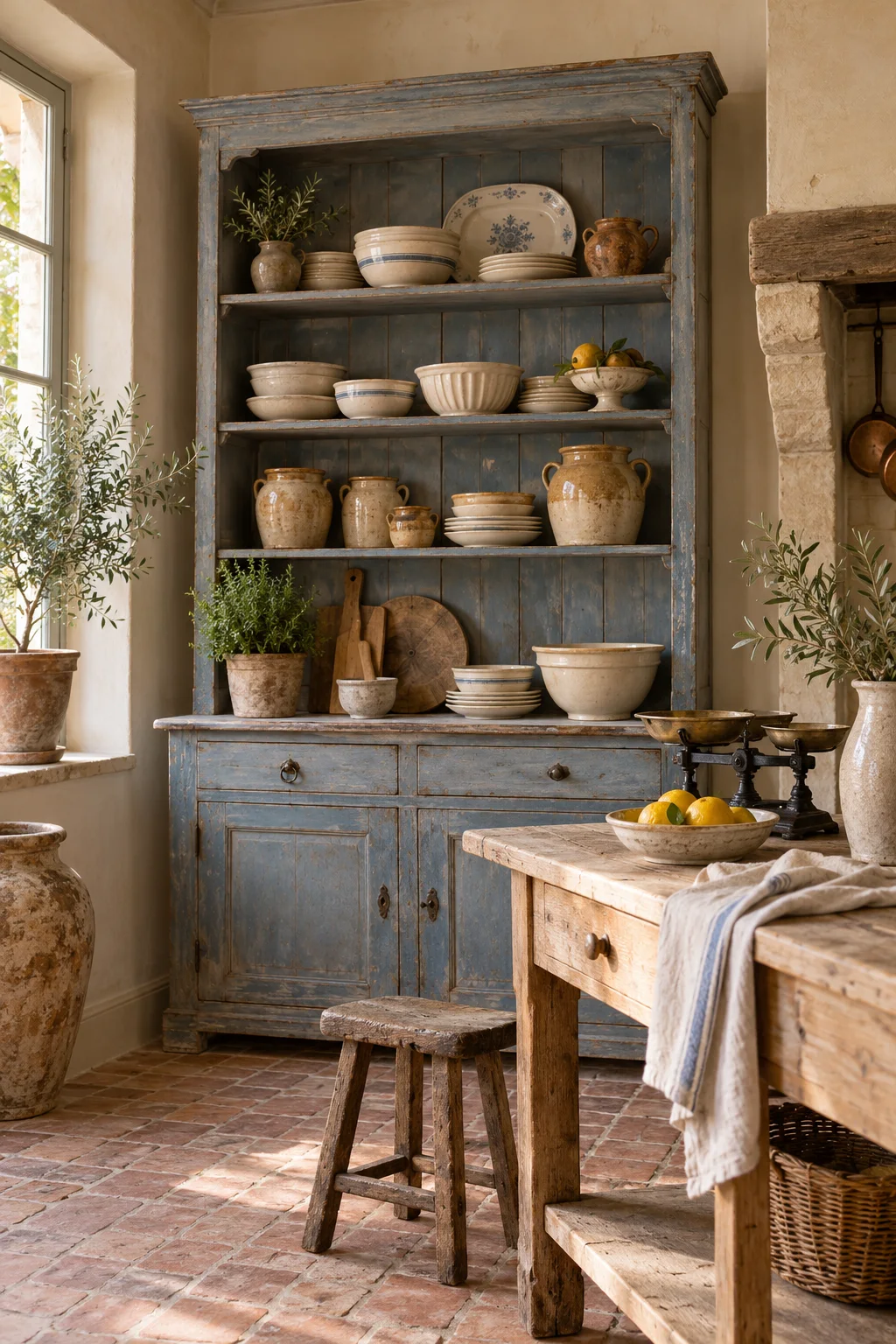
Old paint shows its history in layers: a chip reveals a different color beneath, the surface has chalked slightly, and wear concentrates at handles and corners. Shabby chic borrows this look; the Shabby Chic style page explains why natural wear is not proof of age and why a finish you enjoy should be kept rather than stripped.
Real wear versus artificial distressing
Real wear follows use. On a chair, the front stretcher is worn by feet and the arms by hands; on a table, the edge nearest the seats is rounder than the far edge; on a drawer, the runners are grooved. Wear on a surface no one touches, such as the top of a tall cornice, is suspect.
Artificial distressing is usually uniform: scratches at the same angle across the grain, sanded corners all equally round, paint rubbed through to wood that looks freshly cut and pale. Chains and screws leave patterns that nature does not. A piece can be new and distressed and still be a fine piece of furniture, but it should be described as such.
Ask for photographs of the back, the underside and the inside of a storage cabinet. Those surfaces age slowly and show whether the visible patina belongs to the piece. Distressing and age are different questions; condition is a third.
Keeping patina: cleaning, waxing and the environment
Dust with a soft cloth or brush. Clean wood with a barely damp cloth and dry it at once; apply a thin coat of beeswax or microcrystalline wax once a year and buff. Avoid silicone sprays, which seep into the wood and cannot be removed, and avoid stripping and sanding, which end the patina in an afternoon.
Decide what you want from metal. Unpolished brass keeps its warm oxide; polished brass returns to bright gold and then tarnishes again within months unless lacquered. Polishing is a decorative choice, but each pass removes a little metal and any remaining gilding. Copper cookware is the exception: patina outside, a clean tin lining inside.
The environment does most of the work. Keep rooms between 40 and 60 percent relative humidity, away from direct sun that bleaches wood and fades paint, and away from radiators that dry and crack it. The French farmhouse interiors guide and the Gascon farmhouse style style page show how patinated pieces sit in a whole interior.
What to compare
| Material | Real patina looks like | Decisive Check |
|---|---|---|
| Wood | Deep uneven color, rounded edges, pale underside | Wear where hands and feet actually go |
| Brass and copper | Brown or gray oxide; green verdigris on copper | No powdery corrosion; verdigris off food surfaces |
| Paint | Layers in chips, chalked surface, wear at handles | Scratches not uniform; raw wood not freshly pale |
Your buying checklist
Continue planning your room
Frequently asked questions
What is patina on antique furniture?
Patina is the surface built up by decades of oxidation, handling, dust and wax. On wood it shows as deeper, uneven color with a soft sheen and rounded edges where hands passed. The underside and drawer interiors stay paler. It is part of the value of a piece and is lost by stripping or sanding.
How can I tell real wear from artificial distressing?
Real wear follows use: front stretchers, chair arms, drawer runners and the table edge nearest the seats. Artificial distressing is uniform, with scratches at one angle, equally rounded corners and paint rubbed through to wood that looks freshly cut. Check the back and underside, which age slowly and reveal the truth.
Should I polish old brass and copper?
It is a decorative choice, not a rule. Unpolished brass keeps a warm oxide film; polishing restores bright gold that tarnishes again within months unless lacquered, and each pass removes a little metal. Copper cookware is the exception: the outside may keep its patina but the tin lining inside must be clean.
How do I protect patina without changing it?
Dust with a soft cloth, clean with a barely damp cloth and dry at once, and wax thinly once a year. Avoid silicone sprays, stripping and sanding. Keep the room between 40 and 60 percent relative humidity, out of direct sun and away from radiators, so wood does not bleach or crack.
Sources & further reading
- Canadian Conservation Institute — Basic care: furniture and objects made of wood — Supports preserving old finishes, cleaning with minimal moisture and avoiding silicone products on wooden furniture.
- Canadian Conservation Institute — CCI Notes 9/3: The Cleaning, Polishing and Protective Waxing of Brass and Copper — Supports the distinction between stable tarnish and active corrosion on brass and copper, and the consequences of repeated polishing.