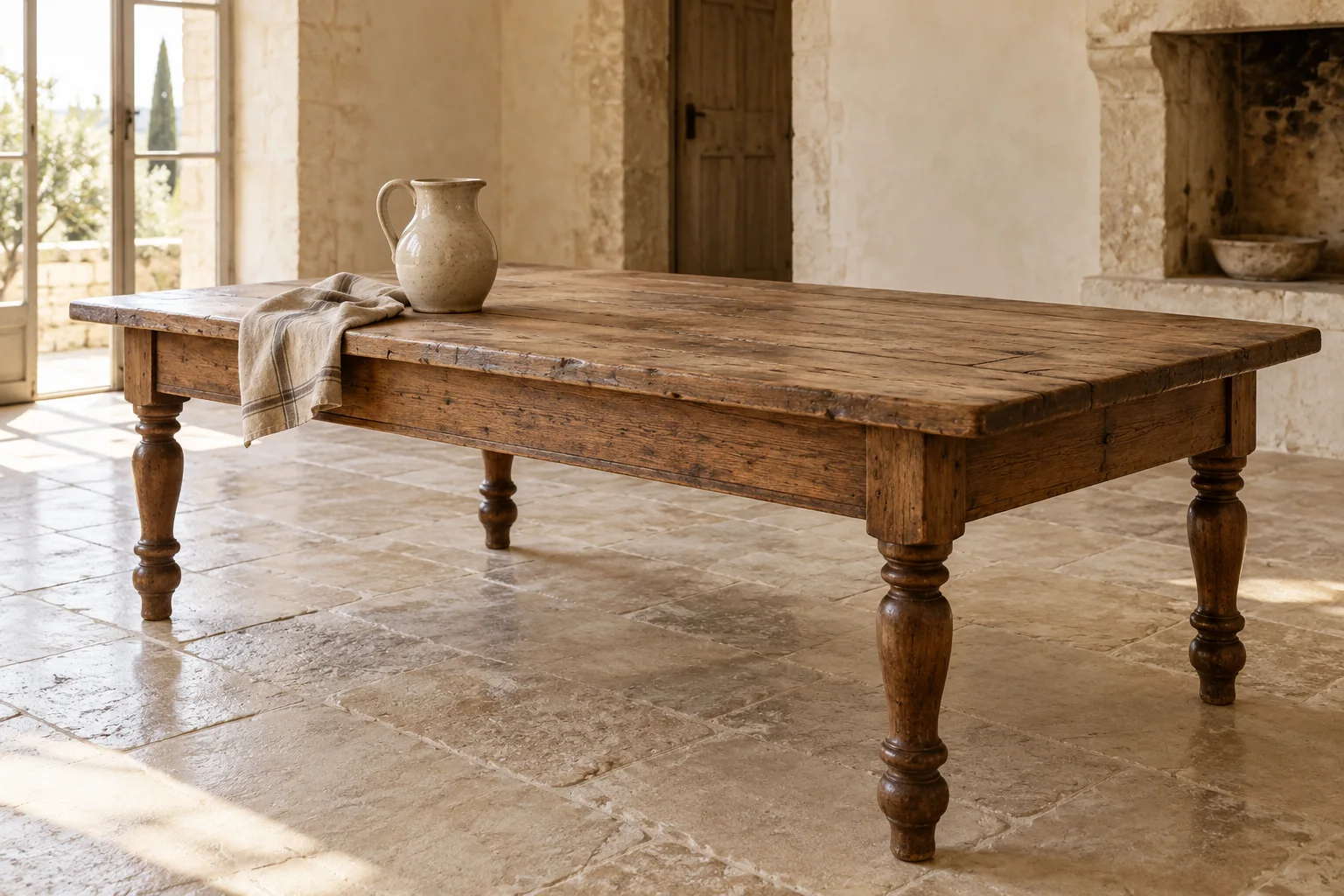
 AI-created styling idea
Furniture
Farmhouse dining tables
Sit at it first: check the stretcher, the height and how the top was scrubbed or replaced.
ExploreFrench Country · An inspiration catalogue · Updated November 2026
French farmhouse decor comes from inside the working farmhouse: a French farmhouse interior is built from what the land provided and what the household used every day: lime and stone walls, terracotta floors, chestnut beams, a scrubbed table, a bread trough and copper hung within reach.
What is French farmhouse decor? It is the plain, working end of French country style: lime-washed walls, stone and terracotta floors, waxed chestnut and oak, and furniture made for a job, such as the table de ferme, the pétrin and the plate dresser. Color comes from glazed earthenware, copper and faded linen, and the finish is real wear.
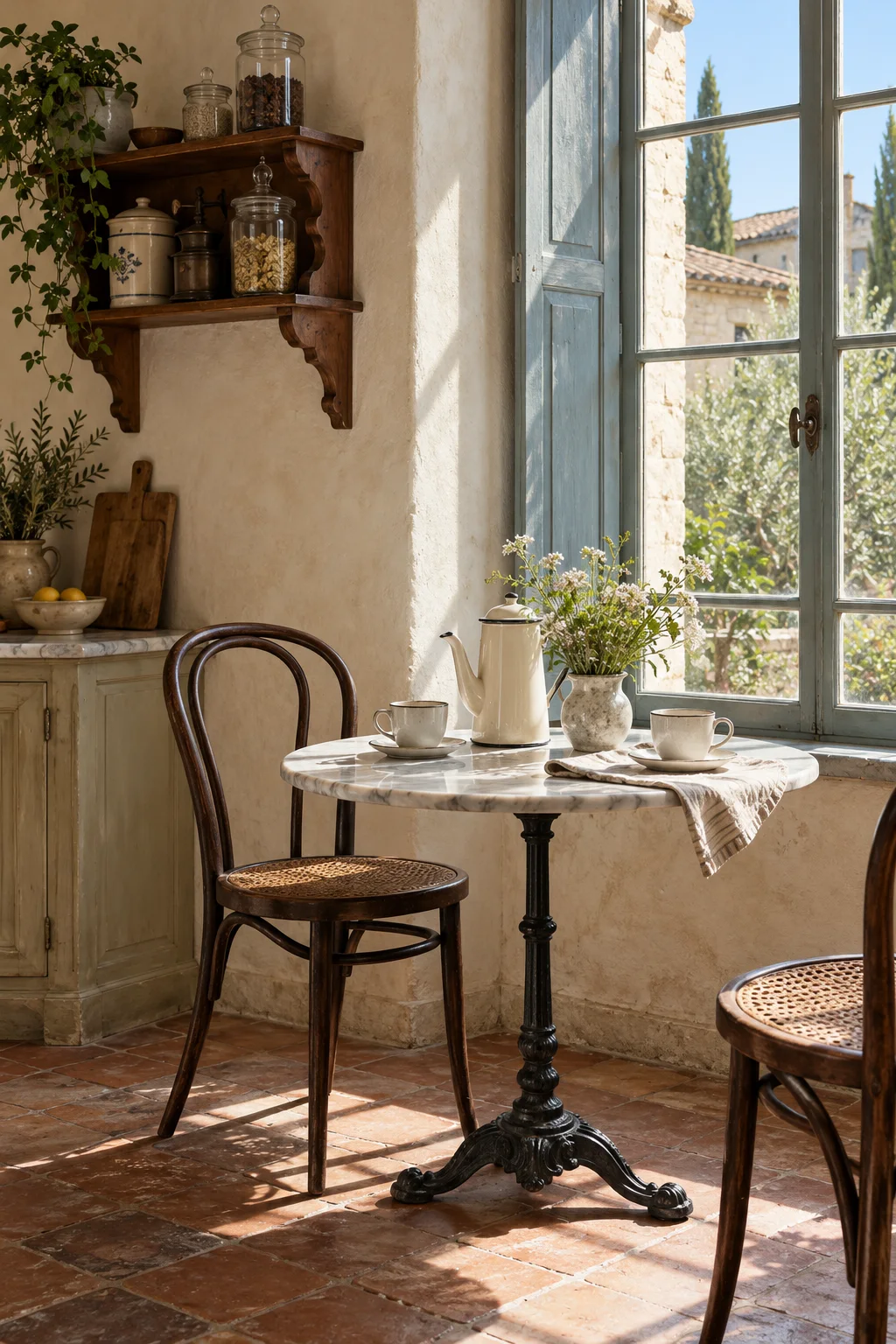
French farmhouse interior design starts from use. Every piece in a working farmhouse, the ferme or the mas, had a job: storing bread, salting meat, keeping linen dry, feeding a dozen people at harvest. The style we admire today is what those objects became after a century of that work. It sits at the plain end of French country decor, closer to the kitchen than to the salon.
A farmhouse piece is judged by what it does. Carving, where it exists, is concentrated on one panel or one apron; the rest is plain wood, pegged and planed by hand. When you choose, ask first what the piece will hold or carry in your house.
A Breton farmhouse, a Provençal mas and a Gascon borde share an approach, not a catalogue. Granite and dark oak in Brittany, ochre plaster and walnut in Provence, stone, chestnut and glazed earthenware in the southwest: our Gascon farmhouse style page shows one regional version in detail.
The finish of a farmhouse room is wear: a table top scrubbed pale with sand and water, a step hollowed by feet, a copper pan darkened by the fire. Keep it where it is sound, and do not try to manufacture it on new pieces.
These French farmhouse decor ideas come from the way real farmhouses in France were furnished and used. Each one names a material, a size or a check, so it can be carried out in an American house without turning the room into a set. Start with the walls and floors, then the working furniture, then the small objects.
Limewash goes on in three or four thin coats over lime plaster, with about 24 hours between coats, and dries to a chalky, uneven white that changes with the light. Lime suits old stone because it lets damp escape. On drywall, a mineral paint with a matte, varied finish is the honest substitute. The colors that sit well beside it are set out in a French country paint palette, room by room.
The shallow farmhouse sink, the évier en pierre, was cut from one block, often 30–40 in / 76–100 cm long and only 4–6 in / 10–15 cm deep. If your house has one, plan the cabinets around it. A reclaimed sink can weigh more than 220 lb / 100 kg, so check the drain for cracks and plan a reinforced base. Architectural antiques groups sinks, doors and fireplaces.
Reclaimed tomettes and square terre cuite tiles arrive with chipped edges and shades from pale pink to deep red. Lay them on a mortar bed with joints of about 3/8 in / 1 cm, and finish with linseed oil or wax rather than a glossy sealer. Order 10–15 percent extra, because some tiles break in cleaning. Our note on keeping patina in a farmhouse interior explains why the uneven color stays.
A farmhouse table of 7–8 ft / 2.1–2.4 m seats eight and still leaves one end free for homework, pastry or accounts. The usual height of 29–31 in / 74–79 cm is comfortable for chopping as well as eating. Check that the planks of the top are sound at the joints. The encyclopedia entry on the French farm table names each part of the frame.
A pétrin is a dough trough on legs, usually 40–50 in / 100–125 cm long, with a lid that lifts off or hinges. Its height, around 30 in / 76 cm, suits a hall console or a drinks bar, and the trough holds bottles, linen or kindling. Look inside for old woodworm and check whether the legs were replaced. Our guide to French farmhouse antiques such as tables and pétrins covers both checks.
The Provençal panetière is a spindled bread cage, often in walnut, made to hang on the wall out of reach of mice. Most measure 30–36 in / 76–91 cm wide, and a carved one can weigh 20–30 lb / 9–14 kg, so fix it into studs or masonry with two screws. Use it for bread, linen or small pottery. Read more on wooden bread bins and panetières.
The garde-manger is a small food cupboard, typically 24–36 in / 60–90 cm high, with panels of pierced tin, wire mesh or turned spindles that let the air move. Hung on a cool north wall or set on a dresser, it now holds cheese, fruit or spices. Check that the mesh is intact and free of rust before food goes in. Similar ventilated forms appear among the storage cabinets.
A bench seats more people than chairs along a long table and slides fully underneath it after the meal. Choose one 4–8 in / 10–20 cm shorter than the table top so it clears the legs, with a seat height of about 18 in / 46 cm. Sit on it before buying, since old benches can rock on a modern floor. The farm and church forms are compared in vintage wooden benches.
Bunches of thyme, bay and sage, and plaits of garlic or shallots, were hung from beams to dry away from the damp floor. Keep them at least 12 in / 30 cm from a range hood or an open flame, and replace them each season when the color fades and dust settles. An iron S-hook over a kitchen beam needs no drilling and moves easily.
Ochre- and green-glazed confit pots, 8–14 in / 20–35 cm tall, look their best in a row on one plank shelf at least 10 in / 25 cm deep. Leave the glaze line visible: the unglazed lower half shows how the pot was filled and stored. Do not drill an old pot for a lamp. More forms are shown among the glazed confit pots in room scenes.
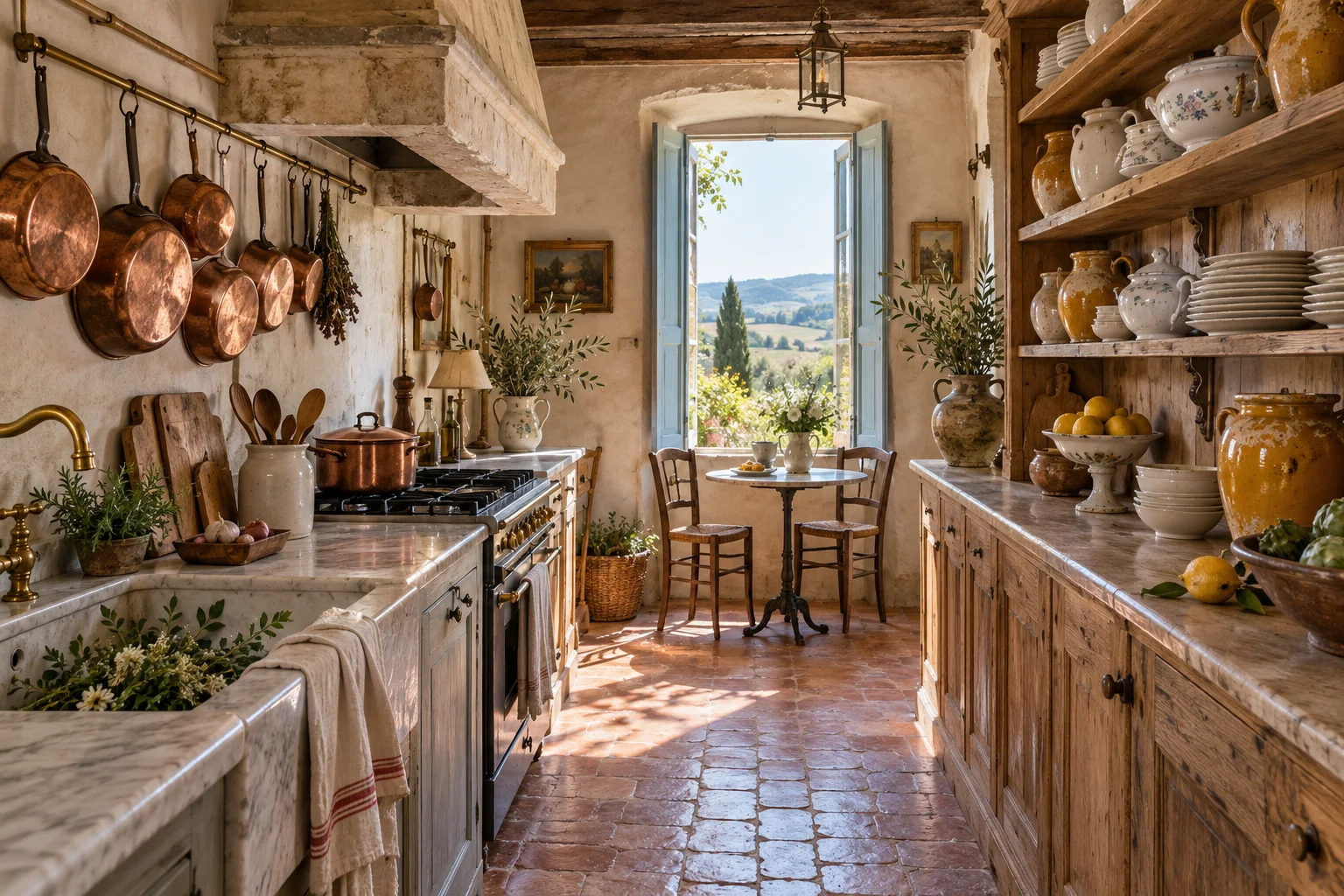
Tinned copper heats evenly and was the working batterie de cuisine of larger farmhouses. A pan meant for cooking needs an intact tin lining and walls of roughly 2 mm or more; thinner pieces are better kept for display. Hang the pans from an iron rail at about 60 in / 150 cm. Our page on French copper cookware explains retinning and maker's marks.
Enamel jugs and coffee pots in white, blue or speckled gray were everyday ware in 20th-century farmhouses. Chips at the rim are normal; rust inside means the jug should take a glass liner rather than water. A jug of 8–10 in / 20–25 cm holds a generous bunch of field flowers without tipping. Browse the pitchers and teapots for other shapes.
A worn round or rectangular bread board, 12–20 in / 30–50 cm across, stays on the table rather than in a drawer. Knife marks and a slight dip in the center are signs of use, not damage. Oil the board with food-safe mineral oil, never olive oil, which turns rancid in the grain. Our guide to vintage cutting boards and French bread boards covers cleaning.
A red, blue or green check, the vichy, in linen or linen-cotton is the everyday farmhouse tablecloth. Allow a drop of 8–12 in / 20–30 cm on each side: a 79 × 35 in / 200 × 90 cm table needs a cloth of about 100 × 55 in / 250 × 140 cm. Old cloths and runners are described in French linen and antique textiles.
Torchons are heavy linen or métis kitchen towels, often with a red stripe and a woven or embroidered monogram. A common size is about 28 × 32 in / 70 × 80 cm. Hang two on a wooden or iron rail by the sink, one for hands and one for dishes, and wash them warm, not hot. The guide to French linen tea towels and torchons explains the weaves.
A wrought-iron lantern with clear glass panes, 16–24 in / 40–60 cm tall, marks the farmhouse door without ornament. An antique lantern must be rewired to US standards and fitted with parts rated for damp locations before it goes outdoors. Hall, market and garden forms are shown on the page of antique lanterns.
A swing-arm workshop lamp in enameled steel, or a plain iron sconce, lights the sink better than a central pendant. Mount it about 24–30 in / 60–75 cm above the worktop so the shade stays below eye level and out of the glare. The other kitchen fittings are covered in pendants and lanterns for a French country kitchen.
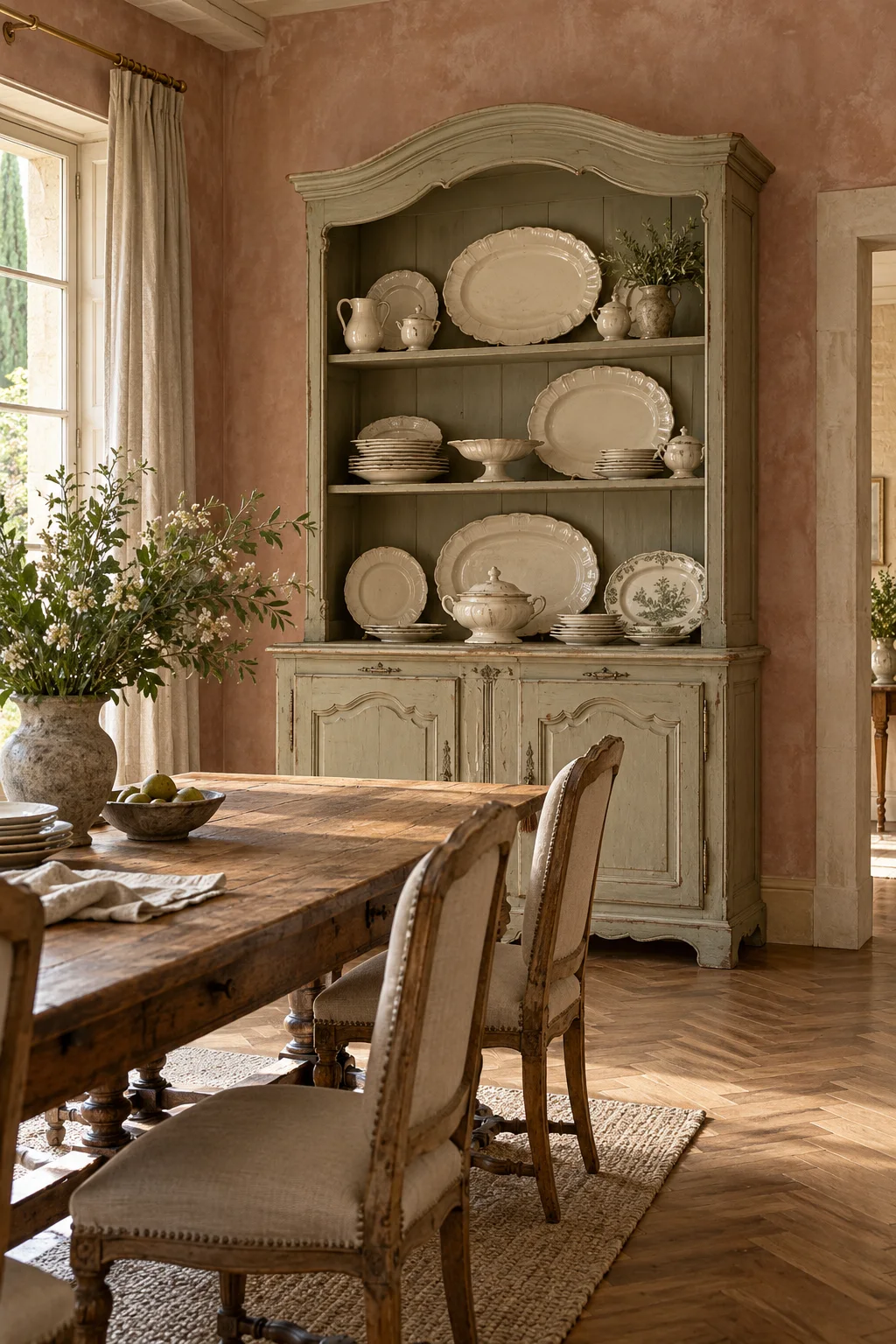
Waxed or simply scrubbed chestnut and oak age to a warm gray-brown that varnish would seal away. Use a beeswax paste once or twice a year on furniture, and nothing at all on beams. If a piece was varnished later, a restorer can strip it, but ask first whether the old color survives underneath. Each timber is described on our page about antique wood furniture.
A large willow or split-chestnut basket, 18–24 in / 45–60 cm across, holds logs or kindling by the fire and blankets in summer. Keep it at least 36 in / 90 cm from an open hearth, because dry wicker catches easily. Check the base, which wears through first. Market, egg and harvest forms are described in antique French baskets.
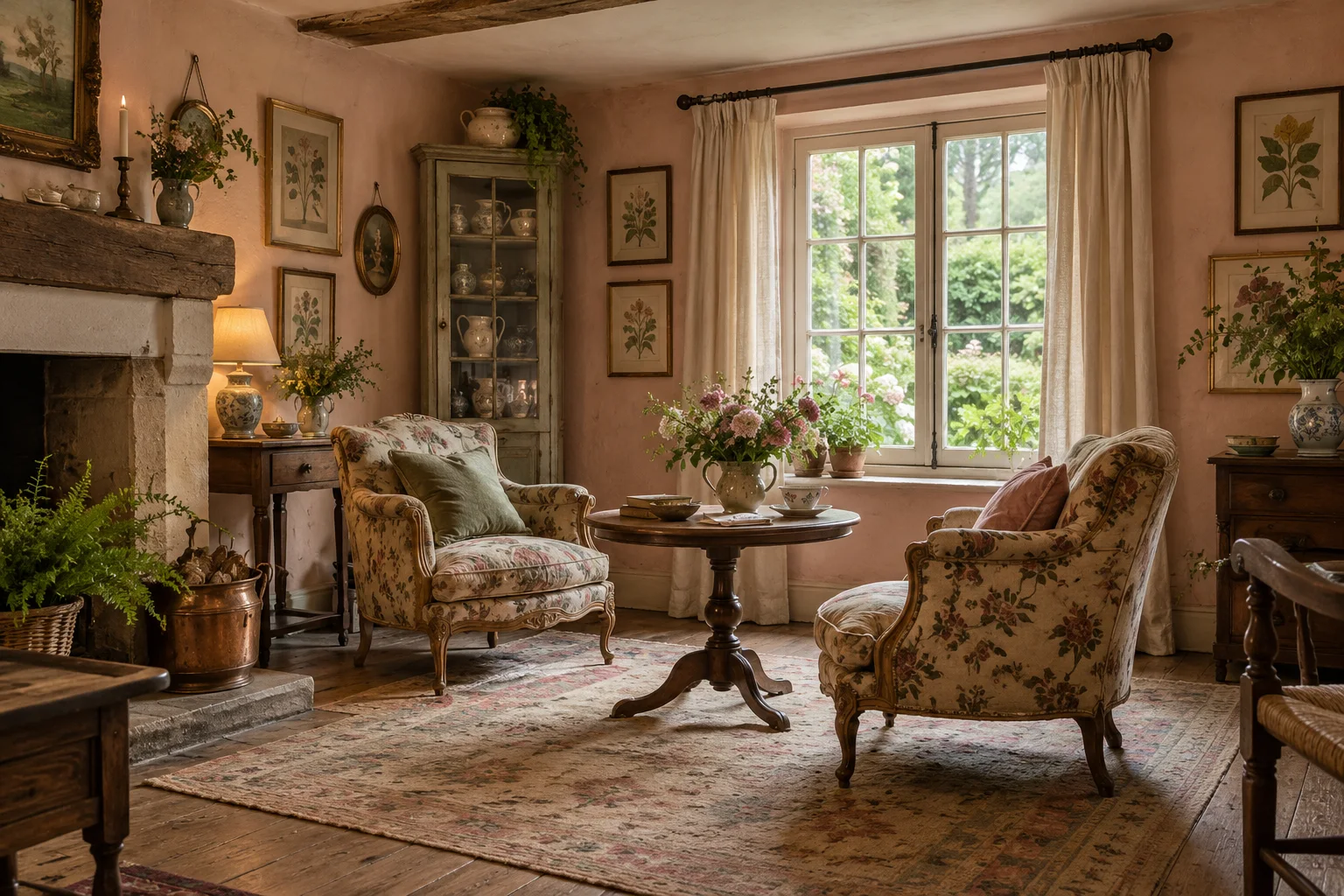
Farmhouses kept thin wool or horsehair mattresses covered in striped ticking, laid on benches and chests for extra seats. A pad 2–3 in / 5–8 cm thick, cut to the bench, makes long meals comfortable. Ask whether an old filling has been cleaned, and air it outside for a day before use. Old ticking and cushion covers appear among the linens and cushions.
Unlined linen curtains on a wooden or iron rod filter the light without hiding the window frame. Make each panel 1.5 to 2 times the width of the window, and let it stop at the sill or about ½ in / 1 cm above the floor. Antique sheets can be cut into panels when they have stains to lose. The textiles catalogue lists linen, hemp and ticking.
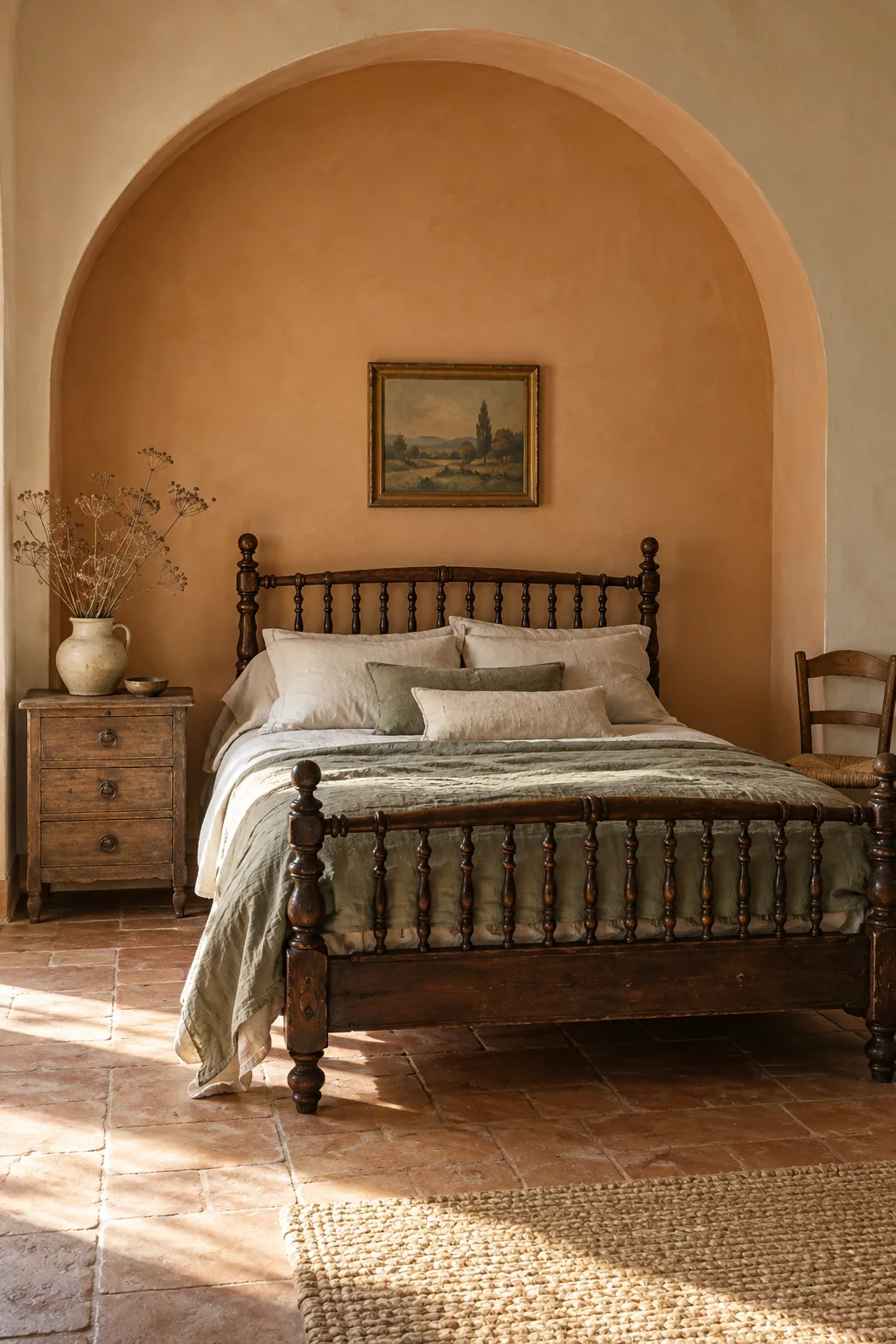
The farmhouse entry is a working room: a row of iron hooks at 60–66 in / 150–168 cm, a bench to sit on while pulling off boots, and a stone floor or a zinc tray that takes the mud. A long hall can work the same way with a narrow bench 12–14 in / 30–36 cm deep. See a French country mudroom with benches, hooks and baskets.
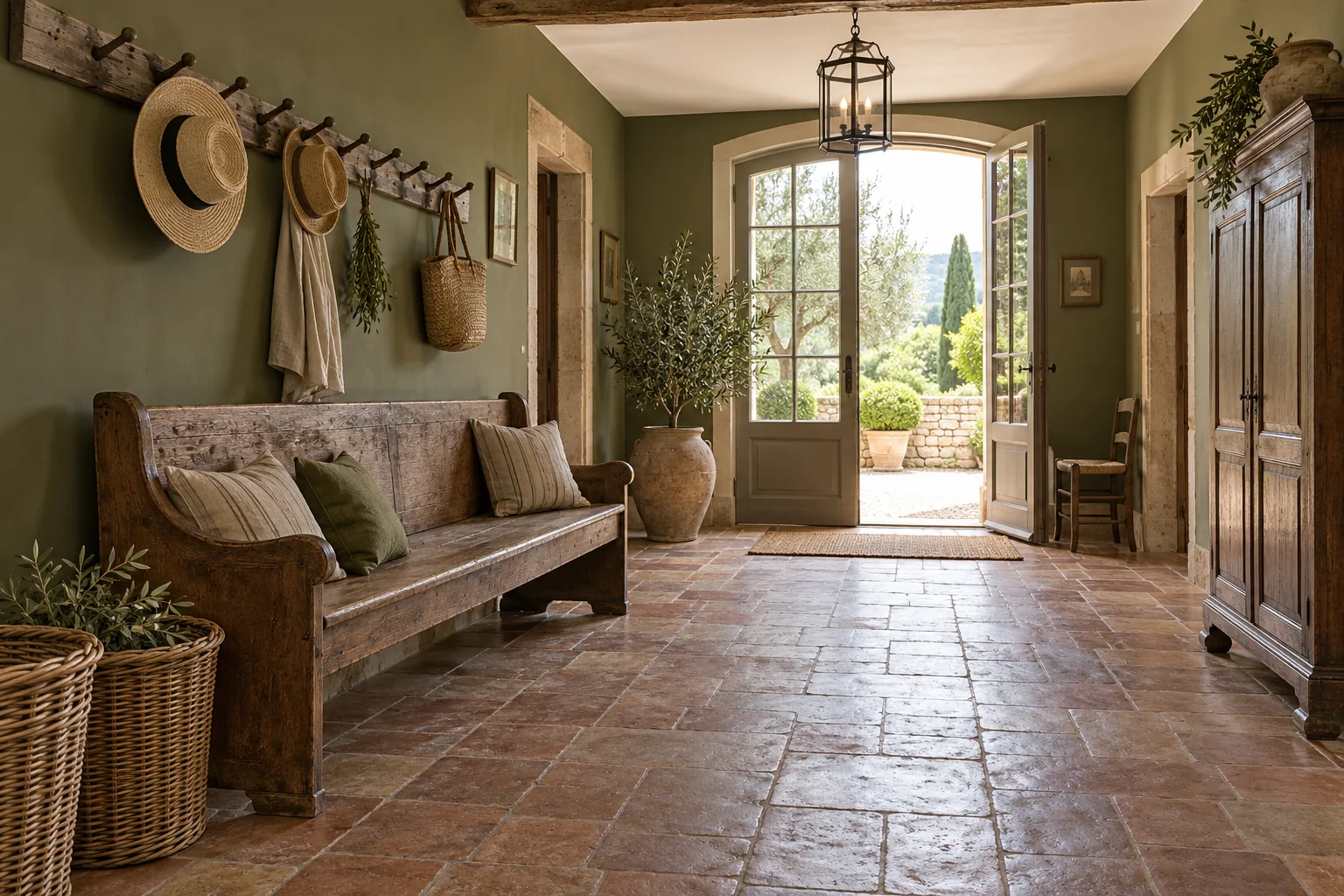
Salt-glazed stoneware crocks, the French grès, 6–10 in / 15–25 cm tall, stand beside the range with wooden spoons, whisks and ladles. Check the base for hairline cracks if the crock will also hold water or flowers. A heavy crock does not tip when a spoon is pulled out. The forms and marks are explained in antique stoneware crocks.
Dried lavender, wheat, oats and hydrangeas last a whole winter in a dry room. Tie lavender in bunches of 50–100 stems and hang it upside down for about two weeks before arranging. Use a glazed jug or a confit pot rather than a clear glass vase, which shows the stems. The vessels are compared in French country floral arrangements.
One sound antique, a table, a buffet or an armoire, sets the tone of a room more than a set of new distressed furniture. Spend first on the piece that will be used every day, then add small objects over months, not in one weekend. The order is set out in French farmhouse interior design in 10 principles.
Farmhouse walls were plastered and washed with lime, which breathes, so damp in thick stone walls can escape. Limewash gives the soft, uneven white that paint imitates; it is reapplied every few years rather than repaired. On modern drywall, a mineral paint with a slightly matte, varied finish is the closest honest substitute.
Hand-made terracotta tiles (tomettes, often hexagonal, about 6 in / 15 cm across) and large stone flags are the farmhouse floors. Reclaimed tomettes vary in thickness by 1/8–1/4 in (3–6 mm), so they need a mortar bed rather than thin-set adhesive, and a linseed or wax finish rather than a glossy sealer.
Chestnut was the farmhouse timber of central and southwestern France: beams, floorboards, simple cupboards. Oak dominates the north and west, walnut the better furniture of the south. The USDA Wood Handbook explains why each wood moves, splits and wears the way it does, which matters when an old table meets a heated room.
The farmhouse table is long (7–10 ft / 2.1–3 m), with a thick top, one or two shallow drawers and often an H-stretcher low between the legs. Height is usually 29–31 in (74–79 cm); a stretcher can catch knees, so sit at it before buying. Compare forms in farmhouse dining tables and on our page about choosing a French farmhouse table.
The pétrin is a dough trough on legs with a lifting lid, now used as a console or a linen chest; the Provençal panetière is a spindled bread cage hung on the wall; the garde-manger is a ventilated food safe with pierced tin or wire panels. Check the pétrin's interior for old woodworm and the panetière's spindles for breaks: both are common and repairable.
Benches along the table, rush-seated chairs at the ends, and a two-part buffet or a vaisselier for plates complete the main room. See benches and banquettes; a bench needs 18 in (46 cm) of seat height and a solid stretcher to stay steady on an uneven floor.
Glazed confit pots, stoneware jars and terrines stand on open shelves because they were in daily use. Describe a confit pot by its material and condition before assigning an origin; browse French confit pots for the forms.
Tinned copper pans hung from an iron rail and enamel jugs on the stove give the room its color. Copper meant for cooking needs intact tin lining; copper for display can show its wear. See copper cookware and utensils.
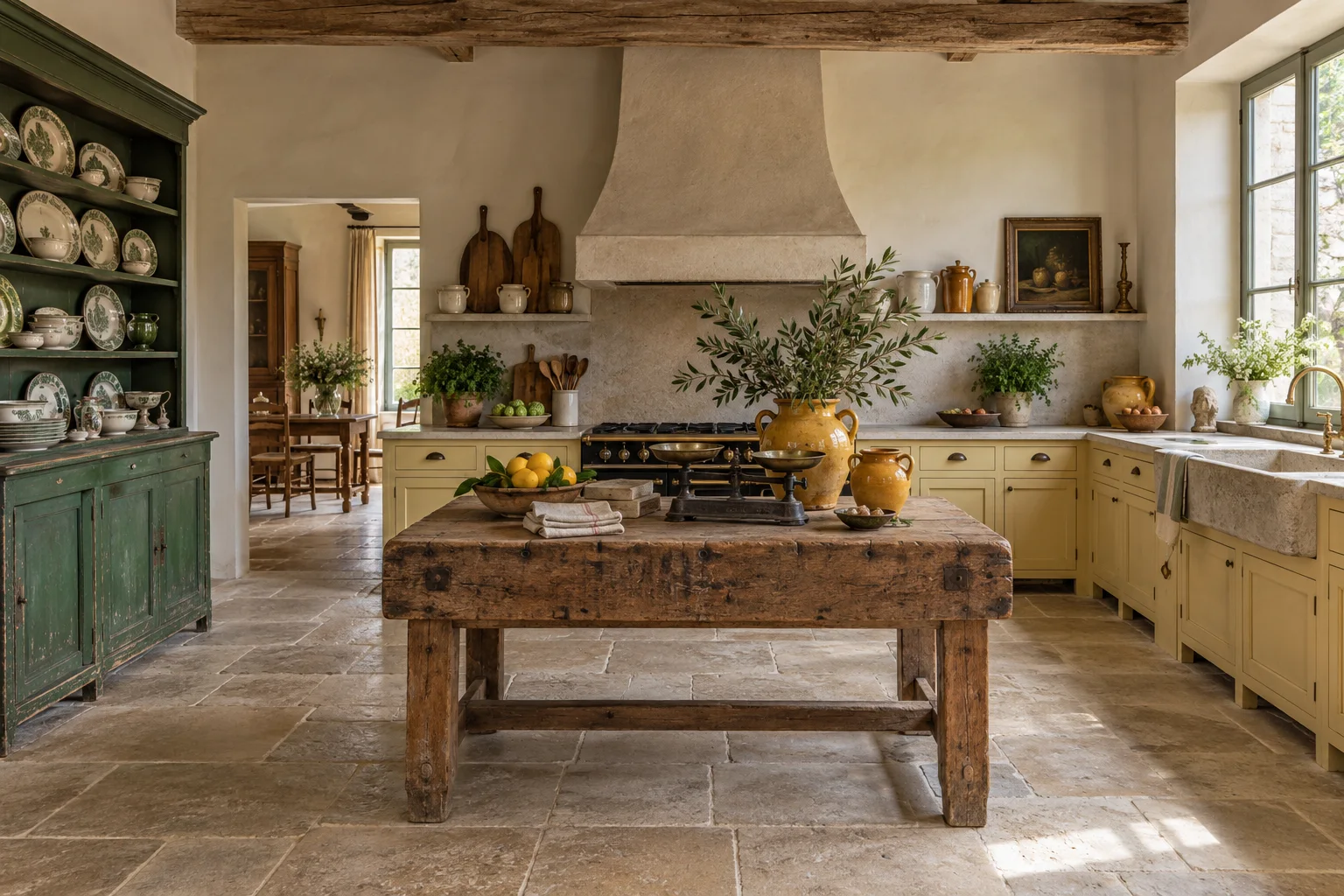
A brass balance scale, worn bread boards and willow baskets fill the gaps without adding clutter. Group them by material, as the kitchen scenes do, and leave one shelf half empty.
In a farmhouse the kitchen is the main room: the table sits in it, the dresser faces it, the hearth or range anchors one wall. If your kitchen and dining room are separate, give the dining room the table and the buffet and keep the kitchen for the objects in use. The French country kitchen page covers the layout.
Farmhouse bedrooms are sparse: a wooden or iron bed, a chestnut or oak armoire for linen, a chair used as a bedside table. Old hemp and métis sheets, washed until soft, are the textiles; browse antique linens and cushions.
A bench, iron hooks, a stone or terracotta floor and a basket for boots: the farmhouse entry works hardest of all. Reclaimed architectural pieces, such as an old door, shutters or a stone sink, belong here; see architectural materials and ornaments.
The small objects of a French farmhouse are still the easiest to find and the least expensive to ship: enamel jugs, stoneware crocks, torchons, bread boards, baskets, wine-bottle racks and odd plates. At a weekend brocante they are sold by the box as often as by the piece, and prices depend on the seller, the condition and the day. Check rims, bases and linings, then pack flat in a suitcase or ship as a small parcel. Our guide to [French brocantes and vide-greniers](a487) explains how the markets work, and [antique shopping in France](s240) covers the trip itself.
Buy new where age adds risk or cost without adding use: the mattress, the sofa, upholstery foam, wiring, the sink tap and the kitchen worktop. A new linen-cotton tablecloth or new limewash costs little and carries the look. Keep the money saved for one old working piece, such as a table or a buffet, chosen with its condition report in hand. Our [guide to French country furniture](s215) explains how to tell real wear from applied distressing.
Do not save on the structure of a large antique. A farmhouse table with a split top or an armoire with failed joints costs more to restore than a sound one costs to buy. Ask for photographs of the back, the underside and every repair before paying, and for the dimensions in inches and centimetres. A cheap piece that cannot be used is the most expensive one in the house.
American farmhouse style, as popularized in the 2010s, leans on white shiplap, black metal, barn doors and painted signs. The French farmhouse leans on lime, stone, terracotta and waxed wood, with color coming from glazes, copper and faded textiles rather than paint.
French farmhouse style is built around antiques with real wear; American farmhouse retail often uses new furniture with applied distressing. Both are legitimate choices, but the description should say which is which. Our page on French country furniture explains how to tell age from finish.
Lo Cantou lists French country kitchen pieces and antique bread boards with condition notes. For a client project, a designer can send a brief to Antiques 360: farmhouse tables, buffets and kitchenware from established dealers in southwest France, three documented options within 72 hours and the landed cost known upfront. The French country antiques guide explains what that documentation includes.
AI-created styling ideaFurniture
Sit at it first: check the stretcher, the height and how the top was scrubbed or replaced.
Explore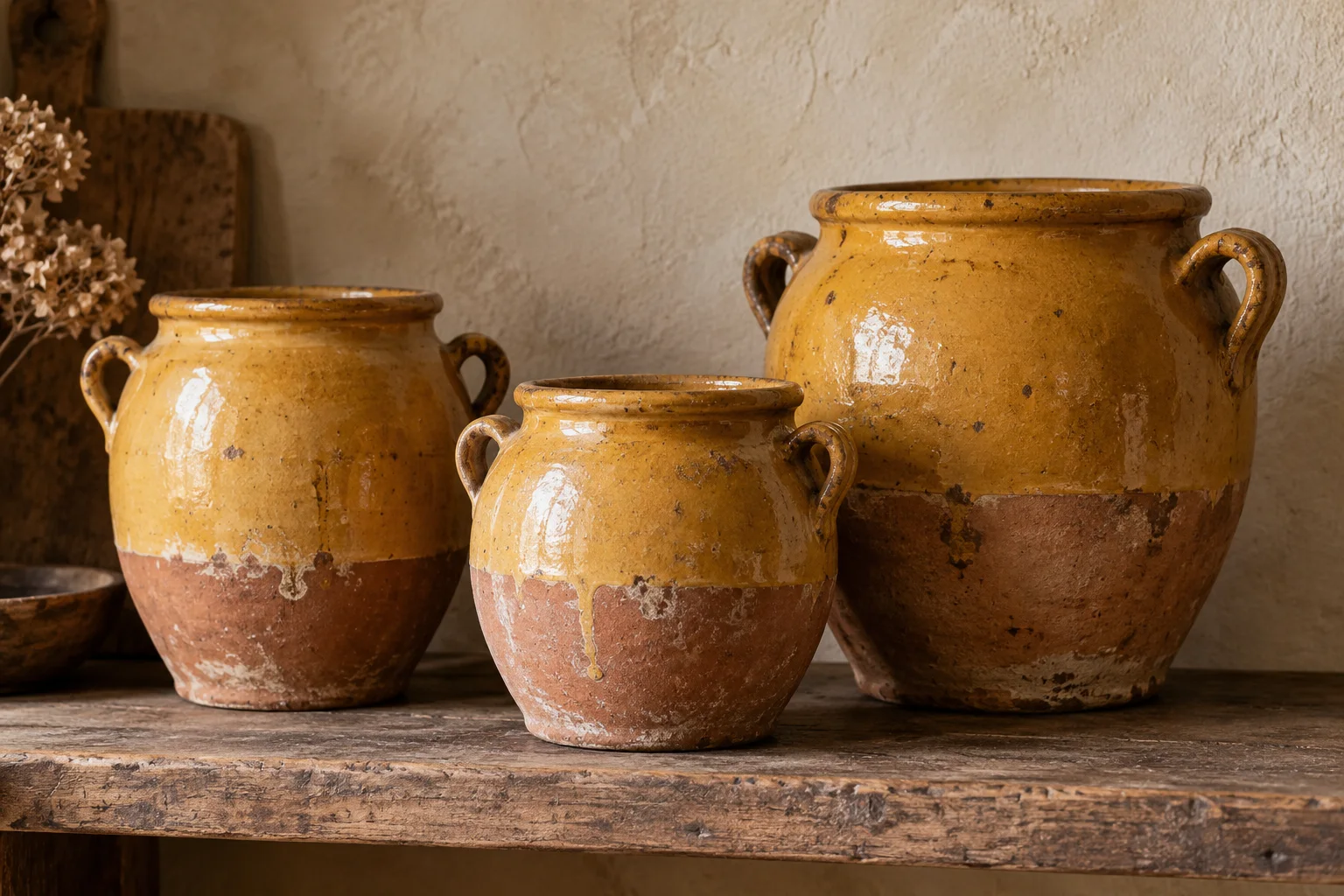 AI-created styling idea
Tableware & kitchen
Describe a confit pot by material and condition before assigning an origin.
Explore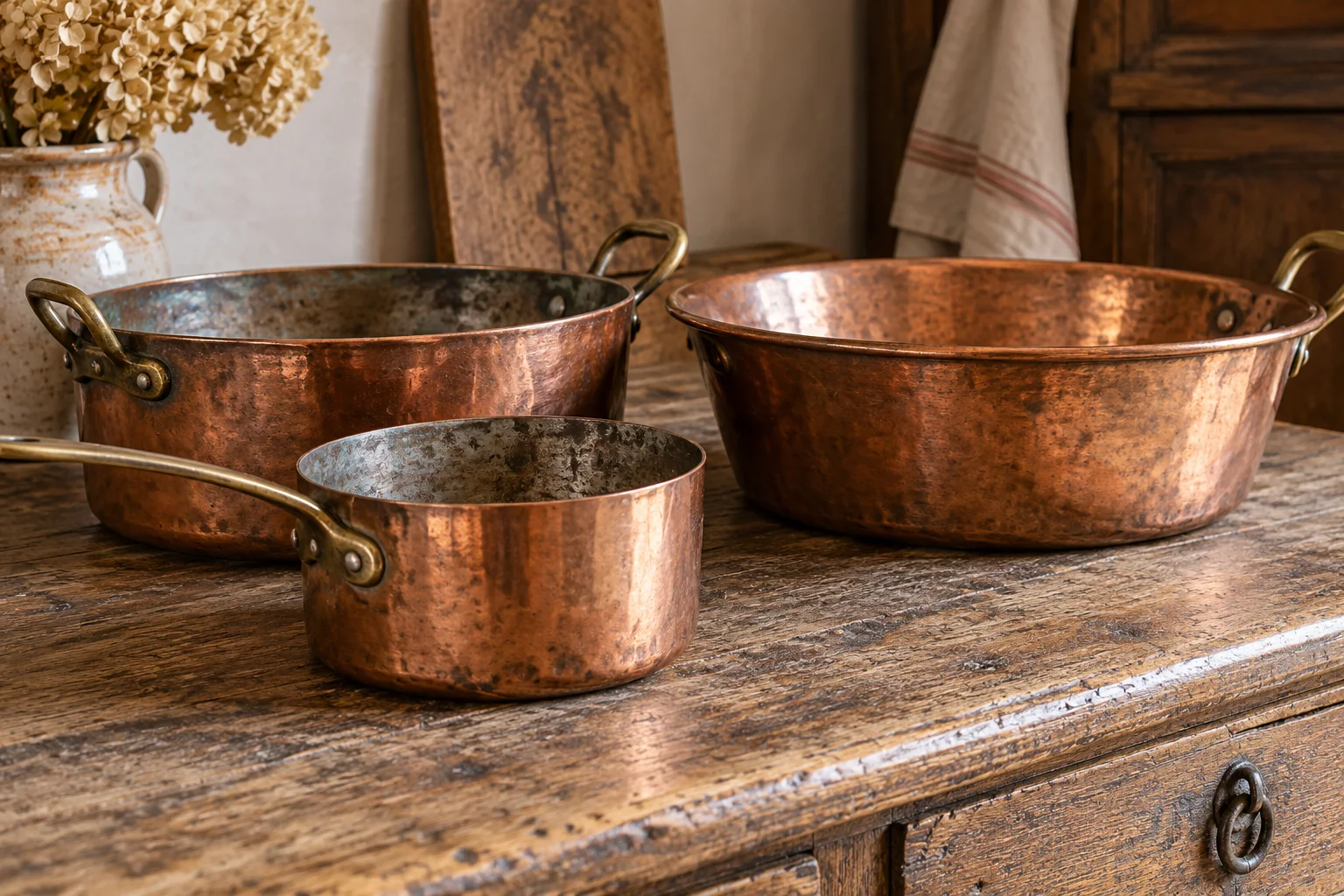 AI-created styling idea
Tableware & kitchen
Check the tin lining before cooking; display copper can keep its wear.
Explore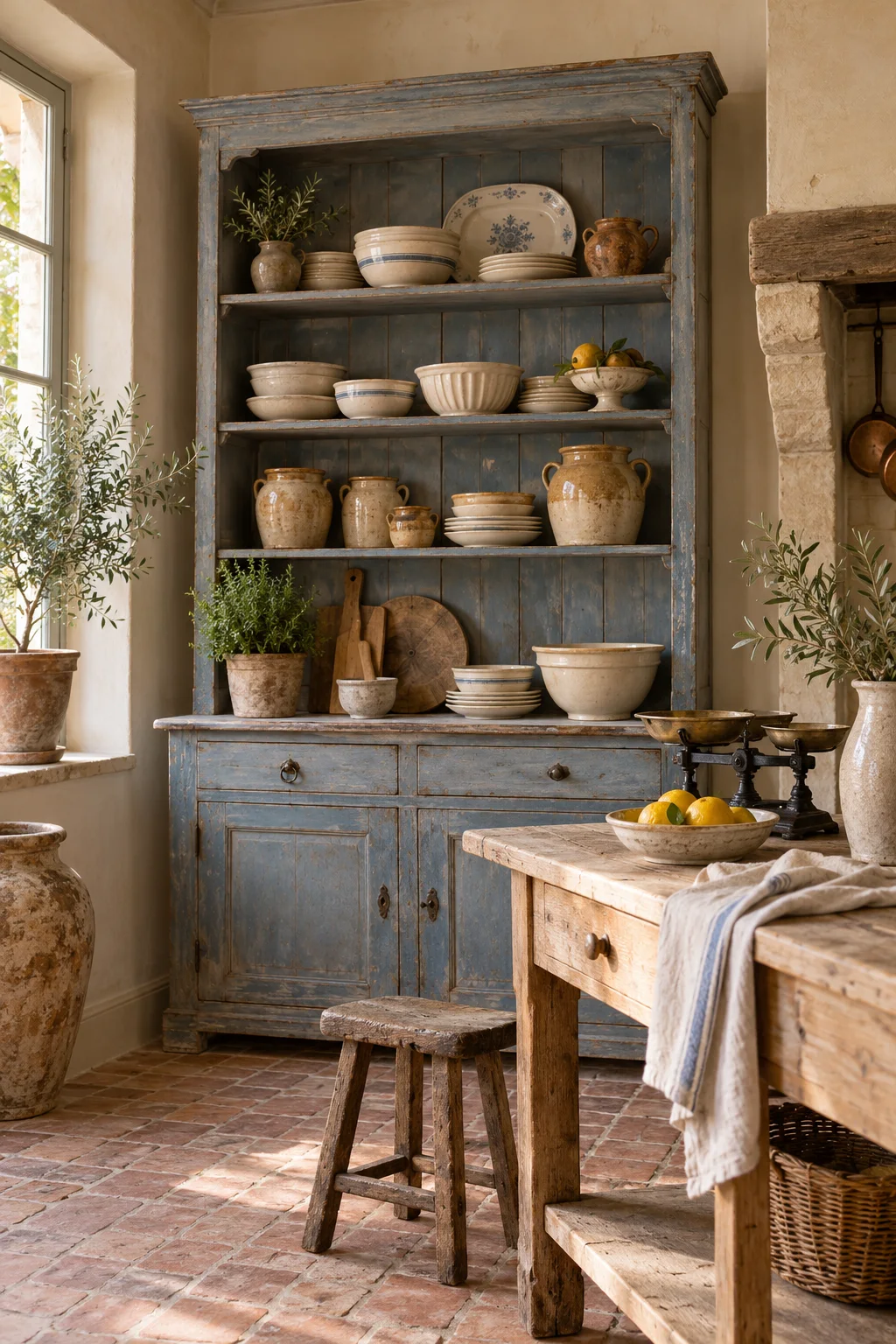 AI-created styling idea
Furniture
An 18 in seat and a solid stretcher keep a bench steady on an old floor.
Explore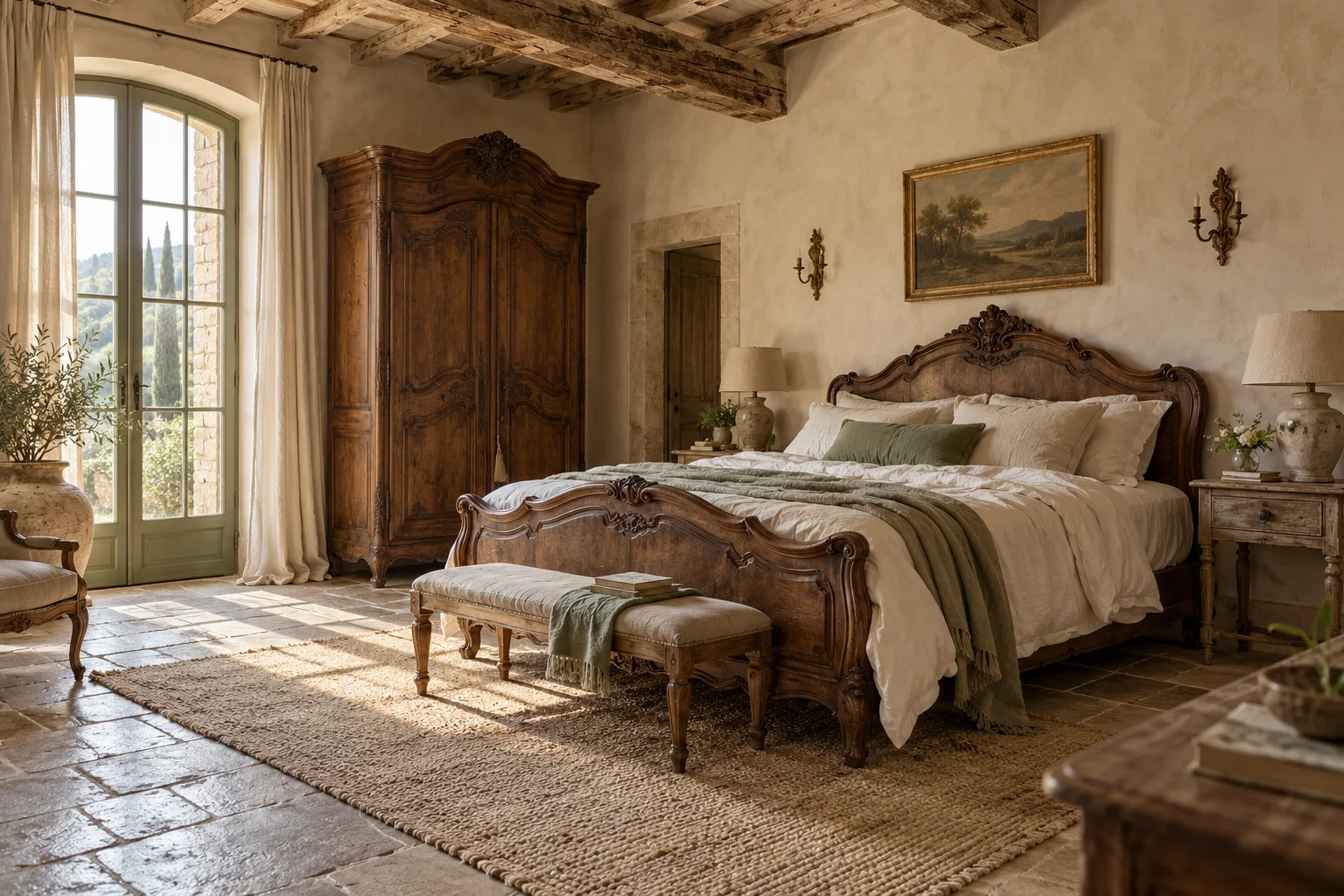 AI-created styling idea
Textiles
Hemp and métis sheets: identify the fiber and the condition before washing.
Explore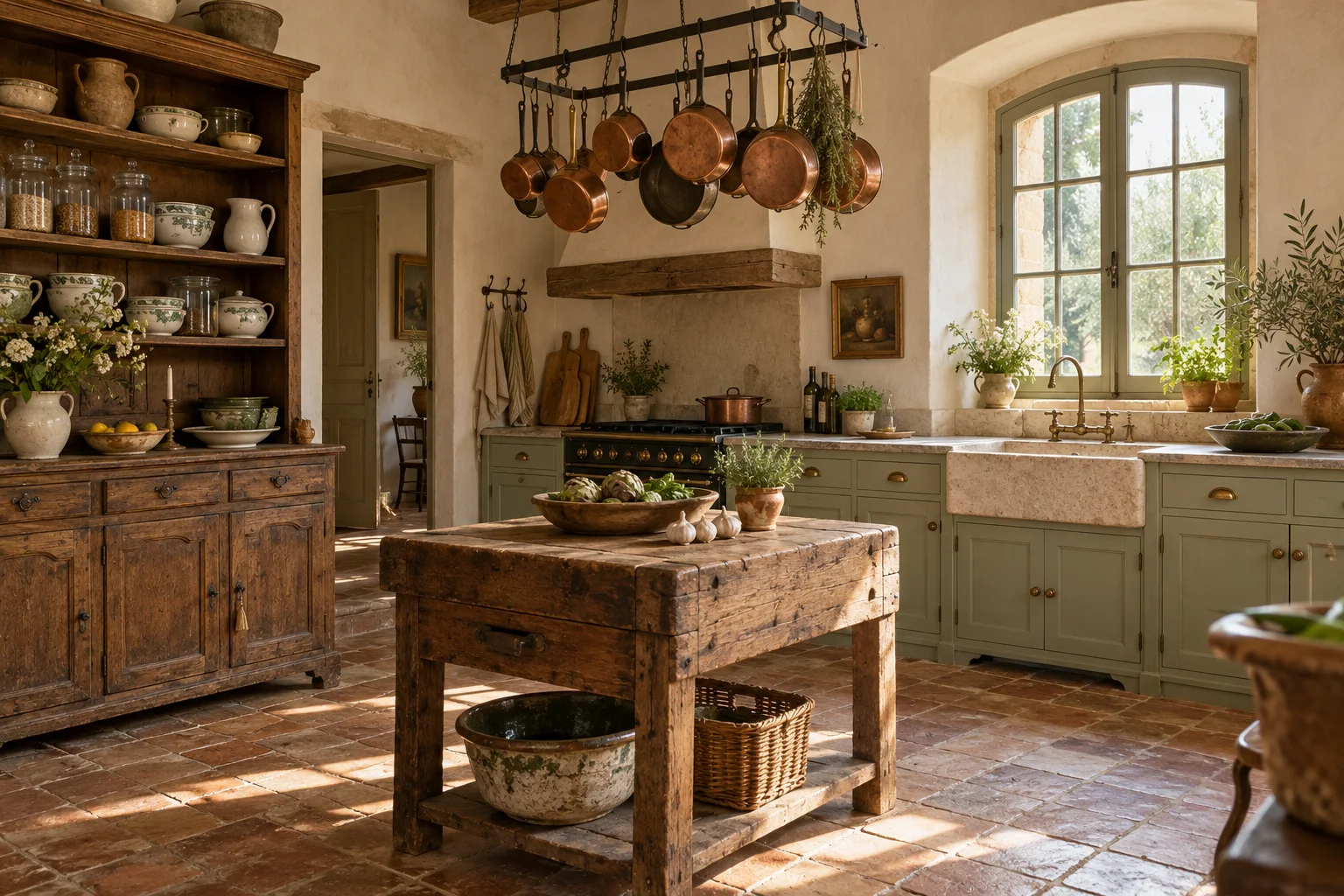 AI-created styling idea
Styles
Glazed earthenware, copper and generous serving dishes: the southwestern version of the style.
ExploreFrench farmhouse interior style is the plain, working end of French country decor: lime-washed walls, stone or terracotta floors, waxed chestnut and oak, and furniture made for use, such as a long table de ferme, a bread trough and a plate dresser. Color comes from glazed earthenware, copper and faded linen, and the finish is real wear rather than applied distressing.
American farmhouse style typically uses white shiplap, black metal, barn doors and new furniture with applied distressing. French farmhouse relies on lime, stone, terracotta and waxed wood, with antiques that carry genuine wear and color from glazes and copper. Both value comfort and utility; the French version is quieter in color and older in its pieces.
A pétrin is a wooden dough trough on legs with a lifting lid, used in French farmhouses to knead and prove bread. Today it works as a console in a hall, a linen or blanket chest at the foot of a bed, or a sideboard in a kitchen. Check the inside for old woodworm and the lid hinges before relying on it for storage.
Yes, by starting with materials and one working piece. Use a mineral paint with a soft finish on the walls, add terracotta or wood where the floor allows, and choose one strong antique such as a farmhouse table or a buffet. Then add objects in daily use, like confit pots, copper and linen, rather than decorative signs or new distressed furniture.
Start with walls, textiles and small objects, which cost little: limewash or mineral paint, linen curtains, checked tablecloths, enamel jugs, stoneware crocks and baskets from a brocante. Buy the mattress, upholstery and wiring new. Keep the savings for one sound old working piece, such as a farmhouse table or a buffet, chosen from a listing that photographs every flaw.
Nov 6, 2026 · Antique guide
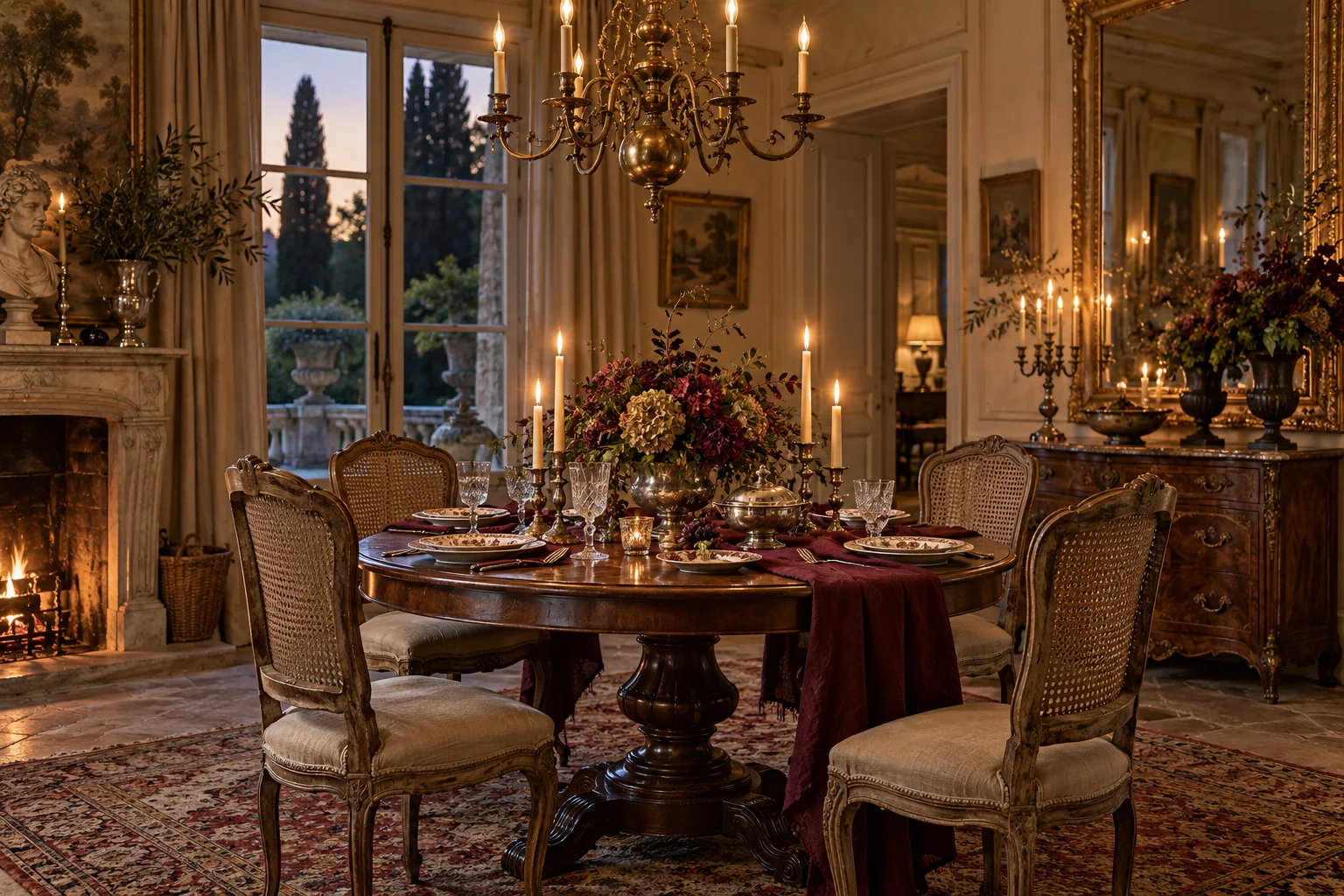
A French country Thanksgiving table takes its look from the farmhouse: a linen cloth, white ironstone or faience plates, mixed silverplate, short bistro glasses,…
Nov 6, 2026 · Antique guide
Samadet faience is the tin-glazed tableware made in a single village of the Landes, in the Tursan hills south of Mont-de-Marsan, from about 1730 to 1840.
Nov 1, 2026 · Antique guide
A French country chandelier is lighter in spirit than its crystal cousins: forged iron, turned wood with tole leaves, painted sheet metal with flowers, or wooden…