Principles 1 to 4: materials, one working table, open storage, light
Materials first. Lime-washed walls, limestone or terracotta floors, chestnut or oak beams and iron hardware set the palette before any object arrives. If the house is new, choose one honest surface per room rather than imitation everywhere. Second, one working table: a farmhouse dining table at 28 to 30 in (71 to 76 cm) high with benches or mismatched chairs replaces the island and seats eight.
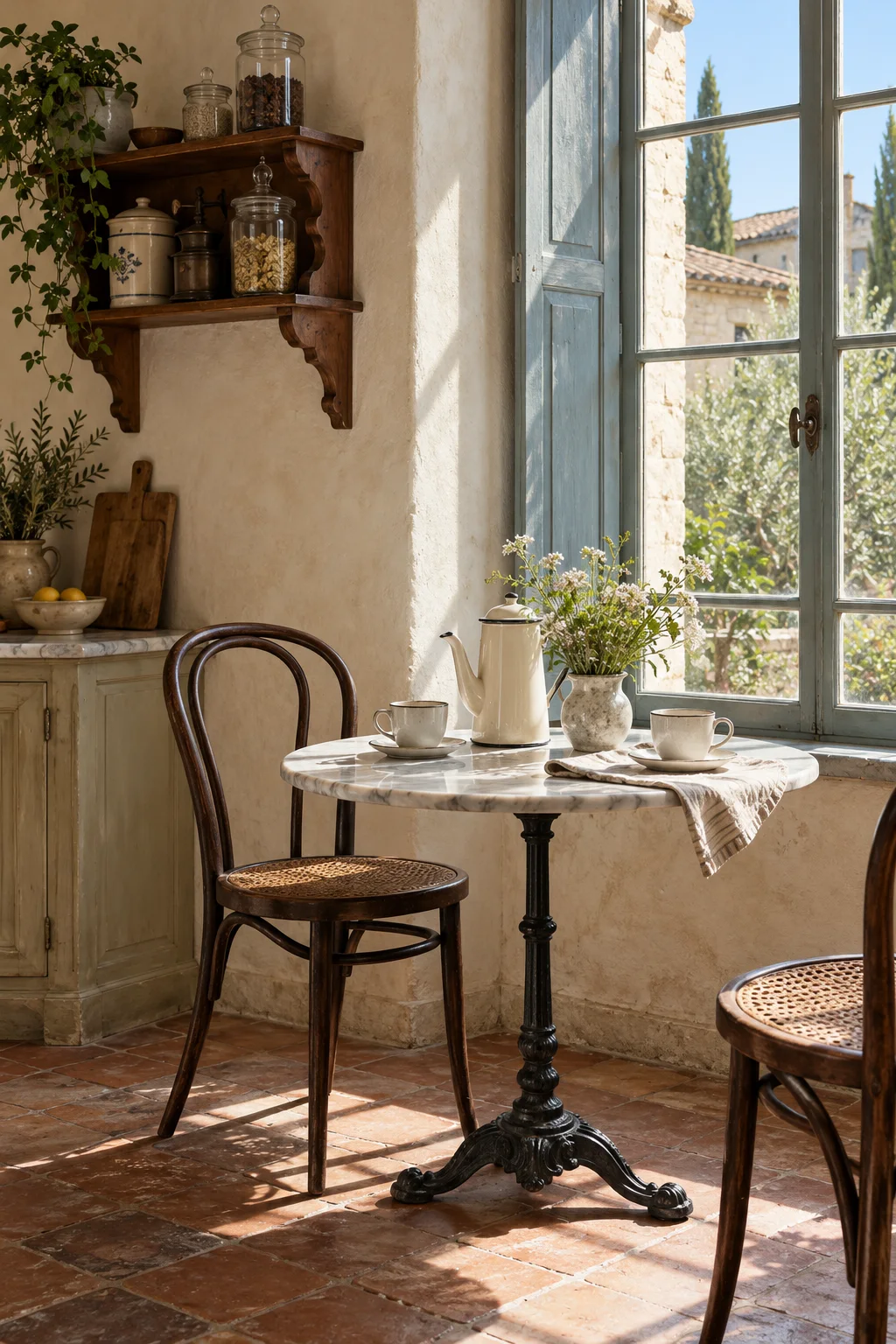
Third, open storage that shows use. A vaisselier or open shelves hold the plates and jugs that are actually used; copper hangs on hooks near the stove. Glazed earthenware, from confit pots to large platters, was made for this display and for daily work, which is why the French faience tradition is so broad.
Fourth, light. Farmhouse windows are small, so keep walls pale, avoid heavy curtains and place mirrors opposite windows. A kitchen with white or pale gray walls and one dark piece of furniture reads as a farmhouse; a dark kitchen with many small objects reads as a shop.
Principles 5 to 7: patina, restraint, textiles
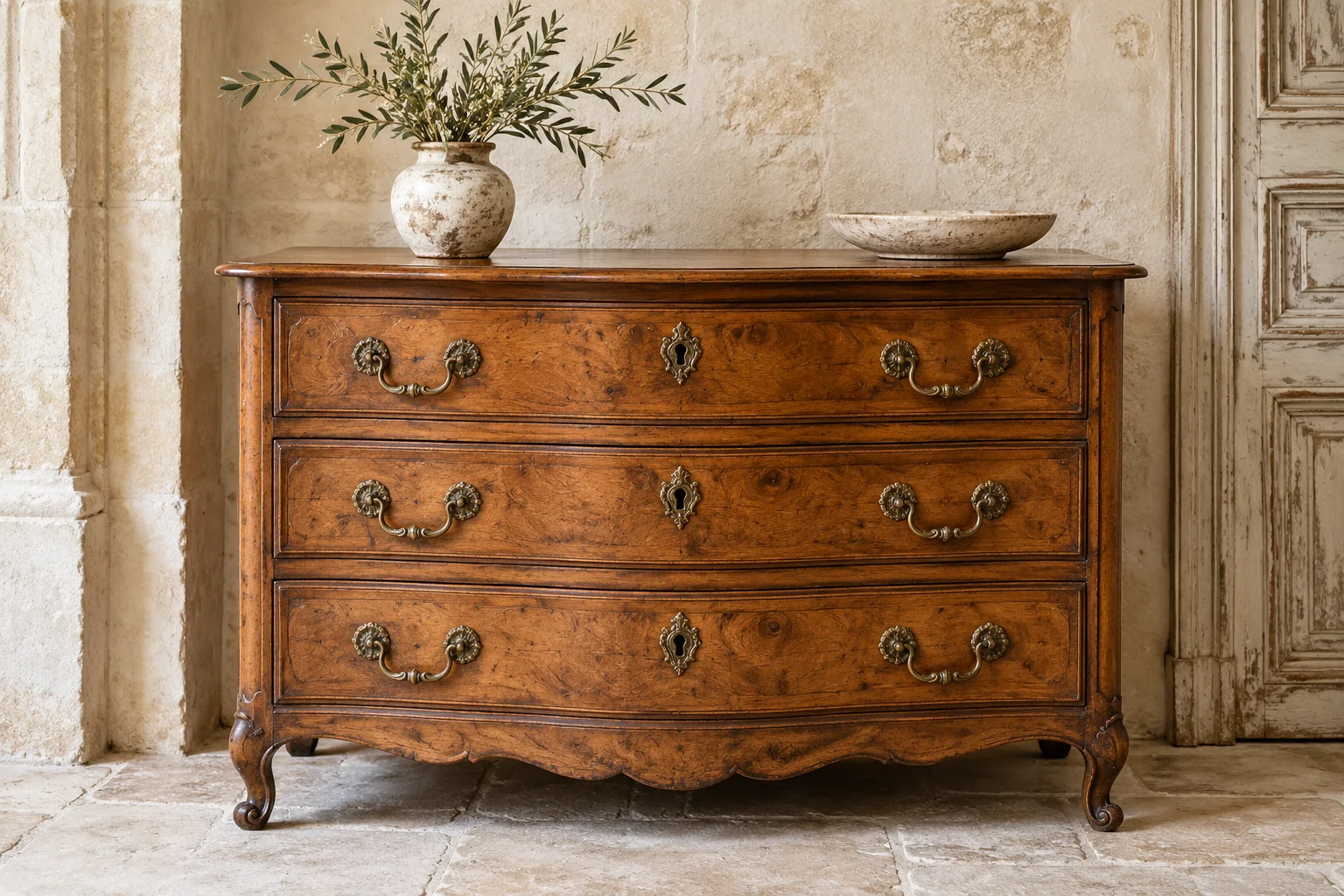
Fifth, keep the patina. A scrubbed table top, a waxed armoire and a chipped enamel jug carry the years; refinishing removes them. Clean with a damp cloth, wax once a year, and leave the rest. Sixth, restraint. Choose a few large pieces, an armoire, a buffet, a table, and give them wall space. Ten small objects on a shelf cost more attention than one large pot on the floor.
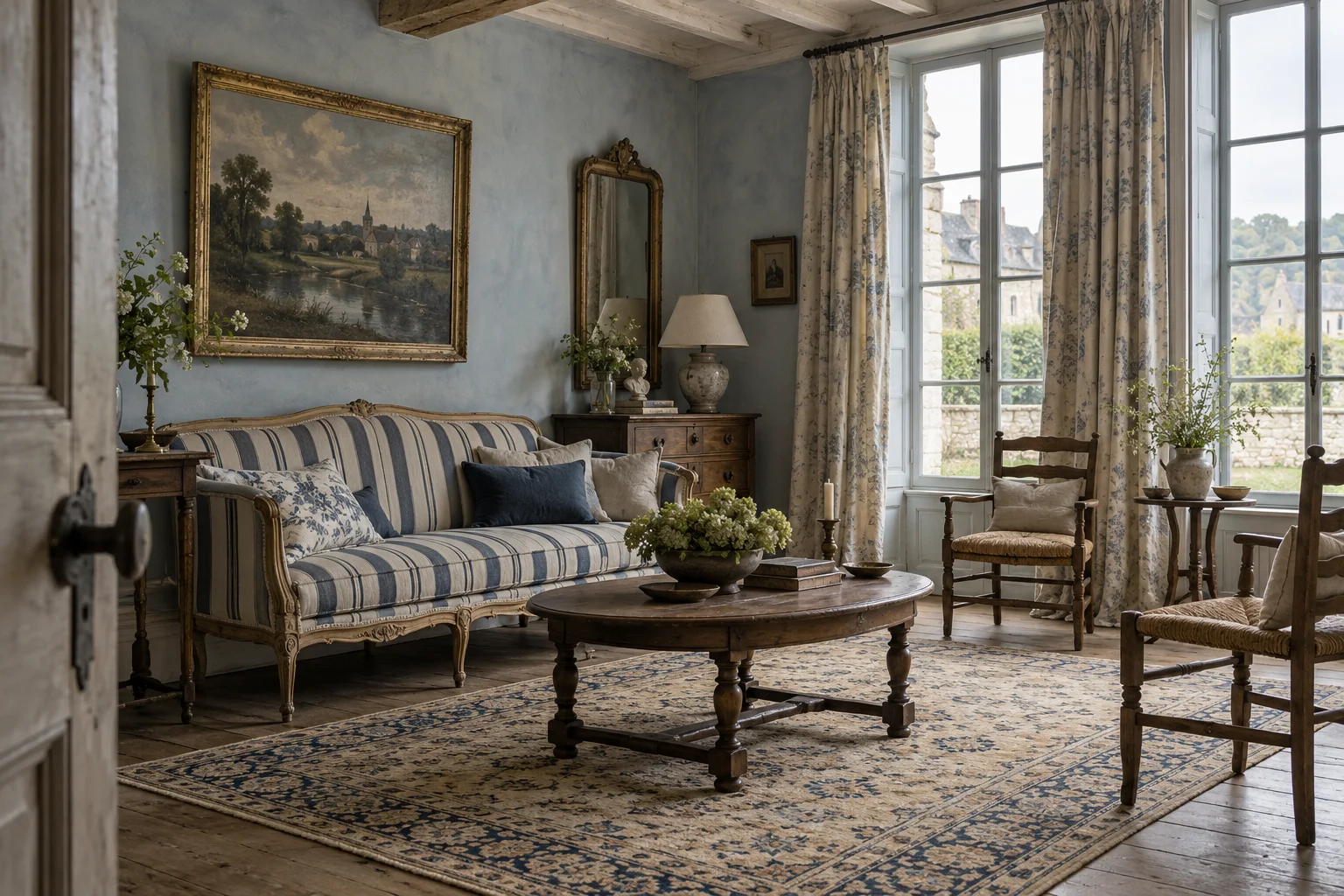
Seventh, textiles. Linen, hemp and the linen-cotton blend called métis were woven for farm households and survive in quantity: sheets, torchons, grain sacks. Use them as curtains, table runners and cushion covers. Their weight and texture do more for a room than pattern; a single checked or striped fabric is enough.
These three principles decide whether a room feels collected or decorated. The Gascon farmhouse style page shows the southwestern version, where kitchen and table objects lead; the French farmhouse interiors guide extends the principles to the whole house.
Principles 8 to 10: the hearth, objects of use, regional honesty
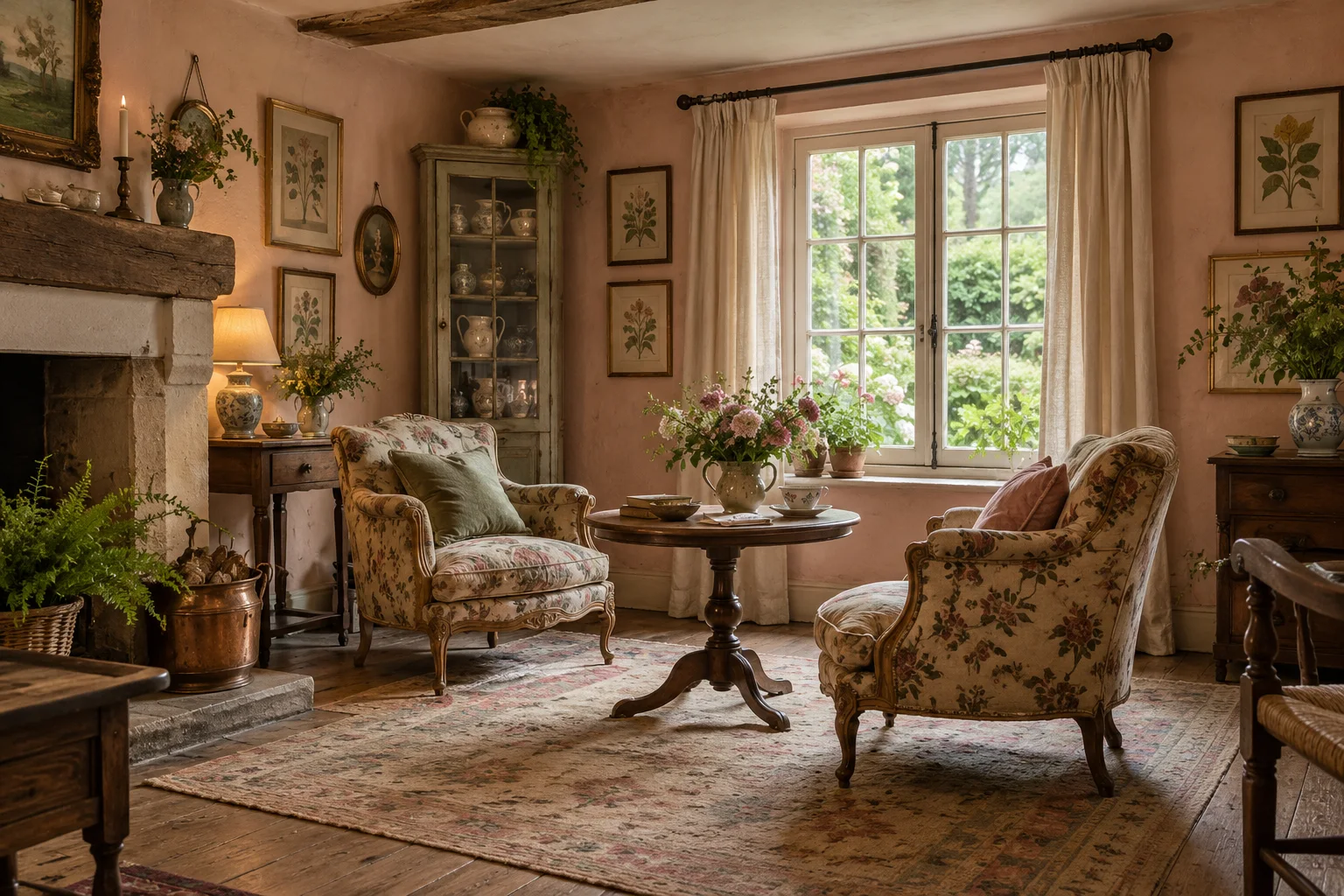
Eighth, the hearth. A fireplace or a former bread oven is the center of a farmhouse room; arrange seating toward it and keep the mantel almost bare: one clock or one pair of candlesticks. Ninth, objects of use. A pétrin for dough, a panetière for bread, a garde-manger for food, confit pots and copper were tools; display them where their use makes sense, the pétrin as a console in the dining room, the panetière on a kitchen wall.
Tenth, regional honesty. Gascony, Provence, Normandy and Brittany furnished their farms differently in wood, in form and in color. A style name describes an inspiration; it does not establish where a piece was made. Describe pieces by material and form, and let the mix be yours rather than a reconstruction.
Modern needs fit inside the principles: appliances behind panels, modern stone or stainless worktops beside the old table, good task lighting over the sink. Old wood moves with humidity, so keep the house between 40 and 60 percent relative humidity and expect a wide oak top to shrink slightly across the grain in winter.
What to compare
| Principle | What carries it | The check |
|---|---|---|
| One working table | Farm table 28-30 in high, benches | Knee clearance and seats per foot |
| Open storage of use | Vaisselier, shelves, copper on hooks | Objects are used, not only displayed |
| Patina kept | Scrubbed and waxed surfaces | No refinishing; wax once a year |
Your buying checklist
Continue planning your room
Frequently asked questions
What makes an interior French farmhouse rather than American farmhouse?
French farmhouse rooms start from lime walls, stone or terracotta floors, dark old wood and objects of daily use such as confit pots, copper and linen. American modern farmhouse leans on painted shiplap, black-framed windows and new matched furniture. The French version keeps patina and mixes periods rather than matching them.
Which pieces should I buy first for a French farmhouse interior?
Start with the working table and the storage piece: a farm table 28 to 30 inches high and an armoire or buffet with wall space of its own. Add seating that can mismatch, then textiles in linen or hemp. Small objects come last, and fewer of them than you expect.
Can a French farmhouse interior include modern appliances?
Yes. Hide refrigerators and dishwashers behind panels, keep worktops modern in stone or stainless steel beside the old table, and add good task lighting. The principles concern materials, light and restraint, not a ban on comfort. A modern range in a lime-washed kitchen with copper on hooks reads as a farmhouse.
How do I keep patina on old farmhouse furniture?
Clean with a barely damp cloth, apply a thin coat of beeswax once a year and stop there. Do not sand, strip or varnish a scrubbed top. Keep the room between 40 and 60 percent relative humidity and away from direct heat so the wood does not crack. Wear in the right places is part of the value.
Sources & further reading
- The Metropolitan Museum of Art — French Faience — Supports the historical breadth of French glazed earthenware made for both display and household use.
- Canadian Conservation Institute — Basic care: furniture and objects made of wood — Supports gentle cleaning, sparing wax and stable humidity for old wooden furniture.
- USDA Forest Products Laboratory — Wood Handbook: Wood as an Engineering Material — Supports the statement that solid wood shrinks and swells across the grain with changes in humidity.