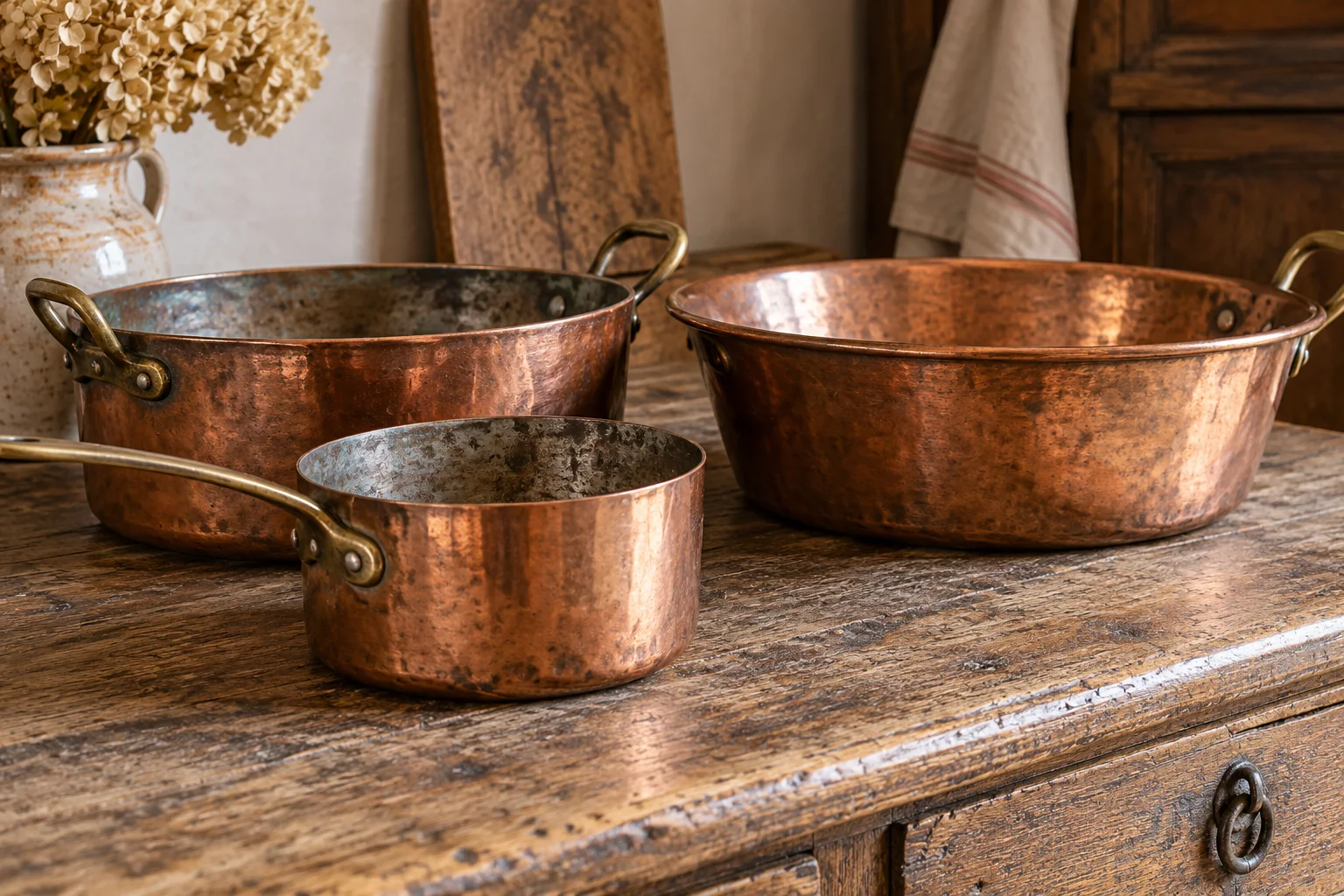
 AI-created styling idea
Kitchen
Copper cookware & utensils
Measure the gauge and look inside the lining before you decide whether a pan will cook or decorate.
ExploreFrench Country · An inspiration catalogue
French copper cookware is judged by three things before its shine: the thickness of the metal, the state of the lining and the way the handle is fixed.
French copper cookware conducts heat quickly and evenly, but only when there is enough metal. Professional French pans were made at about 2.5–3 mm; domestic and hotel pans run 1.5–2.5 mm; decorative copper is often 1 mm or less. Measure the rim with calipers, or compare weight: a 9.5 in / 24 cm sauté pan at 3 mm weighs about 6.5 lb / 3 kg with its handle. Thin copper is fine on a wall. Thick copper is the one that cooks a steady sauce.
Bare copper reacts with food, so French copper saucepans are lined. The traditional lining is tin, wiped on hot, soft gray when used and marked with faint wipe lines. Tin melts at about 450 °F / 232 °C, so a tinned pan is never heated empty. Some later pans carry a bonded stainless lining, bright and hard, which needs no retinning and accepts metal utensils. Both linings are honest choices; the listing should say which one the pan has.
Cast-iron handles fixed with two or three copper rivets are the classic French fitting on saucepans and sauté pans. Brass handles appear on lighter pans, serving pieces and many later sets. Rivets must sit tight and flush inside the pan, because a loose rivet weeps. On hand-raised pans, look for a dovetailed seam, a zigzag line near the base where two edges were joined. Spun or drawn pans have no seam, which says something about the method, not about quality.
The working core of a kitchen is the straight-sided saucepan (casserole), usually bought as a graduated set from about 4.7 in / 12 cm to 9.5 in / 24 cm across, with a sauté pan and a tall stockpot (marmite). A set rarely survives complete, and mixing makers is normal. Our journal guide to copper saucepans from France, their tinning and makers' marks covers the details of gauge and lining piece by piece.
The bassine à confiture is a wide, shallow copper jam pan with two handles, often 14–16 in / 35–40 cm across. It is traditionally unlined, because sugar protects the fruit and the pan is used only for jam; it should not be used for other cooking. The turbotière, a diamond-shaped fish kettle with a pierced insert, and the oval poissonnière are display pieces today for most kitchens. Check that the insert is present and that the lid seats without rocking.
Copper molds for jellies and cakes (moules) are usually tinned inside and stamped with a number for size. A vintage copper chafing dish adds a stand and a burner, so check the burner for cracks before lighting it. Copper water jugs and pitchers belong with our vintage pitchers and teapots. The journal list of twelve French kitchenware essentials shows where these smaller pieces fit beside the pans.
Copper belongs first in the French country kitchen: a row of saucepans on an iron rail, a stockpot on the range, a jam pan on a high shelf. Hang pans by the handle hole or on S-hooks about 18–24 in / 45–60 cm above the worktop so heads clear them. Keep the pans you cook with within reach and the display pieces higher. Copper next to terracotta tiles, stone and scrubbed wood is the classic palette.
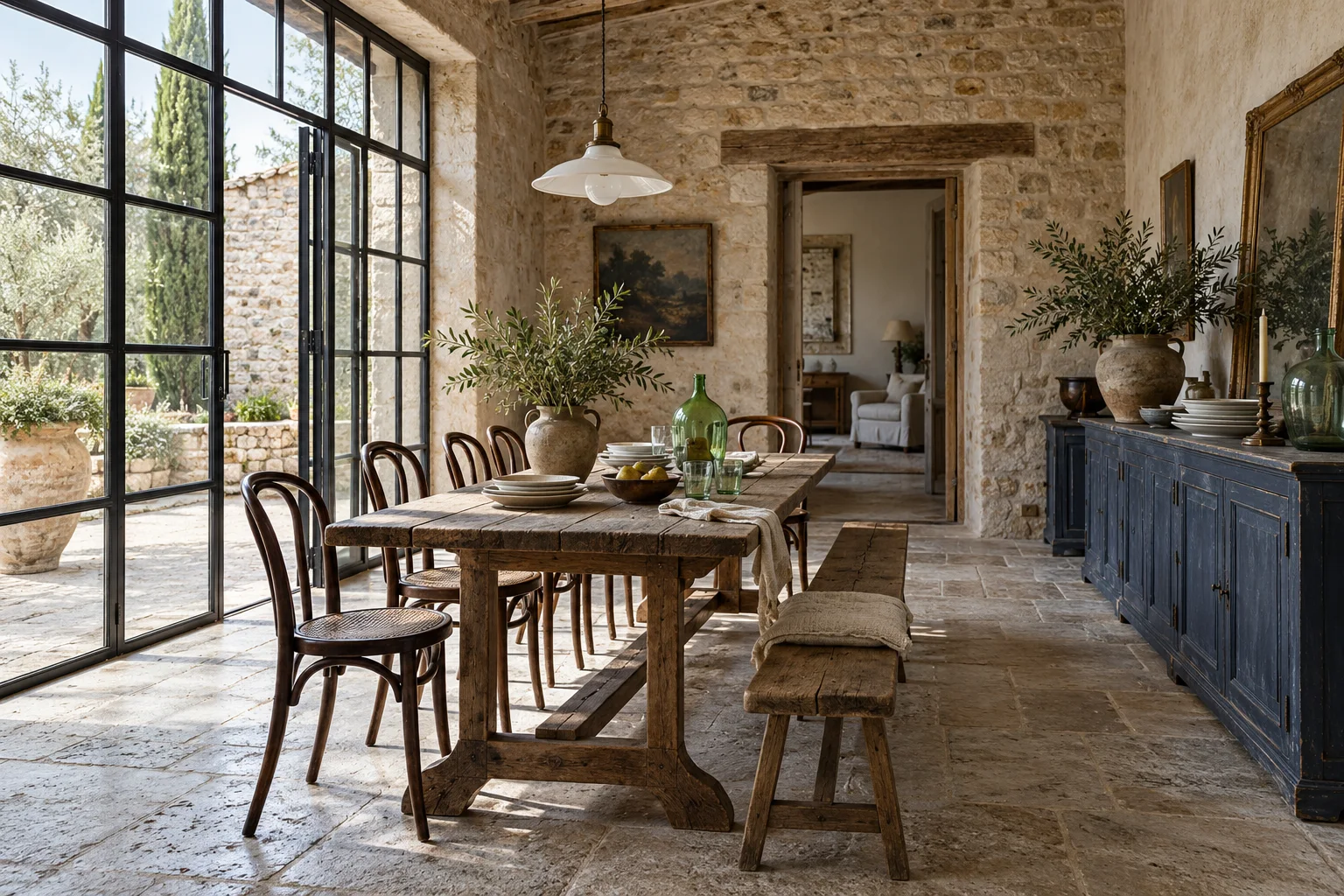
On the table, copper works as a serving piece rather than a centerpiece: a tinned gratin dish brought straight from the oven, a small chafing dish, a copper water pitcher. In a farmhouse dining room, one copper element is usually enough beside faience and linen. Our guide to French country tableware shows how copper sits with glazed earthenware, glass and silverplate on a mixed table.
Away from the kitchen, copper holds wood and warmth. A wide copper bassine makes a log basket beside the fireplace in the country living room, and a copper coal scuttle does the same job. In a French country bedroom, the long-handled bed warmer (bassinoire) hangs on the wall as a reminder of unheated rooms. Neither needs polishing; a mellow brown patina suits both rooms better than a mirror shine.
Outdoors, copper turns brown, then green, and that verdigris is part of its charm. A copper watering can or a planter made from an old stockpot fits the French country garden on a terrace step or a potting bench. Check the seams and the rose of a watering can for leaks, and drill a drainage hole only in a pot that is no longer worth keeping as cookware. Our page on watering cans and garden tools continues the theme.
Antique copper pans come in two families: pans to cook in and pans to look at. A cooking pan needs a thick gauge, a sound lining, tight rivets and a flat base that sits on the burner without rocking. A wall piece needs none of these, only a good shape and an even surface. Write down which you are buying before you compare listings, because the same pan can be a bargain for display and a poor choice for the stove.
Stamps appear on the body or the handle: a maker, a town, a retailer, a hotel or a restaurant. Villedieu-les-Poêles in Normandy is the historic copper town of France and its name appears on many pans. Retailers also stamped pans they did not make, so a stamp identifies a source, not always a maker. Attribute a pan to a workshop only when the mark is present. An unmarked pan is described by its gauge, lining and construction, never by a famous name.
Ask for the diameter, the height, the gauge at the rim and the weight with the handle. Look inside for copper showing through the tin: a patch larger than a coin on the cooking surface means retinning before use. Check the base for dents and for a bulge that would stop it sitting flat. For homeowners, the French country kitchen pieces at Lo Cantou list condition details and availability. Designers furnishing a client kitchen can send a brief to Antiques 360 for three documented pieces within 72 hours, every flaw photographed and the landed cost known upfront.
A brown patina on the outside of a pan is stable and harmless. Polishing removes a little metal each time, so decide how bright you want the pan and then keep it there with the least effort. The Canadian Conservation Institute note on brass and copper explains why a mild polish and a protective wax are gentler than abrasive pastes. Never polish the inside of a tinned pan; the tin is the lining, not tarnish.
Wash a tinned pan by hand with warm water, mild soap and a soft sponge. Steel wool, scouring powder and the dishwasher remove tin quickly. Soak burnt food rather than scraping it. Use wooden or silicone utensils, keep the heat moderate, and never heat the pan empty. A gray, slightly uneven lining is a sign of use, not of damage. When copper starts to show through over a large area, a specialist retinner can renew the lining.
Hang copper away from a steamy dishwasher outlet and from direct splashes of acid such as vinegar and lemon, which mark the surface. Dry pans fully before hanging them. Pans stored in a closed cupboard should stand on their bases, not stacked inside each other, so the rims stay round. A cotton glove for handling bright copper avoids fingerprints that later tarnish into dark marks.
Each category below groups copper pieces by use, from the stove to the garden. The wider tableware and kitchen catalogue collects every related family.
AI-created styling ideaKitchen
Measure the gauge and look inside the lining before you decide whether a pan will cook or decorate.
Explore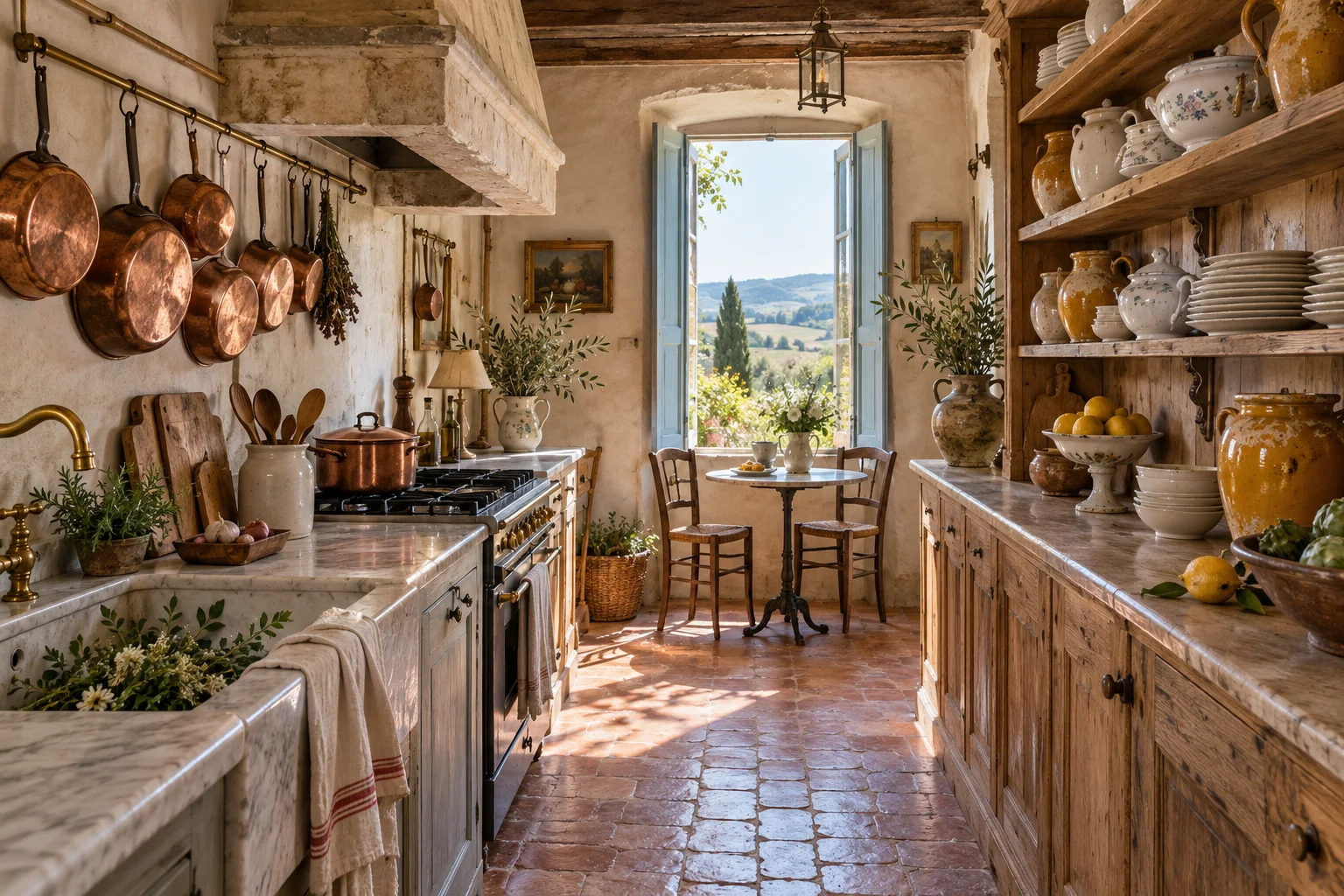 AI-created styling idea
Tableware
Check the spout, the handle joint and any lining before using a copper pitcher for water.
Explore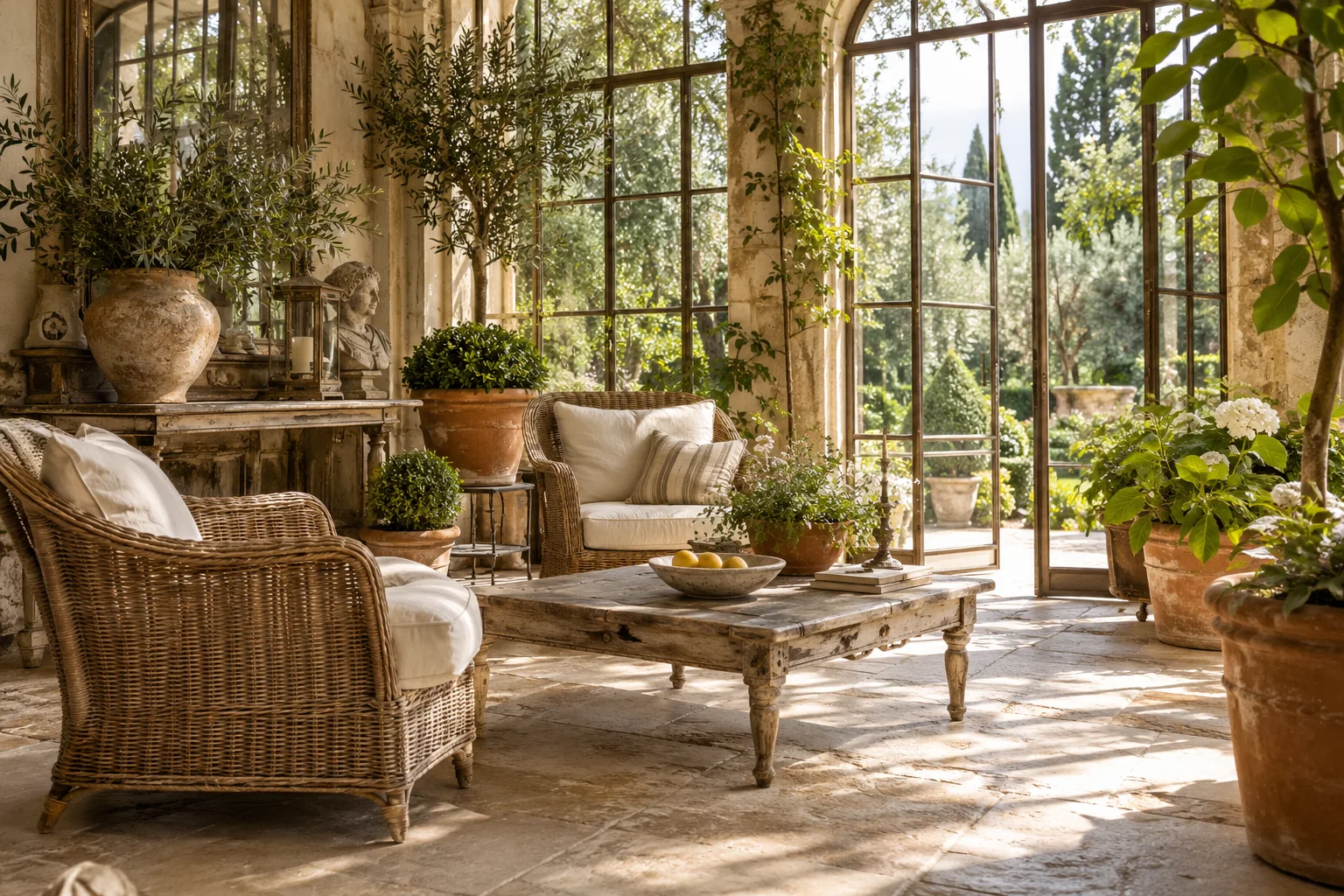 AI-created styling idea
Garden
Test seams and roses for leaks; outdoor copper earns its green patina slowly.
Explore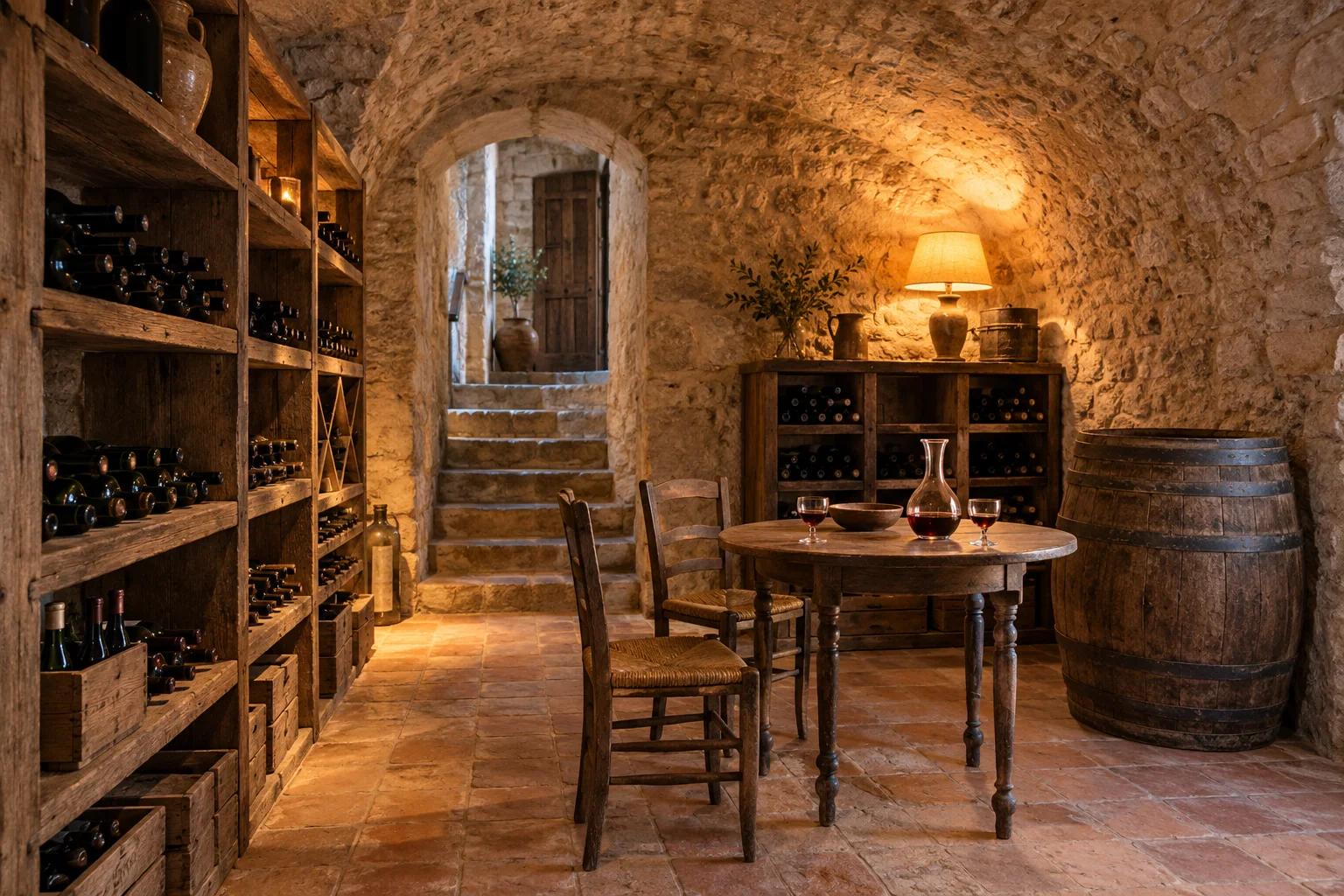 AI-created styling idea
Barware
Copper wine coolers and champagne buckets: check the handles and any lining before filling with ice.
Explore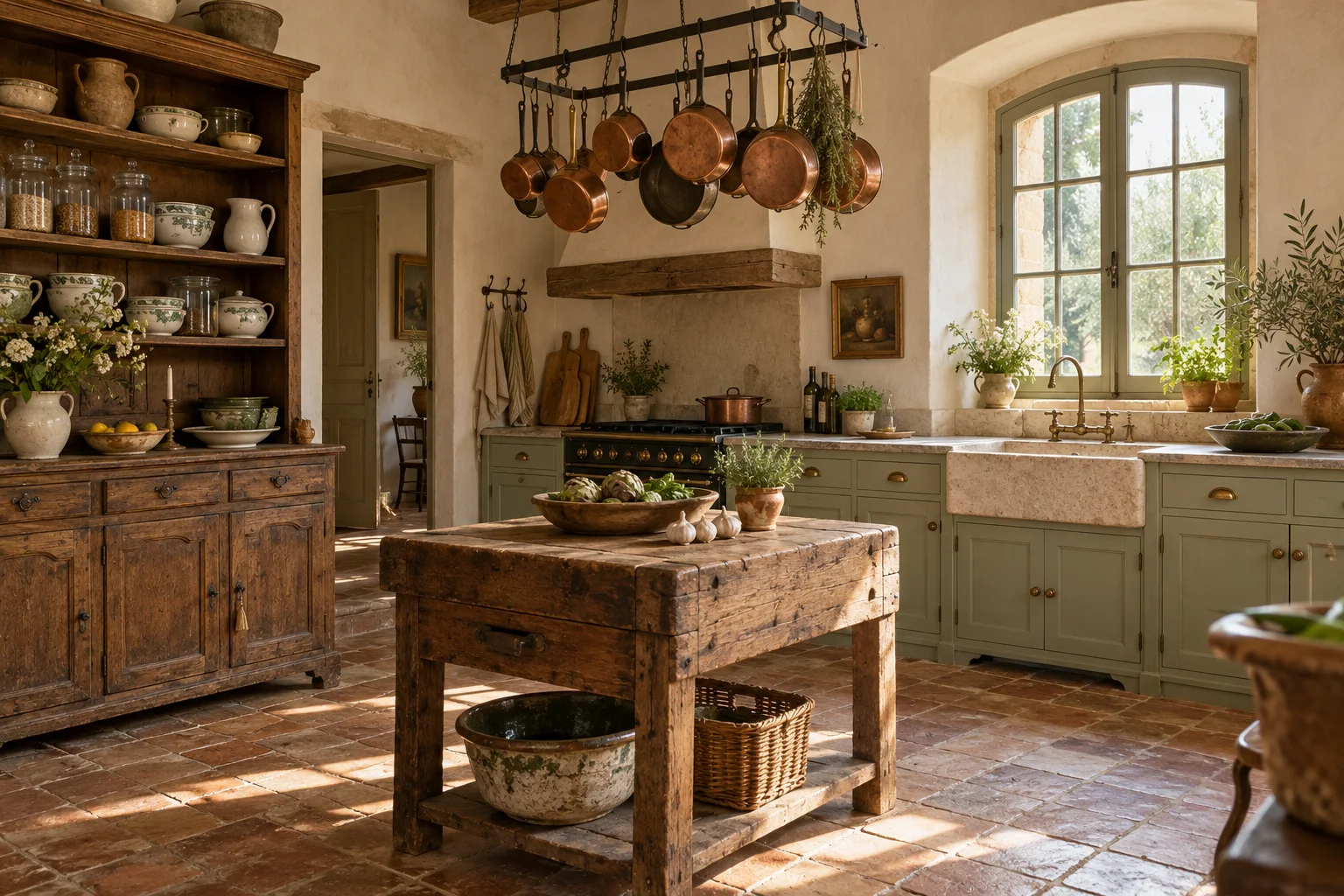 AI-created styling idea
Kitchen
Old scales often pair brass pans with iron frames; check the pointer and the full set of weights.
ExploreYes, when the pan has a thick gauge, a sound lining and tight rivets. Tin-lined pans need moderate heat, wooden utensils and hand washing, and they must never be heated empty. Retin when copper shows through the cooking surface over an area larger than a coin. Thin decorative copper and unlined pans other than jam pans are for display.
For cooking, look for about 2–3 mm at the rim. Pans of 2.5–3 mm were the professional standard and hold heat evenly; 1.5–2 mm pans suit lighter domestic cooking. Copper of 1 mm or less heats unevenly, scorches and dents, and is best kept for display. Calipers give the answer; weight is a useful second check.
Look at the cooking surface in good light. A gray, uneven tin lining is normal. When bright copper shows through in a patch larger than a coin, or in several spots on the base, the pan needs retinning before you cook in it. Wear on the walls above the food line matters less. Retinning is a job for a specialist workshop.
Either is acceptable on the outside of the pan; it is a decorative choice. A brown patina protects the copper and needs no work. A bright finish needs regular gentle polishing, which removes a little metal each time. Never use abrasive paste or steel wool, and never polish the tin inside a lined pan.

Nov 6, 2026 · Antique guide
A French country Thanksgiving table takes its look from the farmhouse: a linen cloth, white ironstone or faience plates, mixed silverplate, short bistro glasses,…
Nov 6, 2026 · Antique guide
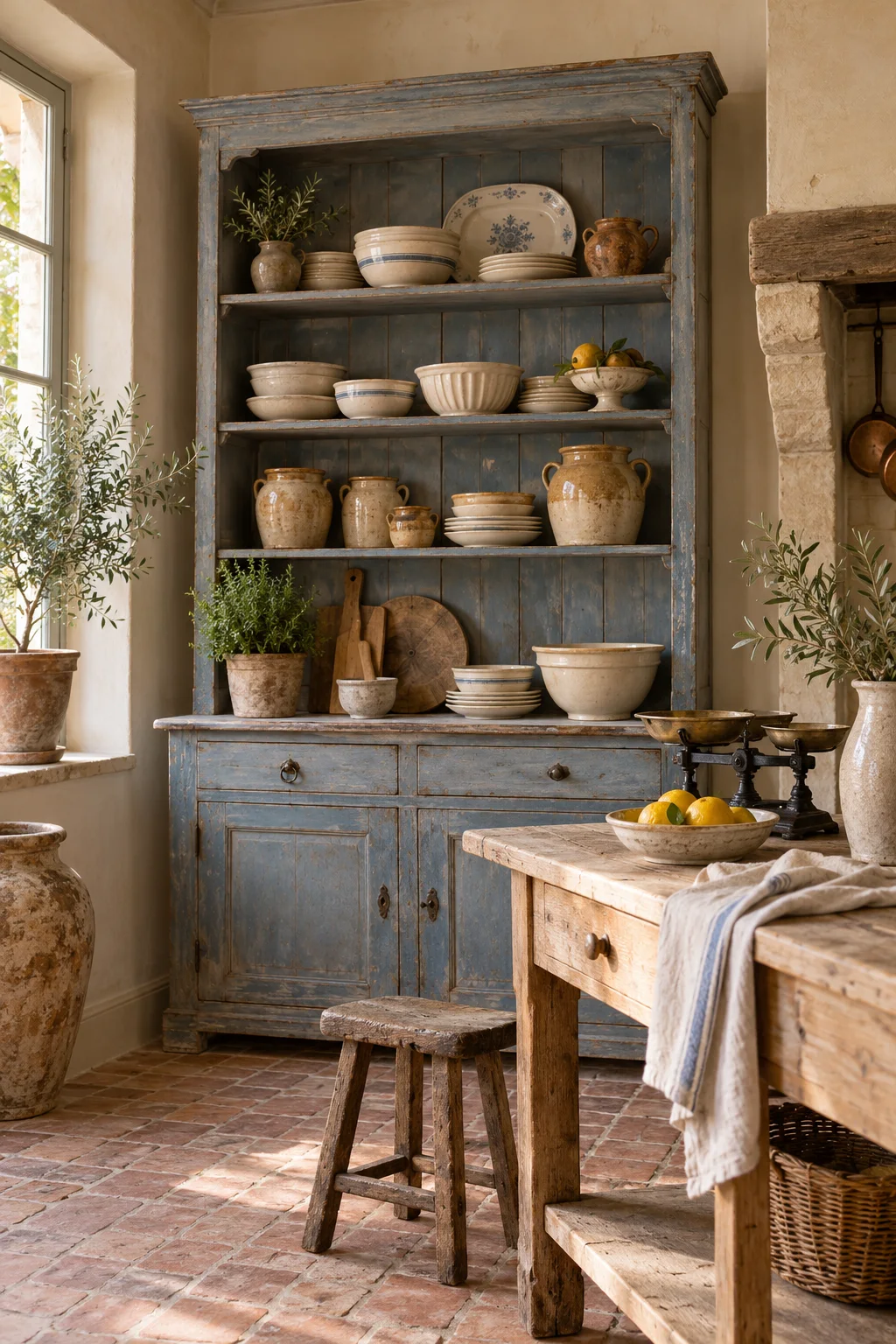
French kitchenware from 1880 to 1960 was made for daily work, which is why the good pieces are still at it.
Nov 6, 2026 · Antique guide
Samadet faience is the tin-glazed tableware made in a single village of the Landes, in the Tursan hills south of Mont-de-Marsan, from about 1730 to 1840.
Nov 5, 2026 · Antique guide
Vintage silver and vintage silverplate look alike on a sideboard and behave differently in the hand, in the sink and at resale.
Nov 5, 2026 · Antique guide
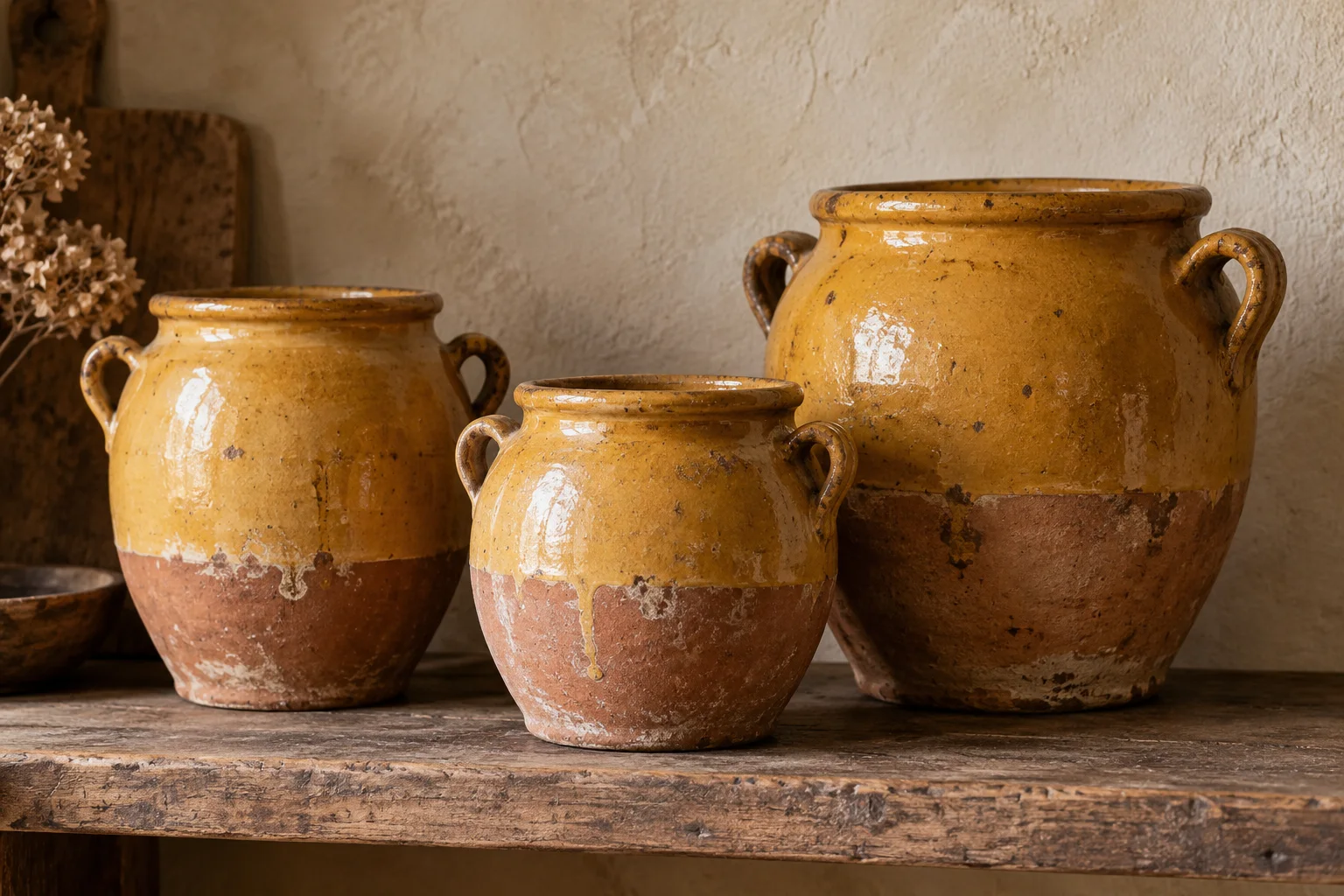
Vintage pottery from French kitchens and workshops falls into two bodies and three glazes.
Nov 5, 2026 · Antique guide
An antique magazine rack is one of the few small antiques that still does its original job and several new ones.