What antique French pewter looks like
- Color and feel: a soft, satin grey, darker where lead content is higher, with a weight that surprises for a dull-looking metal.
- Softness: pewter dents easily. Old plates show knife marks, rims bent back into shape and softened edges.
- No plating: unlike silverplate, there is no base metal showing through at worn points; the metal is the same all the way through.
- Casting and turning: pieces were cast in moulds, often bronze, then finished on a lathe. Fine concentric turning lines under a plate or inside a jug are normal.
The forms you will meet
The most common French pieces are plates and dishes (assiettes, plats), often with a plain or moulded rim; jugs (pichets) with a hinged lid and a thumb-piece; the écuelle à oreilles, a shallow bowl with two flat pierced handles, often with a cover; wine and oil measures in graduated sizes; and church or household burettes and candlesticks. In eastern France and the Alpine border you will also see the tall lidded channe, a regional jug shared with Switzerland.
Reading pewterers' marks
French pewter was regulated by local guilds, and pewterers struck control marks, or poinçons, into their work: initials, a symbol such as a crowned rose or a figure, sometimes a town name or a date. A date in a mark is often the year the pewterer became a master, not the year the object was made. Marks were also reused and imitated. Use them as one piece of evidence with the form, the wear and the construction.
Many good pieces carry no mark at all, or marks so worn that only a shape remains. Words such as étain fin stamped on later pieces refer to the quality of the alloy.
Lead: display or table?
Older pewter often contains a significant proportion of lead. A traditional rough test is that high-lead pewter is darker, softer and leaves a grey mark when rubbed on white paper, but only a lead test (a swab kit from a hardware store, or a laboratory) gives a real answer. The practical rule:
- Use antique pewter of unknown composition for display, or for dry, non-food uses such as flowers, keys or dried bread.
- Do not serve wine, vinegar, fruit or anything acidic in it, and do not use it for children.
- Modern lead-free pewter is a different material and is sold for table use; check the maker's indication.
Cleaning and care
Most collectors keep the soft grey patina. Wash in warm water with a little mild soap, dry immediately and buff with a soft cloth. Avoid dishwashers, abrasive pads and silver dips. Heavy black oxidation can be reduced by a specialist, but stripping old pewter to a bright shine removes much of its character and some of its value. Keep pieces away from oak cabinets and fresh paint, whose vapors can corrode the surface.
Displaying pewter in a country kitchen or dining room
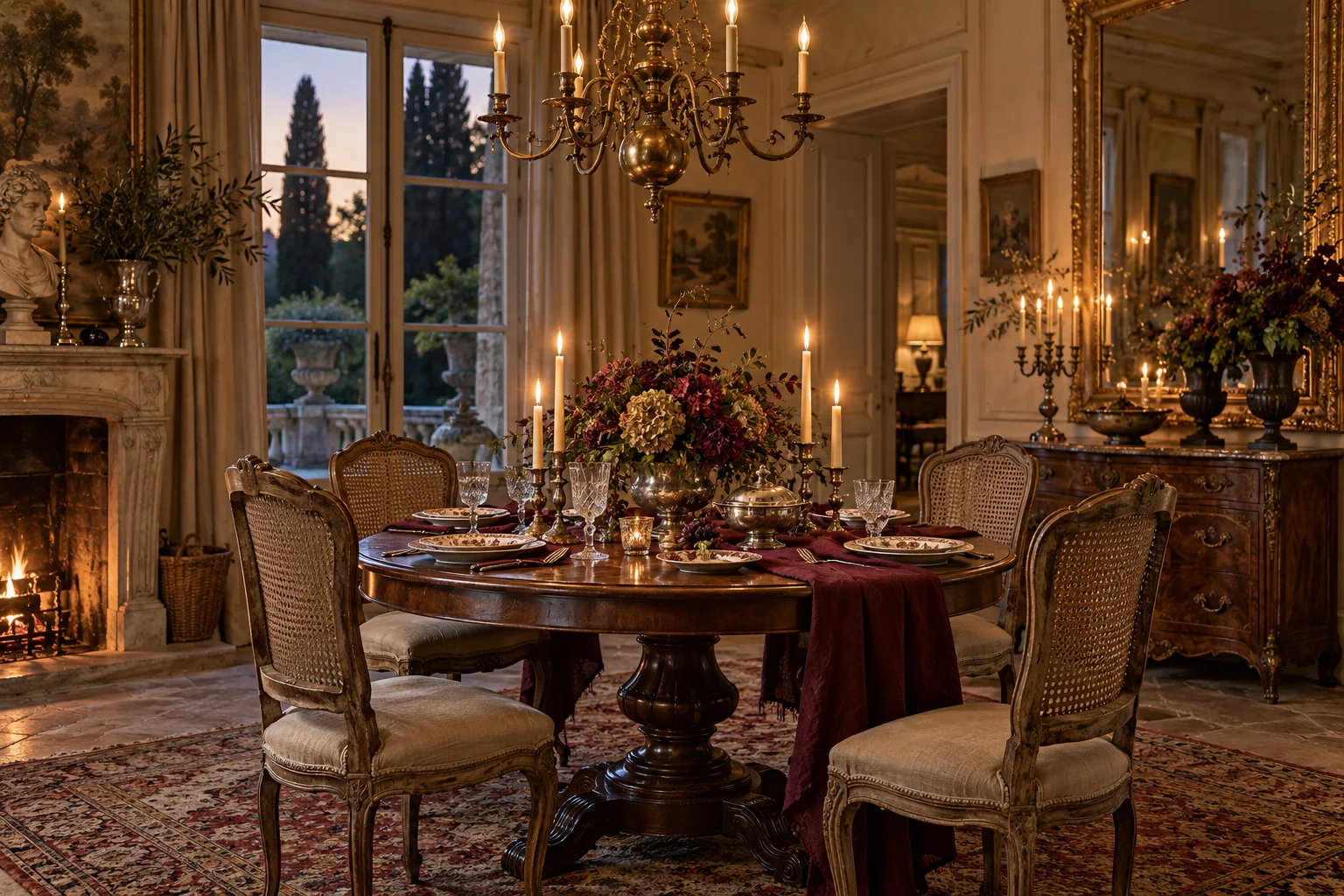
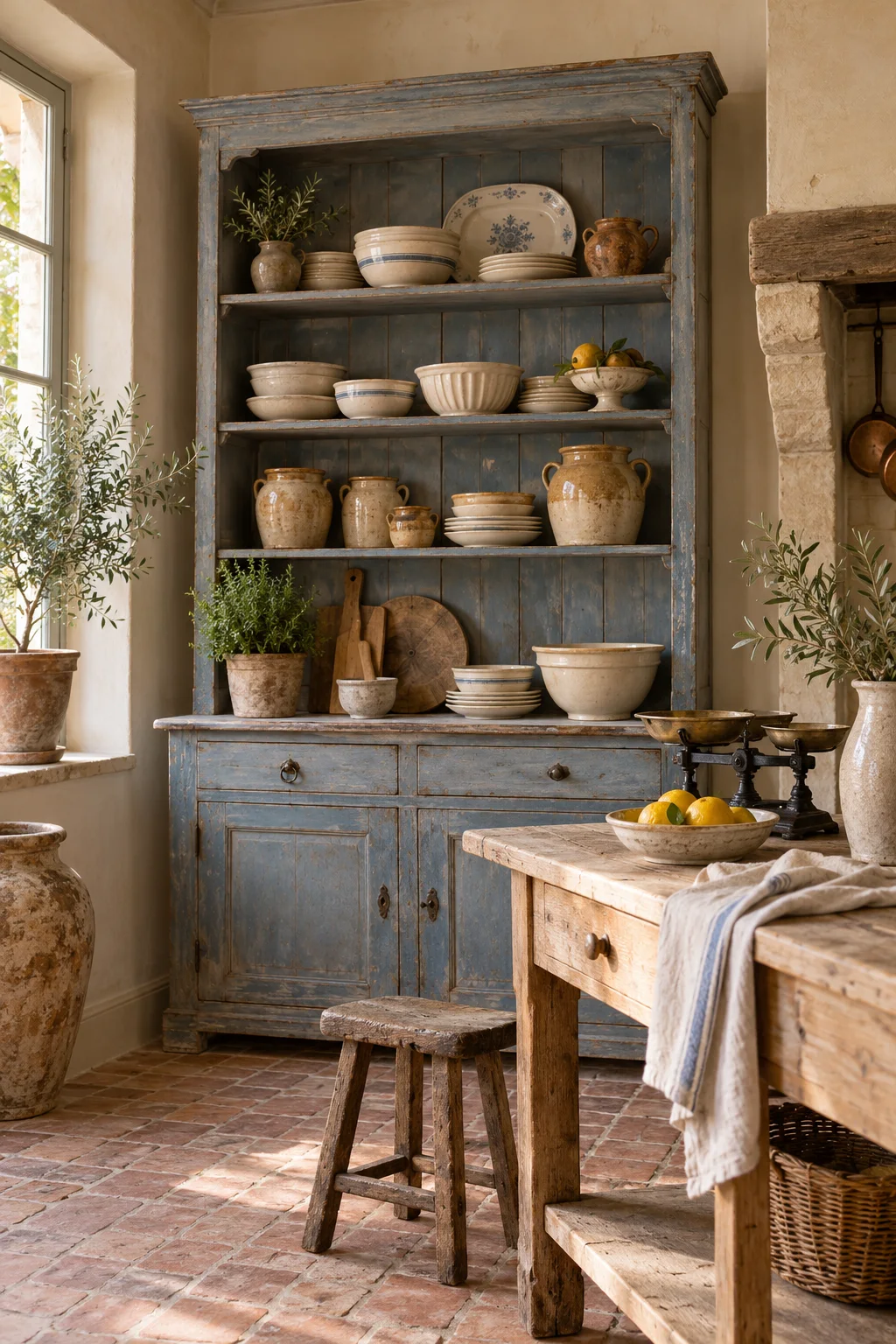
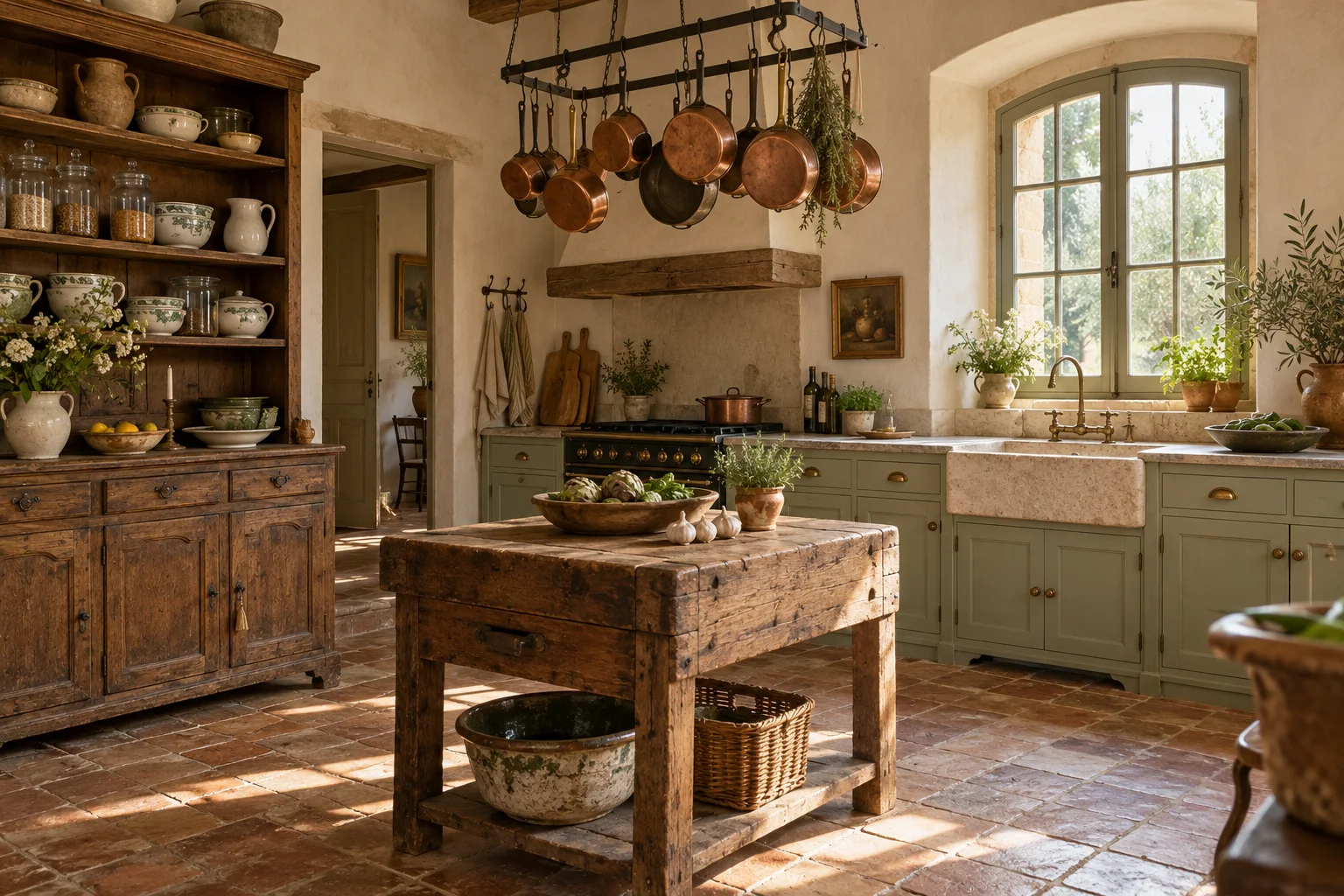
Pewter is at its best in a group: a row of plates standing on the shelf of a vaisselier, jugs of different sizes on a sideboard, an écuelle on a farmhouse table with a few branches. Grey pewter flatters scrubbed oak, limewashed walls and blue-and-white faience; next to copper it brings a cool note that keeps the warm metal from feeling heavy.
See also French copper cookware, our serving dishes & tableware category and silverplate flatware marks.
Frequently asked questions
Is antique pewter safe to eat or drink from?
Not without testing. Old pewter often contains lead, which acidic food and drink can leach. Keep pieces of unknown composition for display or dry uses.
How do I tell pewter from silverplate?
Pewter is grey, soft and the same metal throughout. Silverplate is brighter, harder and shows copper or brass underneath where the plating has worn.
Should I polish old pewter?
Usually not. Wash gently and buff dry. Most collectors prefer the soft grey patina to a bright polished finish.