Nov 14, 2026 · Antique guide
8 Mistakes That Make a French Farmhouse Look Fake
Buyers of old houses in the Gers, the Landes and the Lot-et-Garonne often set out to make them more "rustic" and end up making them less authentic.
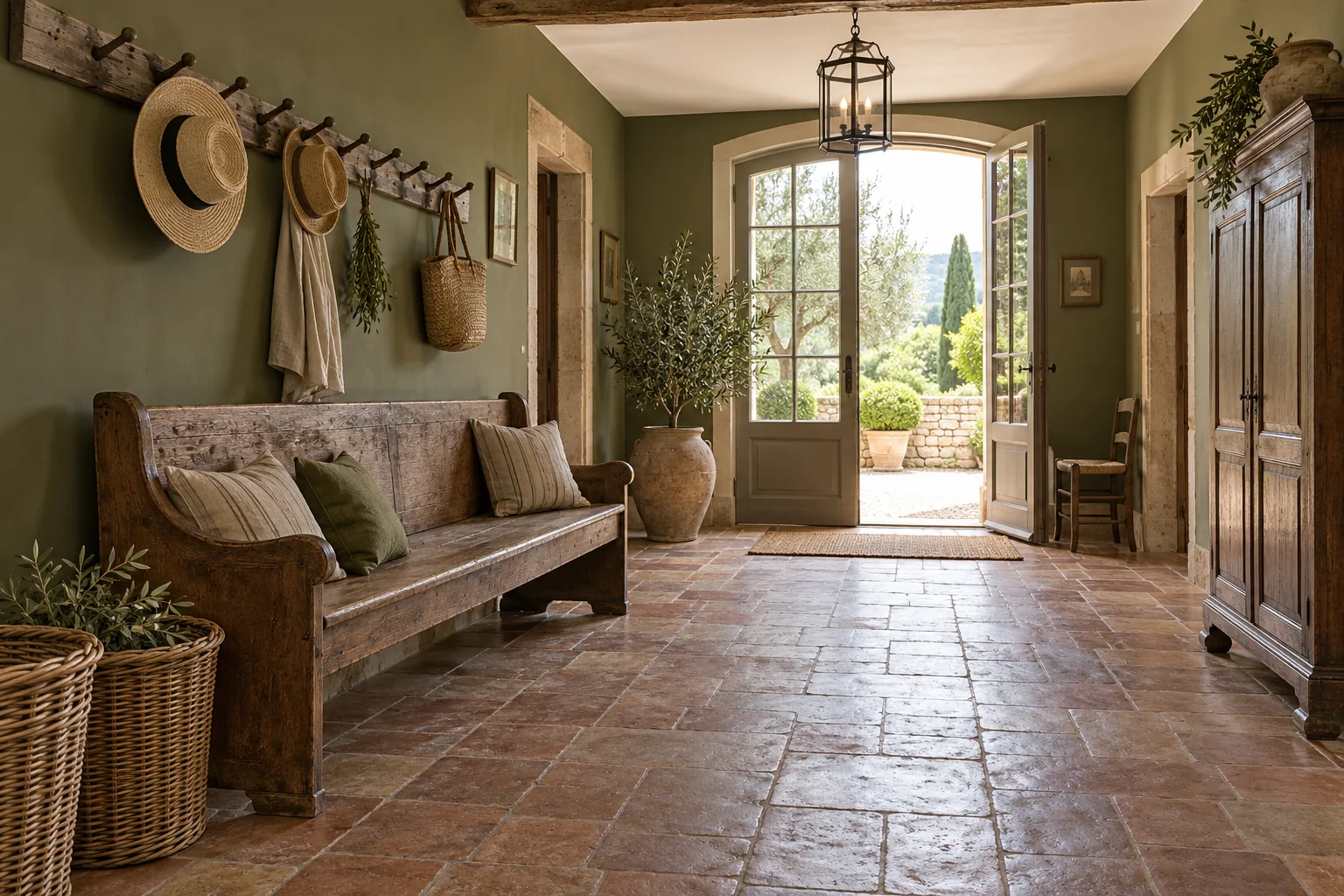
In the timber-framed houses of the Landes, Cayla writes, the floor was originally beaten earth. It was later improved with terracotta tiles. These were usually square and larger than the malons or tomettes of Provence, and their colour within a single batch could range from yellow to brown, through every shade of red.
In the Lot-et-Garonne the usual floor was also terracotta, made by the same tile works that produced roof tiles. The oldest tiles are the largest. They were laid on a bed of sand and fat lime mortar, and their surface was rubbed with hot linseed oil until it became perfectly smooth.
The variation in colour was not a defect. It came from the clay and from the position of each tile in a wood-fired kiln, nearer to or further from the flames. That uneven palette is exactly what makes old floors so attractive and why a floor of new, uniform tiles looks flat beside one.
Cayla gives several tests that still help when you buy reclaimed material:
Everything in these houses was bound and finished with lime. Cayla explains the material clearly:
On site, Cayla writes, the lime was worked with roughly its own volume of water until it took on a fatty, paste-like consistency, hence the name fat lime. Sand was then added, about two parts of lime to three of sand. The sand should contain as little clay as possible; it was taken from the river, choosing a favourable bank, or from a selected soil, then sieved. It gives the render the colour of the local earth.
On the timber-framed houses of the Landes, the earth infill was a durable material if it was maintained, usually protected by a limewash on both faces, inside and out. The lime let the wall breathe without causing condensation. Inside, the timber-frame walls were whitened with lime, as they were outside.
Rubble stone walls were rendered with fat lime mortar. Cayla's rules for applying it are still sound:
Our article on renovation mistakes explains why cement should not replace lime on old walls.
Old tiles come from demolition and from salvage yards that specialise in reclaimed building materials (matériaux anciens). Before buying:
On an old ground floor, moisture rises from the soil. A traditional floor laid on sand and lime lets that moisture evaporate through the joints. Sealing an old floor under an impermeable membrane and a cement screed can push the damp into the walls instead. Ask a builder who works with old houses which solution suits your floor.
Lay the tiles with lime mortar and fill the joints with a lime-based mortar coloured with sand to match the tiles. Mix tiles from different boxes as you go so the colours spread evenly across the room.
The traditional finish Cayla records is hot linseed oil, which soaks into the clay and gives a smooth, slightly glossy surface. Today, many owners use boiled linseed oil followed by a wax. Apply oil thinly, wipe off the excess and let it cure fully; too much oil stays sticky and darkens.
Rags soaked in linseed oil can catch fire spontaneously as they dry. Spread them flat outdoors to dry or soak them in water before disposal.
Terracotta is warm and uneven, so it suits furniture with the same honesty: walnut, oak and chestnut, wrought iron, copper and linen. Felt pads under furniture feet protect the surface. Rugs should have a breathable backing; rubber-backed rugs can trap moisture and mark the tiles. Our Gascon farmhouse style page shows complete rooms, and French country paint colours helps choose wall tones that sit well with terracotta.
| Material | Traditional use | Decisive check when buying |
|---|---|---|
| Large square terracotta tiles | Ground floors of farmhouses | Clear ring, worn face, old mortar on the back |
| Old flat bricks | Walls, infill, génoise and arches | Thinner than modern bricks, clear ring |
| Canal roof tiles | Low-pitched roofs | About 25 mm thick, impermeable, clear ring |
| Fat (air) lime | Render, limewash, mortar | Ready-slaked fleur de chaux; mix with clean sand |
| Linseed oil | Polishing the tile floor | Apply thinly; dispose of oily rags safely |
In Gascony, terracotta floors were laid on sand and lime mortar and rubbed with hot linseed oil until the surface became smooth. Today boiled linseed oil followed by wax is a common equivalent.
The colour depends on the clay and on where each tile sat in the wood-fired kiln. In the Landes, one batch could range from yellow to brown through every shade of red, which gives old floors their depth.
Sweep regularly, wash with warm water and a neutral or linseed-based soap, and renew the oil or wax when the floor looks dry. Never use acid cleaners or bleach.
Dr Alfred Cayla recommended fat or air lime, which hardens on contact with the air, mixed with about two parts of lime to three of clean, low-clay sand. Conservation specialists generally recommend lime throughout on old walls.
Nov 14, 2026 · Antique guide
Buyers of old houses in the Gers, the Landes and the Lot-et-Garonne often set out to make them more "rustic" and end up making them less authentic.