The French country palette: six families of color
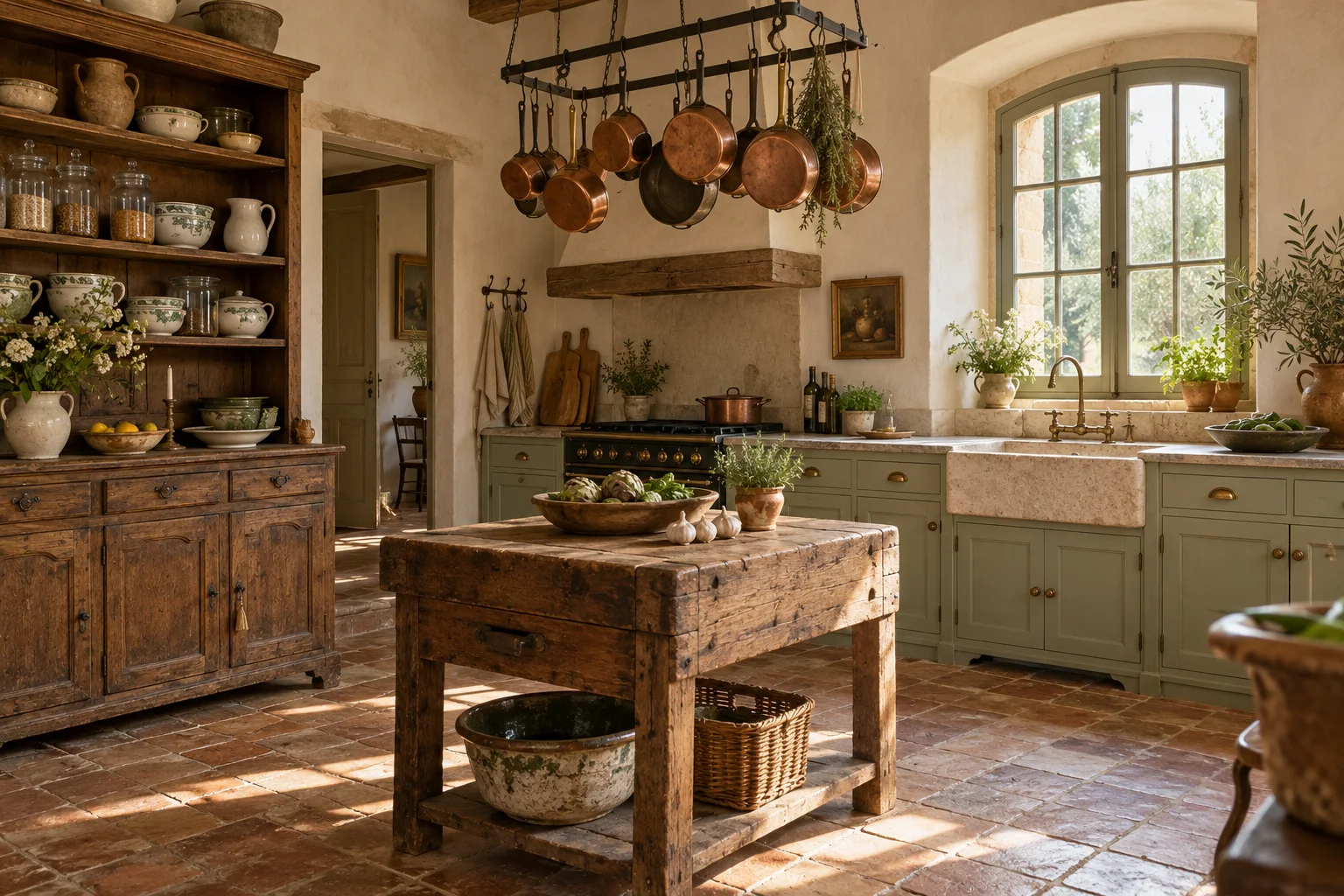
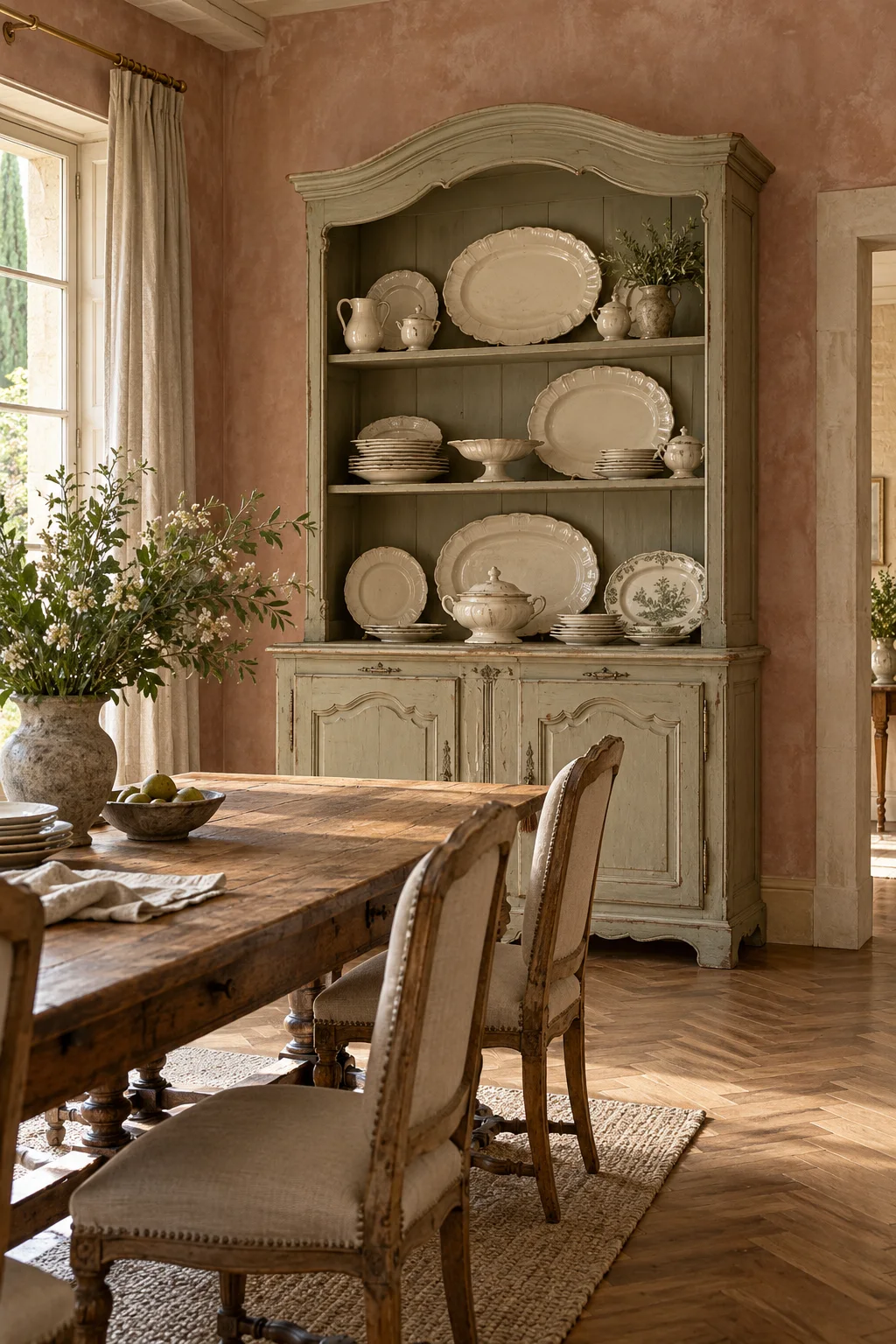
Whites come first: limewash white, chalky off-white and cream, slightly warm, never brilliant, the color of old plaster. Ochre and yellow, from pale straw to deep gold, recall the ochre earths of the Luberon around Roussillon and warm a room without making it bright. Sage, olive and gray-green come from shutters, olive leaves and old painted furniture; they suit bedrooms and kitchens. A 2026 designer survey named chocolate brown among its top colors, a tone that sits naturally with walnut.
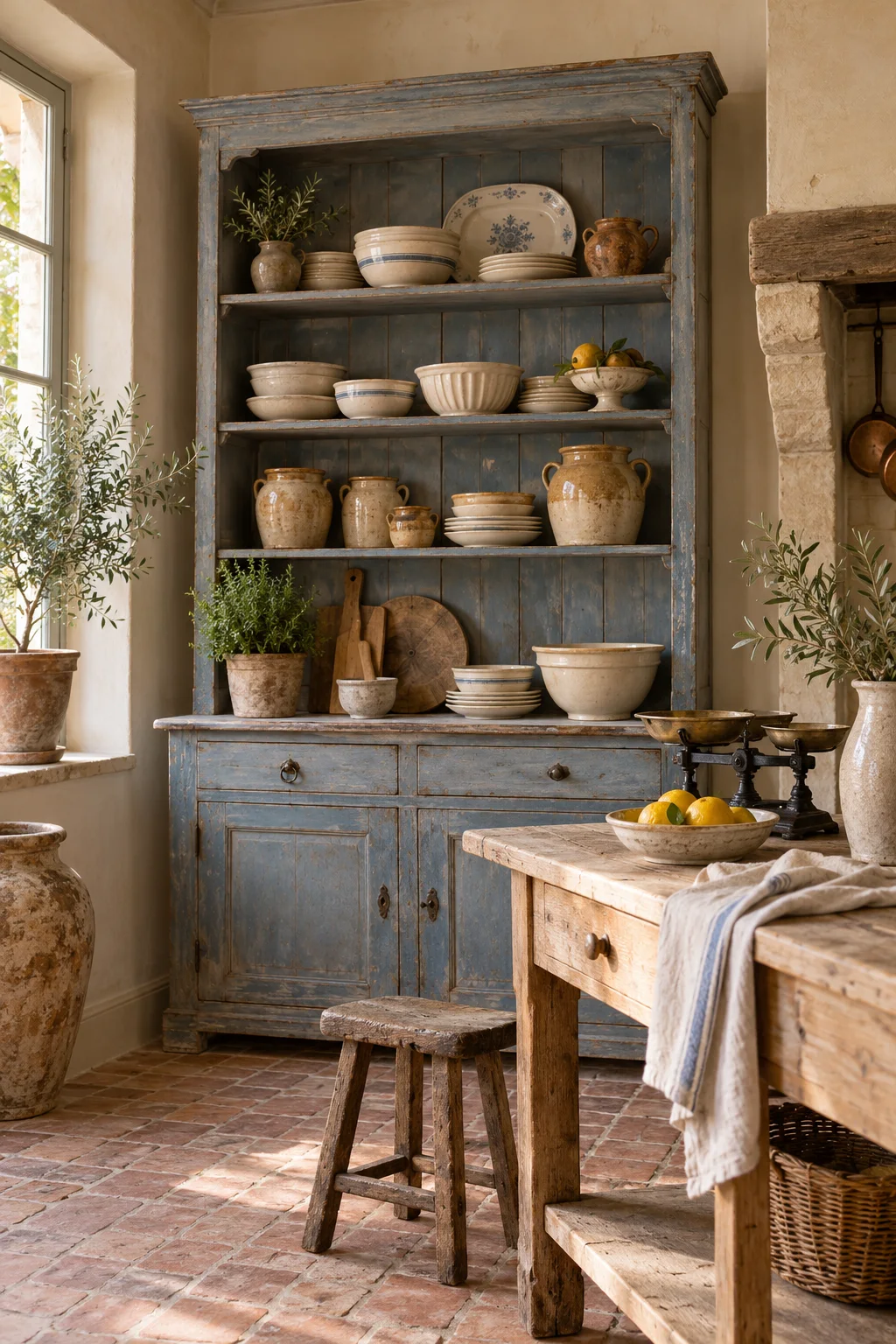
Provençal blue runs from pale powder to the deeper blue of shutters, doors and farm carts; it works on woodwork and furniture more than on a whole wall. Faded red, from terracotta pink to the dark red of Basque timbers, belongs to floors, tiles, textiles and a front door. Greige and stone gray, the colors of limestone and painted paneling, link all the others and suit rooms with mixed wood tones.
How light changes French country colors
North-facing rooms receive cool, even light that pushes colors toward blue and gray. Choose whites and greiges with a warm base, and lean on ochre, warm sage and terracotta; a blue-gray that looks soft on a card can read cold on four walls. South-facing rooms receive warm, strong light that intensifies yellow and can turn ochre orange; cooler whites, sage, gray-green and blue balance it. East rooms are warm in the morning and cooler by evening; west rooms the reverse.
Test each color on a board at least 24 by 24 in (61 by 61 cm) so you can move it, and look at it morning, noon and evening for two or three days. Hold it beside the floor, the largest wood piece and the main fabric. Paint reads darker on a whole wall than on a sample, so when in doubt go one step lighter.
Limewash, chalk paint or eggshell: choosing the finish
Limewash, slaked lime with water and pigment, gives the cloudy, mottled surface of old French walls. It suits plaster, stone and masonry because they can breathe through it, but over existing paint it needs a compatible primer, and it rubs slightly when new. Mineral and chalk-finish wall paints imitate the effect with less upkeep. Matte finishes suit living-room and bedroom walls; they hide uneven plaster and keep color soft.
Woodwork, doors and kitchen cabinets need a harder eggshell or satin finish that cleans well and resists knocks; gloss looks new and reflects too much. Chalk paint is a reasonable decorative choice on new or reproduction furniture. On antique painted furniture, the original paint is part of the object: do not strip or repaint an old armoire to match the walls. Choose the walls to suit it instead, and read our note on patina and how to keep it first.
Pairing colors with wood and antiques, room by room
Wood tones decide the background. Walnut and dark oak sit best against warm whites, ochre and greige; honey pine and cherry against sage, gray-green and soft blue. In the living room, keep the walls warm white or greige and put color into textiles and one painted piece; our French country living room page shows the balance. In the kitchen, sage or blue lower cabinets under white walls and above terracotta floors are the classic French country kitchen colors, covered in the French country kitchen guide.
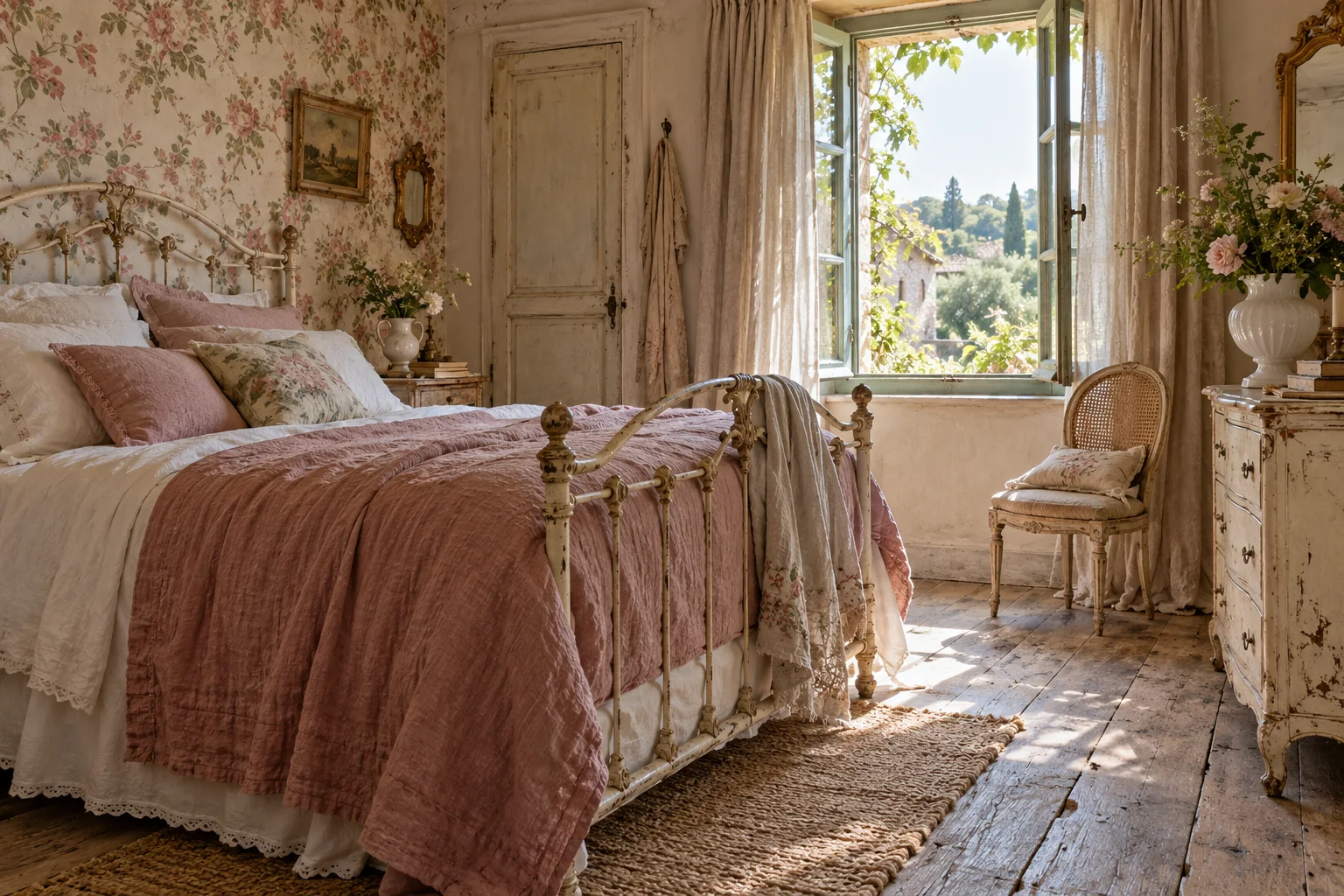
French country bedroom paint takes the softest colors: pale sage, faded blue, warm white or muted rose, with bedding in the same family; the French country bedroom guide shows complete rooms. Entries and halls can take a stronger ochre because people pass through rather than stay. The whole style, color included, is set out in French country decor, room by room.
What to compare
| Form | Suggested Use | Decisive Check |
|---|---|---|
| Warm white or limewash | Any room; essential in north light | Warm base; sample beside floor and wood |
| Ochre and straw yellow | Entries and north-facing living rooms | Turns orange in strong south light |
| Sage and Provençal blue | Kitchen cabinets, bedrooms, shutters | Pairs with honey wood; test against terracotta |
Your buying checklist
Continue planning your room
Frequently asked questions
What are the classic French country colors?
The classic French country colors are limewash and warm whites, ochre and straw yellow, sage and olive green, Provençal blue, faded red and terracotta, and soft greige or stone gray. Whites and greiges form the background; the stronger colors appear on woodwork, furniture, textiles and tiles rather than on every wall.
What paint color is best for a French country bedroom?
Soft, low-contrast colors work best: pale sage, faded blue, warm white, greige or a muted rose, in a matte finish. Choose a warm base in a north-facing bedroom and a cooler one in a sunny south-facing room, and repeat the wall color in the bedding or curtains so the room feels calm.
Is limewash a good choice for French country walls?
Limewash gives the cloudy, mottled finish of old French plaster and suits masonry, stone and lime plaster because they can breathe through it. Over existing latex paint it needs a compatible primer, and it rubs slightly when new. On drywall, a mineral or chalk-finish wall paint gives a similar look with less upkeep.
Should I paint antique furniture to match a French country color scheme?
No. The original paint or wax on an antique is part of the object and of its value, and repainting cannot be undone without loss. Choose the wall color to suit the antique instead. Chalk paint is a reasonable decorative choice for modern or reproduction furniture, where nothing original is lost.
Sources & further reading
- Canadian Conservation Institute — Basic care: furniture and objects made of wood — Effects of light and humidity on wood and its finishes; supports leaving original paint on antiques.
- 1stDibs — 2026 Interior Design Trends Survey (November 17, 2025) — 2026 designer survey naming chocolate brown among top color choices; trend context for warm, earthy palettes.