Construction: frame, top and leaves
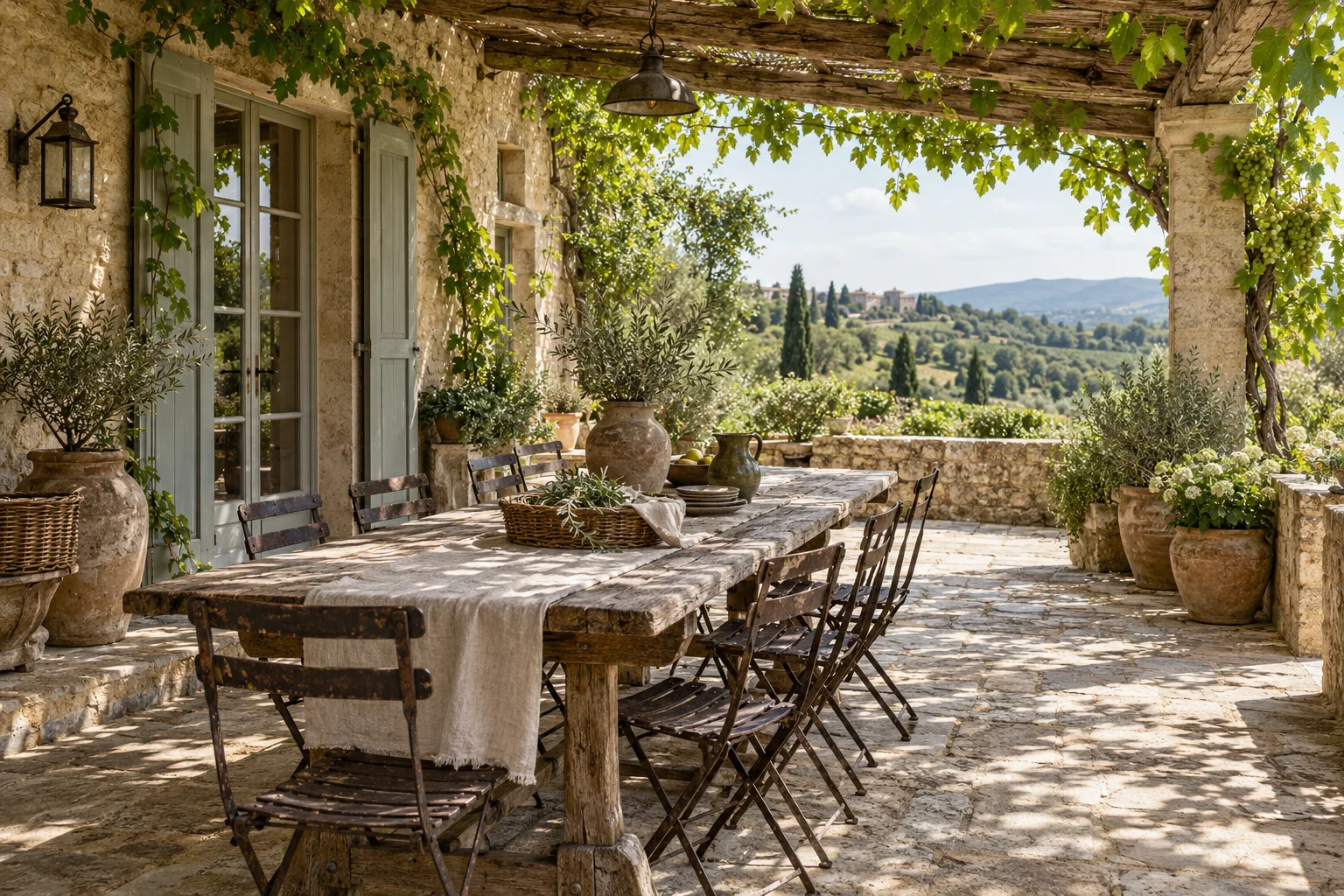
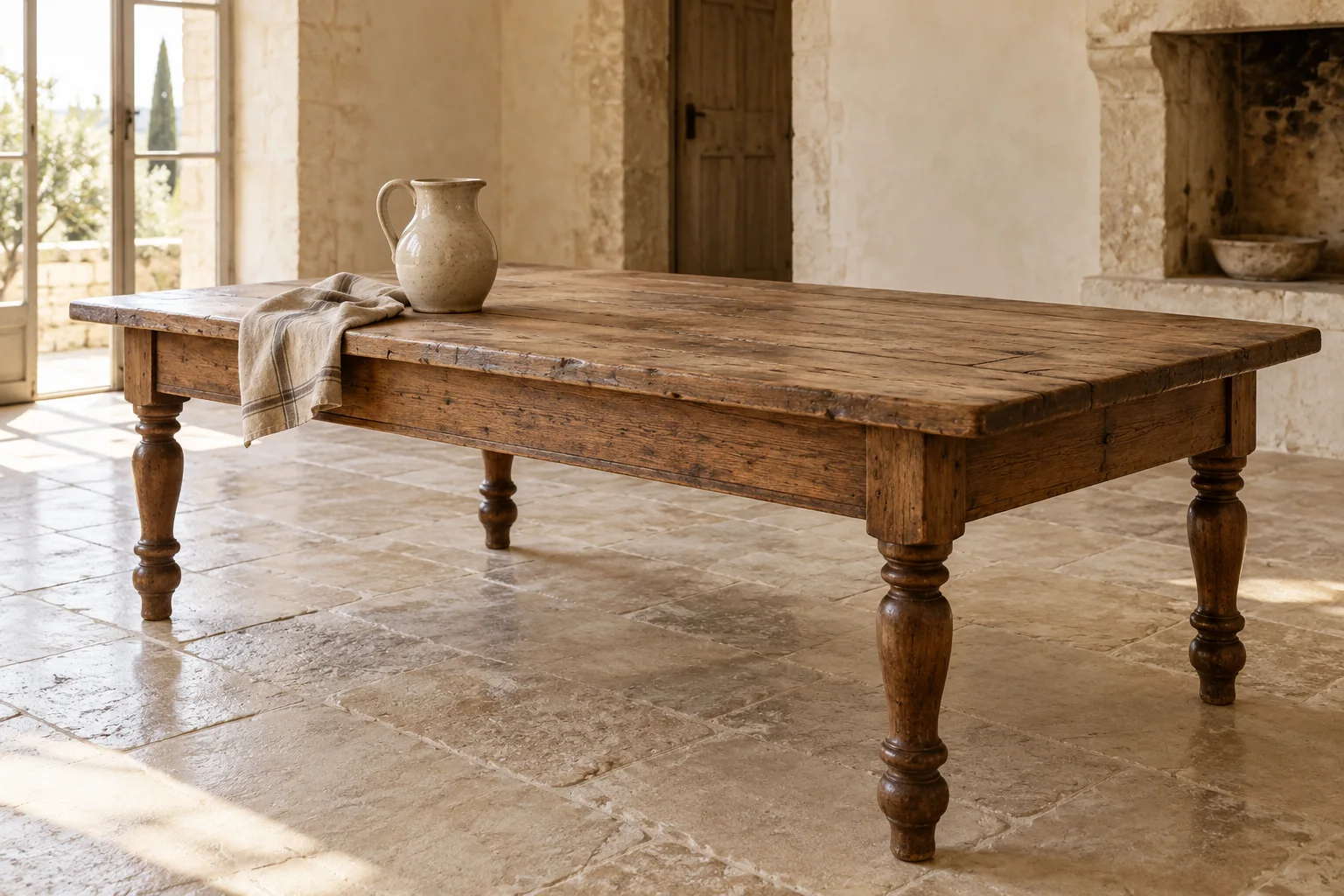
French dining tables fall into a few forms. The table de ferme has a deep apron with drawers, square or turned legs and often an H-stretcher; the refectory table runs long on trestles or a central stretcher; the table à allonges extends with leaves on wooden slides; the draw-leaf table pulls its leaves from under the top; the round table with drop leaves, the table à volets, folds for a small room. The farmhouse dining tables catalogue shows the forms, and the guide to table shapes helps match one to a room.
Look at the joints. A frame of pegged mortise-and-tenon joints, with the pegs standing slightly proud as the wood shrank around them, is the construction to expect on a country table. The top is two or three boards, sometimes with breadboard ends, fixed to the frame with cleats or wooden buttons that allow movement; boards nailed hard to the frame will split. Shrinkage gaps between the boards are normal and are not a fault to repair.
The sizes that make a table usable
Height runs 28 to 30 in (71 to 76 cm). Knee clearance, from the floor to the underside of the apron, should be at least 24 in (61 cm); a deep farm-table apron with drawers can take it down to 22 in, which is tight with a modern chair. Allow 24 in (61 cm) of edge per person, 22 in at a squeeze: a 72 in (183 cm) table seats six, a 96 in (244 cm) table eight. A width of 36 to 40 in (91 to 102 cm) leaves room for dishes in the middle.
Then the room. Leave 36 in (91 cm) between the table edge and any wall or sideboard so chairs can be pulled out and people can pass. Legs at the corners free the long sides for seating; a trestle or central stretcher takes the legs out of the way but limits where feet go. A 48 in (122 cm) round table seats four to five, a 60 in (152 cm) round seats six, and both need the same 36 in all around.
Tops: scrubbed, waxed, replaced, and what to check
A scrubbed top, usually pine or oak, is grey, open-grained and soft from a century of washing; a waxed top in walnut or cherry is darker and closes the grain. Both are original finishes worth keeping. A replaced top is found from below: look for a colour and oxidation that differ from the frame, for screw holes that match nothing, and for machine plane marks on a top that should show hand planing. Measure the thickness at the edge: 1 to 1.5 in (2.5 to 4 cm) is right, and a top planed thin to remove stains flexes and cracks.
Test the table by leaning on a corner; a frame that rocks has loose joints, which a restorer re-pegs. Check for woodworm holes with fresh dust, for cupping across the boards and for leaves that no longer match the top in colour. Care is simple: wax once or twice a year, mats under hot dishes and no plastic cloth left on for weeks, which traps moisture. The Canadian Conservation Institute and the Wood Handbook explain the movement of wood with humidity that causes most table faults.
What to compare
| Form | Suggested Use | Decisive Check |
|---|---|---|
| Farmhouse table with drawers | Kitchen, everyday meals | Legs against the seats, drawer depth and knee room |
| Table à allonges with slides | Dining room, flexible seating | Slides, leaves and the colour match |
| Round table with drop leaves | Small room or apartment | Hinges, gates and stability when open |
| Refectory or trestle table | Long room, many guests | Stretcher height and where feet go |
Your buying checklist
Continue planning your room
Frequently asked questions
How tall is an antique dining table?
Most antique dining tables stand 28 to 30 in (71 to 76 cm) high. The useful number is the knee clearance from the floor to the underside of the apron, which should be at least 24 in (61 cm) for a modern chair. Farm tables with drawers in a deep apron can fall to 22 in, which is tight.
How many people fit at an antique dining table?
Allow 24 in (61 cm) of table edge per person, or 22 in at a squeeze. A 72 in table seats six, a 96 in table seats eight, a 48 in round table seats four to five and a 60 in round seats six. Corner legs free the long sides; a central stretcher limits where feet go.
How can I tell if a tabletop has been replaced?
Look underneath. A replaced top differs from the frame in colour and oxidation, carries screw or nail holes that match nothing, and often shows machine plane marks where hand planing is expected. Measure the thickness at the edge as well: 1 to 1.5 in is right, and a thin top has been planed down.
Can an antique dining table be extended?
Only if it was built to extend. A table à allonges carries leaves on wooden slides, a draw-leaf table pulls leaves from under the top, and both need the slides and leaves checked for fit and colour. A fixed farm or refectory table cannot be extended without visible alteration, so buy it at the length you need.
Sources & further reading
- Canadian Conservation Institute — Basic care: furniture and objects made of wood — Caring for wooden furniture and understanding movement in solid tops.
- USDA Forest Products Laboratory — Wood Handbook: Wood as an Engineering Material — Shrinkage and movement of wood with humidity, the cause of gaps, cupping and splits.