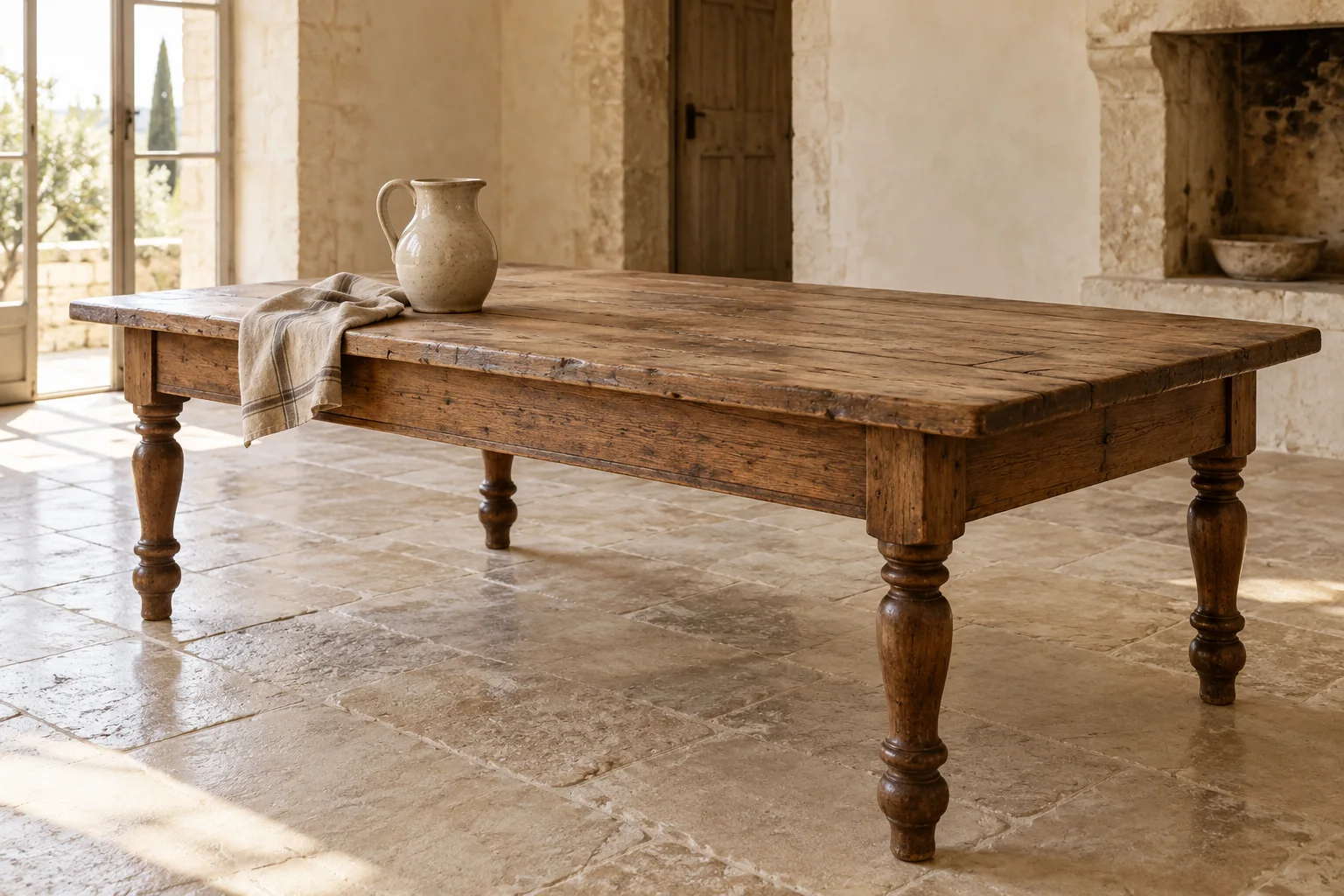
 AI-created styling idea
Furniture
Farmhouse dining tables
Plank tops, deep aprons and stretchers: measure the seats and the knee room before the length.
ExploreFrench Country · An inspiration catalogue
A French farmhouse table is a long plank-topped table with a deep apron, drawers and stretchers, built to feed a household every day and still the most useful antique a dining room can hold.
The table de ferme stood in the kitchen of the farmhouse, where the household ate, kneaded dough and prepared preserves. Its top is made of two to four thick planks, often 1¼–2 in / 3–5 cm, laid lengthwise and fixed with pegs or battens to a frame. A deep apron carries one or two drawers for cutlery and bread knives. The legs are square or turned and are often joined near the floor by stretchers, which add strength and give the table its low, heavy line.
Kitchen tables were scrubbed with water, sand and soda, which leaves the oak or chestnut pale and soft to the touch. Dining tables in better houses were waxed and darkened with time. Painted bases with a natural top are common in the southwest and in Provence. Each finish is legitimate; what matters is that the listing says which one it is and whether the top has been sanded back recently.
The farmhouse table takes daily use better than almost any other antique. Marks, rings and knife cuts join the existing patina instead of ruining a finish. A table that has already worked for a century will tolerate homework, dinner parties and a hot pan on a trivet. That durability is the reason it is the anchor of most rooms described in our French country decor guide.
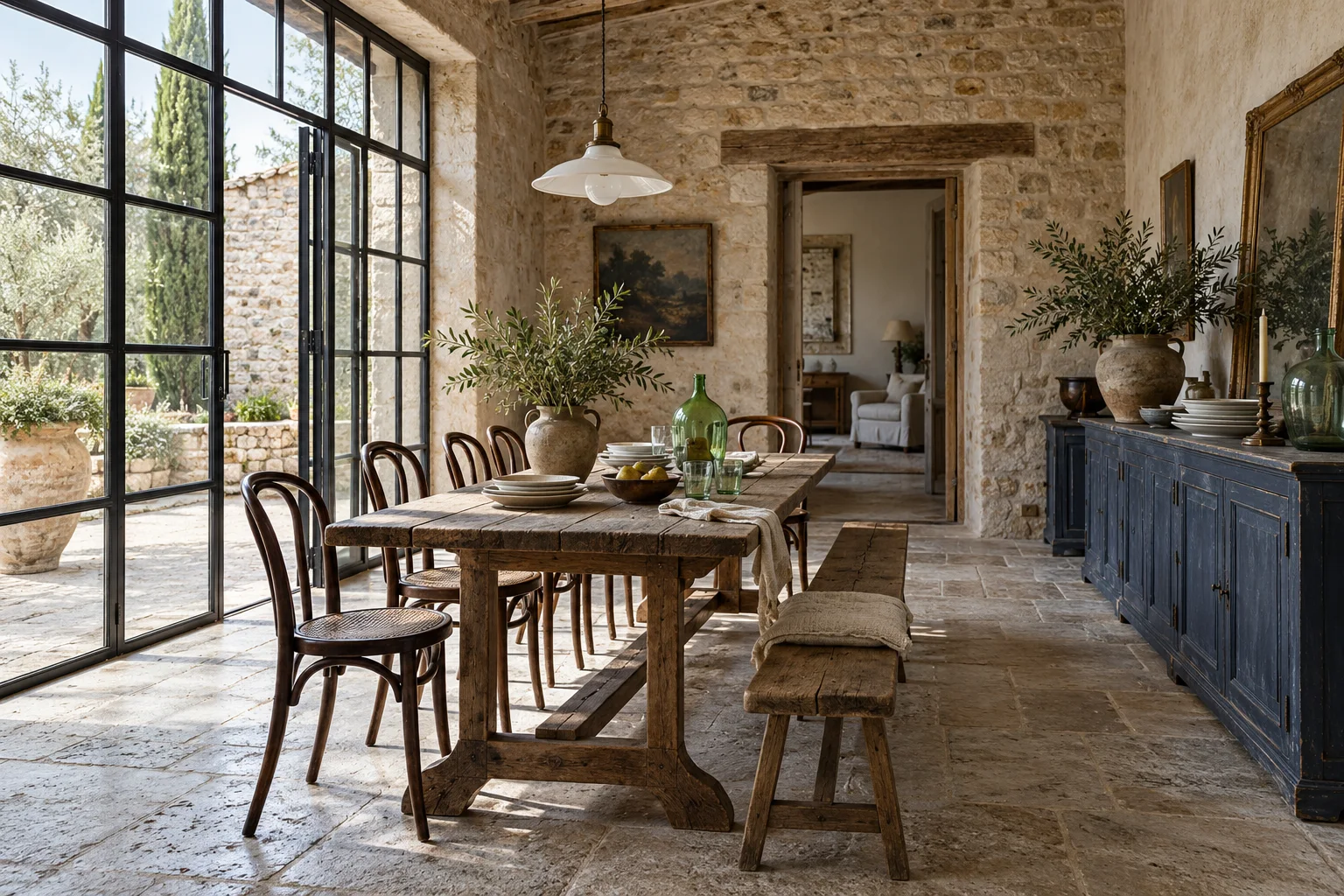
Longer and narrower than the farmhouse table, monastery and refectory tables can reach 10–13 ft / 3–4 m with a width of only 30–34 in / 76–86 cm. They have trestle or multiple leg bases and few or no drawers. They suit a long room or a kitchen opening onto a terrace, and they seat guests along both sides rather than at the ends.
Walnut and fruitwood tables with shaped aprons and cabriole legs bring the curves of French provincial furniture to the dining room. They are usually smaller, seating four to six, and many are 19th-century interpretations of Louis XV forms. A style name describes the shape; it does not date the table.
Extension tables open on wooden slides to take one or more leaves, which are often stored separately and may not match the top exactly. Round and oval tables with a central pedestal or four legs suit square rooms and conversation. Check that every leaf is present, that the slides run smoothly and that the leaves have aged to a similar color; a leaf in fresher wood is a later replacement.
For a kitchen corner or a breakfast nook, a marble-topped bistro table or a small square farm table seats two to four. See bistro tables and antique tables for the smaller forms.
Most antique dining tables stand 28–30 in / 71–76 cm high, close to modern standards. The deep apron of a farmhouse table can be the problem: measure from the floor to the underside of the apron and compare it with the seat height of your chairs plus about 7 in / 18 cm for thighs. Stretchers also limit where feet can go and where an armchair can slide under.
Allow 24 in / 60 cm of table edge per person, 28 in / 70 cm for comfort or armchairs. A table of 79 in / 200 cm seats six along the sides, plus one at each end if the legs allow it. Legs set at the corners leave the ends free; trestle bases and inset legs may block a seat.
Leave 36 in / 90 cm from the edge of the table to the wall or the next piece of furniture so a chair can be pulled out and someone can pass behind it. In a narrow room, a bench on one side saves 8–10 in / 20–25 cm compared with chairs. The dining room scenes show these proportions in plan.
Look underneath before admiring the top. Original tops show tool marks, oxidized undersides and old fixings; replaced tops show clean wood and modern screws. Splits along the grain are normal in thick planks and stable if they do not move; a loose top that rocks on the frame needs new fixings. Check that each leg is tight in its mortise and that the stretchers are not cracked at the joints.
An antique table is more than 100 years old and should come with written age documentation. Many good tables are 20th-century country pieces, which are vintage. Tables made from reclaimed planks are new furniture in old wood; they can be excellent, but they should be described as such. Our guide to French country furniture explains how to read construction and wear.
Use placemats under hot dishes, wipe spills promptly and wax a waxed top twice a year. A scrubbed top can be washed with mild soap and water and left to dry. Avoid silicone polishes, which make later restoration harder. Keep the table away from radiators; thick planks move with humidity and can open at the joints.
The listings at Lo Cantou show tables with their dimensions and condition details. Designers furnishing a client's dining room can send a brief to Antiques 360: three documented tables within 72 hours, dimensions in inches, photographs of every flaw and a landed-cost quote that includes crating and freight.
Mismatched chairs around one long table are a French country tradition. Keep one element constant, such as seat height, wood tone or rush seats, and vary the rest. Our guide to French country chairs covers the forms and checks.
A bench on the wall side seats more people and keeps the room open. Match its length to the table minus the legs, and its height to the chairs. See benches and banquettes.
A buffet or enfilade along the long wall completes the room and gives a serving surface at the right height. Our page on French country sideboards and buffets explains the forms.
AI-created styling ideaFurniture
Plank tops, deep aprons and stretchers: measure the seats and the knee room before the length.
Explore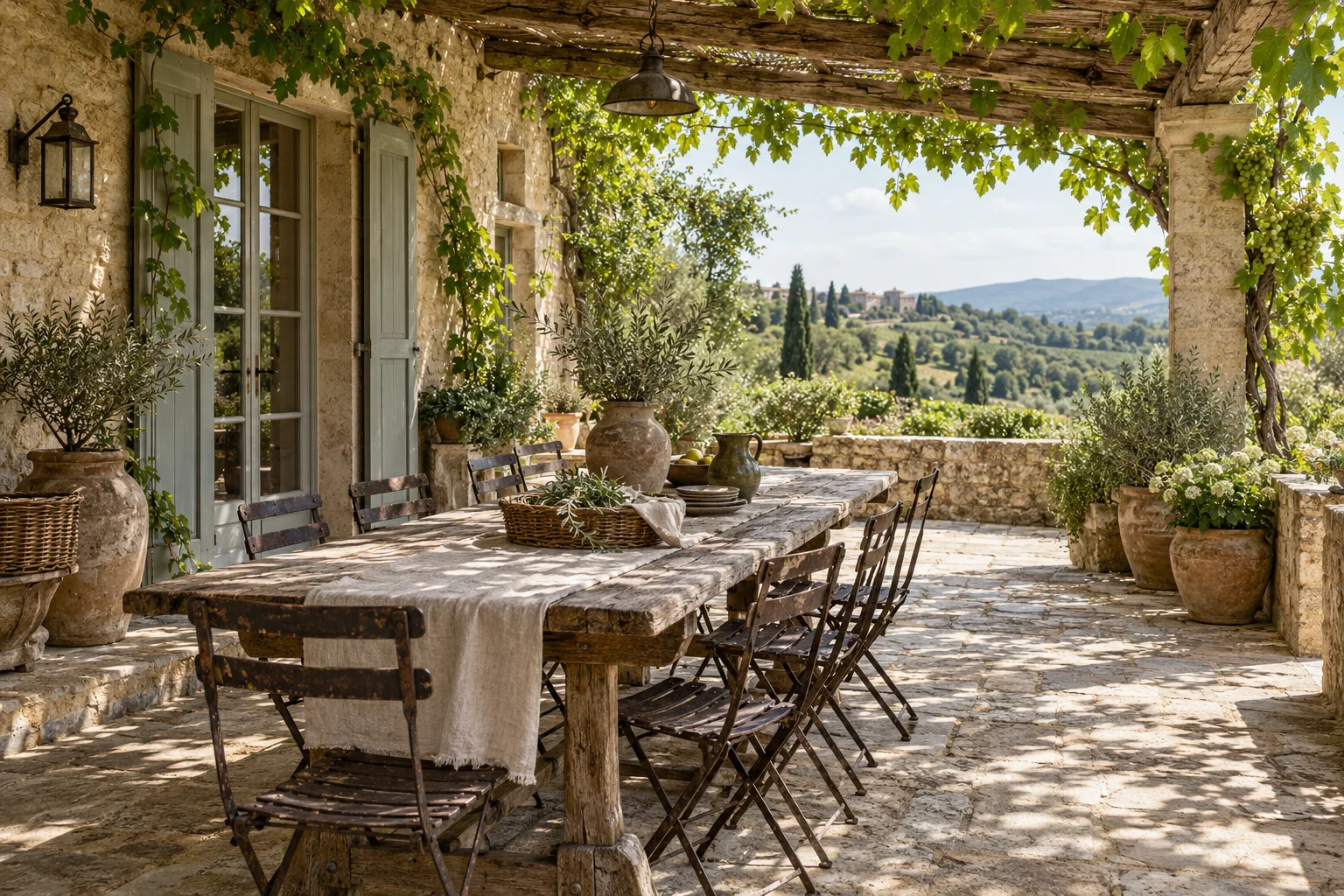 AI-created styling idea
 AI-created styling idea
Furniture
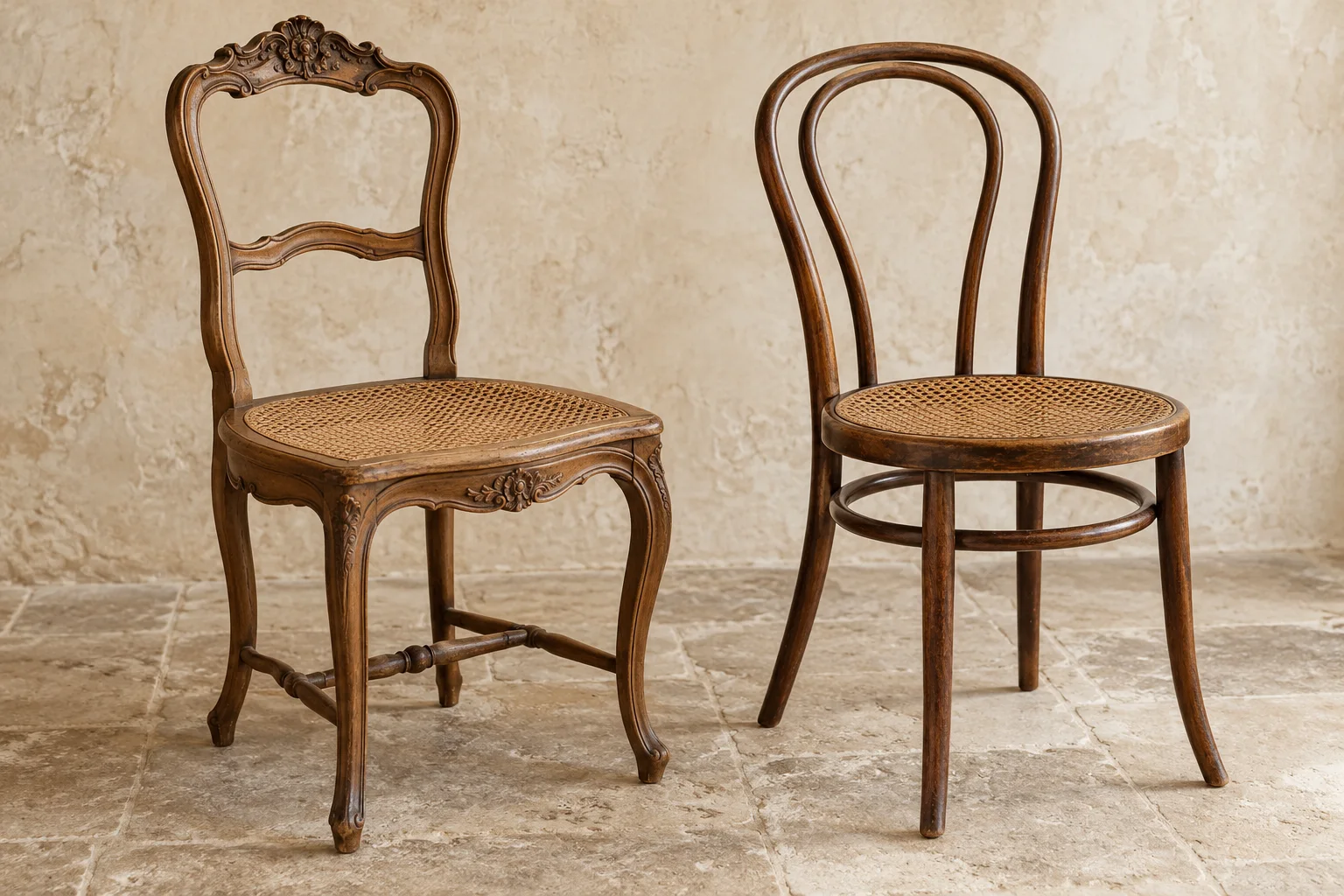
Compare seats, backs, and joints to choose antique chairs that work in everyday life.
Explore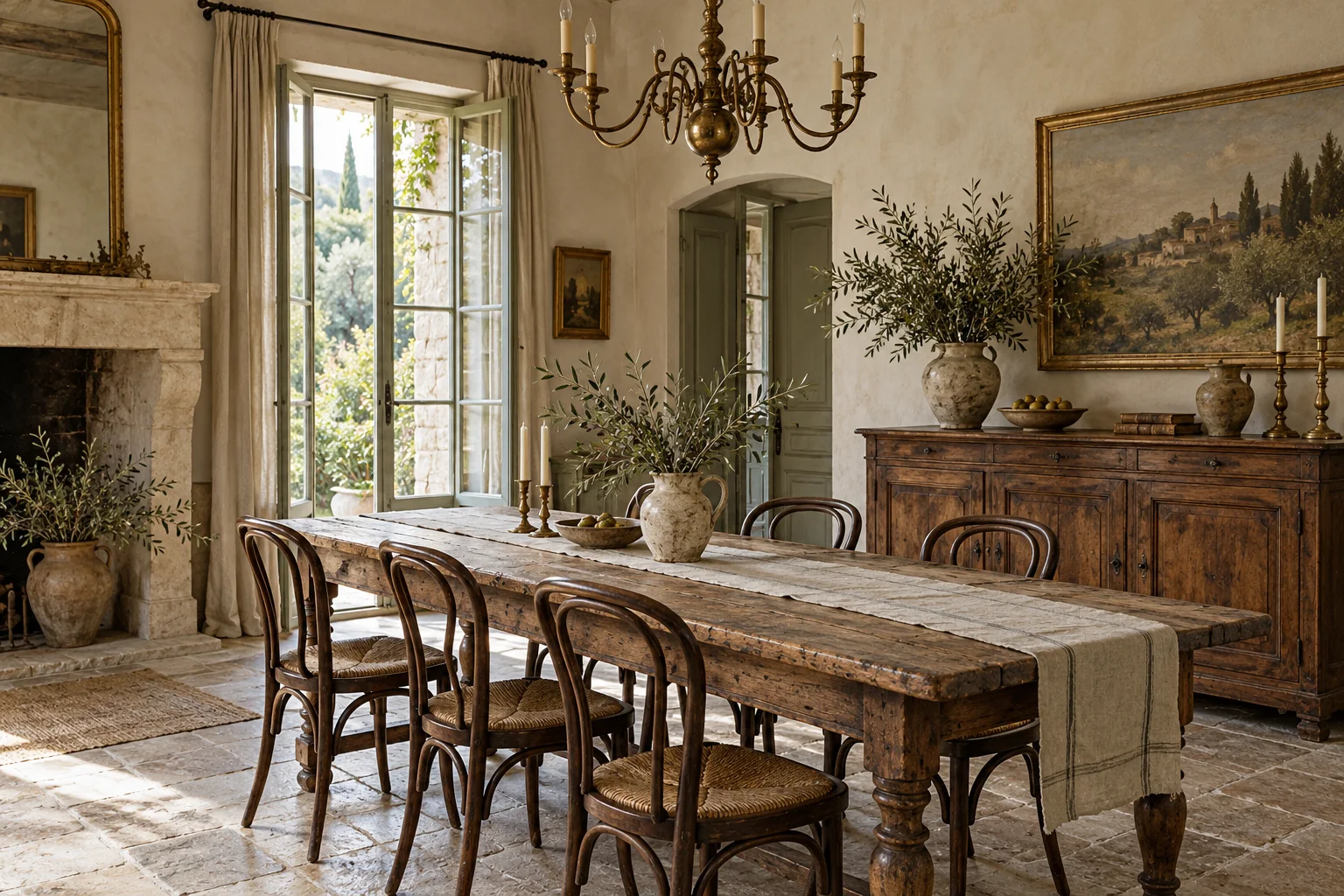 AI-created styling idea
Furniture
Choose a sideboard around your serving dishes, access needs, and useful serving surfaces.
Explore AI-created styling idea
Every piece for the dining room in one place, grouped by category. Each subcategory page explains what to check before you buy and links to the detailed guides.
A French farmhouse table, or table de ferme, is a long kitchen and dining table with a thick plank top, a deep apron with one or two drawers, and square or turned legs often joined by stretchers. It was usually made in oak, chestnut, walnut or fruitwood and finished scrubbed, waxed or with a painted base and a natural top.
Allow 24 in or 60 cm of table edge per person. A table of about 79 in or 200 cm seats six along the sides and two more at the ends when the legs are set at the corners. Trestle bases and inset legs can block the end seats, so check the leg position before counting places.
Look underneath. An original top shows tool marks, darkened oxidized wood and old pegs or nails, and its fixings match the frame. A replaced top usually shows fresh wood on the underside, modern screws and saw marks that differ from the frame. Replacement is common and acceptable when it is disclosed in the listing.
Yes, that is what it was built for. Use placemats or trivets under hot dishes, wipe spills promptly, wax a waxed top twice a year and wash a scrubbed top with mild soap and water. Keep it away from radiators and direct heat, because thick planks move with humidity and can open at the joints.
Nov 6, 2026 · Antique guide
Vintage metal chairs bring the terrace indoors.
Nov 6, 2026 · Antique guide
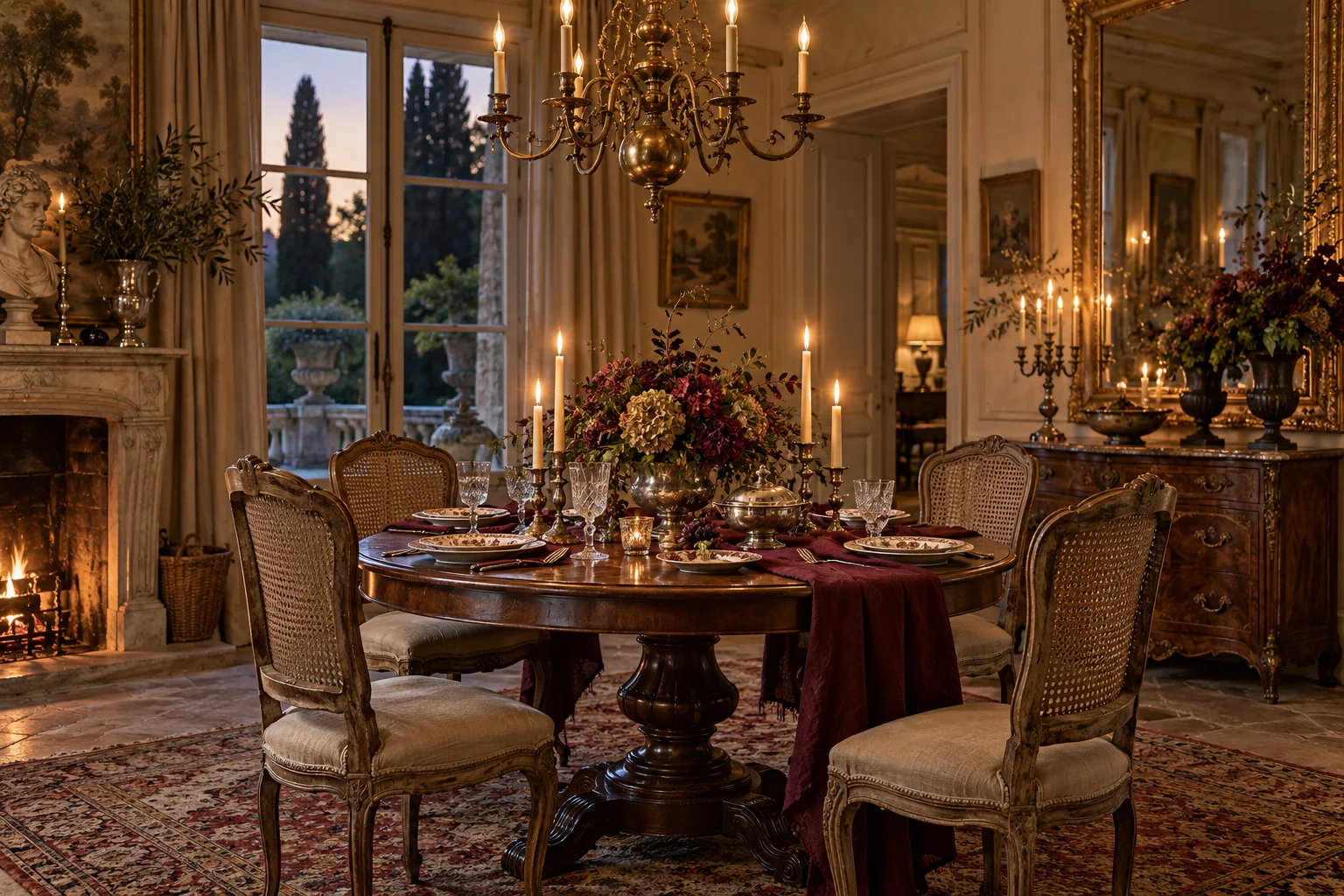
A French country Thanksgiving table takes its look from the farmhouse: a linen cloth, white ironstone or faience plates, mixed silverplate, short bistro glasses,…
Nov 6, 2026 · Antique guide
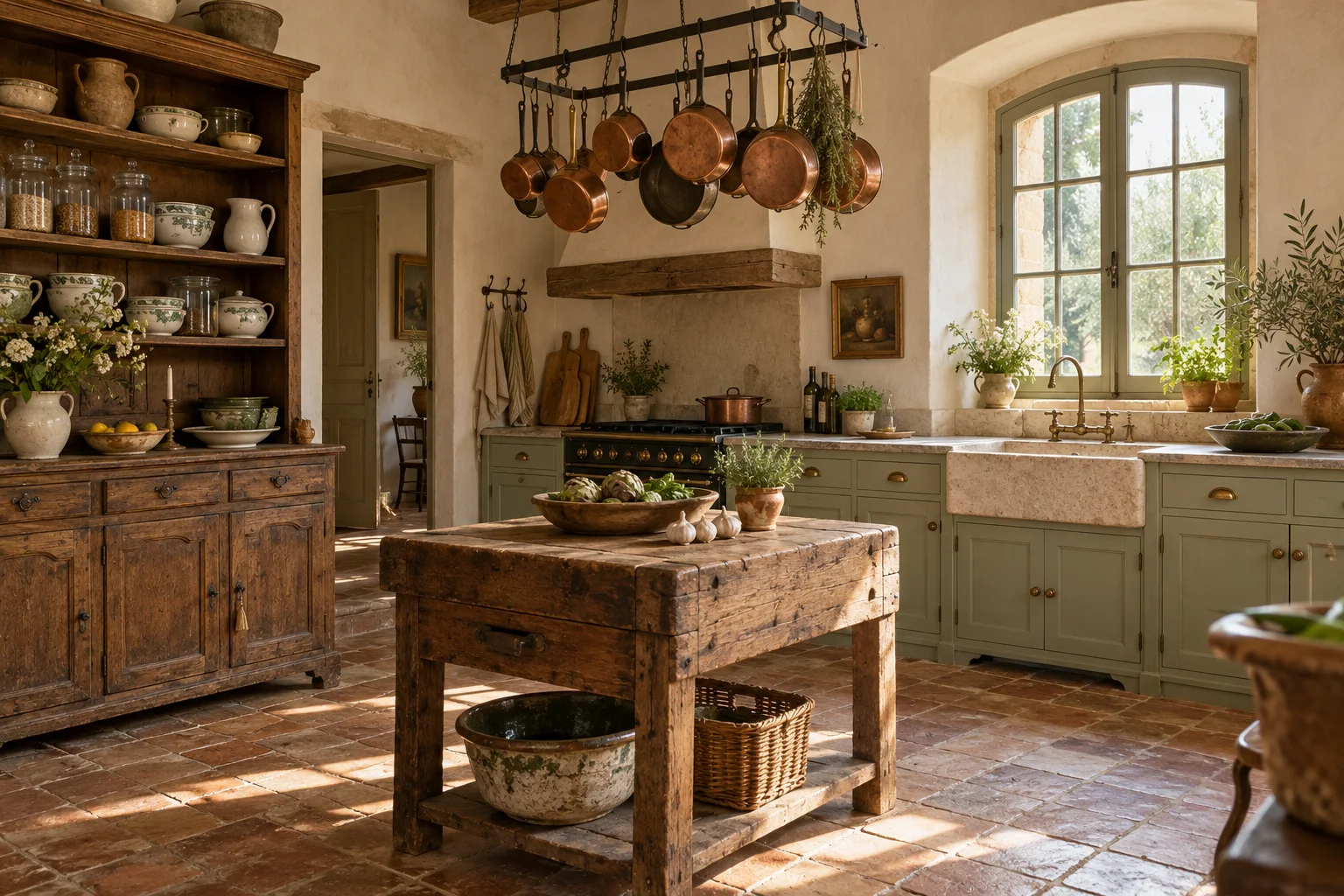
French kitchenware from 1880 to 1960 was made for daily work, which is why the good pieces are still at it.
Nov 5, 2026 · Antique guide
Vintage silver and vintage silverplate look alike on a sideboard and behave differently in the hand, in the sink and at resale.
Nov 5, 2026 · Antique guide
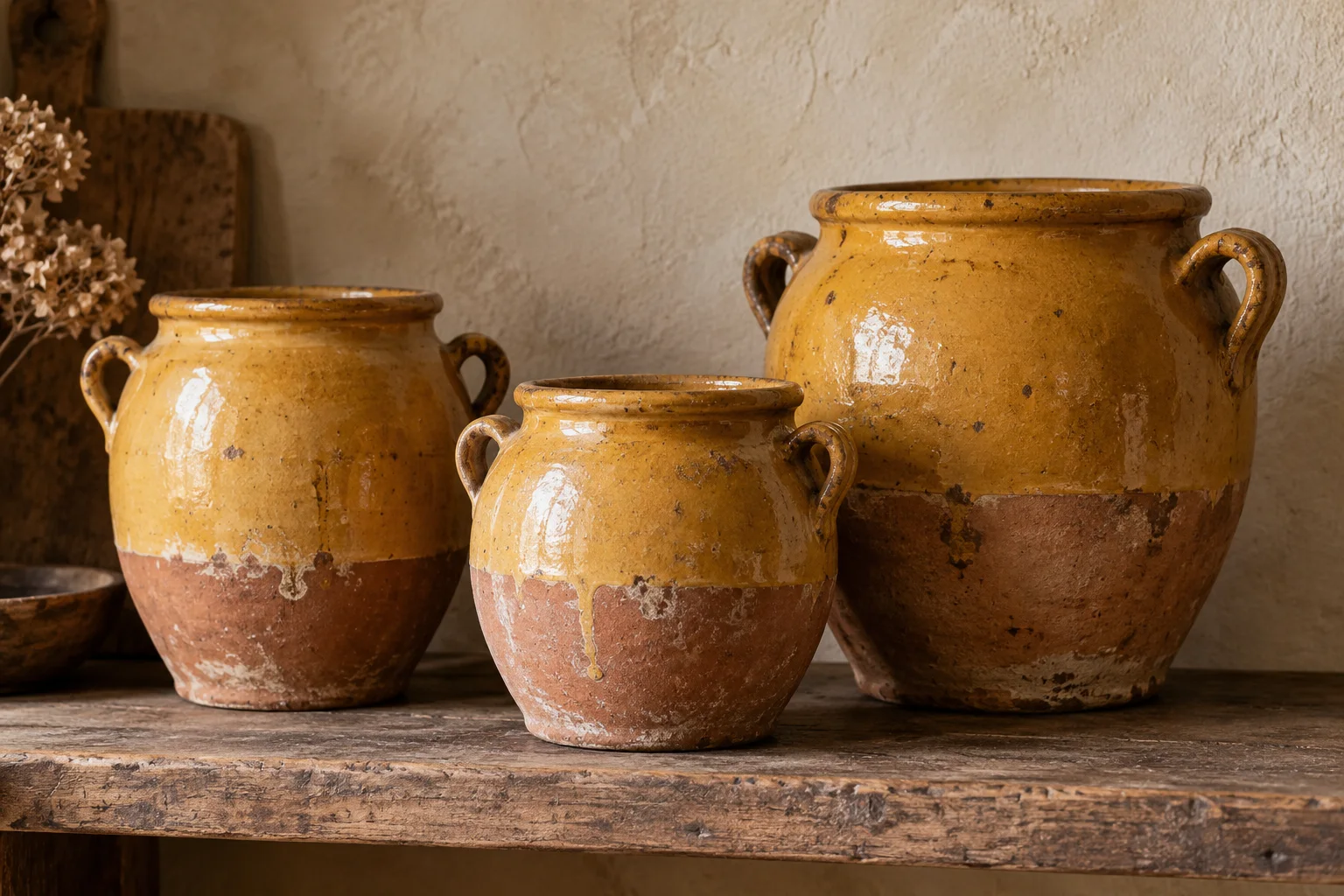
Vintage pottery from French kitchens and workshops falls into two bodies and three glazes.
Nov 5, 2026 · Antique guide
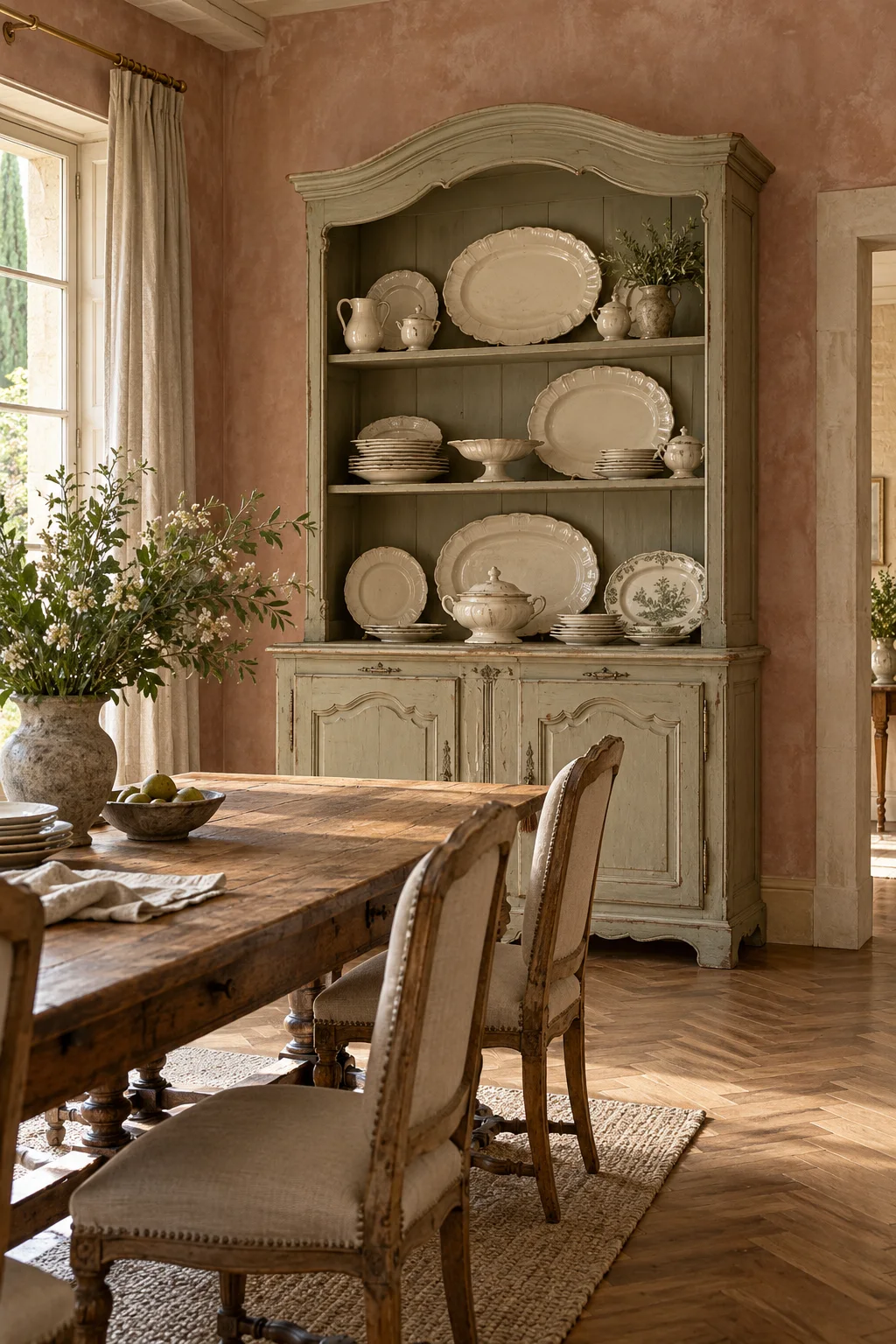
French country Christmas decor works best when it borrows from the house rather than from a store: brass candlesticks taken down from the mantel, greenery cut from…