Sets, carvers and the numbers that survive
A full set of antique dining chairs was usually six or eight side chairs, sometimes with two carvers, armchairs placed at the ends of the table. A so-called 6+2 set is the most sought after and the rarest to find intact. Sets of four are often the remains of six; a single carver with five side chairs tells of a lost partner. Count the chairs, then count the matching details: identical turnings, the same seat construction, the same wear under the feet.
Chairs from one set share the same wood species, the same joint type and the same maker's marks, if any, under the seat rails. Differences in colour alone are not disqualifying: a chair that stood by a window for decades is paler than its siblings. Differences in height, in the profile of the back splat or in the stretcher arrangement point to a chair added later.
Our chairs catalogue lists sets and singles separately, because singles are the raw material of harlequin sets. A harlequin set, deliberately mismatched, is the French country answer to the broken set and has its own rules.
Assembling a harlequin set that reads as one
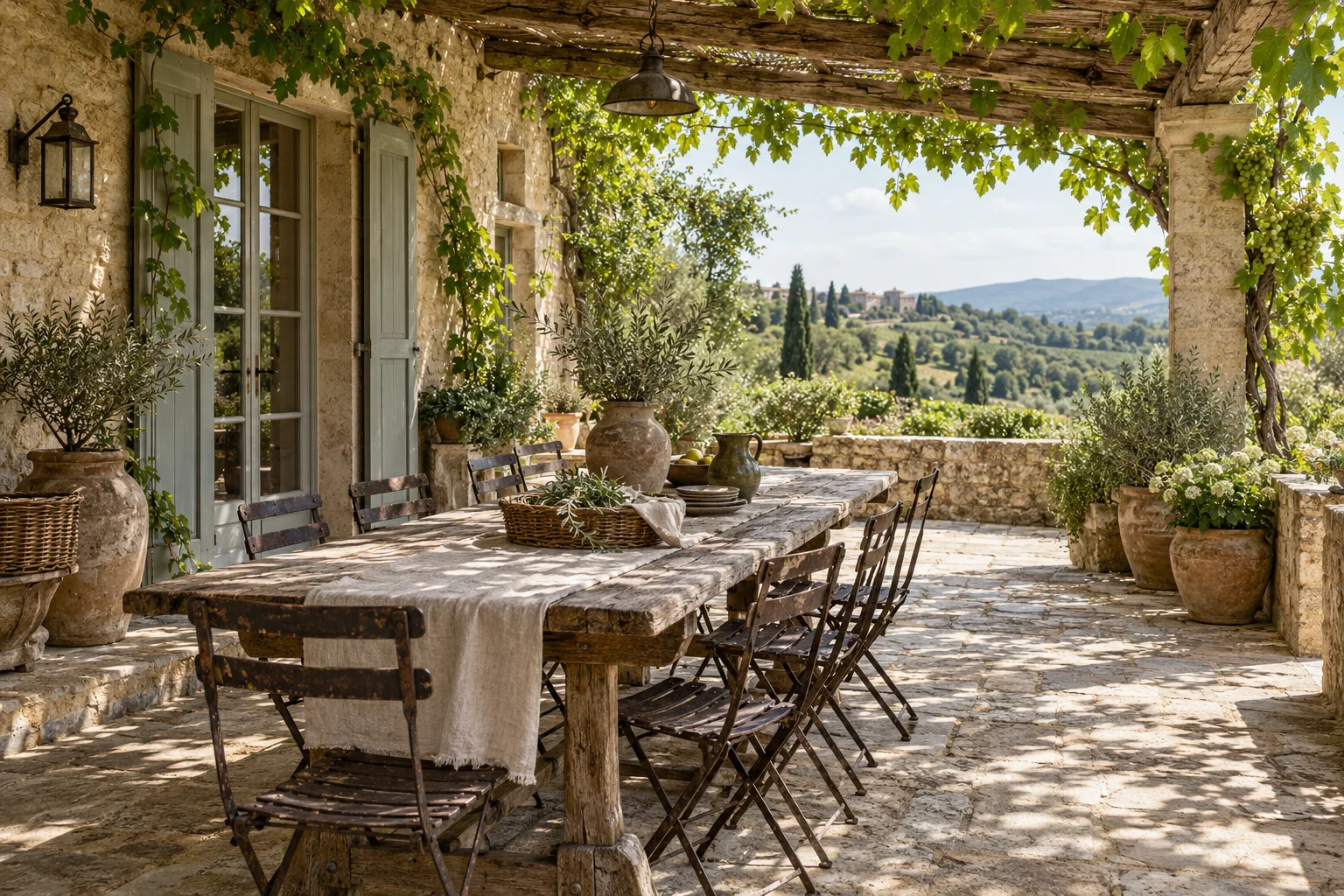
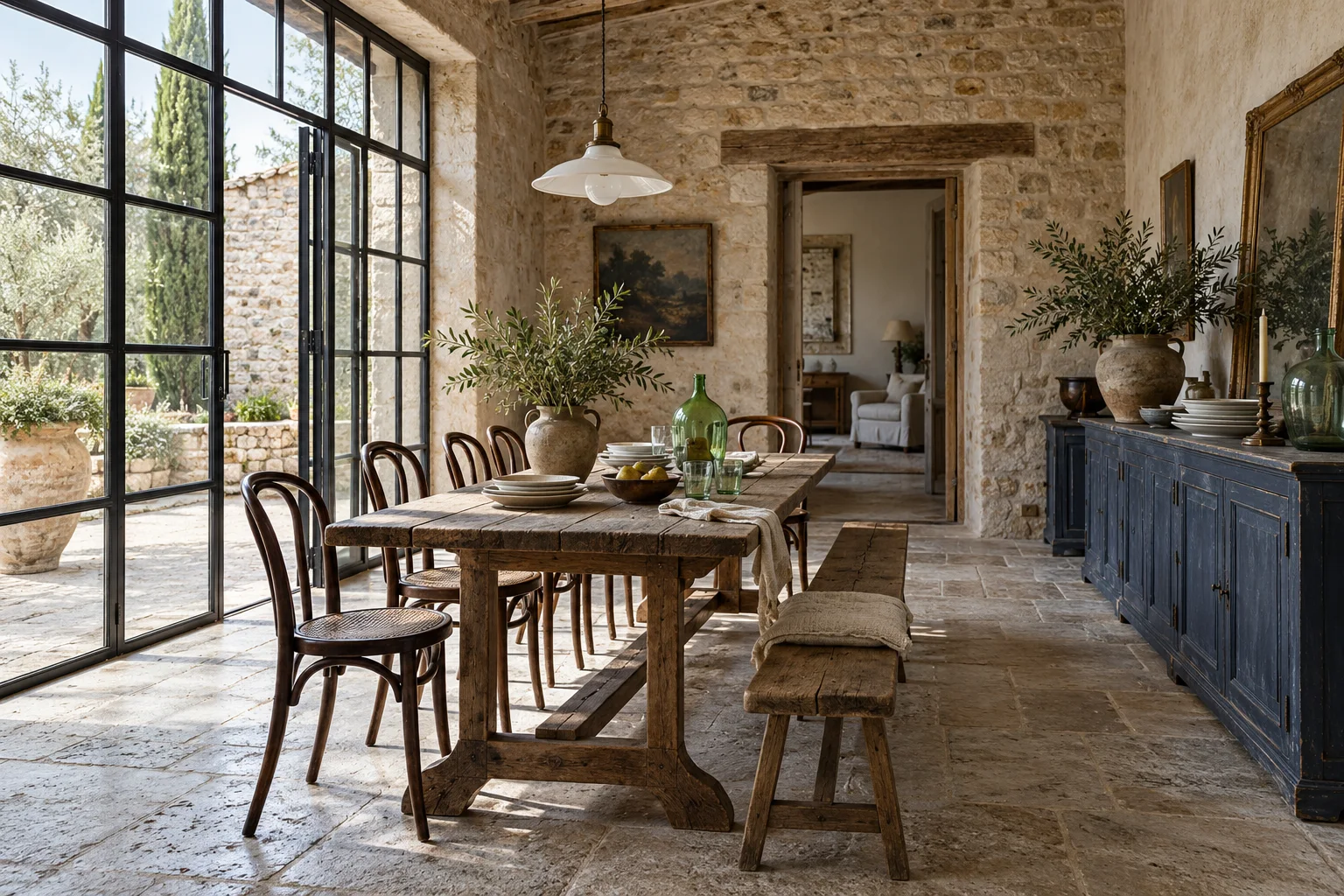
The rule that holds a mismatched table together is one shared dimension: seat heights within 1 in (2.5 cm) of each other, measured at the front edge. The second rule is a shared family: all rush seats, or all cane, or all upholstered. The third is a limit of two or three visual families around one table; six different chairs look like a waiting room, four of one type and two of another look intended.
Place the two most alike chairs at the ends as carvers, even if they have no arms, and alternate the others. Keep the backs at a similar height, 34–38 in (86–97 cm) from the floor, so the line above the table reads evenly. A long farmhouse table forgives more variety than a round pedestal table, where every chair is seen at once.
Loose cushions in the same linen unify a harlequin set in one move, and they lift the seat of a lower chair by an inch. For the broader room, our guide to French country dining tables explains the clearances that make a mixed set comfortable.
Seat height, stability and reupholstery
Comfort at a dining table comes from three figures: a seat height of 17–19 in (43–48 cm), a table height of 29–30 in (74–76 cm), and at least 7 in (18 cm) between the seat and the underside of the table apron. Allow 24 in (61 cm) of table edge per chair, 26 in (66 cm) for carvers with arms, and check that arms pass under the apron if the chair is pushed in.
Test each chair: sit, lean back, shift forward and press the back sideways. Creaks, a rail that moves in its mortise or a chair that rocks on an uneven leg are repair items, not reasons to walk away, but they belong in the price. Turn the chair over for worm exits, replaced corner blocks and nails driven into joints. Regluing a set of six is routine work for a furniture restorer; nails and brackets are not.
Drop-in seats are reupholstered without touching the frame; fixed seats with tacks need an upholsterer who respects the original rails. Choose a cloth that takes spills: a dense linen or a wool blend, not a loose weave. Keep the old cover under the new one when the upholsterer agrees, so the history of the chair stays with it. See also our guide to choosing antique chairs for seat types.
What to compare
| Form | Suggested Use | Decisive Check |
|---|---|---|
| Matched set of six | Formal dining room | Same joints, marks and wear on every chair |
| Harlequin set | Farmhouse table, family meals | Seat heights within 1 in, two or three families |
| Four side chairs plus two carvers | Long table with ends | Carver arms clear the table apron |
Your buying checklist
Continue planning your room
Frequently asked questions
How many antique dining chairs make a set?
Historically six or eight side chairs, often with two carvers at the ends of the table. Sets of four are usually survivors of six. Count matching details rather than chairs: identical turnings, the same seat construction and similar wear under the feet show that the chairs began life together.
What is a harlequin set of dining chairs?
A deliberately mismatched set assembled from singles. It works when the seat heights stay within 1 in (2.5 cm), the seats belong to one family (all rush, all cane or all upholstered) and no more than two or three visual types sit around the table. Matching linen cushions unify the group.
What seat height do I need for a 30-inch dining table?
A seat height of 17–19 in (43–48 cm) measured at the front edge, leaving at least 7 in (18 cm) between the seat and the underside of the apron. Allow 24 in (61 cm) of table edge per chair and 26 in (66 cm) for carvers with arms.
Can antique dining chairs be reupholstered?
Yes. Drop-in seats lift out and can be recovered without touching the frame; fixed seats need an upholsterer who keeps the original rails. Choose a dense linen or wool blend for spills, and ask to keep the old cover underneath when possible so the chair retains its history.
Sources & further reading
- Canadian Conservation Institute — Basic care: furniture and objects made of wood — Checking joints and preserving original materials before furniture returns to daily use.
- The Metropolitan Museum of Art — French Furniture in the Eighteenth Century: Case Furniture — Background on eighteenth-century French furniture workshops and the distinction between veneered and solid-wood trades.