 AI-created styling idea
Furniture
Bistro & dining chairs
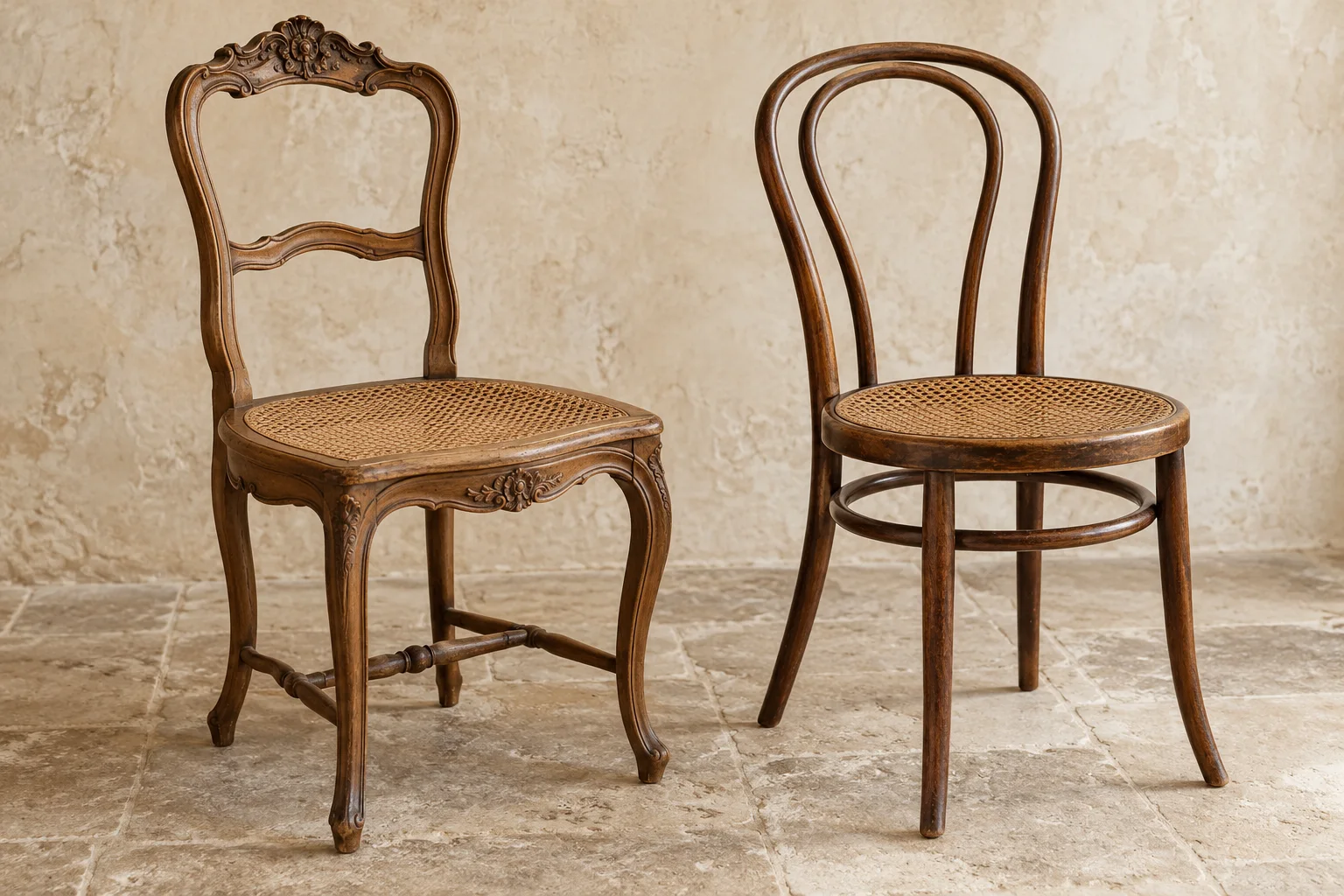
Compare seats, backs, and joints to choose antique chairs that work in everyday life.
ExploreFrench Country · An inspiration catalogue
French dining room chairs range from the rush-seated farmhouse chair to the carved provincial armchair, and choosing well starts with the joints and the seat rather than the silhouette.
Among French dining room chairs, the rush-seated chair, or chaise paillée, is the everyday chair of the countryside. Its frame is turned or square, often in beech, walnut, cherry or ash, with a ladder back of two to four shaped slats or a back of turned spindles. The seat is woven from natural rush around four rails. It is light, strong and repairable, which is why so many survive in sets and in odd numbers.
Cane seats appear on provincial chairs from the 18th century onward and on the bentwood bistro chairs of the late 19th and 20th centuries. Bentwood chairs are steamed beech bent into curves and assembled with screws; many carry a maker's label or stamp under the seat, which is the only reliable basis for an attribution. Cane is cool and elegant but less forgiving than rush; a broken cane seat is replaced in sheets or rewoven by hand.
Louis XV and Louis XVI forms, with cabriole or fluted legs and a padded seat and back, bring the curves of French provincial style to the dining room. Many are 19th- and 20th-century interpretations. Upholstery is the part most likely to be replaced; judge the frame, then decide whether the cover is yours to change.
Regional chairs differ in the shape of the back slats, the turning of the legs and the height of the back. Treat regional names as descriptions of a form unless the provenance is documented. A Provençal chair with curved slats and a straw seat is a tradition, not a certificate of origin.
The fauteuil is an open armchair with upholstered seat and back and exposed wooden arms; the bergère is deeper, with closed upholstered sides and a loose cushion. A pair of fauteuils at the ends of a dining table, or a bergère beside the fireplace, gives the room a second, softer type of seat. See antique armchairs and the guide to placing two antique armchairs around a round table.
A bench along the wall side of a farmhouse table seats more people and narrows the room's footprint. Upholstered banquettes suit a kitchen corner. Match bench height to chair seats, about 17–19 in / 43–48 cm. See benches and banquettes.
Low stools, milking stools and the small chauffeuse once used beside the hearth fill corners and serve as side tables. See stools and ottomans.
Sit on the chair and rock gently from side to side and front to back. Movement at the joints of the seat rails or the back posts means old glue has failed. Loose joints are common and repairable by a cabinetmaker who takes them apart and reglues them with hide glue; screws and metal brackets added to stiffen a chair are a warning sign. Check the back legs at the seat rail, where most breaks happen.
Rush seats sag and fray at the front rail first; a seat with holes needs rerushing, which takes a specialist one or two days per chair. Paper rush is a cheaper substitute that looks similar but feels harder. Cane seats should be taut and intact. Upholstered seats should be checked for webbing, springs and frame damage hidden under the cover.
Small round exit holes indicate past woodworm; fresh pale dust under the chair indicates active infestation, which needs treatment before the chair enters the house. Repaired legs, replaced stretchers and new rush are normal on country chairs and should be disclosed in the listing.
Seat height is usually 17–19 in / 43–48 cm, for a table of 28–30 in / 71–76 cm. Allow 24 in / 60 cm of table edge per chair and 28 in / 70 cm per armchair. Check that the arms of a fauteuil clear the apron of the table, often 24–25 in / 61–64 cm from the floor. Our guide to French farmhouse tables explains the apron and knee room.
Matched sets of four, six or eight chairs are harder to find than single chairs and command more for that reason. Count the chairs, then compare them: a "set" may combine chairs from two batches with slightly different backs or heights. Ask whether all chairs have the same repairs and the same seats.
A harlequin set mixes chairs of different forms around one table. To make it read as a choice, keep one element constant, such as wood tone, rush seats or seat height, and vary the rest. Two carvers at the ends and mixed side chairs is the classic arrangement.
Antique chairs can sit around a contemporary table, and modern chairs around a farmhouse table. Repeat one material in the room, for example a linen cushion or a wooden frame, so the mix feels deliberate. The principles in our French country decor guide apply here.
Dust rush and cane with a soft brush; wipe with a barely damp cloth and never soak them. Keep rush away from radiators, which dry it out. Do not stand on rush or cane seats.
Wax a waxed frame once or twice a year and avoid silicone polishes. Keep chairs off damp floors and lift them rather than dragging them, which strains the back-leg joints.
The listings at Lo Cantou show chairs with condition details and seat heights. Interior designers who need a coordinated set for a project can send a brief to Antiques 360 for three documented options within 72 hours; upholstered antique seating ships as a frame only, ready for the client's fabric. The full range of pieces is in our guide to French country furniture.
AI-created styling ideaFurniture
Compare seats, backs, and joints to choose antique chairs that work in everyday life.
Explore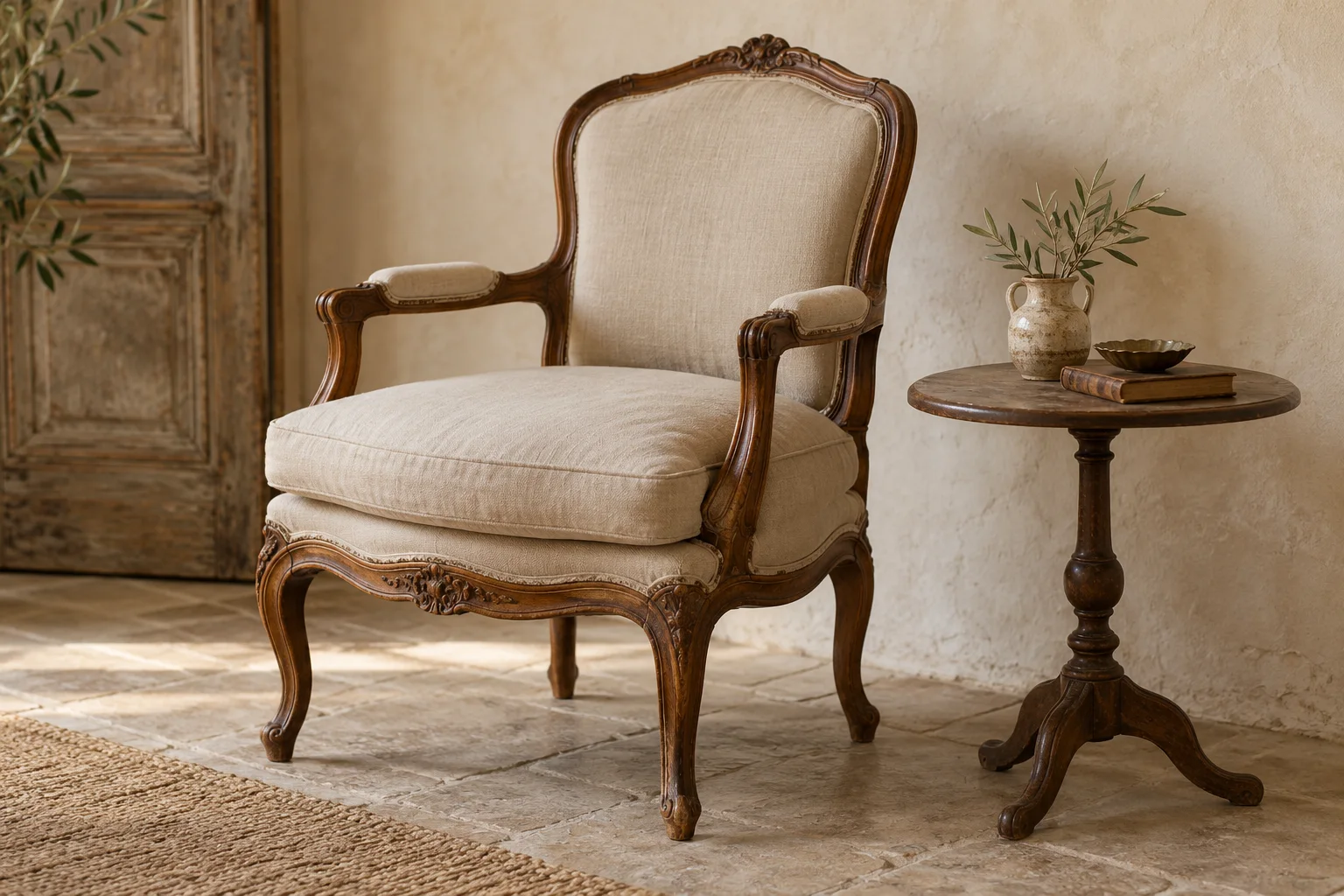 AI-created styling idea
Furniture
Frame first, upholstery second: test the joints, then decide whether the cover is yours to change.
Explore AI-created styling idea
 AI-created styling ideaAI-created styling idea
Furniture
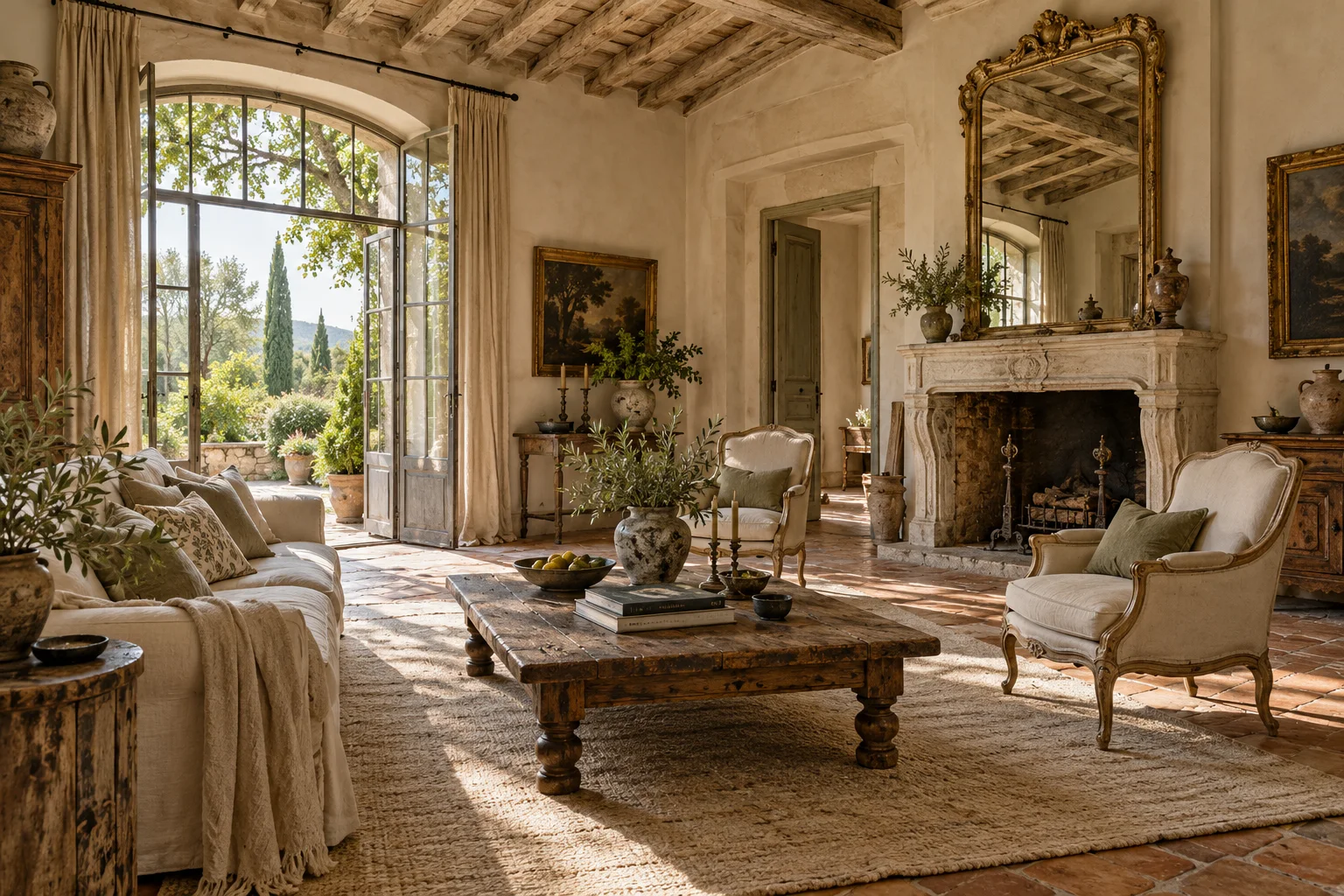
Settees and méridiennes bring a soft seat to a living room or a wide hall.
ExploreThe everyday rush-seated chair is a chaise paillée. An open armchair with upholstered seat and back is a fauteuil, and a deeper armchair with closed upholstered sides is a bergère. Bentwood bistro chairs, cane-seated provincial chairs and ladder-back country chairs are the other common forms around a French country table.
Sit and rock gently in every direction. Movement at the seat rails or the back posts means the glue has failed and the joints need regluing by a cabinetmaker. Check the back legs at the seat rail, look for cracks, added screws or brackets, and look under the chair for fresh pale dust, which signals active woodworm.
Yes. A harlequin set of mismatched chairs is a French country tradition. Keep one element constant, such as seat height, wood tone or rush seats, and vary the forms. Two armchairs at the ends with mixed side chairs along the length is the classic arrangement, and it is easier to assemble than a matched set of six or eight.
Dust with a soft brush and wipe with a barely damp cloth; never soak the rush or put it near a radiator. Do not stand on the seat. When the rush frays at the front rail or develops holes, have it rewoven by a specialist; natural rush lasts longer and feels softer than paper rush.
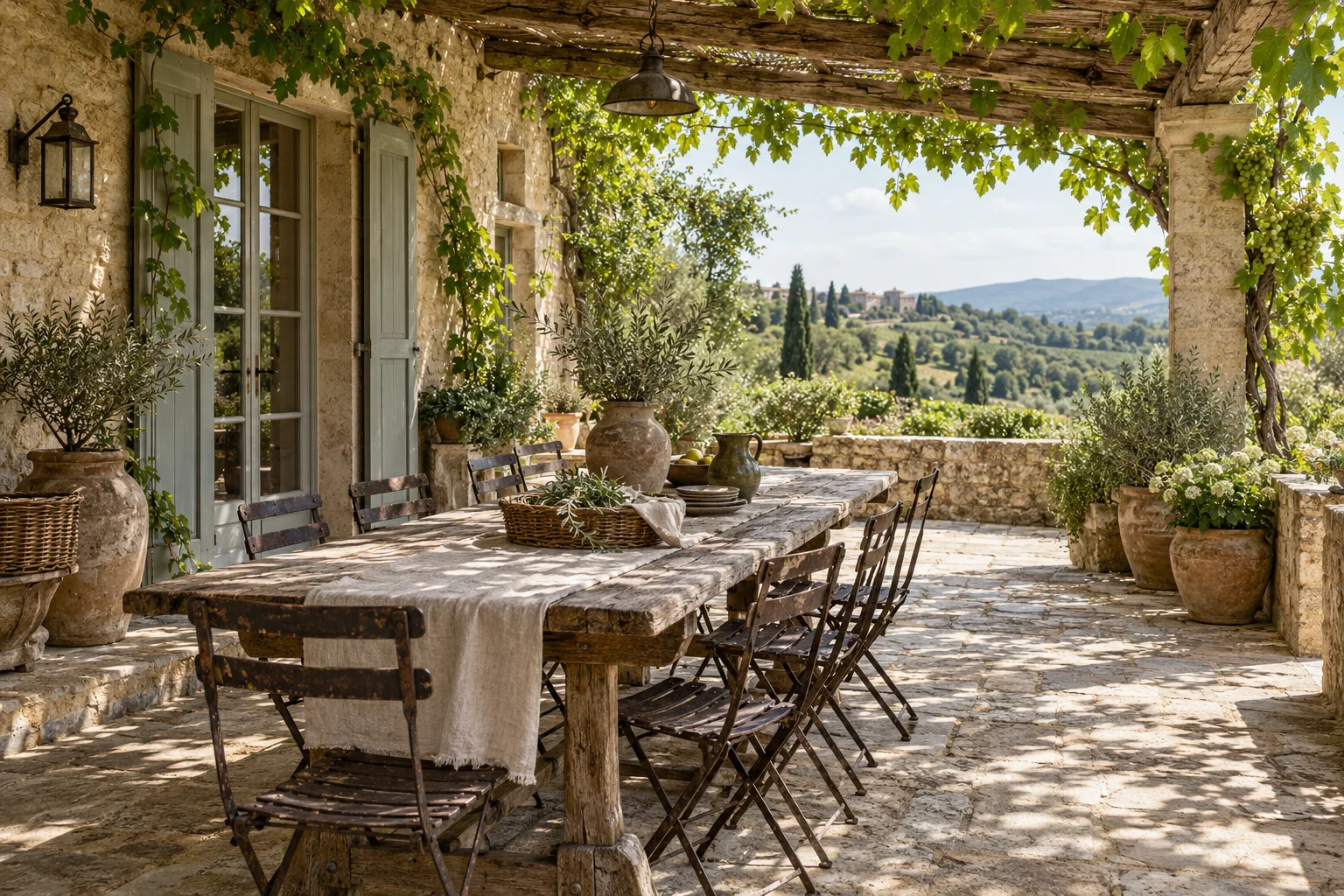
Nov 6, 2026 · Antique guide
Vintage metal chairs bring the terrace indoors.
Nov 6, 2026 · Antique guide
Choose the shape and distinguish the condition of the frame from that of the fabric.
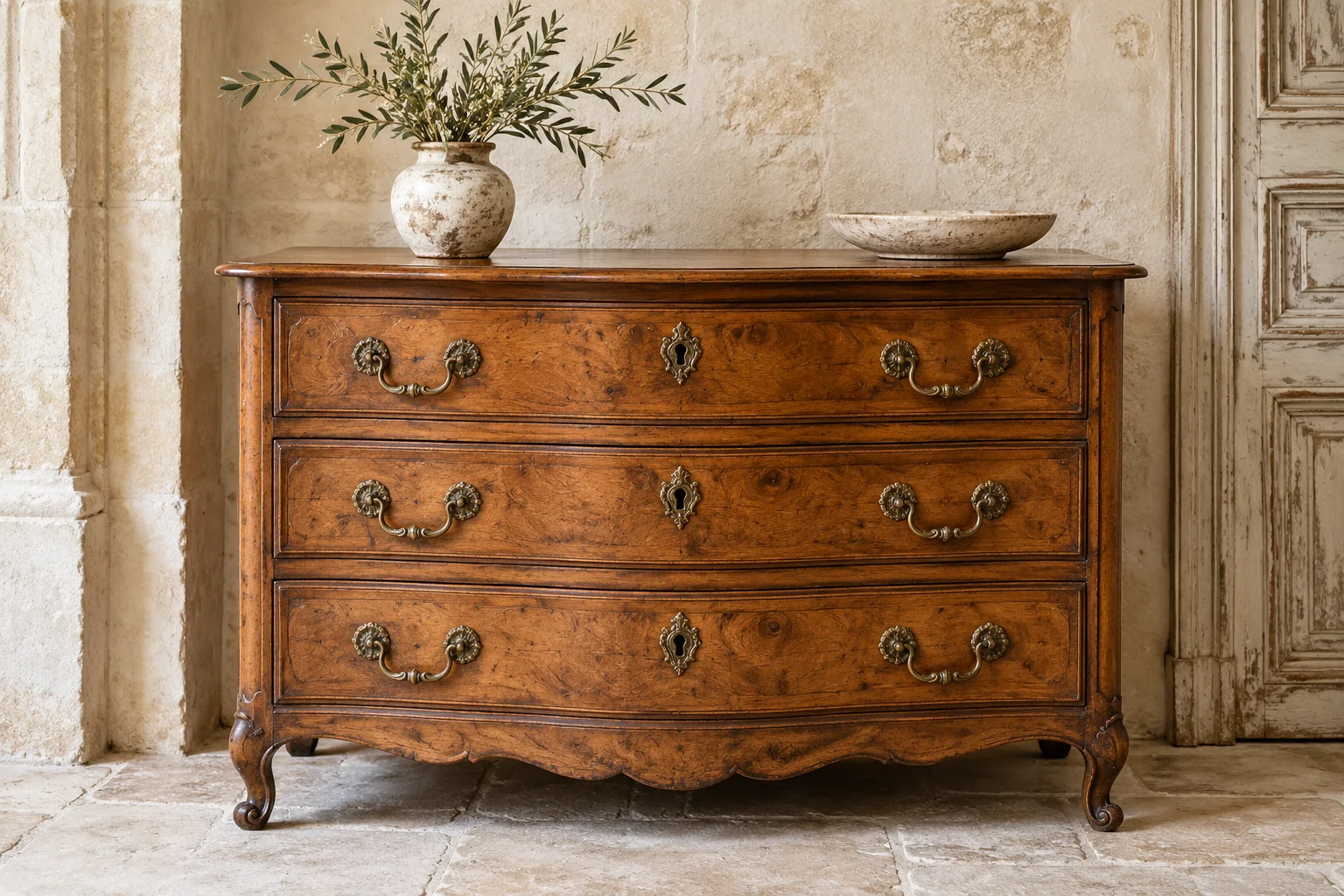
Nov 5, 2026 · Antique guide
"Louis XV commode" can mean three different pieces of furniture: a period chest, a later Louis XV style chest, or a regional walnut commode.
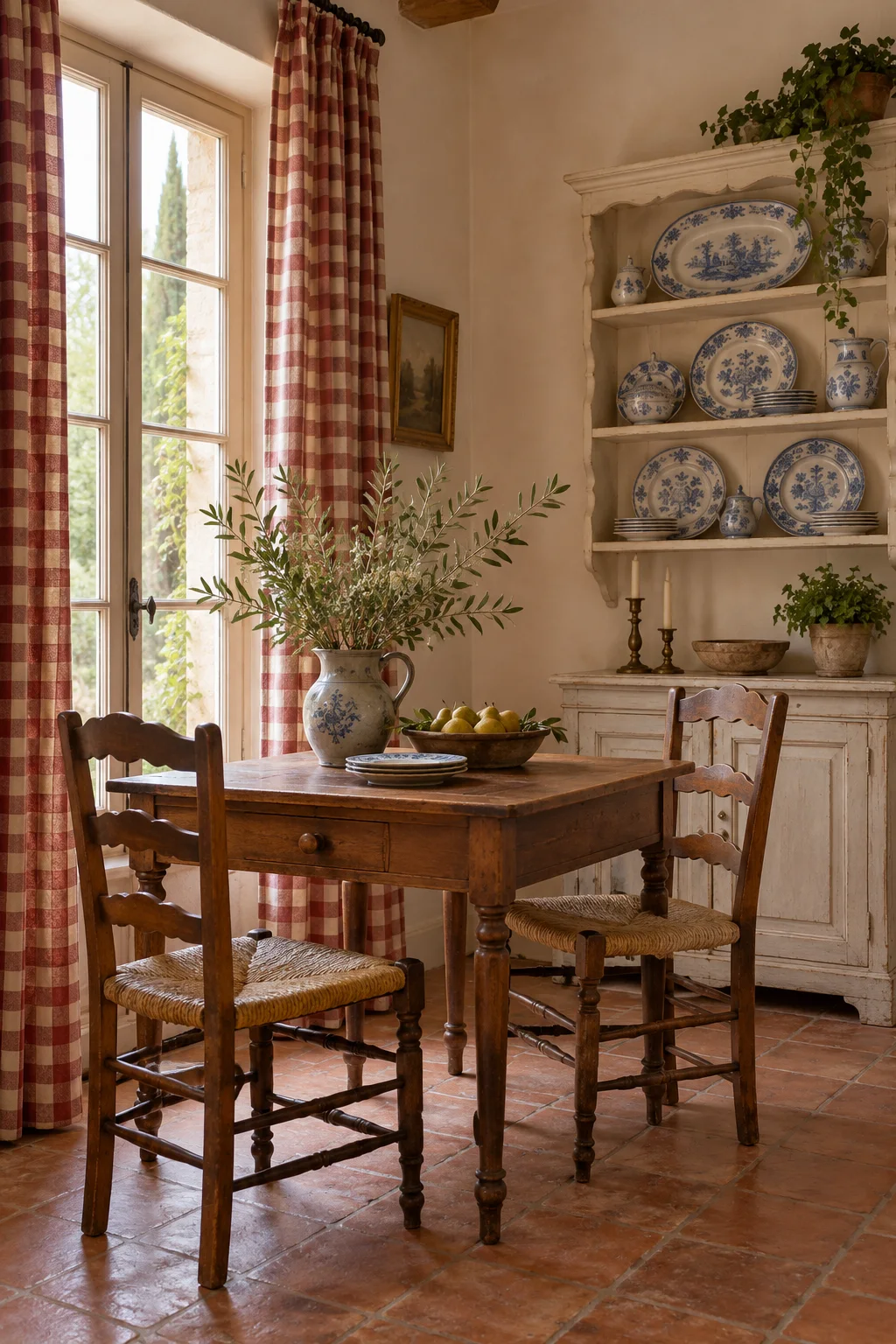
Nov 5, 2026 · Antique guide
Vintage dining chairs made between 1920 and 1970 are the easiest antique seating to live with: factory-made, sturdy, and plentiful enough to assemble a set.
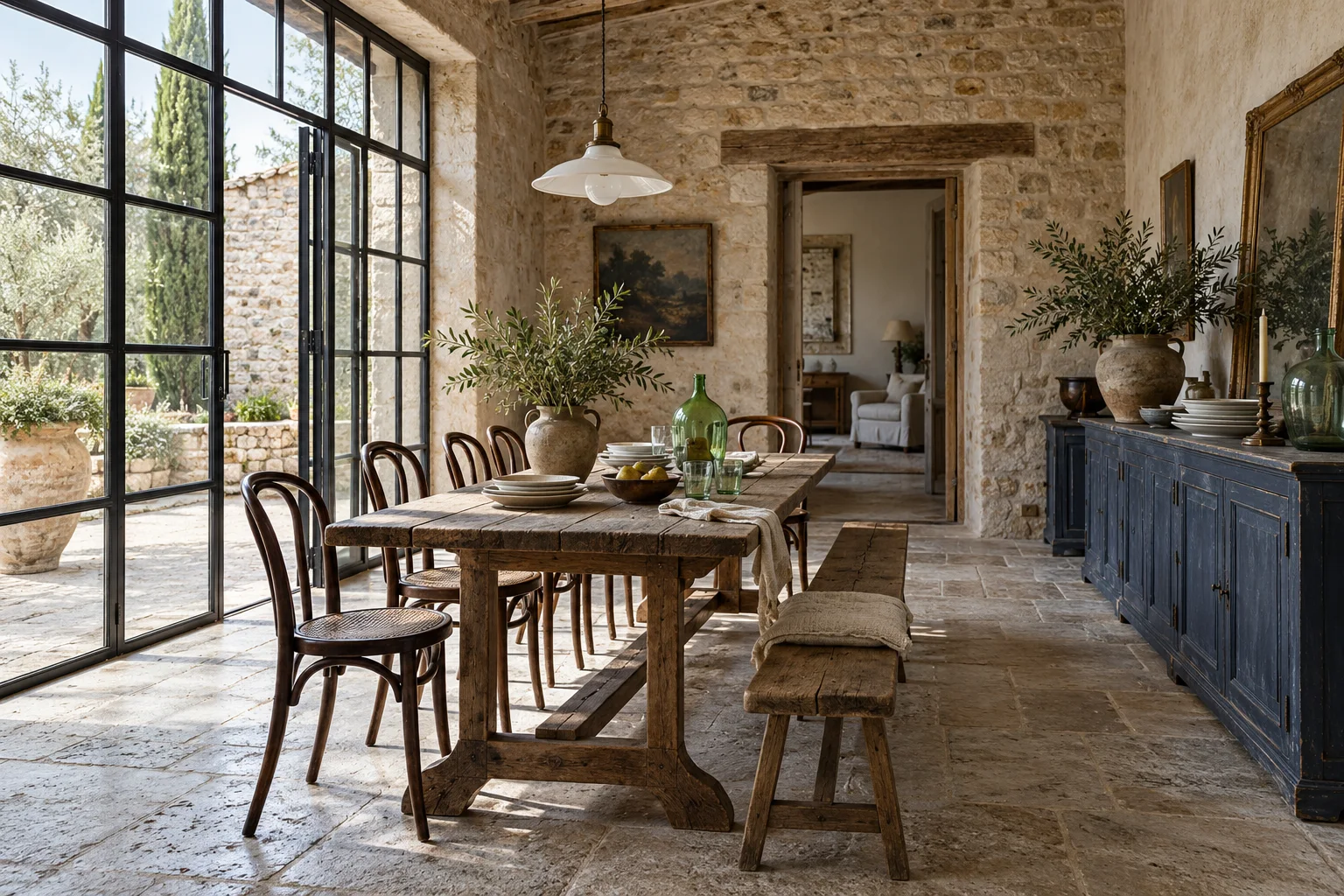
Nov 4, 2026 · Antique guide
Antique dining chairs rarely arrive in the number you need.
Nov 4, 2026 · Antique guide
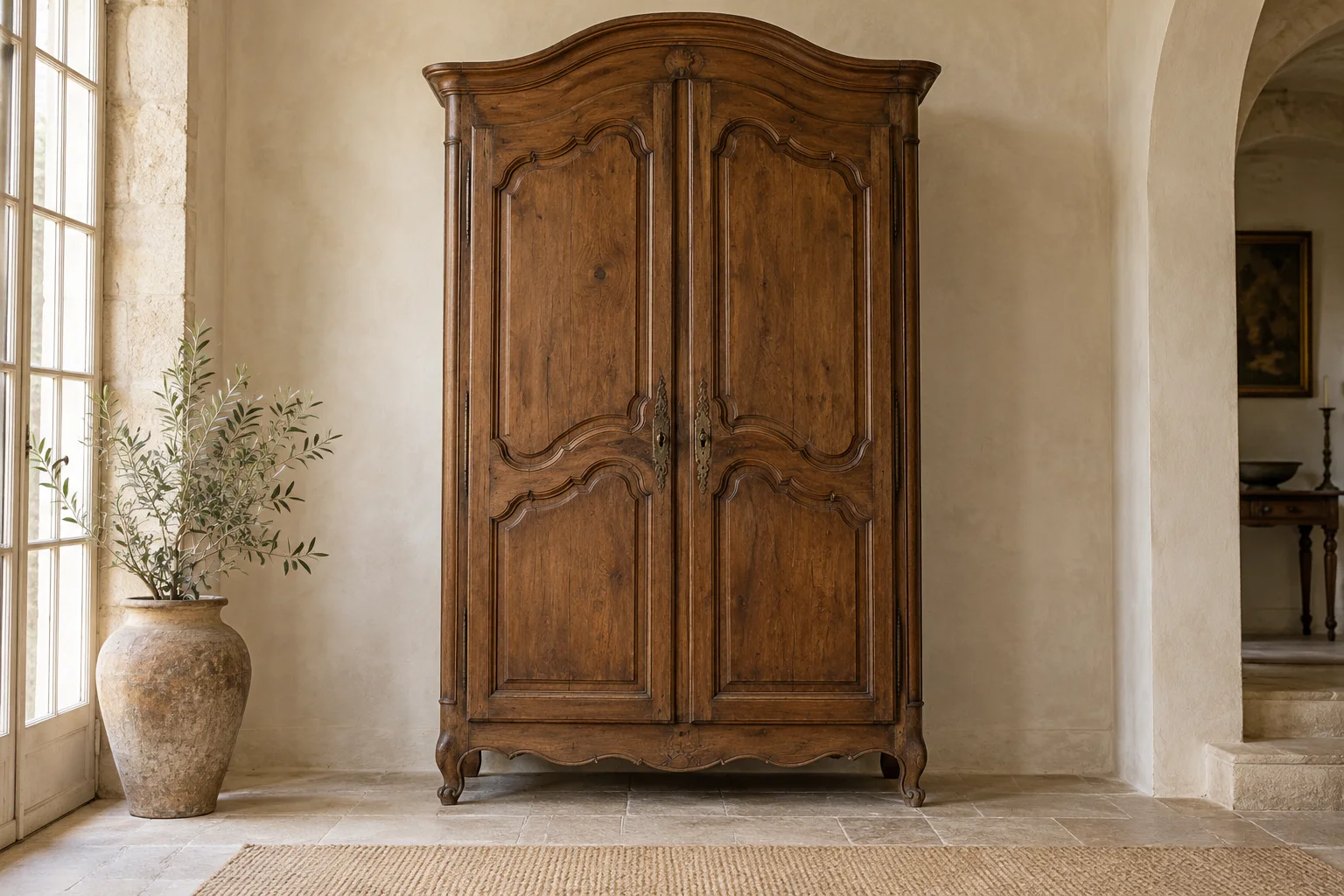
Compare exterior size, interior storage and delivery constraints when choosing an armoire.