Where the French bistro table comes from
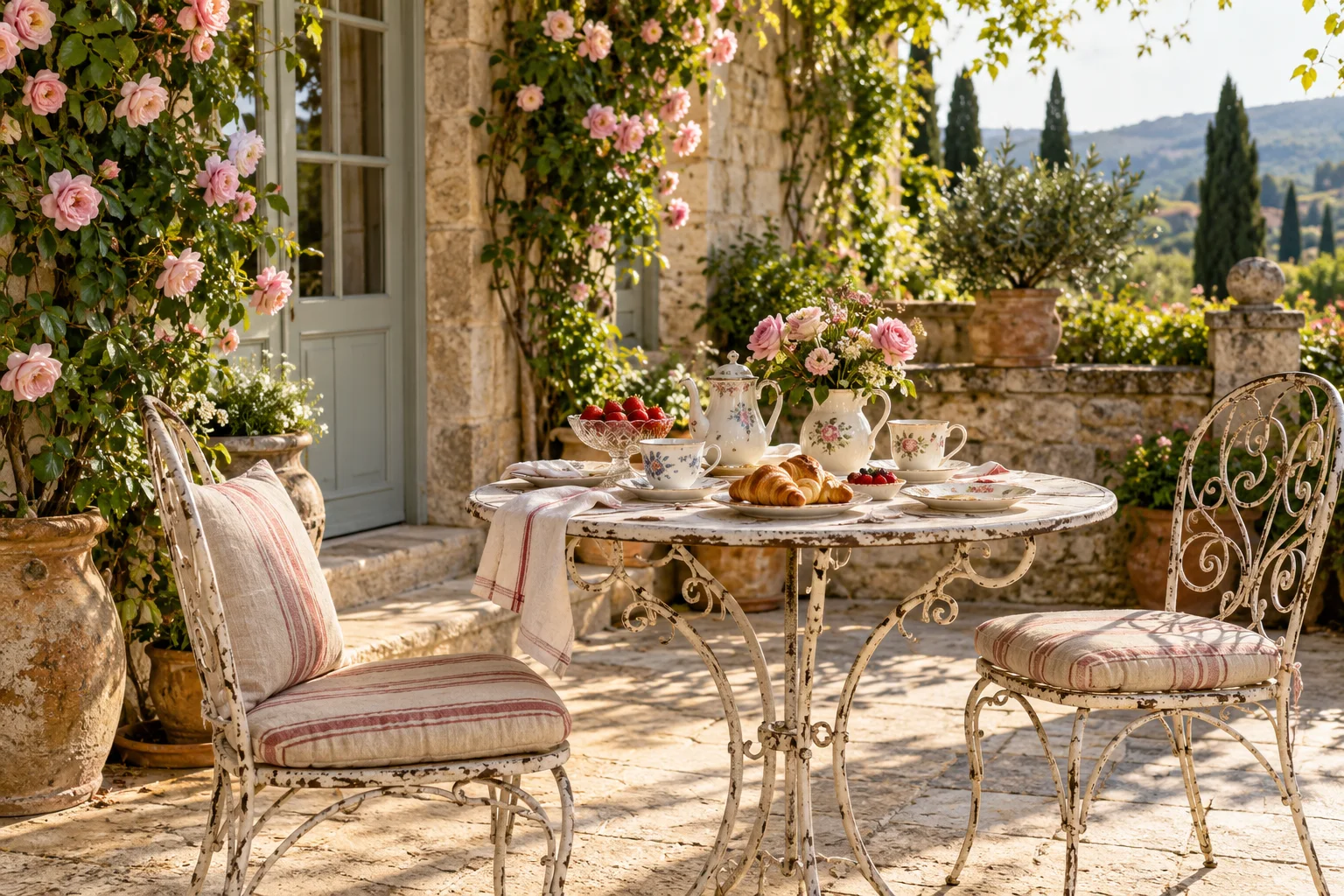
The bistro table was café furniture before it was home furniture. Paris cafés and brasseries needed tables light enough to move onto the pavement and stable enough to hold two glasses and a plate. The answer was a cast-iron pedestal with a three- or four-lobed foot and a round top of about 24 in (60 cm). Tops were white or gray marble first, then enamelled steel in the 1930s and laminate after the war. Many bases carry a foundry name on the column; the name identifies a maker, not a year.
Historical origin explains the form; it does not date your table. Cast-iron bases were produced for decades and are still cast today, often from the same patterns. Treat any period claim as a decorative description unless a maker’s mark, a dated invoice or a documented provenance supports it. The journal applies the same rule to bistro tables in the object catalogue: describe the base, the top and the condition first.
How to size a bistro table for two
A top of 20–24 in (50–60 cm) seats two people with a glass and a plate each; 28 in (70 cm) gives room for a bowl of fruit and two cups. Standard height runs 28–30 in (71–76 cm). With chairs whose seat sits at 17–18 in (43–46 cm), that leaves 10–12 in (25–30 cm) of knee room, which is the comfortable minimum. Measure the base foot as well: a spread of 16–20 in (40–50 cm) under a 24 in top is the usual balance between stability and the space for feet.
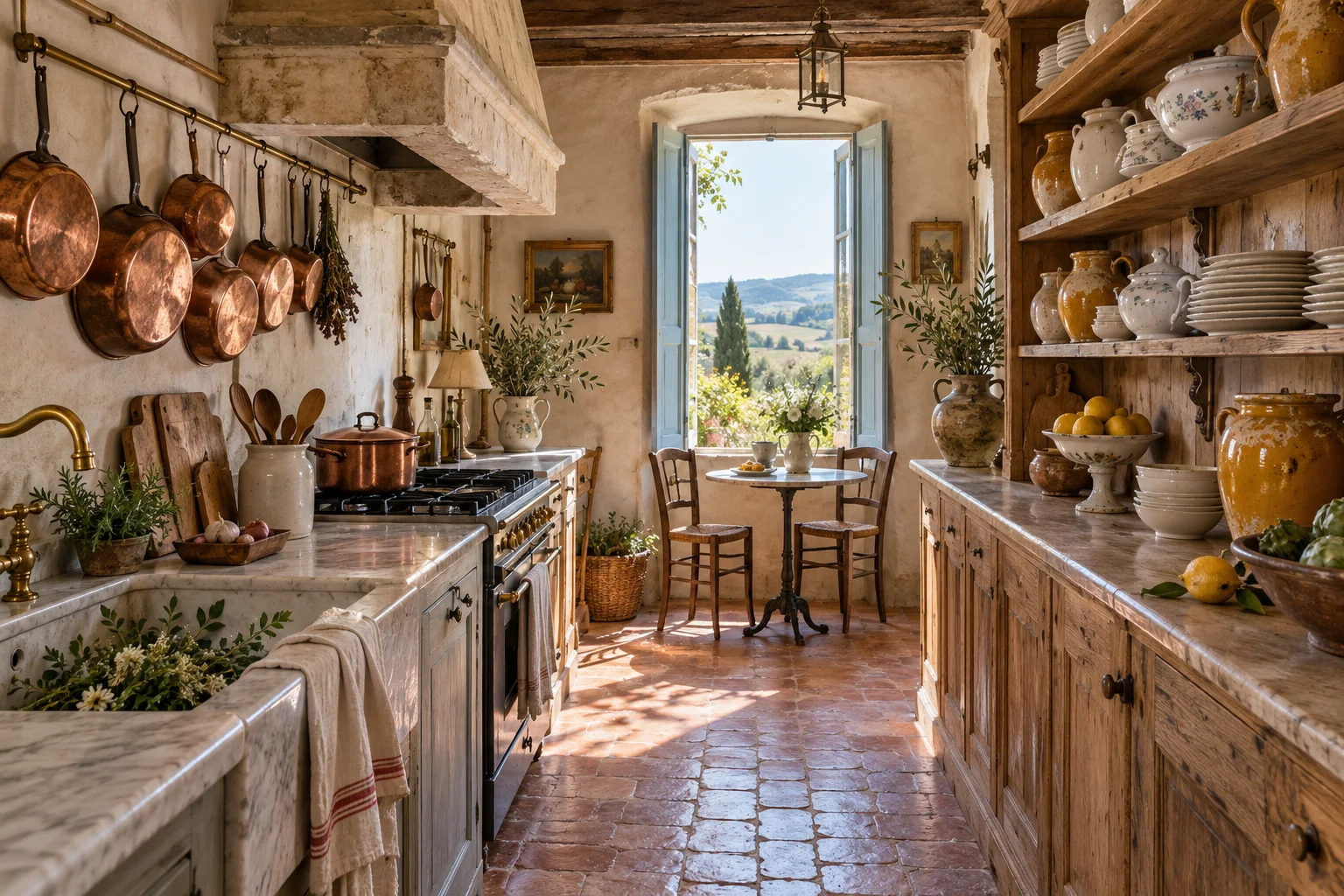
Weight matters for the room. A cast-iron base alone weighs roughly 30–50 lb (14–23 kg); a marble top adds 20–30 lb (9–14 kg). That mass keeps the table steady but makes it a two-person lift. In a kitchen corner, a square 24 in top fits flush to the wall; on a covered patio, an iron base with an enamel top survives better than marble; in a garden without shelter, use iron only, because freezing water in a marble crack splits the stone. Our French country kitchen guide shows where a small table earns its place.
Wobble, cracks and bolts: what to check
Set the table on a flat floor and press down on opposite edges. Wobble comes from one of three places: an uneven casting on the foot (shim with felt pads or adjustable glides), a loose central bolt between the top and the column (tighten it and check the threaded insert set into the marble), or a cracked column, which is a reason to walk away. Lift the top off if the design allows: the underside shows repairs that the polished face hides.
Marble tells its history on the surface. A hairline across the top filled with resin is common and acceptable when disclosed; a chip on the rim is cosmetic; rings and dull patches are acid etching from wine, lemon and vinegar, and etching does not come out without re-polishing. Enamel tops chip at the edge and the exposed steel rusts. On the iron, distinguish stable dark rust, which can be sealed with wax, from active orange powder, which needs treatment before the table comes indoors. The Canadian Conservation Institute’s guidance on iron and copper alloys applies to a bistro base as it does to a museum object: keep it dry and avoid aggressive stripping.
What to compare
| Form | Suggested Use | Decisive Check |
|---|---|---|
| Round marble top on a cast-iron pedestal | Breakfast for two, café corner, entryway | Filled cracks, etching and the central bolt |
| Enamel-topped brasserie table | Kitchen or patio under cover | Edge chips and rust under the enamel |
| Folding iron terrace table | Balcony and garden | Hinge wear and stability when open |
Your buying checklist
Continue planning your room
Frequently asked questions
How big is a typical French bistro table?
Most round bistro tables measure 20–28 in (50–70 cm) across and 28–30 in (71–76 cm) high. A 24 in top is the café standard for two people. Measure your chairs first: a seat at 17–18 in needs about 10–12 in of clearance under the top, and the cast-iron foot needs floor space of its own.
Can a marble bistro table stay outside?
Not through a winter. Marble absorbs water, and water that freezes inside a hairline crack splits the top. Rain also carries acids that etch the polish. Keep marble under cover and bring it in before frost; for a garden left open to the weather, choose an iron or enamel top instead.
How do I stop a bistro table from wobbling?
Find the cause before adding pads. Tighten the bolt that joins the top to the column and check the threaded insert in the marble. If the foot casting is uneven, fit adjustable glides or felt shims under the low lobe. A column that rocks on its own is cracked and should not be used.
Are all cast-iron bistro tables antique?
No. The pedestal form has been cast continuously since the nineteenth century, and many bases on the market date from the 1950s onward or are recent castings from old patterns. A foundry name identifies a maker, not a year. Treat a date as decorative unless a document supports it.
Sources & further reading
- Canadian Conservation Institute — Care of metal objects — Guidance on keeping iron and copper alloys dry and on treating active rust without aggressive stripping.