What makes a plate majolica rather than faience
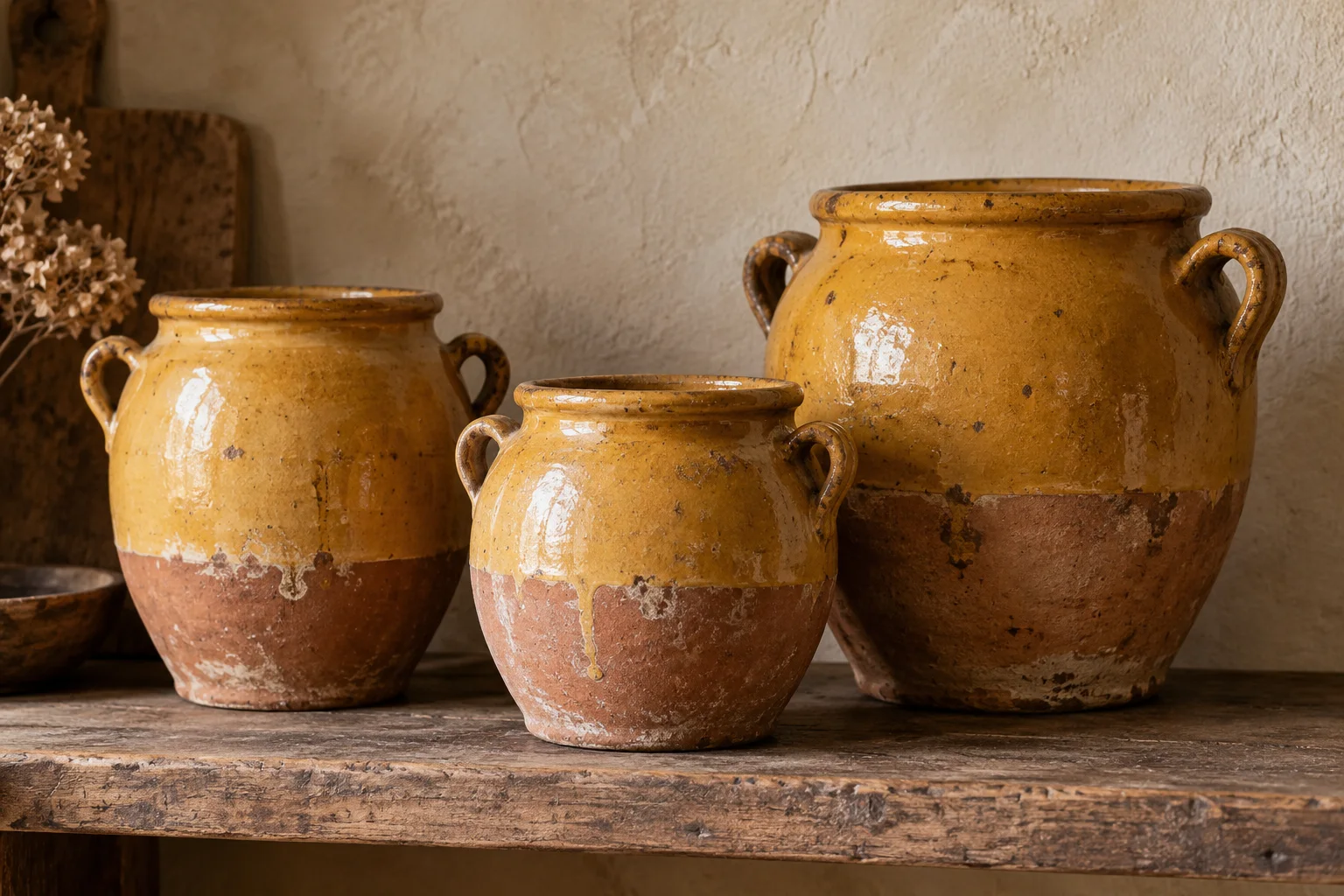
Majolica is a 19th-century term for earthenware covered in colored lead glazes, usually over molded relief. The glazes pool in the hollows and thin on the ridges, so a leaf looks darker in its veins and paler on its edges. Faience, the older French tradition, is earthenware under an opaque white tin glaze with painted decoration on top; the Met’s essay on French faience describes that white ground as the defining layer. A majolica plate therefore shows color in the glaze itself, not on a white surface.
Barbotine is a related French technique: liquid clay slip applied in relief, then glazed. Plates described as barbotine often carry high-relief flowers or fish with naturalistic coloring. The body under both techniques is porous earthenware. A chip shows a buff, pink or red clay, and a fine network of cracks in the glaze, called crazing, is common and does not by itself mean the plate is damaged.
How to read a mark without over-attributing
Turn the plate over. French majolica may carry an impressed factory mark, a printed mark, a painted number, or nothing at all. Impressed marks were pressed into the clay before firing and sit below the glaze; a mark scratched or painted on top of the glaze later deserves suspicion. Names you will meet on 19th-century French pieces include Sarreguemines, Longchamp, Orchies, Onnaing, Lunéville and Saint-Clément. Attribute a plate to a factory only when the mark is present and legible; a familiar pattern alone is not evidence, because factories copied each other and molds were sold on.
Model numbers help more than people expect. A molded number on the back often matches the catalogue number of a shape, so two plates with the same number and the same mark belong to one service. A plate with no mark is still an honest antique plate; describe it by technique, subject and condition, and leave the maker open.
Crazing, chips and repairs: display or use
Look across the glaze in raking light. Crazing appears as fine lines; staining inside those lines shows that liquids have soaked into the body, which weakens it and can smell. Run a fingertip around the rim for chips and flakes, and tap the plate with a knuckle while holding it loosely on your palm: a clear ring suggests a sound body, a dull note suggests a crack. Check the foot ring for old glue, overpaint or filler, which read as a different sheen.
Lead glazes were not made for modern dishwashers or for acidic foods left in contact for hours. Use antique majolica for dry food or short service, and hand wash in warm water without soaking. The Canadian Conservation Institute advises against soaking porous ceramics and against metal plate hangers that press on the glaze; for a wall display, prefer a hanger with padded hooks or a shelf with a lip.
What to compare
| Form | Suggested Use | Decisive Check |
|---|---|---|
| Relief fruit or leaf plate, about 8 in / 20 cm | Wall group of three to seven | Glaze chips on the high points of the relief |
| Asparagus or artichoke plate with well | Table service for dry food | Staining in the crazing of the well |
| Barbotine plate with applied flowers | Display on a dresser or plate rack | Losses and regluing on the applied parts |
Your buying checklist
Continue planning your room
Frequently asked questions
Can you eat from antique majolica plates?
Occasionally, for dry or quickly served food, yes. The glazes contain lead, so avoid acidic foods such as vinaigrette or tomato left in contact for hours, and avoid heating the plate. Hand wash in warm water, do not soak, and keep heavily crazed or stained plates for display only.
How do I know if a majolica plate is French?
Only a mark settles it. Impressed or printed marks from factories such as Sarreguemines, Longchamp or Orchies sit under the glaze on the back. Without a mark, describe the plate by technique and subject; many English, American and French factories made similar relief plates in the same decades.
Does crazing reduce the value of a majolica plate?
Light, unstained crazing is normal on lead-glazed earthenware and is usually accepted. Dark staining in the cracks, a dull ring when tapped, or a visible hairline change the description and the price, and move the plate from the table to the wall.
What is the difference between majolica and barbotine?
Majolica refers to earthenware with colored lead glazes over molded relief. Barbotine is slip, a liquid clay, applied in relief by hand before glazing, which gives higher and more irregular decoration. Both are French 19th-century techniques and both appear on the same factory marks.
Sources & further reading
- The Metropolitan Museum of Art — French Faience — Distinguishes the white tin-glazed ground of faience from colored-glaze earthenware.
- Canadian Conservation Institute — Caring for ceramic and glass objects — Handling, soaking and display mounts for porous ceramics.