Stoneware or glazed earthenware: how to tell a French stoneware crock
Stoneware is fired at roughly 1,200 to 1,300 °C (2,190 to 2,370 °F). At that heat the clay partly vitrifies, so the body holds liquid even where it is unglazed. Many crocks are salt-glazed: salt thrown into the hot kiln forms a thin glassy coat with a dimpled, orange-peel texture in gray, tan or brown.
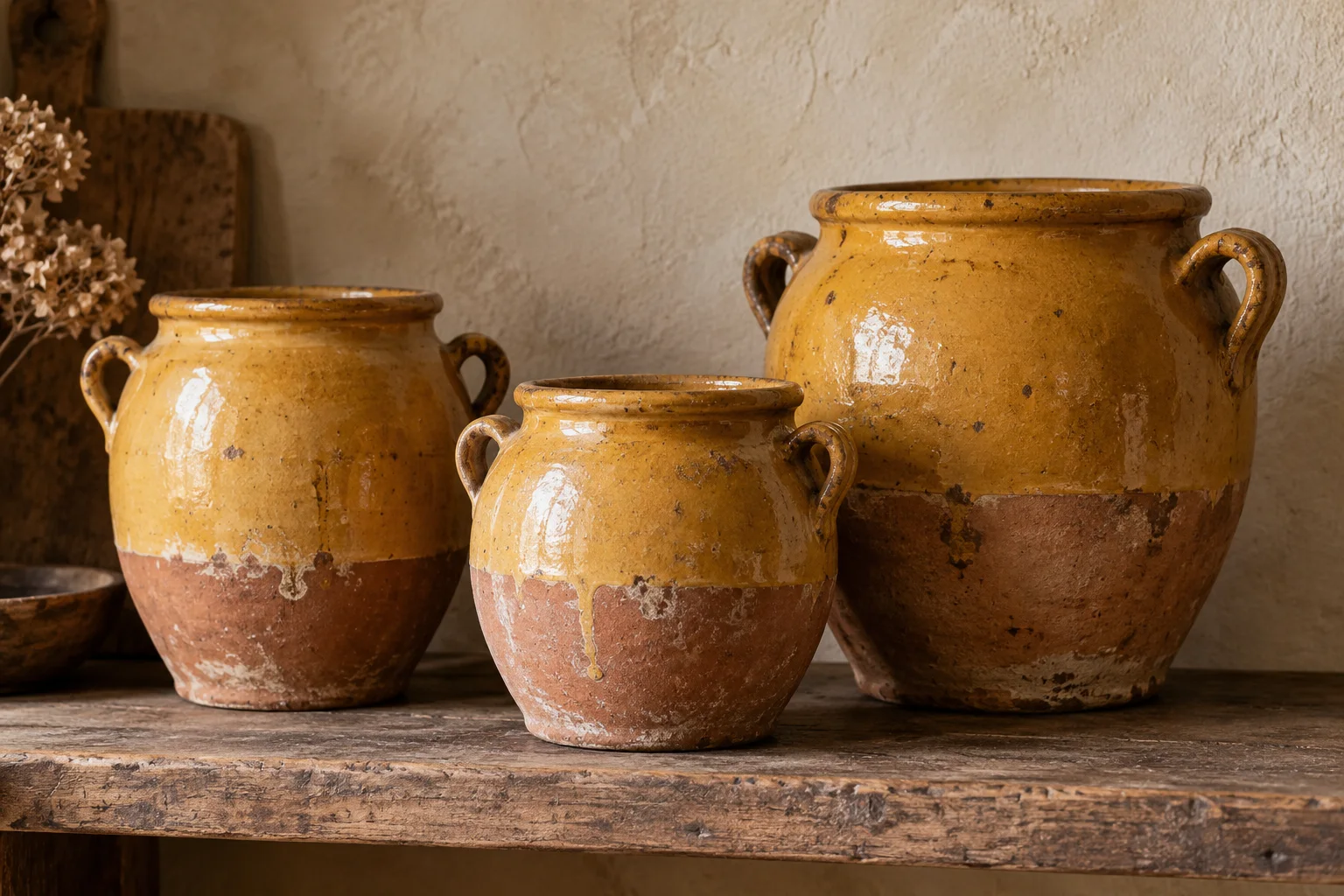
Glazed earthenware, terre vernissée, is fired lower, around 1,000 °C (1,830 °F). The body stays porous and needs a glaze to hold liquid, traditionally a lead glaze in yellow, green or ochre. French confit pots belong to this family: glazed inside and on the upper outside, bare below. Three tests help. Unglazed stoneware is hard and smooth, while earthenware is chalky and darkens under a drop of water. Stoneware rings higher when tapped. Stoneware is heavier for its size.
French crock forms and sizes: saloir, jarre, pot à graisse
- Saloir. A salting crock for pork, wide-mouthed and straight-sided, often 12 to 24 in (30 to 61 cm) tall, sometimes with a lid.
- Jarre. A large storage jar for oil, water or grain, made in both stoneware and earthenware; garden examples can exceed 30 in (76 cm).
- Pot à graisse. A smaller pot for fat or lard, often 6 to 12 in (15 to 30 cm) tall.
- Confit pot. A glazed earthenware jar from southwest France for preserving meat in fat, commonly 8 to 14 in (20 to 36 cm) tall.
A number stamped or painted on the shoulder often gives capacity in liters, not a date or a model. Stoneware traditions are recorded in Puisaye, Normandy and northern Alsace, among others, but attribute a region only by mark or documented provenance. Our kitchen pots and jars show the forms side by side.
Cracks, hairlines and old repairs in a vintage crock
Separate firing features from damage. Kiln marks, glaze skips, salt drips and slight warping happened in the kiln and are not defects. A hairline is a fine crack that may or may not pass through the wall. To test, fill the crock with water and leave it overnight on paper towels; a wet patch shows a crack that leaks. A sound crock rings when tapped, while a cracked one sounds dull.
Old repairs include metal bands, wire binding and staples; they are part of the object's history and should be described in a listing. Outdoors, water trapped in a crack can freeze, expand and split the pot, so bring crocks in before frost.
Food safety and everyday uses for stoneware crocks
Lead glazes on old earthenware can release lead into acidic or fatty food. Do not store food in antique glazed earthenware, confit pots included. Salt glaze itself contains no lead, but crocks may carry other glazes or slips inside, and old cracks hold residues. Use antique crocks for dry goods in a liner, or for decoration. Our guide to reading glazes and marks on vintage French pottery explains the three main glazes.
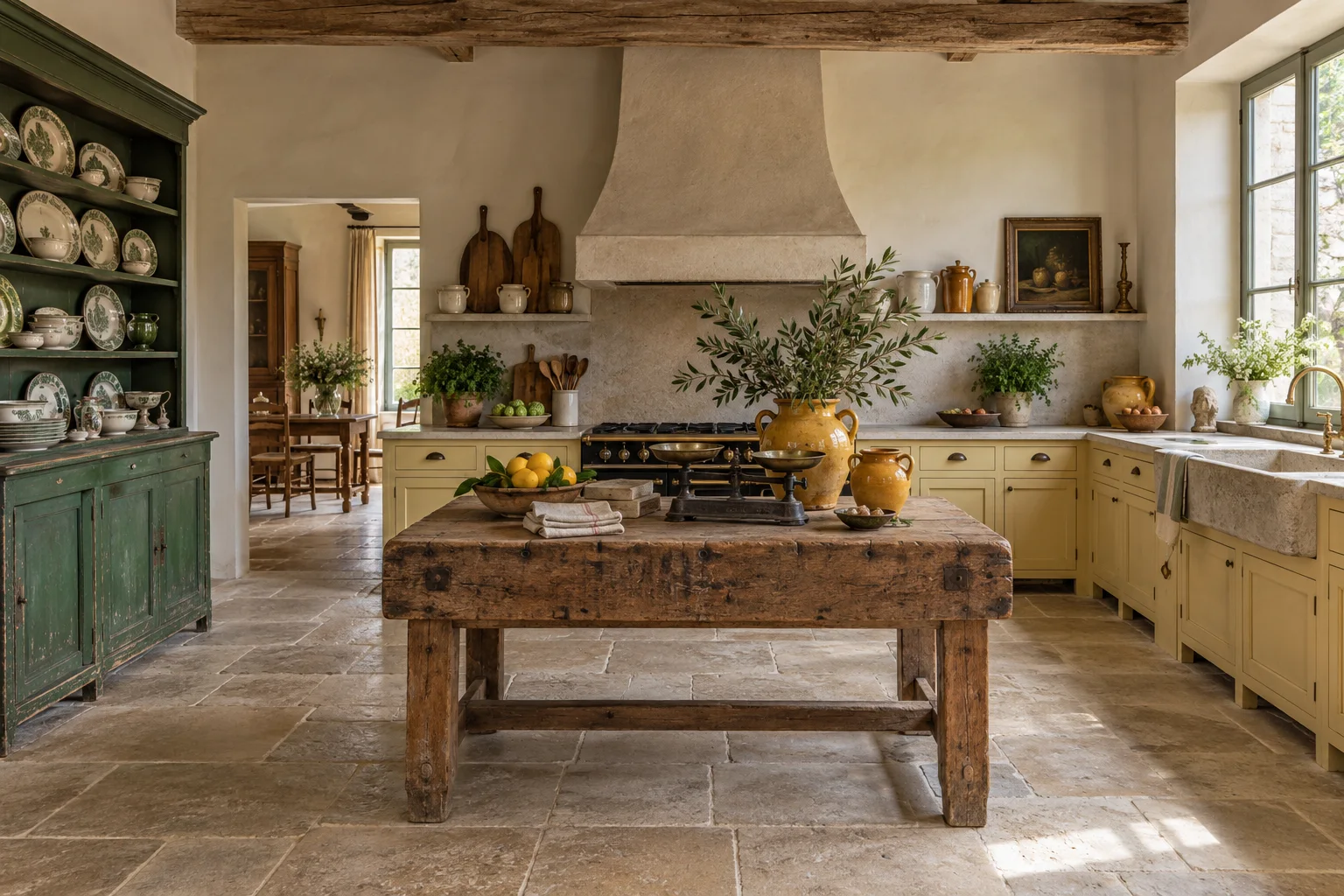
A crock by the stove holds wooden spoons and whisks, a natural fit in a French country kitchen. With a plastic nursery pot and saucer inside, it becomes a planter. By the fireplace it holds kindling, and in the hall it serves as an umbrella stand. Put a felt pad under the unglazed base to protect floors and furniture.
What to compare
| Form | Suggested Use | Decisive Check |
|---|---|---|
| Salt-glazed stoneware crock | Utensils, dry goods in a liner, kindling | Clear ring when tapped; overnight water test |
| Glazed earthenware confit pot | Display, flowers in a liner, utensils | Lead glaze: no food storage |
| Large jarre | Garden, terrace or hall | Frost cracks; stable base |
| Pot à graisse | Small utensils or a herb pot with a liner | Handles sound; chips at the rim |
Your buying checklist
Continue planning your room
Frequently asked questions
What makes a crock stoneware rather than earthenware?
Firing temperature. Stoneware is fired at roughly 1,200 to 1,300 °C, so the body becomes dense and holds liquid even unglazed. Earthenware is fired lower, stays porous and needs a glaze. On the unglazed foot, stoneware feels hard and smooth, while earthenware feels chalky and darkens under a drop of water. Stoneware also rings higher when tapped.
Can I store food in an antique stoneware crock?
It is better not to. Antique glazed earthenware, including confit pots, may have lead glazes that release lead into food. Salt-glazed stoneware has no lead in the salt glaze, but it may carry other glazes or slips, and old cracks hold residues. Use a food-safe liner for dry goods, or keep the crock for utensils and decoration.
Is a hairline crack in a crock a problem?
It depends on the use. A hairline that does not leak is acceptable for utensils, dry storage or display. Fill the crock with water and leave it overnight on paper towels to see whether it leaks. Outdoors, any crack is a risk, because water that freezes inside it can split the pot.
What can I use an old crock for?
Use a crock to hold wooden spoons by the stove, kindling by the fireplace or umbrellas in the hall. With a plastic nursery pot and a saucer inside, a crock becomes a planter. Large jarres stand in gardens and on terraces. Put a felt pad under the unglazed base to protect floors and furniture.
Sources & further reading
- Canadian Conservation Institute — Caring for ceramic and glass objects — Supports careful handling of ceramics, checking for cracks and keeping porous bodies dry.