Majolica or porcelain: two kinds of fish plate
Majolica fish plates are earthenware with molded fish in relief under colored lead glazes, usually 8 to 9 in (20 to 23 cm) across, with a wave or reed border. The relief fish is the point of the plate; check its fins and tail first, because they stand proud of the surface and chip first. Porcelain fish plates, often from the Limoges region, are smooth and white with a hand-painted or transfer-printed fish, a gilt rim and a named species. The painted versions show a signature or a species name on the front; the mark on the back identifies the porcelain blank, and a second mark the decorating workshop.
A mark is the only basis for naming a factory. A relief carp on a green ground was made by several French and English factories; the Met’s overview of French ceramics is a useful reminder that patterns travelled between workshops. Describe an unmarked plate by technique and subject.
How a fish service was composed
A full service pairs the plates with a platter long enough for a whole fish, typically 20 to 24 in (50 to 60 cm), and sometimes a sauce boat on a fixed stand. Count the plates and compare the back marks and the border molding across the set; a harlequin set assembled from several services is common and perfectly usable, but it should be described as such. Platters were lost or broken more often than plates, so a service with its platter is rarer than one without.
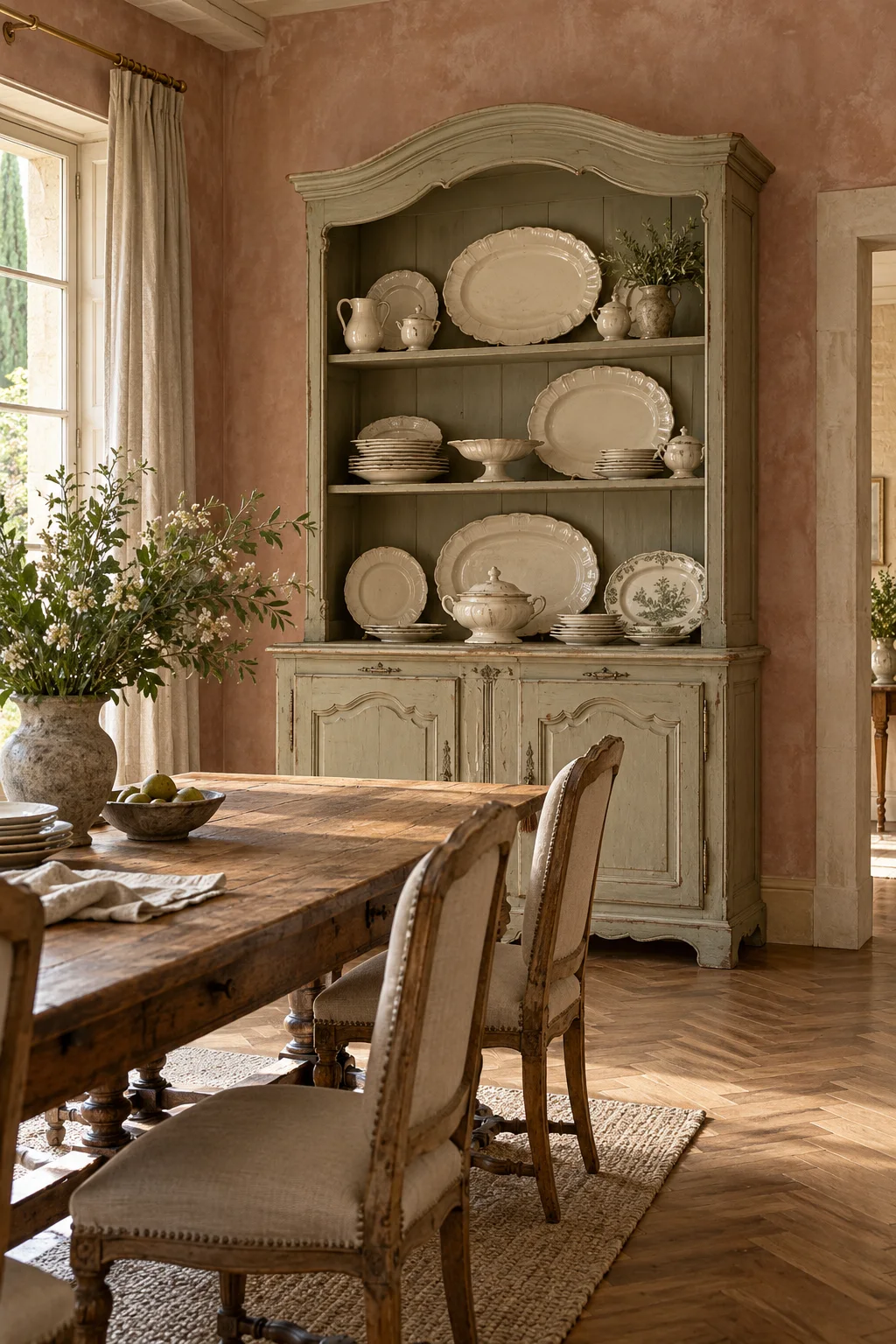
On the table, a fish service sits on a plain cloth and takes the color of the meal. In a French country dining room the set usually lives on the buffet or dresser between uses, plates upright on the shelves, platter leaning at the back. Our page on French country tableware shows how a mixed service is built from several patterns.
Checks before buying, and hanging without damage
Hold each plate up to a window: light through a hairline shows as a bright thread. Tap for a clear ring, run a finger around the rim for chips, and look at the fins of a relief fish for regluing. On porcelain, gilt rims wear first; even wear across a set is acceptable, one bright plate among dull ones suggests a replacement. Staining in crazing matters more on earthenware than on porcelain, which is vitrified and does not absorb.
For a wall, the Canadian Conservation Institute warns against spring-wire hangers that bear on the glaze at the rim. Use hangers with vinyl-covered hooks sized to the plate, or adhesive disc hangers rated for the weight, and keep plates away from a stove where heat and grease settle. A platter goes on a plate rail or stand rather than on hooks.
What to compare
| Form | Suggested Use | Decisive Check |
|---|---|---|
| Majolica relief plates, set of six | Wall group or seasonal table | Chips on fins and tail of the relief fish |
| Painted porcelain service with platter | Dinner service for fish courses | Matching back marks and even gilt wear |
| Single plates from different services | Kitchen or hallway wall | Weight and hanger size for each plate |
Your buying checklist
Continue planning your room
Frequently asked questions
How many plates are in an antique fish service?
Most French services were sold with six or twelve plates, one long platter and often a sauce boat. Sets were broken up over time, so a group of four or eight plates without a platter is common. Describe what is present rather than assuming a set was always twelve.
Are antique fish plates safe to eat from?
Porcelain fish plates are vitrified and safe for normal use if the glaze is intact. Majolica fish plates carry lead glazes: use them for short service, avoid acidic sauces left standing, and hand wash. Plates with stained crazing or repairs belong on the wall.
How do you hang antique plates on a wall?
Use hangers whose hooks are covered in vinyl and sized so the plate sits without pressure on the rim, or adhesive disc hangers rated for the plate’s weight. Avoid bare spring-wire hangers, which chip the glaze at the rim. Keep plates away from heat and grease.
What is the difference between a fish plate and an oyster plate?
A fish plate is a flat dinner plate decorated with a fish, used for the fish course. An oyster plate has molded wells, usually six, to hold shells in place. Both were made by the same French factories and are often collected together.
Sources & further reading
- The Metropolitan Museum of Art — French Faience — Background on French ceramic traditions and the circulation of patterns between factories.
- Canadian Conservation Institute — Caring for ceramic and glass objects — Display mounts and handling for ceramic plates.