How to tell wrought iron from cast iron on the terrace
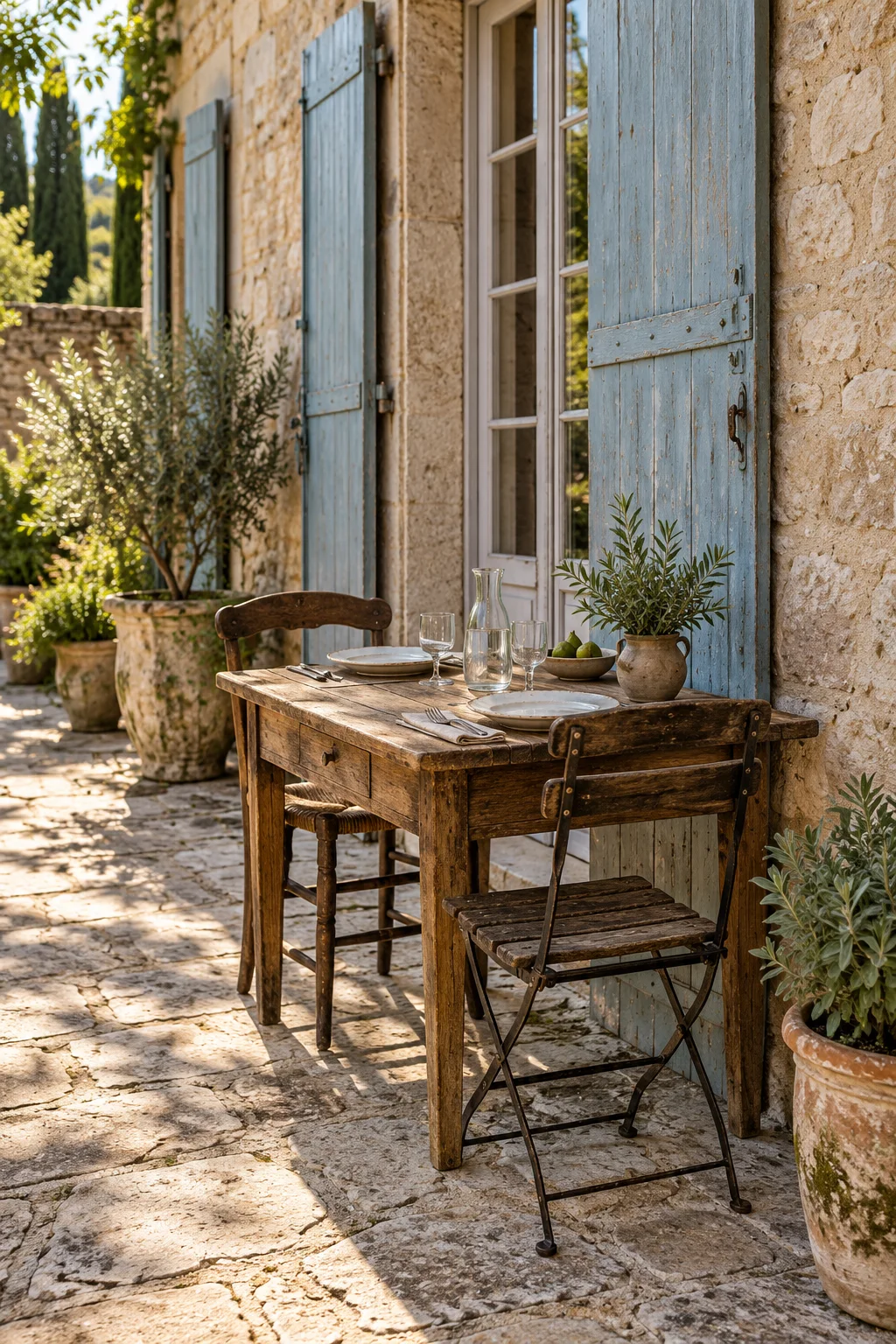
Wrought iron is worked hot: flat or square bars are bent into scrolls, then joined with rivets, collars or welds. Look for bars of constant section, hammer or roller marks along the length, and visible rivet heads where two scrolls meet. A wrought iron chair bends before it breaks, so old damage shows as a distorted leg rather than a missing piece.
Cast iron is poured into a sand mould. The patterns are more pictorial (ferns, vines, grapes), the sections are thicker, and a fine mould seam often runs along the edges. Cast iron is brittle: a dropped chair chips or cracks, and cracks show as a rust line through the pattern. Many mid-twentieth-century garden sets described as wrought iron are in fact strap steel; the test is the same, because the look of the bar and the joints tells you how the set was made.
Weight is the quickest check. A wrought iron side chair usually lifts easily with one hand, roughly 15–25 lb (7–11 kg); a cast iron chair of the same size often weighs 30–50 lb (14–23 kg). A magnet does not help, because both metals are ferrous.
Judging a set: joints, feet and seat comfort
Rock each chair on a flat surface. A wobble can come from a bent leg, a loose rivet or a cracked weld; loose rivets rattle when the chair is lifted and dropped an inch. Turn the chair over and inspect every foot: rust eats iron from the bottom, where water sits, and a foot that has lost half its section will go through a paving joint. Tap the feet with a coin; a dull sound suggests a deep rust pocket.
Check the seat and back for use rather than looks. Strap seats should be tight, mesh seats free of broken wires, and the seat height close to 16–18 in (41–46 cm) so cushions do not raise the sitter too high at the table. A dining table in iron sits at 28–30 in (71–76 cm); a round top of 36–42 in (91–107 cm) seats four. A set assembled from matching chairs and a later table is common and acceptable, as long as the listing says so.
Rust, paint and winter: the maintenance a set actually needs
Surface rust is a finish problem; rust that has thinned a bar is a structural one. For surface rust, brush back to sound metal, prime and repaint in dry weather, and keep the original color if the old layers are stable. The Canadian Conservation Institute guidance on metals supports the same principle: keep iron dry and protected by a coating, and stop corrosion before it becomes loss. Do not grind away stamped marks or the texture of the forging.
In freezing climates, store the set dry, off the ground and under a ventilated cover, or at least tip chairs so water cannot collect in hollow legs. Fit glides under the feet so the iron does not stand in puddles on stone. Lift rather than drag a cast iron piece; dragging is how feet and fern ends break.
What to compare
| Form | Suggested Use | Decisive Check |
|---|---|---|
| Wrought iron scroll chair | Everyday seating that moves easily | Rivets, welds and foot ends |
| Cast iron fern bench or chair | A fixed focal point in the garden | Cracks through the pattern, repaired breaks |
| Strap-steel set (1930s–1960s) | Dining for four on a terrace | Strap tension and paint adhesion |
Your buying checklist
Continue planning your room
Frequently asked questions
How can I tell wrought iron from cast iron patio furniture?
Look at the bars and the joints. Wrought iron is made of bent bars of constant section joined with rivets or welds, and it is relatively light. Cast iron shows pictorial patterns, thicker sections, mould seams and a much greater weight. A magnet does not separate them, because both are iron, but a lift test and a close look at the joints usually settle it.
Is rust on antique wrought iron furniture a problem?
Surface rust is normal and can be brushed, primed and painted. Rust becomes a problem when it has eaten into the metal, usually at the feet and in hollow sections where water collects. Press a screwdriver against the rusted area; if the metal flakes or gives, the bar has lost section and needs a blacksmith rather than paint.
Can antique wrought iron patio furniture stay outside all year?
In a dry, mild climate, yes, with glides under the feet and a sound paint finish. Where winters freeze, move the set under cover or at least tip chairs so hollow legs cannot hold water. Ice inside a closed section splits iron, and the damage appears in spring as a crack at a joint or a foot.
How heavy is an antique wrought iron patio set?
A wrought iron side chair weighs roughly 15 to 25 pounds (7 to 11 kilograms), and a small table with a glass or iron top adds 30 to 60 pounds (14 to 27 kilograms). Cast iron pieces are far heavier. Ask for the weight before shipping, because crating and freight for garden furniture are priced by weight and volume.
Sources & further reading
- Canadian Conservation Institute — Care of metal objects — Supports keeping iron dry and coated and treating corrosion early; it does not date any piece.