The main forms of antique step stools and library steps
The simplest form is the kitchen step stool: two or three treads, splayed legs, often pine or beech, 10–14 in (25–35 cm) high for a single step and 18–24 in (46–61 cm) for two. French examples are frequently painted, with wear concentrated on the front edge of each tread. A milking stool, with three legs and a round seat, is lower, 8–12 in (20–30 cm), and was never meant as a step.
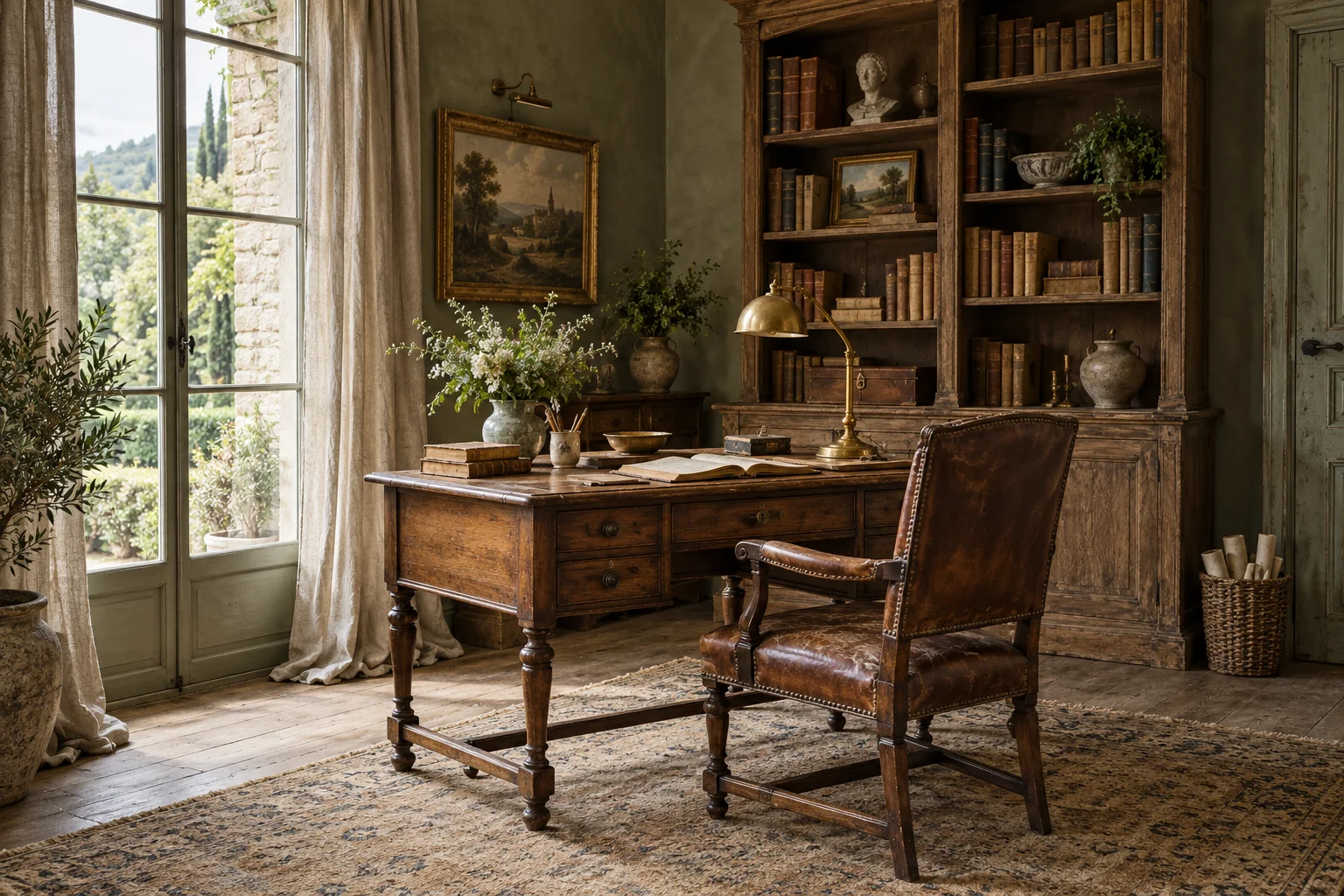
Library steps are the taller family: a straight run of four to six treads with a handrail, a spiral stair around a central post, or a metamorphic piece that converts from a chair or a table into steps. Heights of 24 to 40 in (61–102 cm) are common. Mahogany, oak and walnut dominate, sometimes with brass fittings and leather-covered treads. Our home office and library scenes show how a set of steps stands beside a bookcase without blocking the shelves.
Folding step stools of the 1900s–1950s, in beech with iron hinges, fold flat to 2–3 in (5–8 cm) and were sold for shops and pantries. A maker's stamp under a tread is a bonus, not a guarantee of date. Treat every name, English library steps, French escabeau, as a description of form rather than a documented origin.
Testing stability before anyone stands on one
Put the antique step stool on a flat floor and press down on each tread with both hands, then push sideways at the top. Any rocking, creaking or play at the joints means the piece needs regluing before use. Look under the treads: wedged tenons, screws added later and metal brackets each tell a different story of repair. Split treads, especially along the grain near a knot, are a reason to retire the stool from climbing duty.
Check the legs for worm holes (small round exits with fresh pale dust) and for shortened feet, which show as fresh end grain. A stool whose legs have been cut down may stand level but has lost its original splay and some stability. On spiral library steps, turn the whole stair slowly and listen for the central post moving in its base.
Weight limits are rarely known for old pieces. A sound two-step kitchen stool in beech carries an adult without complaint; a delicate metamorphic chair-step may not. When in doubt, keep the piece for display and reach for a modern stool. The stools and ottomans catalogue groups the low forms that are safer to sit on than to climb.
New uses: bedside, plant stand, display
A step stool of 20–26 in (51–66 cm) matches the height of a mattress top and makes an unusual bedside table: the lower tread holds books, the top a lamp. Library steps of 30–40 in (76–102 cm) carry plants in a sunroom, with a saucer under each pot to protect old wood from water. In a hallway, a single wide step becomes a bench for changing shoes.
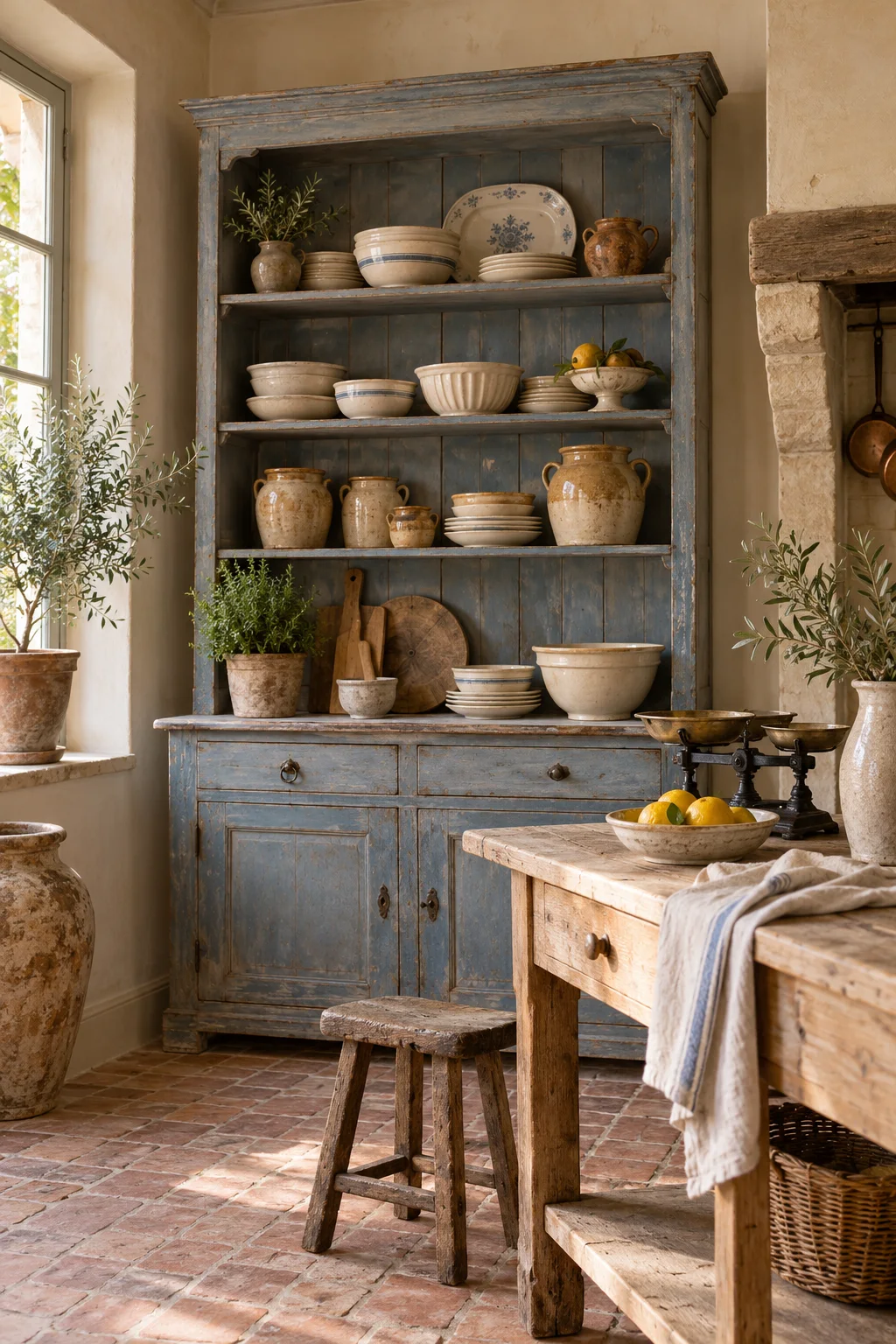
Painted stools suit a French country kitchen as a stand for a basket of bread or a stack of linen; leave the worn paint alone, since stripping it removes the evidence of age. Oil or wax unpainted wood once a year, and keep the stool away from radiators that dry and crack the treads.
Mixing a working stool with display pieces is a matter of honesty: label the fragile ones in your own mind as furniture, not equipment. For a bookish room, read our guide to a window reading corner, where a low step stool doubles as a footrest.
What to compare
| Form | Suggested Use | Decisive Check |
|---|---|---|
| Kitchen step stool | Pantry, bedside stand | Rocking, split treads |
| Library steps | Beside a bookcase, plant display | Handrail fixing, central post play |
| Folding stool | Studio, occasional use | Hinge wear, locking bar |
Your buying checklist
Continue planning your room
Frequently asked questions
Is it safe to stand on an antique step stool?
Only after a stability test on a flat floor: press each tread, push the top sideways, and listen for creaks or play at the joints. Loose joints must be reglued first, and a split tread is a reason to retire the stool from climbing. Keep delicate metamorphic pieces for display and use a modern stool for the top shelf.
What is the difference between library steps and a step stool?
A step stool has one to three treads and stands 10–24 in (25–61 cm) high; library steps run from four to six treads, often with a handrail or a spiral around a post, and reach 24–40 in (61–102 cm). Library steps were made for book rooms in finer woods; step stools came from kitchens and shops, often painted.
How tall should a step stool be to use as a bedside table?
Match the height of the mattress top, usually 20–26 in (51–66 cm) for a modern bed. Measure from the floor to the top of the mattress, then choose a stool within 2 in (5 cm) of that figure so a lamp and a glass stay within reach without stretching.
Should I repaint a worn painted step stool?
No, unless the paint is flaking into the room. Worn paint on the front edges of the treads is the evidence that the stool was used, and stripping it removes that history. Clean with a barely damp cloth, let it dry, and apply a thin coat of wax on bare wood only.
Sources & further reading
- Canadian Conservation Institute — Basic care: furniture and objects made of wood — Checking joints, preserving old finishes and keeping wooden objects away from heat sources.