What Reclaimed Means, and What It Does Not
Reclaimed boards come from barns, joists, floors, scaffolding, wine vats and sleepers. In France the usual species are oak, chestnut, elm and pine, and the boards carry nail holes, old saw marks, worm channels and a grey oxidized skin that a maker either planes away or keeps. For customs and for description, the age of the material does not transfer to the object: heading 9706 of the US tariff covers objects more than 100 years old, and a table built this year from 19th-century oak is new furniture. Our French country antiques guide explains what does count as an antique.
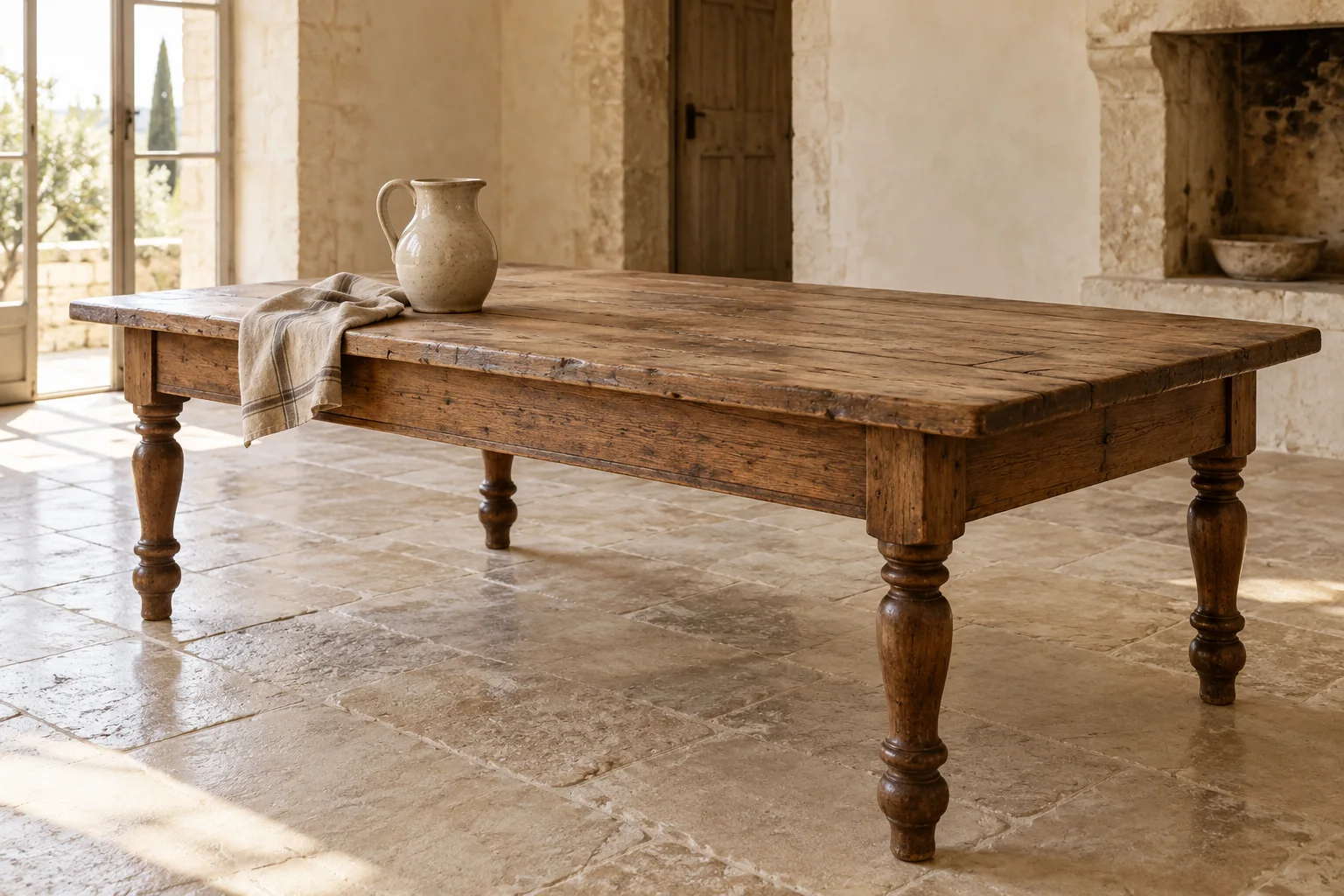
The honest description is simple and specific: “table made in 2026 from 19th-century oak floorboards”. The same words sell the piece better than “antique oak table” and avoid a dispute later. Compare the forms with the farmhouse dining tables and kitchen islands and workbenches in the catalogue, where old and new construction sit side by side.
How Old Boards Behave: Movement, Metal and Finish
Wood moves with humidity whatever its age. A 36 in (91 cm) wide oak top can change by 1/4–3/8 in (6–10 mm) across the grain between a humid summer and a heated winter, so a well-made reclaimed table needs breadboard ends, slotted screw holes or buttons that let the top move. Run a magnet over the surface before planing or cutting: hidden nails and bolts are common in old joists. Sleepers and some barn timbers carry creosote or other treatments and belong outdoors; old painted boards may carry lead paint. A kitchen table top finished with oil or hardwax oil keeps its texture and can be refreshed; polyurethane fills the grain and shows scratches.
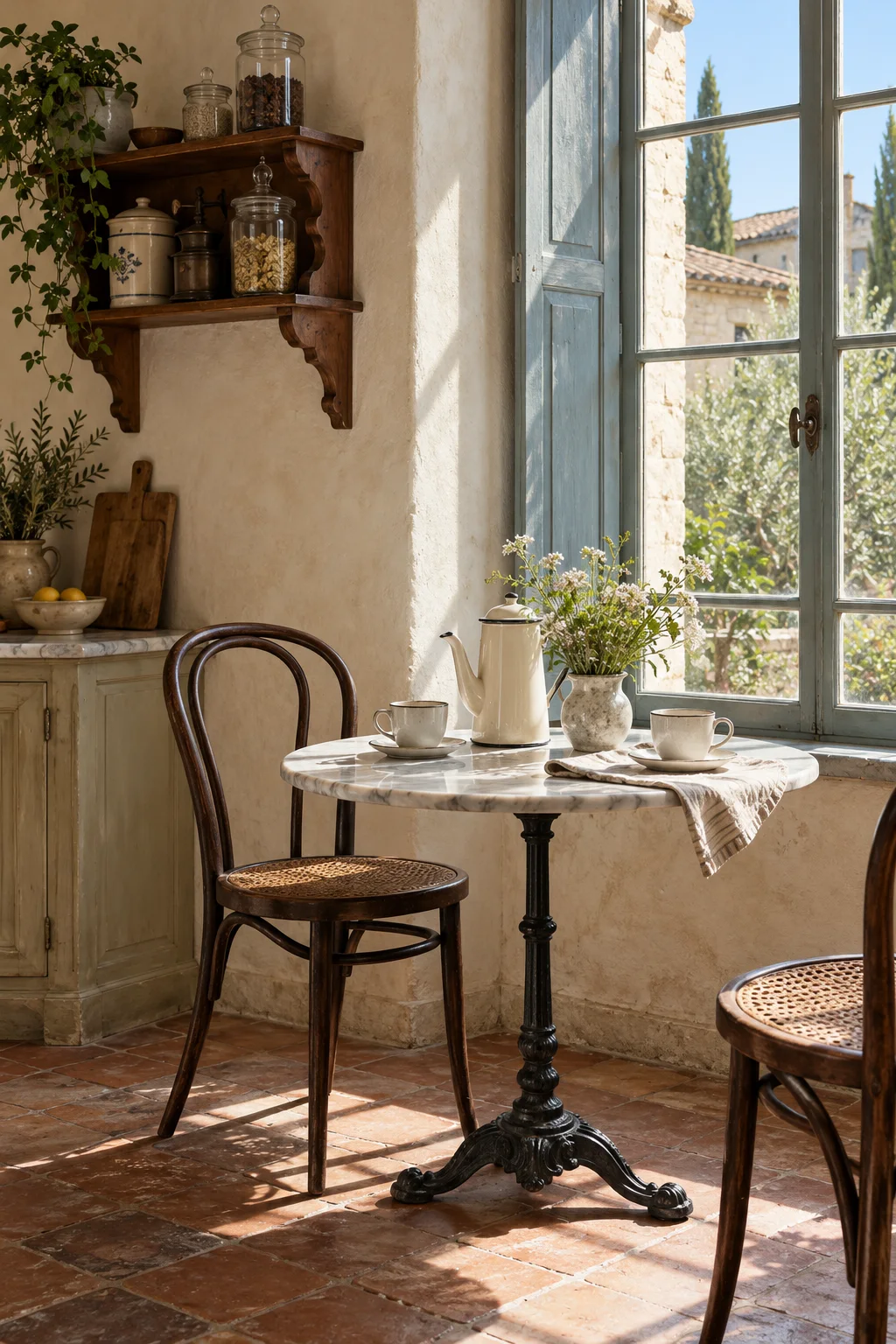
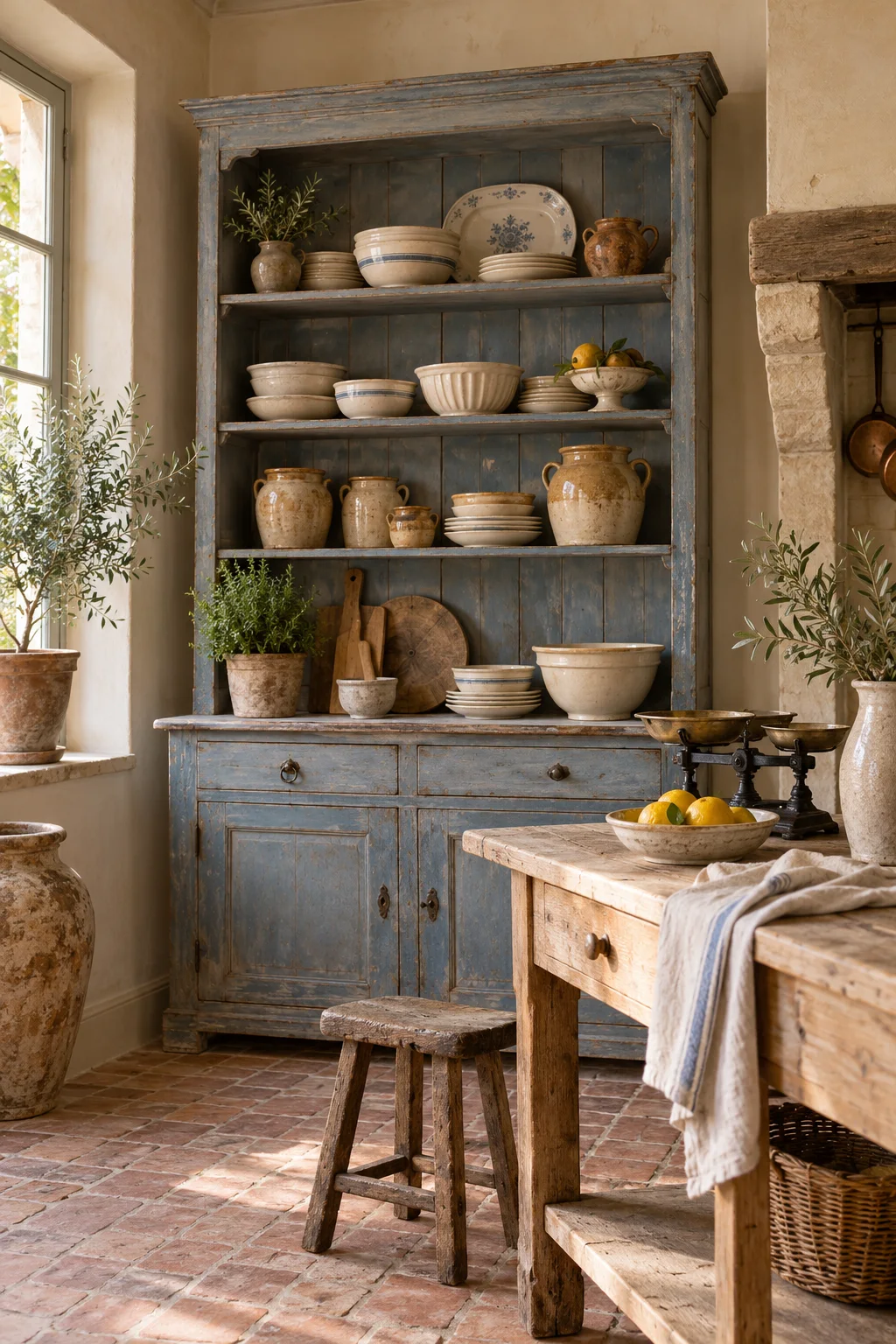
Insect activity should be checked and treated before the wood comes into the house: look for fresh pale dust in holes. The kitchen page and our French country kitchen guide show reclaimed tables with antique chairs and copper, which is where the material works best.
Checks Before Buying and Mixing With Antiques
Turn the piece over. Mortise-and-tenon joints and pegged frames outlast pocket screws; hairpin steel legs are a design choice, not a flaw, but they should be bolted through a thick top. Look for open checks filled with resin, splinters on edges and any smell of creosote or mould. Ask the maker for the origin of the boards and the date of construction, and keep that note with the piece.
One reclaimed table with antique chairs works when the proportions are right: a top at 28–30 in (71–76 cm) and 24 in (61 cm) of width per seat. The guide to antique tables and our French country dining tables guide cover those numbers; the French farmhouse interiors guide shows how old timber, stone and lime sit together in a room.
What to compare
| Form | Suggested Use | Decisive Check |
|---|---|---|
| Reclaimed oak farmhouse table | Daily family meals, custom size | Breadboard ends and fixings that allow movement |
| Reclaimed beam console or bench | Hallway, boot room | Hidden nails and treated timber |
| Antique table de ferme | Rooms where age is the point | Wear, construction and documentation |
Your buying checklist
Continue planning your room
Frequently asked questions
Is reclaimed wood furniture considered antique?
No. An antique is an object more than 100 years old; reclaimed wood furniture is a new object made from old material. The boards may be two centuries old, but the table, bench or console was built recently. Describe it as new furniture made from reclaimed wood, with the origin of the timber if known.
Why does my reclaimed wood table crack?
Because wood moves with humidity throughout its life. A wide top shrinks in a heated house and swells in a humid season; if the top is screwed rigidly to the frame, it splits. Old boards also carry checks from their first life. Good construction uses breadboard ends, slotted holes or buttons so the top can move freely.
Is reclaimed wood safe for a dining table?
Usually, with two checks. Avoid timber treated with creosote or industrial preservatives, which belongs outdoors, and test old painted boards for lead. Have the wood treated for insects before it enters the house. Finish the top with a food-safe oil or hardwax oil and clean with a damp cloth rather than standing water.
How do I tell reclaimed wood from new distressed wood?
Reclaimed boards show the marks of a first life: nail holes with rust halos, old saw patterns, worm channels, color that goes deep into the wood. Distressed new wood shows uniform dents, pale wood under a thin stain and marks in places that use would never reach. Ask the maker for the source of the timber.
Sources & further reading
- USDA Forest Products Laboratory — Wood Handbook: Wood as an Engineering Material — Explains the dimensional movement of wood with moisture, the cause of splits in rigidly fixed tops.
- USITC — Harmonized Tariff Schedule, heading 9706 (antiques of an age exceeding 100 years) — The tariff heading that defines antiques as objects of an age exceeding 100 years.
- Canadian Conservation Institute — Basic care: furniture and objects made of wood — Guidance on finishes, cleaning and insect checks for wooden furniture.