Willow, rattan and the fitted hamper
French baskets were mostly osier, cultivated willow, woven either with the bark on (buff or brown) or peeled (white). Rattan, a tropical cane, appears on lighter export baskets and on the fittings of grand hampers. A good basket has thick, straight stakes, an even weave with no gaps, a wrapped rim and a base that sits flat. Sizes run from a 12 in (30 cm) lunch basket to a 24 in (60 cm) hamper for four.
Fitted hampers held enamel or tin plates, glass flasks in wicker sleeves, cutlery in leather loops and a cloth; complete fittings are rare and worth a premium, partial fittings are usual. Straps and buckles are leather or wicker loops; a hamper with its original straps intact and supple is a sign that it lived indoors.
Checks before buying: weave, handles, hinges and smell
Flex the body gently with both hands. A sound basket springs back; dry, brittle willow cracks with a snap and sheds splinters. Look at the points where handles join the body: the rods should pass into the weave and be bound, not nailed through a split rod. Lid hinges on wicker baskets are loops of willow or leather; count broken loops and check that the lid closes square.
Smell the inside. Mould and mildew leave a musty smell and grey bloom in the corners, usually from storage in a garage or cellar; the Canadian Conservation Institute groups basketry with wooden objects for care, and gives the same advice: stable humidity, no soaking, and gentle dry cleaning. Insect damage shows as pinholes and dust in the thicker rods; treat or walk away.
Cleaning, storage and uses beyond the picnic
Vacuum with a soft brush attachment, then wipe with a cloth barely damp with water; dry away from sun and heat. Never hose or soak a basket, which swells the willow and loosens the weave, and never oil it, which attracts dust. A dry, brittle basket can be revived slightly by a few hours in a humid bathroom, then slow drying, but it will not become new.
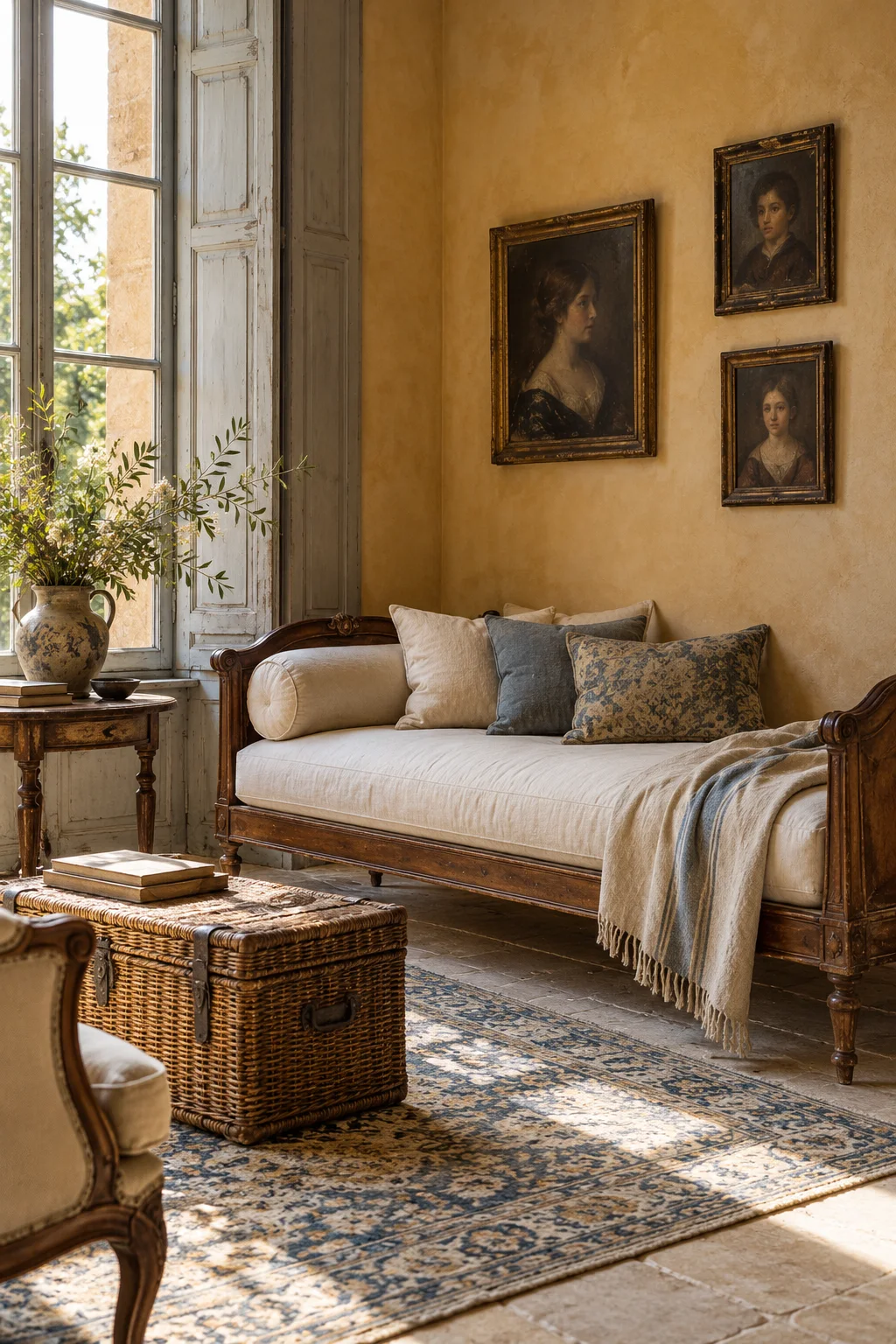
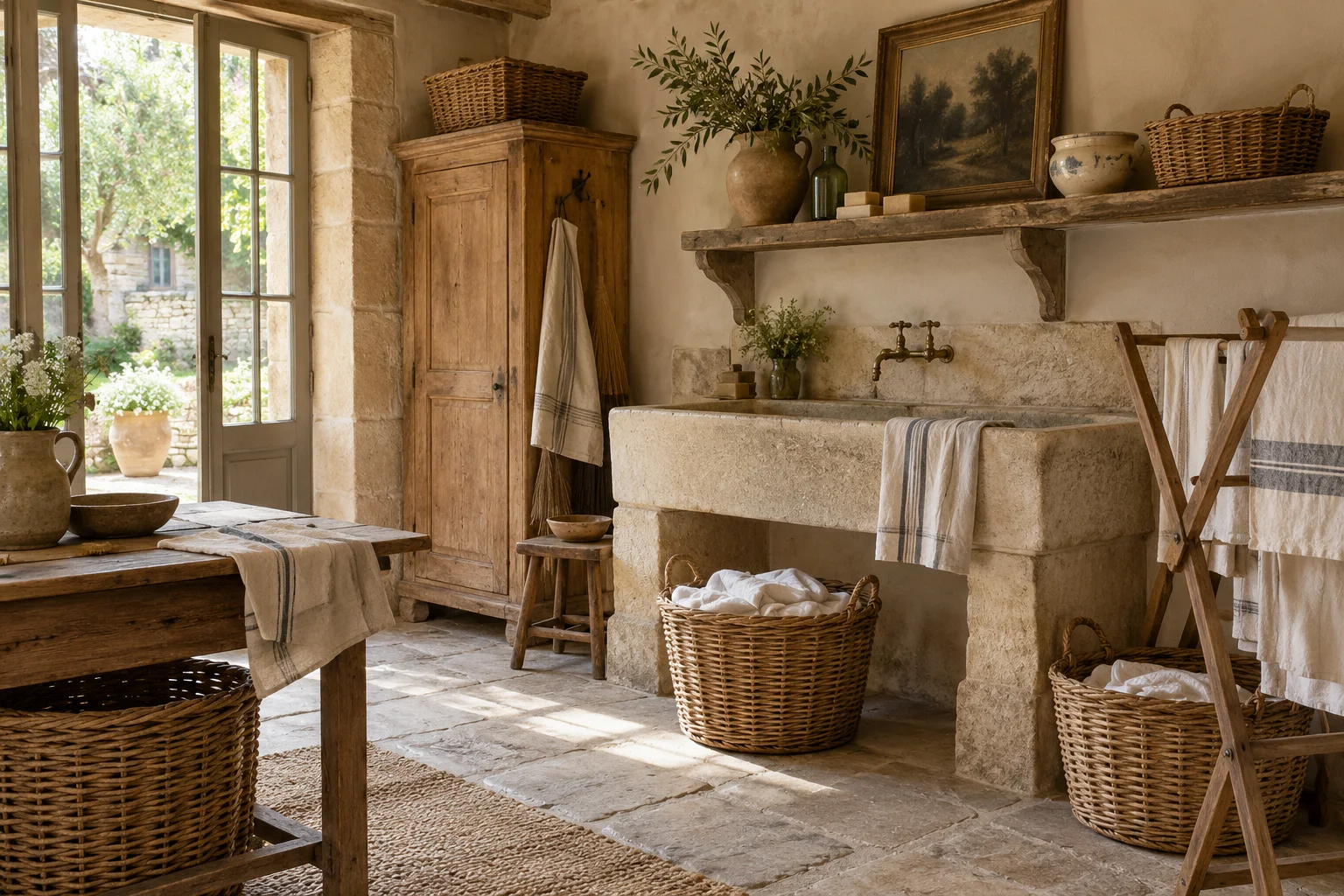
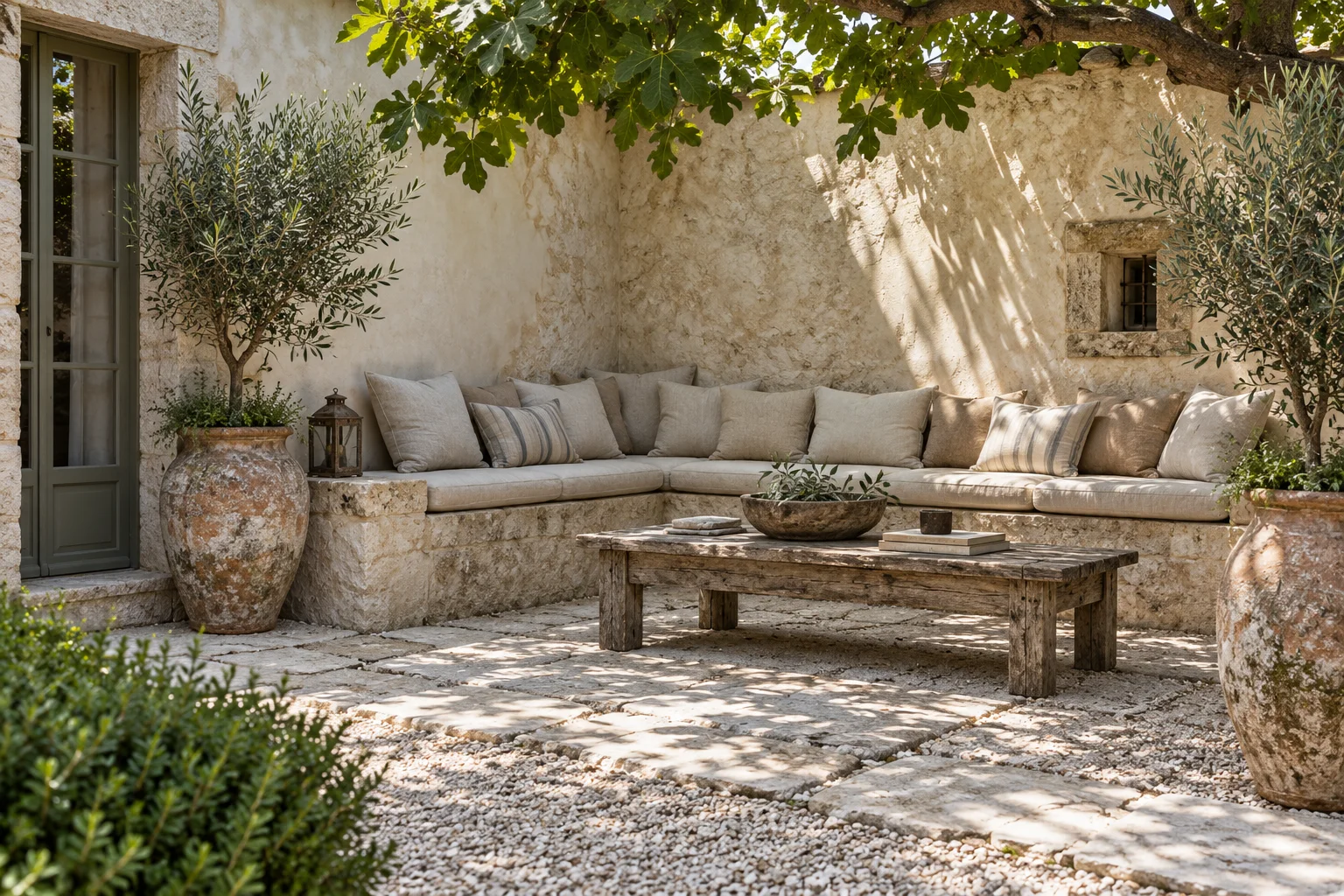
In the house a hamper holds towels, logs, a dog’s blankets or the week’s papers; on a terrace it carries lunch, as in our patio room ideas. A row of baskets under a bench or on top of an armoire is one of the quiet signatures of a French country interior; our page on baskets and boxes shows how they sit with the rest of the room, and the French country decor guide covers the balance of textures around them.
What to compare
| Form | Suggested Use | Decisive Check |
|---|---|---|
| Willow lunch basket with lid, 12 to 16 in / 30 to 40 cm | Picnics, bread at the table | Handle joins bound into the weave |
| Fitted hamper with straps, 20 to 24 in / 50 to 60 cm | Display and occasional use | Completeness of fittings and supple straps |
| Open willow log or laundry basket | Hearth, laundry, towels | Flat base and intact rim wrap |
Your buying checklist
Continue planning your room
Frequently asked questions
How do you clean an antique wicker picnic basket?
Vacuum it with a soft brush, wipe with a cloth barely damp with plain water, and let it dry slowly away from sun and radiators. Do not hose, soak or oil it: water loosens the weave and oil collects dust. Mould can be brushed off outdoors, then the basket aired for a day.
What are antique French picnic baskets made of?
Mostly osier, cultivated willow, woven with the bark on or peeled white. Rattan cane appears on lighter and later baskets and on fittings. Handles are thicker willow rods or wrapped cane; straps are leather or wicker loops.
Is a picnic hamper without its fittings worth buying?
Yes, if the body, handles and lid are sound. Complete fitted interiors are rare and command a premium, but an empty hamper is the more useful object: it holds linen, logs or a lunch packed in modern containers. Price it as a basket, not as a set.
Can a brittle wicker basket be restored?
Partly. A few hours in a humid room followed by slow drying makes dry willow more flexible, and a basket maker can replace broken stakes and rewrap a rim. Willow that snaps when flexed has lost its strength and is better kept for display than for carrying.
Sources & further reading
- Canadian Conservation Institute — Basic care: furniture and objects made of wood — Care of basketry and wooden objects: humidity, cleaning and handling.